Why Bucharest is a 2026 water pinch for hyperscale data centers
A 100 MW Bucharest facility operating at PUE 1.2 can draw up to 2 million L/day of municipal supply, of which roughly 60% leaves as evaporation in an evaporative cooling loop and the balance splits between blowdown and drift (per ide-tech, 2026). At 4 cycles of concentration (COC) the blowdown stream is moderate in salinity but large in volume; at 6 COC it roughly halves, but the concentrate chemistry becomes the design driver. Three structural pressures now make the math binding rather than aspirational: the Dâmbovița basin's recurring July–October low-flow regime, which triggers seasonal scrutiny from the Romanian National Environmental Guard and ANPM (Garda Națională de Mediu / Agenția Națională pentru Protecția Mediului); the EU Taxonomy 2020/852 DNSH water criterion that requires a Do No Significant Harm assessment on water use for any activity seeking Taxonomy alignment; and CSRD ESRS E3 first reporting for FY2026, which makes WUE and reuse percentages auditable line items for sites above the 2 MW IT-load threshold. A defensible Bucharest 2026 WUE target sits below 1.5 L/kWh, mirroring Italy's 2024 Codice di Condotta figure cited in the Hydropure Rome guide and giving the sustainability lead a single number that survives a DNSH alignment opinion.
Romania transposed UWWTD 91/271/EEC through GD 352/2005, with NTPA 002 setting the industrial sewer-admission ceilings. A Bucharest facility that ignores those ceilings risks permit refusal at the ANPM environmental authorization stage, an Apa Nova Bucharest industrial admission denial, or — worse — a flagged activity under the Taxonomy delegated act that disqualifies the project from green financing.
The four wastewater streams leaving a Bucharest data center
A Bucharest site discharges four distinct wastewater streams, and each one carries a different NTPA 002 / Apa Nova Bucharest industrial discharge obligation and a different reuse value. Mapping them is the first engineering step, because treating them as a single flow guarantees a parameter violation somewhere downstream.
Cooling tower blowdown (CTBD) is the largest by volume, typically 1.14–1.70 ML/day for a 100 MW site running 4–6 COC, with TDS in the 1,500–2,500 mg/L band carrying silica, calcium sulfate, phosphonate antiscalants, isothiazolone biocides, and copper carryover from condenser tubes. Chiller bleed from water-cooled condensers arrives at higher TDS because chiller return temperatures run hotter than cooling-tower return temperatures; it must be modeled separately when sizing RO recovery because the silica ceiling is reached faster. Humidification drain is lower in TDS but intermittent in flow, which complicates equalization and forces a dedicated equalization tank with continuous pH and TDS monitoring before the stream can be merged with CTBD. Sanitary and diesel-generator test water is small volumetrically but biologically active and chemically distinct — oils, fuel residues, elevated BOD — and must be segregated upstream of any membrane train to prevent irreversible fouling. A useful side-by-side reference for stream characterisation is the parallel Warsaw 2026 data center treatment guide, which applies the same four-stream framework to the Vistula basin and is worth reading for the contrasting intake chemistry.
Bucharest intake chemistry and the COC lever
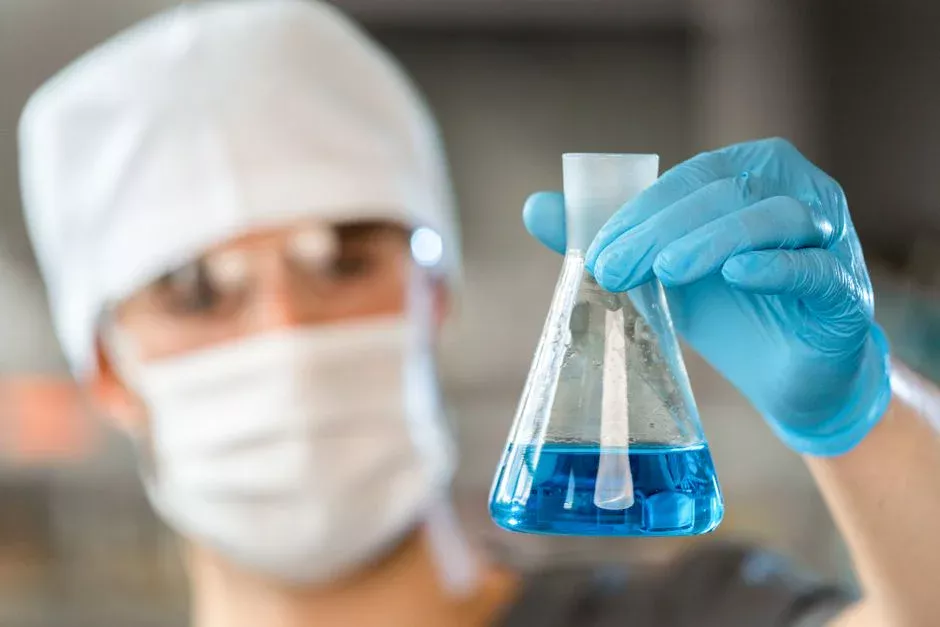
Bucharest intake typically arrives as a Dâmbovița / Apa Nova blend at 300–500 mg/L TDS, calcium-bicarbonate hardness around 280 mg/L as CaCO₃, and chloride 30–60 mg/L (per typical Apa Nova industrial supply characterisation). Those numbers must be verified against the operator's current quality report before sizing the RO concentrate envelope, but the band is consistent with what the Hydropure Rome guide cites for the Tiber/ACEA blend and what the typical Bucharest facility will see in practice. At 5 COC those values concentrate to roughly 1,500–2,500 mg/L TDS, which is squarely inside the Genesis blowdown characterisation band of 1,200–6,000 mg/L. Above 5 COC the limiting species shift: silica climbs to 40–60 mg/L, calcium sulfate approaches its solubility envelope near 6 COC, and the Langelier Saturation Index swings positive enough to drive carbonate scale onto heat-exchange surfaces.
The single largest CAPEX lever in the whole train is side-stream filtration, sized at 1–5% of circulation flow and integrated upstream of the recovery train using a multi-media filter that polishes to 10–15 µm. Lifting COC from 4 to 6 with effective side-stream filtration roughly halves blowdown volume before it ever reaches the RO, which shrinks every downstream unit operation by a corresponding factor.
Romanian and EU discharge limits that bind the train
Discharge to surface water in Romania is governed by GD 352/2005 with NTPA 001 ceilings; discharge to municipal sewer is governed by NTPA 002 and the operator's Apa Nova Bucharest industrial contract, which sets stricter ceilings than NTPA 002 on three binding parameters — portata (maximum hourly flow), qualità (parameter ceilings), and punto di immissione (the manhole or inspection point). The key sewer-admission ceilings parallel the values in the Italian Tab. 5 referenced in the Hydropure Rome guide: sulfates at roughly 1,000 mg/L (verify the current NTPA 002 value against the latest Apa Nova contract schedule), total phosphorus restricted, oils and greases capped, free chlorine quenched before discharge, and pH held inside 5.5–9.5. The operator's contract will be tighter than the published NTPA 002 ceiling on TDS for a Bucharest site, and that is the parameter that forces RO polish on any sewer-discharge pathway.
On the EU overlay, Taxonomy 2020/852 DNSH Appendix B water metrics and CSRD ESRS E3 reporting apply to sites above the 2 MW IT-load threshold, which captures every hyperscaler and most colocation halls in the Bucharest metro. A raw 1,500–2,500 mg/L TDS blowdown will not meet the typical NTPA 002 / Apa Nova quality clauses; RO polish is effectively mandatory before any sewer discharge, and reuse back into the cooling-tower makeup stream is the cleanest path to a defensible DNSH alignment narrative.
Defensible four-stage treatment train for Bucharest blowdown
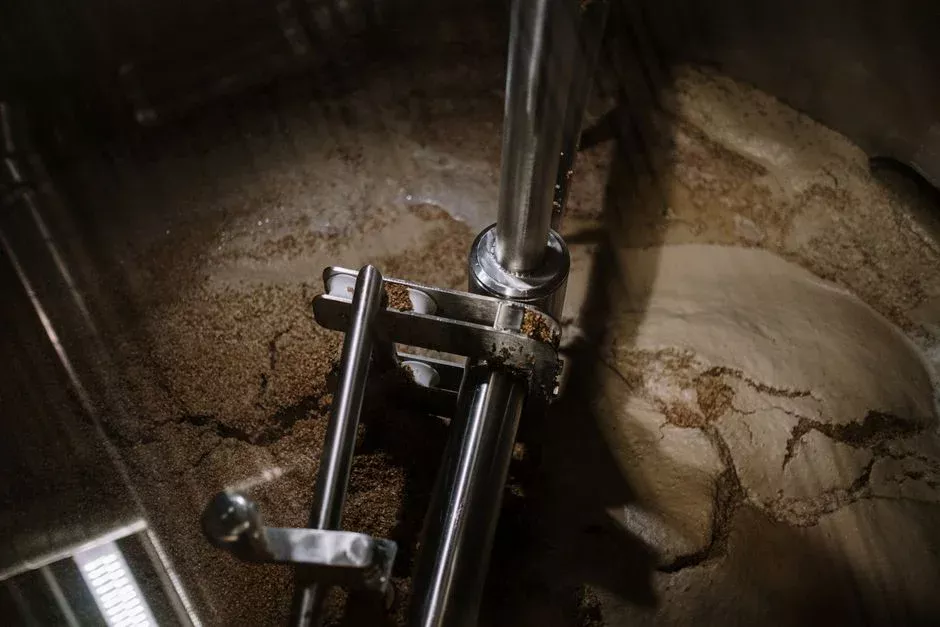
The defensible Bucharest train is a four-stage configuration sized to the 1.14–1.70 ML/day blowdown envelope, with the fourth stage invoked only seasonally or where ESG mandates demand it. The table below captures the operating envelope for each stage.
| Stage | Equipment | Key operating parameter | Output / performance |
|---|---|---|---|
| 1 — DAF | DAF pretreatment skid with PLC-controlled antiscalant and biocide dosing skid | Surface loading 20–40 m/h in lamella zone; PAC + flocculant polymer | TSS <15 mg/L; 60–80% total phosphorus cut; free and emulsified oils removed |
| 2 — MMF + UF | Multi-media filter followed by 0.03 µm PVDF ultrafiltration skid | MMF polish to 10–15 µm; UF backwash returns to DAF inlet | SDI <3; 90–95% UF recovery; 90–95% biofouling barrier |
| 3 — Brackish RO | Industrial RO system at 75–80% recovery | Antiscalant holds Si <1 mg/L at concentrate; LSI held between -0.5 and +0.5 | Permeate 10–50 mg/L TDS, blended back into cooling-tower makeup |
| 4 — MVC polish (optional) | Mechanical vapour compression on RO concentrate | 15–25 kWh per 1,000 US gallons | 95–98% recovery; distillate <10 mg/L TDS |
Stage 1 removes suspended solids, free and emulsified oils, microbial flocs, and a meaningful fraction of bound phosphorus. Stage 2 polishes to 10–15 µm and brings the Silt Density Index down to RO feed range, after which the PVDF UF cuts SDI to <3 and provides the biofouling barrier. Stage 3 produces a 10–50 mg/L TDS permeate suitable for blending back into the cooling-tower makeup stream, with concentrate either discharged to Apa Nova sewer after polishing or routed to Stage 4. Stage 4, the MVC polish, is sized as a seasonal asset for the July–October Dâmbovița low-flow window, not as a year-round workhorse, because the marginal CAPEX is only justified when sewer admission is constrained or when an ESG mandate requires near-zero liquid discharge.
How to push recovery above 80% on Bucharest-typified blowdown
Conventional BWRO plateaus at 75–80% recovery on silica- and CaSO₄-rich CTBD because the concentrate reaches its scaling threshold on sparingly soluble species before the osmotic ceiling of the membrane is reached. Pushing higher with conventional designs requires additional stages, booster pumps, and recirculation loops, which adds CAPEX, footprint, and operational complexity. The alternative architecture (per the ide-tech 2026 piece) routes RO concentrate to a fluidized bed reactor where scaling inhibitors are intentionally deactivated, so silica, calcium carbonate, and other problematic salts precipitate onto seed material as dense pellets. The residual brine becomes a NaCl-dominant stream that can be recycled to a single high-recovery RO stage. The IDE MAXH₂O case demonstrates ~95% overall recovery with permeate silica around 1 mg/L, and blowdown volumes cut substantially without multi-stage RO complexity. For a Bucharest site where the operator wants a defensible near-ZLD reuse narrative and is willing to fund a higher-CAPEX front end, this is the 2026 path. For most greenfield sites, the standard 75–80% BWRO with seasonal MVC overlay is the more defensible economic answer.
Reuse strategies and the Bucharest 2026 economics
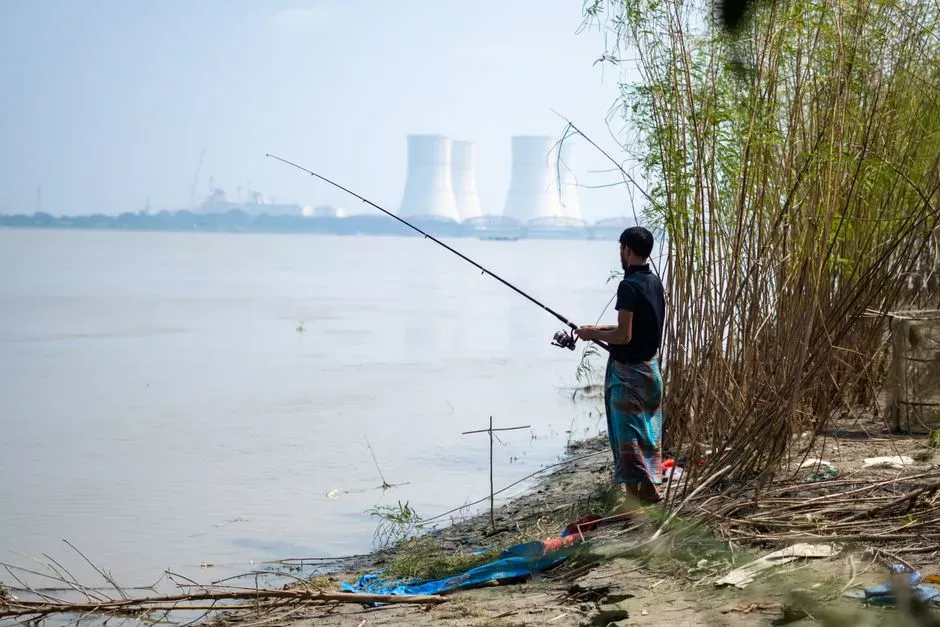
Three realistic reuse strategies exist, and the choice should be driven by site-specific factors — ESG mandate, sewer capacity, district heating proximity, and OPEX volatility on Apa Nova tariffs — not by which option is cheapest to build.
| Strategy | Configuration | CAPEX envelope (100 MW site, EUR) | OPEX envelope (EUR / 1,000 L) | Best fit |
|---|---|---|---|---|
| A — Reuse as cooling-tower makeup | DAF + UF + BWRO at 75–80% recovery | ~€230K–460K BWRO skid (50,000 GPD); train CAPEX scales with flow | €1.40–2.80 including energy, chemicals, membrane replacement | Baseline; 3–5 year payback on water + discharge savings |
| B — ZLD-lite via MVC polish | Strategy A + MVC on concentrate | ~€2.8–7.4M for full ZLD train at 50,000 GPD; 4–6× Strategy A at full scale | OPEX dominated by MVC energy at 15–25 kWh/1,000 US gallons | Zero-discharge ESG mandate or Apa Nova admission denied |
| C — Discharge to Apa Nova with RO polish | DAF + RO polish only; permeate not reused | Lowest of the three | Lowest; concentrate sewered after polishing | Viable only where sewer capacity is generous and reuse market absent |
Converting the CAPEX/OPEX bands to RON at a 4.97 anchor gives the Bucharest 2026 envelope: a 50,000 GPD BWRO skid lands at roughly RON 1.14M–2.29M with OPEX of RON 7–14 per 1,000 L, and a full ZLD train at the same capacity runs RON 13.9M–36.8M. These are orientation numbers — fabrication, installation, civil works, and engineering multipliers for a Romanian site will move the final figure, and the 2026 industrial RO system cost and ROI guide walks through the drivers in detail. The dominant OPEX line at any strategy is energy, which is why pushing COC up before the recovery train is the cheapest CAPEX lever on the whole site.
Permit path, monitoring, and the 2026 reporting calendar
The Romanian permit path is sequential. Environmental authorization from ANPM is required, and where the site crosses the thresholds set by HG 445/2009, an EIA procedure runs in parallel. Apa Nova Bucharest industrial admission contract negotiation runs in parallel, and the ANPM self-monitoring plan (planul de automonitorizare) must be approved before first compliant discharge. Realistic elapsed time from design freeze to first compliant discharge is 6–9 months, dominated by the Apa Nova contract and any EIA follow-on requests, which mirrors the timeline in the Hydropure Rome guide for the Italian equivalent.
The 2026 reporting calendar stacks three obligations on the same site: CSRD ESRS E3 first reporting for FY2026 makes WUE and reuse percentages auditable line items; EU Taxonomy DNSH alignment opinions for green-financed projects must reference the actual WUE figure, not an aspirational one; and PNRR-funded water-pricing reform is expected to lift the OPEX case for reuse through the planning window by raising the unit cost of both intake and discharge. The 2026 EU industrial wastewater compliance guide covers the Taxonomy alignment mechanics in more detail.
Frequently Asked Questions
Can a Bucharest data center discharge cooling blowdown directly to the Apa Nova sewer?
Only after RO polish, and only under a valid Apa Nova Bucharest industrial admission contract that meets the NTPA 002 / contract ceilings on TDS, sulfates (~1,000 mg/L), total phosphorus, oils, free chlorine, and pH 5.5–9.5. Raw 1,500–2,500 mg/L TDS blowdown fails the typical quality clause and requires the four-stage train described above.
What is the realistic RO recovery ceiling on Bucharest-typified cooling blowdown?
Conventional BWRO plateaus at 75–80% recovery because silica and calcium sulfate hit scaling limits in the concentrate above that band. Reaching 90–95% recovery requires induced precipitation and dynamic RO operation, as demonstrated in the IDE MAXH₂O case where a fluidized bed reactor strips silica and calcium carbonate as dense solids before the brine is recycled to a single high-recovery RO stage.
Why is side-stream filtration the cheapest CAPEX lever on the whole train?
Lifting COC from 4 to 6 with effective side-stream filtration roughly halves the blowdown volume that ever reaches the RO train, which downsizes every downstream unit operation by a corresponding factor. A multi-media filter sized at 1–5% of circulation flow typically lands at CAPEX of €50K–200K, against the multi-million-euro savings on smaller RO and MVC equipment.
When does full zero-liquid discharge become the right answer for a Bucharest site?
ZLD-lite via MVC is justified for the July–October Dâmbovița low-flow window and for sites with explicit zero-discharge ESG mandates, where Apa Nova Bucharest has refused admission, or where CSRD ESRS E3 reporting requires a near-ZLD narrative to defend the DNSH alignment. For most greenfield Bucharest hyperscalers, the right answer is Strategy A with the MVC stage held as a seasonal or emergency asset rather than a base-load workhorse.
Related Equipment
- HydropureWater industrial RO system at 75–80% recovery — specifications, capacity range, and technical data
- 0.03 µm PVDF ultrafiltration skid — specifications, capacity range, and technical data
- DAF pretreatment skid — specifications, capacity range, and technical data
- multi-media filter — specifications, capacity range, and technical data
- PLC-controlled antiscalant and biocide dosing skid — specifications, capacity range, and technical data