How Belfast Regulates Domestic Sewage in 2026
In Belfast, domestic sewage treatment in 2026 must satisfy two parallel rules: the sewer must connect to NI Water where a public sewer is reachable, and any treated discharge to a watercourse or the sea requires a consent from the Northern Ireland Environment Agency (NIEA). For sites that cannot connect — rural homes, small housing clusters, hotels, schools — a packaged biological plant (typically anoxic/aerobic or MBR) sized to the design flow and the consent limits is the standard 2026 solution.
The legal frame sits on two main statutes: the Water and Sewerage Services (Northern Ireland) Order 2006, which gives NI Water ownership of the public network and the power to adopt new sewerage, and the Urban Waste Water Treatment Regulations (Northern Ireland) 2007 (SR 2007/348), which transpose the EU UWWTD into NI law and set the treated-effluent quality bar for agglomerations above 2,000 PE (per NIEA Water Management Unit guidance). Building Regulations Part N (conservation of fuel and power) interacts with drainage design, but the binding technical consent is the NIEA discharge consent issued under the Water (Northern Ireland) Order 1999, with standard parameters of BOD ≤ 25 mg/L, TSS ≤ 35 mg/L, ammonia ≤ 5 mg/L, and total nitrogen ≤ 15 mg/L for discharges to freshwater (NIEA standard template, 2025).
Northern Ireland operates three sewer categories — foul, surface water, and combined — and it is a criminal offence to cross-connect a foul drain to a surface-water sewer or vice versa (per nidirect.gov.uk Sewerage Services guidance). Most Belfast postcodes still carry legacy combined sewers, which is why every new build or major retrofit must demonstrate separate drainage and, where a public sewer is within reach, fund the connection through a Section 109 requisition or a developer-services adoption agreement. If the public sewer is genuinely unreachable — typical on rural sites, small islands, or large single plots — a standalone buried anoxic/aerobic package plant or an MBR membrane bioreactor with an NIEA consent is the only compliant path.
What Is Actually in Domestic Sewage and Why It Matters
UK domestic sewage arriving at a Belfast treatment works typically carries BOD₅ 200–400 mg/L, COD 400–800 mg/L, TSS 200–350 mg/L, ammonia 20–50 mg/L, total nitrogen 35–70 mg/L, and total phosphorus 5–15 mg/L (per Water UK Sewage Treatment in the UK guidance, 2024). Those six numbers are the design envelope — every consent parameter and every process choice is a response to one of them. If they are not characterised at the design stage, the consent will fail in operation.
Each parameter drives a specific environmental and consent risk. BOD and COD above 25 mg/L in receiving water cause oxygen depletion; ammonia above 5 mg/L is toxic to salmonids in the Lagan and Belfast Lough tributaries; TSS above 35 mg/L deposits sludge blankets on gravel beds; total nitrogen above 15 mg/L drives eutrophication in Belfast Lough's slow-flushing embayments. The NIEA consent template maps directly onto these surrogates, so the engineer's job is to choose a process that consistently delivers them at the design flow and the design temperature — not just at the average.
The energy framing is also worth holding in mind: domestic wastewater carries 17.8–28.7 kJ of chemical energy per gram of COD, roughly four to five times the energy required to treat it (per Clean Technologies 2021, DOI 10.3390/cleantechnol3010010). That is why a well-tuned biological train — and, increasingly, a biological train with a membrane polish — has become the Belfast default: it converts pollution into sludge and CO₂ cheaply, and the next generation of low-energy add-ons (MEC, MFC) target the same energy balance. Pilot trials using real domestic wastewater in microbial electrolysis cells have reached 85% COD reduction (per Clean Technologies 2021), a data point that signals where 2026 design is heading rather than what is buyable today.
| Parameter | Typical influent (UK domestic) | Typical NIEA consent limit (freshwater) | Risk if exceeded |
|---|---|---|---|
| BOD₅ | 200–400 mg/L | ≤ 25 mg/L | Dissolved oxygen depletion in receiving water |
| COD | 400–800 mg/L | ≤ 125 mg/L (typical) | Indicator of overall organic load |
| TSS | 200–350 mg/L | ≤ 35 mg/L | Sludge blanket, benthic smothering |
| Ammonia (N) | 20–50 mg/L | ≤ 5 mg/L | Fish toxicity in Lagan / Lough tributaries |
| Total nitrogen | 35–70 mg/L | ≤ 15 mg/L | Eutrophication in Belfast Lough |
| Total phosphorus | 5–15 mg/L | ≤ 2 mg/L (sensitive sites) | Algal blooms |
Treatment Trains That Work for Belfast Sites
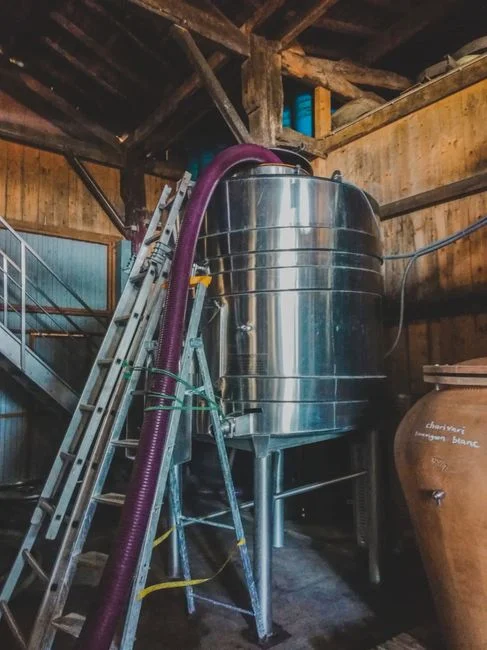
Five trains are credible for Belfast in 2026. The choice is driven by flow, footprint, consent tightness, and operator availability, not by brand.
Package anoxic/aerobic (A/O) plant. The default for housing clusters, hotels, schools, and rural campuses at 1–80 m³/h. A buried or skid-mounted unit combines biological contact oxidation with sedimentation and disinfection in a single tank, runs fully automated on a PLC, and needs no resident operator. For a 200 PE housing scheme at 30 m³/day with a standard NIEA consent, a properly sized WSZ-class unit is the lowest-CAPEX, lowest-O&M option on the market.
MBR (membrane bioreactor). Submerged PVDF ultrafiltration at a nominal pore size of 0.1–0.4 µm (typically quoted as "<1 µm") delivers a solid-free, partially-disinfected effluent that comfortably meets tighter consents, including ammonia ≤ 2 mg/L and total nitrogen ≤ 10 mg/L. Footprint is roughly 60% of a conventional activated-sludge plant at the same load. The trade-off is membrane air-scour energy and integrity testing, so MBR is specified where consent is tight or land is constrained, and is the right tier for inner-Belfast redevelopments, hospitals, and sites discharging to a sensitive tributary.
Sequencing batch reactor (SBR). A fill–react–settle–decant time-based cycle that handles seasonal flows (resort hotels, campuses) without equalisation. SBR is operator-friendly but more control-intensive than A/O, and is usually the second choice unless the flow profile is genuinely erratic.
Constructed wetland and vermifiltration. Low-energy, low-O&M options for very small rural or off-grid sites. Vermifiltration (per IntechOpen DOI 10.5772/intechopen.103920) can meet statutory Zimbabwean effluent limits comparable to EU/UK UWWTD standards, but the technology is land-hungry (typically 5–10 m² per PE) and is positioned as a niche option for Northern Ireland rather than a city-wide solution.
Bio-electrochemical integration (MEC / MFC). Pilot-scale in 2026, with TRL below 4 for hydrogen-producing configurations (per Clean Technologies 2021). Worth tracking for energy-positive sites, but not yet a buyable Belfast specification.
| Train | Flow range | Typical footprint | Energy (kWh/m³) | Effluent quality | Belfast suitability |
|---|---|---|---|---|---|
| Package A/O (buried) | 1–80 m³/h | 0.3–0.5 m²/PE | 0.3–0.8 | BOD 25, TSS 35, NH₃ 5 | Default for housing, hotel, school |
| MBR | 10–2,000 m³/day | ~0.2 m²/PE (60% smaller) | 0.8–1.5 | BOD <10, TSS <1, NH₃ <2 | Tight consent or footprint-constrained |
| SBR | 5–500 m³/day | 0.4–0.6 m²/PE | 0.5–1.0 | BOD 20, TSS 30, NH₃ 5 | Seasonal / variable flow |
| Constructed wetland | 1–50 m³/day | 5–10 m²/PE | <0.1 | BOD 20–30, TSS 20–30 | Rural, land-rich sites only |
| Vermifiltration | <10 m³/day | 5–10 m²/PE | <0.1 | Meets Zimbabwe EMA / UWWTD-equivalent | Niche, off-grid single dwellings |
| MEC / MFC add-on | Pilot scale | Add-on module | Net-positive in trials | 85% COD removal (pilot) | Forward-looking, not a 2026 spec |
Matching the Plant to the Site: A Belfast Decision Framework
Run the rules in order before specifying a process. The cheapest compliant plant is the one that does not need to be built at all.
- If a public NI Water sewer is within reach and capacity is confirmed by a pre-development enquiry (PDE), connection is the default — not treatment. The developer funds the requisition and NI Water adopts the asset.
- If the site is small (<20 m³/day), rural, or off-grid and the consent is standard, specify a buried anoxic/aerobic package plant — lowest CAPEX, no operator.
- If the consent is tight (ammonia < 5 mg/L, total nitrogen < 15 mg/L) or the footprint is constrained, step up to an MBR membrane bioreactor, with a UV steriliser for the final coliform bar.
- If flows are highly seasonal (resort hotel, campus with term-time peaks), specify SBR or an equalised A/O with at least 24 h flow balancing.
- If the discharge is to a sensitive watercourse or a Belfast Lough tributary, add tertiary polishing — UV for low-dose pathogen control or chlorine dioxide for longer-residual protection — and consider a constructed-wetland buffer strip for BOD/TSS polishing before the outfall.
For a more detailed MBR sizing workflow, the MBR specification guide walks through flux, MLSS, and air-scour rates. For wider UK context the UK effluent treatment buyer's guide covers the parallel Newcastle market.
Sludge Handling, Energy Use and 2026 Operating Cost
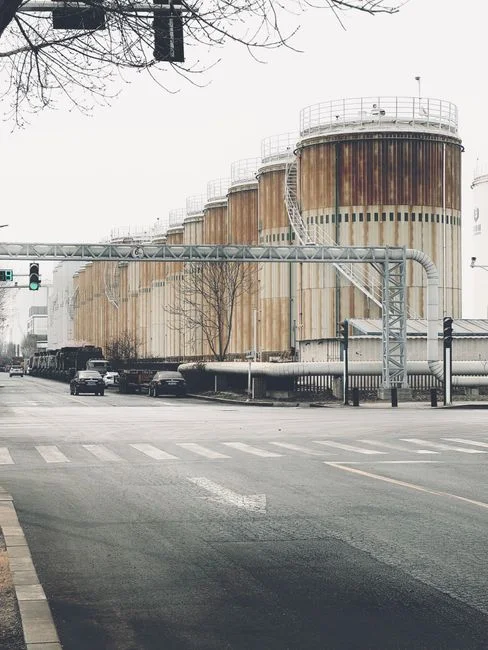
Sludge is the by-product the operator must plan for from day one — NIEA's consent template includes sludge disposal route, and the Water and Sewerage Services Order routes further treatment (incineration, landfill, or agricultural recovery) through licensed contractors. On-site dewatering cuts tanker-off volume and consent-monitoring cost. A 1–500 m² plate and frame filter press or a lamella clarifier thickened upstream of the press is the standard 2026 package (HydropureWater catalog, 2026). Pre-thickening with a rotary mechanical bar screen protects downstream dewatering equipment from ragging.
Energy budget. A well-sized A/O package plant typically runs at 0.3–0.8 kWh/m³ of treated flow, dominated by intermittent aeration; an MBR adds membrane air-scour and sits at 0.8–1.5 kWh/m³ (HydropureWater field data, 2026). For a 30 m³/day hotel, that is roughly 3,300–6,600 kWh/year for A/O and 8,800–16,400 kWh/year for MBR — a number a consulting engineer can defend in a planning meeting.
Routine O&M covers screen cleaning, membrane integrity testing (MBR only, typically weekly pressure-hold test), quarterly desludging, and the NIEA consent monitoring schedule — usually a 24 h flow-weighted composite sample every month for BOD, TSS, ammonia, and total nitrogen. Sites under 50 m³/day rarely justify a full-time operator; a fully automated PLC with remote telemetry, alarm dialling, and a service contract is the Belfast 2026 default.
Frequently Asked Questions
Do I have to connect to the NI Water sewer if one is nearby?
Yes — where a public sewer is reachable and has capacity, connection is the default route under the Water and Sewerage Services (Northern Ireland) Order 2006. The developer funds the requisition through NI Water's developer services process and the sewer is adopted by NI Water. A standalone treatment plant with an NIEA discharge consent is only the compliant option when connection is genuinely not possible (per nidirect.gov.uk Sewerage Services guidance).
What consent do I need from NIEA to discharge treated sewage in Belfast?
A discharge consent issued by the NIEA Water Management Unit under the Water (Northern Ireland) Order 1999, applied for via the standard consent form with site-specific effluent limits, monitoring points, and sludge disposal route. Standard freshwater parameters are BOD ≤ 25 mg/L, TSS ≤ 35 mg/L, ammonia ≤ 5 mg/L, and total nitrogen ≤ 15 mg/L; discharges to Belfast Lough or to a sensitive tributary attract tighter limits and usually require a UV or chlorine-dioxide polish.
Should I specify an MBR or an A/O package plant for a 200 PE Belfast site?
Choose A/O if the site has standard consent limits, ≥ 50 m²/PE footprint, and a stable flow — the lowest CAPEX and the lowest O&M burden. Choose MBR if the consent is tight (ammonia < 5 mg/L, TN < 15 mg/L), the footprint is constrained, or the discharge is to a Belfast Lough tributary — MBR delivers a solid-free, low-ammonia effluent that meets a tighter bar in a ~60% smaller footprint, at the cost of 0.8–1.5 kWh/m³ of energy and routine membrane integrity testing. The full MBR sizing workflow is in the MBR specification guide.
How is sewage sludge handled, and what does it cost in 2026?
Sludge is further treated and disposed of under the same regulatory chain — incineration, landfill, or agricultural recovery via a licensed contractor (per nidirect.gov.uk Sewerage Services guidance). On-site dewatering with a plate and frame filter press (1–500 m² filter area) reduces volume and tanker frequency. A 30 m³/day site typically produces 1.5–2.5 m³/day of thickened sludge, off-site disposal at £40–£80/m³ depending on region, so on-site dewatering pays back inside 18–24 months on most Belfast sites. The circular water economy guide covers the wider resource-recovery case for 2026.
Related equipment and engineering reading
- Underground Package Sewage Treatment Plant (WSZ Series)
- Domestic Sewage Treatment in San Diego: 2026 Engineering Guide
- Domestic Sewage Treatment in Binh Duong: 2026 Engineering Guide
- Anaerobic Digester for Domestic Sewage: 2026 Engineering Guide
- Belt Filter Press for Domestic Sewage Wastewater: 2026 Engineering Guide