What an Anaerobic Digester Does in a Domestic Sewage Plant
An anaerobic digester for domestic sewage wastewater is a sealed, oxygen-free reactor in which microorganisms break down sewage sludge in four stages — hydrolysis, acidogenesis, acetogenesis, and methanogenesis — to produce biogas (50–75% CH4, per US EPA) and stabilized biosolids. Per US EPA, over 1,200 US Water Resource Recovery Facilities (WRRFs) operate anaerobic digesters on wastewater solids, and more than half recover the biogas as heat or electricity, making AD the default sludge-stabilization technology at municipal scale rather than an experimental option.
The reactor's biology proceeds in a defined sequence. Hydrolysis cleaves complex polymers — proteins, carbohydrates, lipids — into monomers; acidogenesis ferments those monomers into volatile fatty acids; acetogenesis converts the acids into acetate, hydrogen, and carbon dioxide; methanogenesis then splits acetate into CH4 and CO2 (or reduces CO2 with H2). Methanogenic archaea are the slowest-growing organisms in the consortium, with doubling times of 2–6 days at mesophilic temperatures, so they set the minimum hydraulic retention time (HRT) for the whole reactor. Underfeeding or short-cycling washes them out, which is why HRT is the first number an engineer checks when a digester underperforms.
Two outputs leave the vessel. Raw biogas (50–75% CH4, balance CO2 with trace H2S and water vapor) exits the headspace for combustion or upgrading. Digestate exits as a slurry; after dewatering (see our 2026 sludge dewatering design guide) it splits into a liquid nutrient stream and a solid cake that can be land-applied, composted, or — at Class A quality — sold as a soil amendment.
Mesophilic vs Thermophilic: Temperature, HRT, and Class A Biosolids
Mesophilic digesters operate at 86–100°F (30–38°C) and thermophilic units at 122–140°F (50–60°C), per US EPA. The choice between them is fundamentally a choice between pathogen-kill targets and operating simplicity, and the trade-off is sharp enough that it should be made before reactor geometry is selected.
Thermophilic digestion produces Class A biosolids under 40 CFR Part 503. That designation means the dewatered cake meets EPA limits for fecal coliform (<1,000 MPN/g total solids) and enteric virus reduction, and can be land-applied without site restrictions, bagged as compost, or sold to home gardeners. Mesophilic digestion typically produces only Class B biosolids, which restricts application near food crops, public-contact areas, and residential zones. The 14–24°F temperature lift from mesophilic to thermophilic also accelerates reaction kinetics, so thermophilic units can be sized 20–30% smaller for the same volatile-solids throughput — but they cost more to heat, are more sensitive to ammonia and toxicant spikes, and require tighter operator attention.
For a domestic-sewage-only plant, the default in 2026 is mesophilic unless (a) the plant has a binding biosolids sale contract that requires Class A, (b) the plant is co-digesting with food waste or fats/oils/grease (FOG) and can monetize Class A cake, or (c) the local regulator or end-user mandates the higher kill. Otherwise, the operating-risk premium of thermophilic does not pay back on a single-feedstock municipal plant.
| Parameter | Mesophilic | Thermophilic |
|---|---|---|
| Operating temperature | 86–100°F (30–38°C) | 122–140°F (50–60°C) |
| Typical HRT for sewage sludge | 18–25 days | 12–18 days |
| Typical OLR (CSTR) | 1.5–3.0 kg VS/m³·d | 2.0–4.0 kg VS/m³·d |
| Biosolids class (40 CFR 503) | Class B (typical) | Class A achievable |
| Land-application restrictions | Yes (buffer zones, crop limits) | None for qualifying cake |
| Heating energy demand | Lower | ~30–50% higher |
| Operator skill required | Moderate | High (toxicant-sensitive) |
| Pathogen kill | Partial | Near-complete |
Digester Configurations That Work for Domestic Sewage
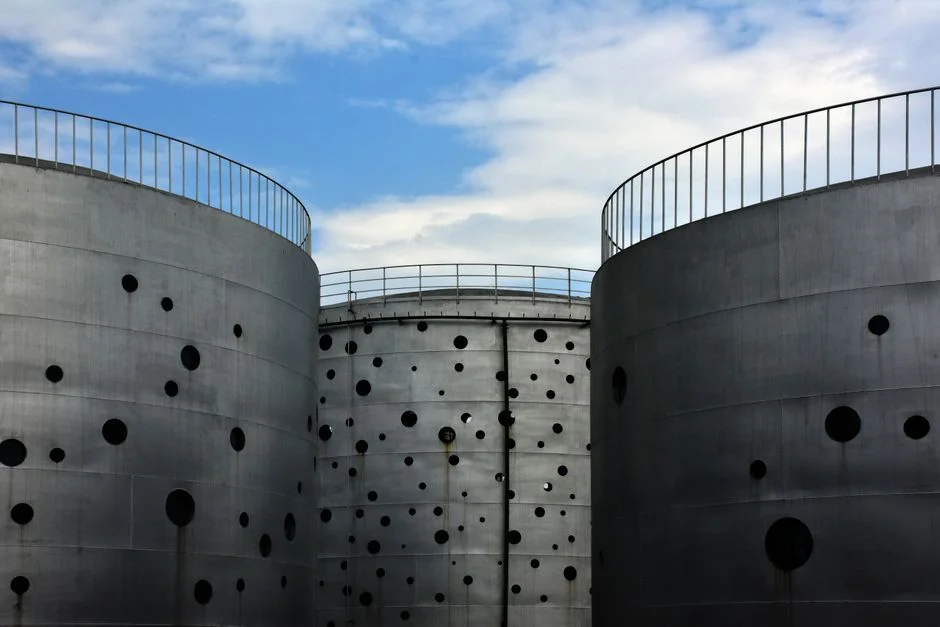
Continuous-flow reactors dominate domestic-sewage applications. Per US EPA, most WRRF digesters run continuously rather than in batch mode, because the upstream wastewater train produces sludge 24/7 and the downstream biosolids handling needs a steady cake throughput. Batch systems are reserved for very small flows or research-scale work.
Wet vs dry is a moisture-content split. Wet digesters handle feedstocks below 15% total solids (TS) as a pumpable slurry; dry digesters run above 15% TS on stackable material. Thickened domestic sewage sludge from a gravity belt thickener or rotary drum typically lands at 4–8% TS — squarely in the wet zone — so wet digesters are the standard. Pushing the same sludge to 15–25% TS for a dry digester requires expensive dewatering up front and is rarely economic for a single-feedstock municipal plant.
US EPA identifies covered anaerobic lagoons, complete-mix, and plug-flow as the three most common on-farm configurations; of these, complete-mix (typically a CSTR with mechanical or gas-mixing) is the workhorse for municipal sewage solids because it tolerates the solids variation that comes from blending primary sludge with waste activated sludge. Plug-flow reactors are simpler but require more uniform feed solids; covered lagoons are restricted to very dilute or warm-climate applications. For 2026 designs, the CSTR with gas mixing remains the default for flows above 5,000 m³/d; high-rate anaerobic reactors (e.g., UASB, IC, EGSB) are viable for high-temperature industrial wastewater but rarely fit the low-strength profile of raw domestic sewage without a pre-concentration step.
2026 Sizing Parameters: HRT, OLR, and Biogas Yield for Sewage Sludge
For low-strength domestic and industrial sewage, optimized hydraulic retention time is 18–22 days with COD removal above 85% under controlled pH around 7.0, per the DUT 2025 study (Ngema, Durban University of Technology). The same study found that biogas production rises exponentially between days 9 and 18, declines between days 19 and 22, and stops between days 22 and 30 — the window where methanogens wash out faster than they reproduce.
For typical municipal sewage sludge, mesophilic CSTR organic loading rates (OLR) sit at 1.5–3.0 kg VS/m³·day; thermophilic units run 2.0–4.0 kg VS/m³·day at the shorter end of the HRT range. US EPA's AgSTAR framework is the reference baseline for these ranges. Specific biogas yield for a mixed primary + waste activated sludge feed is roughly 0.4–0.6 m³ biogas per kg VS fed; after H2S and moisture removal, the methane fraction lands in the 50–75% band that US EPA reports for raw AD biogas.
An emerging 2026 retrofit lever is magnetite dosing. The DUT 2025 study found that 0.4–0.6 g/L of magnetite nanoparticles cut the lag phase from 9 to 3 days and lifted methane content to ~90% via improved interspecies electron transfer between syntrophic bacteria and methanogens. Doses above 0.8 g/L overloaded the system and dropped biogas to 2 mL/d — catalyst poisoning is real, so the dosing window matters. For a 2026 retrofit on an existing digester with chronic foaming or slow startup, magnetite is worth pilot-testing at 0.4 g/L before scaling.
| Parameter | 2026 design range (domestic sewage CSTR) | Source |
|---|---|---|
| HRT, mesophilic | 18–25 days | DUT 2025; US EPA AgSTAR |
| HRT, thermophilic | 12–18 days | US EPA AgSTAR |
| OLR, mesophilic | 1.5–3.0 kg VS/m³·d | US EPA AgSTAR |
| OLR, thermophilic | 2.0–4.0 kg VS/m³·d | US EPA AgSTAR |
| COD removal | >85% (optimized) | DUT 2025 |
| Specific biogas yield | 0.4–0.6 m³/kg VS fed | US EPA |
| Methane content (raw) | 50–75% | US EPA |
| Methane content (magnetite-dosed) | ~90% | DUT 2025 |
| 0.4–0.6 g/L | DUT 2025 |
Biogas Use and Class A Biosolids Economics in 2026
Per US EPA, more than half of WRRFs with digesters recover biogas as heat or electricity; roughly one-third generate electricity on-site, about 10% of those sell to the grid, and ~2% upgrade to pipeline-quality renewable natural gas (RNG). The Des Moines Wastewater Reclamation Facility doubled its biogas production by adding fats, oils, and grease (FOG) and food-processing waste as co-feedstock — a real-world case where organic-rich industrial waste streams lifted output without expanding digester volume. Domestic-sewage plants near food-industry clusters have the same lever available; FOG at 1–3% of feed volume can lift gas yield 50–100%.
Biosolids economics diverge sharply by class. Class A cake from a thermophilic or advanced-thermal digester can be sold as compost or fertilizer at $5–$30 per wet ton depending on region and quality, generating a tip-fee offset or product revenue. Class B cake is land-applied with site restrictions and typically costs the plant $20–$60/wet ton to haul and spread. For a domestic-sewage plant without a Class A contract, biosolids handling is a cost center, not a revenue line.
At small scale, the economics are unforgiving. The DUT 2025 cost-benefit study on a 50 L optimized unit reported a 19-year payback, a net present value of −R121,016, and a benefit-cost ratio of 0.4 — meaning every R1 invested returned R0.40 even at the optimized operating point. The same study found BCR rising with reactor size (1 L → 0.05, 5 L → 0.12, 10 L → 0.13, 50 L → 0.4), implying the break-even size for stand-alone AD sits well above 50 L of digester volume and well above the 50–500 m³/d flow band. Heat offtake and tipping fees are what close the gap at small scale, and they are rarely available to a community or hotel plant.
When to Add an Anaerobic Digester — and When a Package Plant Is Enough
The decision rule for 2026: a standalone anaerobic digester typically needs ≥5,000 m³/d of sewage flow — or a binding co-digestion/tipping-fee revenue stream — to be economically viable. The DUT 2025 BCR data and the US EPA's 1,200-WRRF installed base both point in the same direction: AD pays back at municipal scale with biosolids handling obligations; it does not pay back at community or campus scale on sludge alone.
Below that threshold — residential communities, hotels, hospitals, rural developments, and factories under 500 m³/d — a buried A/O package plant or a packaged MBR is the 2026 default. The HydropureWater WSZ underground package sewage treatment plant combines anoxic/aerobic contact oxidation, sedimentation, and disinfection in a single buried unit rated 1–80 m³/h, fully automated with no operator required; for tighter effluent limits (TN < 10 mg/L or reuse-grade water), the HydropureWater MBR membrane bioreactor system is the 2026 reference. For context on how those small-scale trains interact with downstream sludge handling, see our 2026 screw press guide for domestic sewage wastewater and our 2026 municipal sewage treatment plant guide for a regional case study.
For a WRRF-scale decision, three artifacts have to exist before the digester is sized: (1) a sludge mass balance covering primary, waste activated, and any co-digestion streams; (2) a heat-and-electricity offtake plan that names the boiler, CHP unit, or gas-grid interconnection; (3) a biosolids end-use contract specifying Class A or Class B and the destination site. If any of the three is missing, the project is not ready to size — and the small-scale package alternative is the lower-risk 2026 default.
Frequently Asked Questions
What temperature does a mesophilic anaerobic digester run at?
Mesophilic anaerobic digesters operate at 86–100°F (30–38°C), per US EPA. This is the default temperature band for municipal sewage digesters because methanogenic archaea grow reliably in this range and the heating load is moderate. Thermophilic units run 122–140°F (50–60°C) and achieve Class A pathogen kill, but cost more to heat and require tighter operator attention.
What is the typical hydraulic retention time for a domestic sewage anaerobic digester?
For low-strength domestic sewage in a mesophilic CSTR, the optimized HRT is 18–22 days, with COD removal above 85% at pH around 7.0 (DUT 2025). Thermophilic units reach the same VS destruction at 12–18 days. Retention times below 12 days risk methanogen washout; times above 25 days waste reactor volume without lifting gas yield.
How many US WRRFs use anaerobic digestion?
Over 1,200 US Water Resource Recovery Facilities operate anaerobic digesters on wastewater solids, per US EPA. More than half of those recover biogas as heat or electricity; about one-third generate electricity on-site, ~10% of those sell to the grid, and ~2% upgrade biogas to pipeline-quality RNG. AD is the default sludge-stabilization technology at municipal scale.
When is anaerobic digestion not cost-effective for domestic sewage?
Standalone AD is rarely economic below 5,000 m³/d of sewage flow without a tipping-fee or co-digestion revenue stream. The DUT 2025 cost-benefit study on an optimized 50 L unit found a 19-year payback and a benefit-cost ratio of 0.4. For community, hotel, hospital, and small industrial flows, a buried A/O package plant or MBR is the lower-CAPEX, lower-skill 2026 default.