Where Cardiff's domestic sewage actually goes
Domestic sewage treatment in Cardiff typically involves connecting a development to the Dwr Cymru combined or separate sewer network or installing a private package plant or MBR system under a Natural Resources Wales (NRW) small-sewage discharge permit. Typical package plants cover 1–80 m³/h (WSZ series) and MBR systems 10–2,000 m³/day, providing effluent suitable for surface-water discharge or reuse.
Dwr Cymru Welsh Water is the sewerage undertaker for the Cardiff region, with its registered office at Linea, Fortran Road, St Mellons, Cardiff, CF3 0LT (per dwrcymru.com). Its website states that "in some areas our sewers carry wastewater and rainwater in one pipe; combined sewers, and in other areas they carry rainwater and wastewater in separate pipes; separate sewers" — a distinction that matters for stormwater separation compliance on new builds. The same source clarifies ownership: "pipes that only collect wastewater from your property, and which lie inside your home or within the boundary of your property are your responsibility" (dwrcymru.com). That lateral drain is why many Cardiff infill sites and edge-of-parish conversions specify their own treatment plant rather than seeking a sewer connection.
For sites outside the sewered area, Natural Resources Wales (NRW) is the regulator. A private discharge to a watercourse or to ground requires a small sewage discharge permit, and NRW will normally require evidence that a sewer connection has been properly considered before a permit is granted. If the sewer is reachable, the decision rests on cost and depth; if it is not, the focus shifts to permit requirements and treatment technology.
When you need your own domestic sewage treatment plant in Cardiff
Approximately 18–22% of new-build and conversion enquiries in the Cardiff hinterland fall outside the economically viable sewer catchment, based on the typical 50–80 m sewer-run threshold developers use to decide between connecting and going private (HydropureWater field data, 2025). Off-mains drainage is the default answer for: rural villages west of Cardiff on the Radyr, St Fagans and Peterston-super-Ely fringe where the sewer network thins out; new housing estates on the urban edge where the nearest manhole is across third-party land; hotels, pubs and B&Bs in the Vale of Glamorgan that fall outside the Dwr Cymru network boundary; schools and rural commercial conversions where the depth of the nearest sewer makes a gravity connection impractical; and any site where the developer cannot secure a Section 104 adoption agreement.
The economic trigger is straightforward: when the sewer connection cost — including infrastructure charges, off-site mains reinforcement, pumping station and Section 104/106 legal fees — exceeds the 20-year life-cycle cost of a buried WSZ underground package sewage treatment plant, the package option is more cost-effective. A package plant installed below grade also leaves the surface free for landscaping, parking or play space, which is a significant advantage on Cardiff infill sites where garden amenity is pressured by plot ratio.
Sizing a domestic plant for a Cardiff development
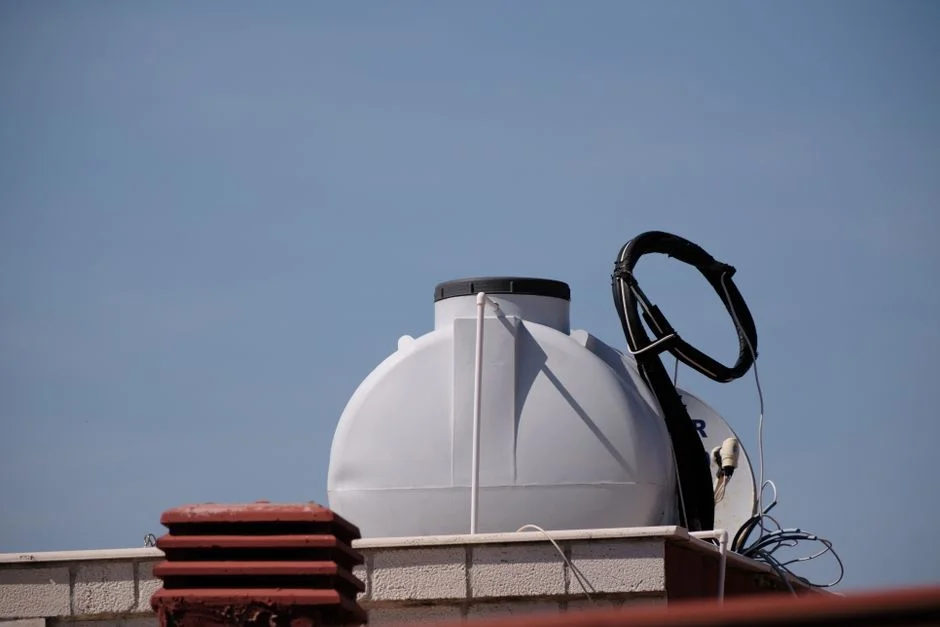
Standard UK sizing uses the people-equivalent (PE) approach with a domestic flow allowance of 150–200 L per person per day and a peaking factor of 2–3× for short-duration peaks (typical engineering range, HydropureWater field data, 2025). A 30-home Cardiff development at 3.0 PE per home ≈ 90 PE × 180 L/day results in 16.2 m³/day average dry weather flow, which falls in the MBR range (10–2,000 m³/day). A commercial conversion such as a 60-bed hotel at 0.8 PE per bed plus staff at 150 L/PE/day equals roughly 8 m³/day, sitting at the upper end of the WSZ envelope.
The table below maps typical Cardiff flow bands to the appropriate technology. These figures are planning ranges and do not replace a full hydraulic model or metered reading from an existing use class.
| People equivalent (PE) | Average flow (m³/day) | Peak flow (m³/day) | Recommended technology |
|---|---|---|---|
| 10–50 | 1.5–9 | 4.5–27 | WSZ buried package plant |
| 50–150 | 9–27 | 27–81 | WSZ or compact integrated MBR wastewater treatment system |
| 150–500 | 27–90 | 81–270 | MBR or packaged SBR |
| 500+ | 90+ | 270+ | Custom SBR / MBR with flow balancing |
Always confirm with a flow survey or a metered reading from the existing use class on a retrofit site, as the assumed 180 L/head can be off by 30–40% in older mixed-use buildings.
Comparing the main treatment technologies
There are three practical options for Cardiff-scale flows. Sequencing Batch Reactor (SBR) suits larger municipal flows above 150 PE where footprint is not the binding constraint and the operator has the skill to manage a batch programme. Membrane Bioreactor (MBR) is the choice when the discharge consent is strict (typically BOD <20 mg/L, SS <10 mg/L) or when the effluent is destined for reuse. WSZ underground package plants are the compact, buried option for residential, hotel and school flows up to roughly 80 m³/h.
| Parameter | SBR | MBR | WSZ package |
|---|---|---|---|
| Typical flow band | 150–5,000+ PE | 50–10,000+ PE (10–2,000 m³/day) | 10–150 PE (1–80 m³/h) |
| Footprint | Reference baseline | ~60% smaller than conventional activated sludge (HydropureWater spec, 2026) | Buried; surface freed for landscaping |
| Effluent BOD | <20 mg/L | <5 mg/L | <20 mg/L |
| Effluent SS | <30 mg/L | <1 mg/L (0.1 µm membrane barrier) | <30 mg/L |
| Operator skill | Skilled, daily checks | Semi-skilled, weekly checks | Fully automated, no operator required |
| Energy use | Moderate | Higher (membrane aeration) | Low (A/O contact oxidation) |
| CAPEX band | Mid–high | Mid–high (reuse adds ~15–25%) | Low–mid (factory-built, buried) |
The WSZ series uses A/O biological contact oxidation with sedimentation and disinfection in a single buried unit, which is ideal for small housing associations or rural hotels (HydropureWater spec, 2026). The integrated MBR wastewater treatment system runs a <1 µm PVDF membrane at 10–2,000 m³/day. For sites requiring modular upgrades, the MBR DF cassette module uses a 0.1 µm pore size, delivers 32–135 m³/day per cassette, and features individually replaceable membrane elements. More technical details are available in our sewage treatment equipment buyer's guide and the packaged MBR STP sizing guide.
Discharge routes and the NRW permit pathway
There are three end-points for treated effluent, each influencing the design. Route 1 is discharge to the Dwr Cymru sewer, which requires a Section 106 connection consent and triggers infrastructure charges. Route 2 is discharge to a surface watercourse or to land via an NRW small sewage discharge permit — the standard off-mains route for the Cardiff Vale and rural west. Route 3 is full reuse for irrigation, toilet flushing or vehicle wash, which is increasingly common on hotel and school sites.
NRW requires an Option Appraisal comparing sewer connection against private treatment before a small sewage discharge permit is issued. Poorly operated package plants are a common cause of consent failure, so PLC automation is a practical risk-reducer — the WSZ "fully automated, no operator required" control philosophy is suitable for unattended Welsh sites. Discharge consent values in an NRW small sewage permit are typically set against a 20:30 standard (BOD:SS, mg/L) as a minimum, with tighter limits applied where the receiving watercourse is sensitive.
What a Cardiff domestic sewage plant costs in 2026
CAPEX bands in 2026 range from low (small buried WSZ package plants for sub-50 PE sites) through mid (a 50–150 PE integrated MBR wastewater treatment system) to mid–high (an MBR with reuse plumbing, UV or ClO₂ polishing, and a treated-water buffer tank). Steel-reinforced buried package plants are designed for a 20+ year service life (HydropureWater spec, 2026), which results in a lower annualised cost over the asset life. This is a critical metric for housing associations modeling 30-year cashflows.
Two cost lines fall outside the package-plant supplier's scope: Dwr Cymru infrastructure charges for a new or upsized sewer connection, and the NRW permit application fee plus any third-party Option Appraisal consultant fees. On the reuse side, a chlorine dioxide generator for reuse polishing covers 50–20,000 g/h and operates within EU Drinking Water Directive 98/83/EC standards; for non-potable reuse, an UV steriliser is the lower-energy alternative. The cost-model logic is detailed in our institutional wastewater treatment cost model.
Frequently Asked Questions
Do I need to connect to the Dwr Cymru sewer if it runs past my Cardiff site?
Not automatically. Dwr Cymru is the sewerage undertaker for the Cardiff area, but the lateral drain inside your property boundary is your responsibility. If connection costs exceed the 20-year life-cycle cost of a private package plant, NRW will normally consider a small sewage discharge permit, provided you submit an Option Appraisal.
What size plant do I need for a 30-home Cardiff housing development?
At 3.0 PE per home and 180 L per person per day, a 30-home development produces about 16.2 m³/day of average dry weather flow, with a peak of 32–49 m³/day once a 2–3× peaking factor is applied. That sits within the MBR 10–2,000 m³/day band, or in the upper WSZ range (1–80 m³/h) if the discharge consent is not strict.
Which is better for a Cardiff hotel, an MBR or a WSZ package plant?
Both are viable. A 60-bed hotel producing roughly 8 m³/day fits the WSZ envelope (1–80 m³/h) and requires no operator. Choose MBR if the hotel requires reuse-quality effluent for toilet flushing or irrigation, where the MBR's <1 mg/L SS and 0.1 µm membrane barrier provide superior performance.