Hospital Wastewater Treatment in Victoria: Systems, Standards & Cost-Effective Solutions 2025
Victoria hospitals must treat wastewater to meet Capital Regional District (CRD) tertiary standards, including <10 mg/L BOD, <10 mg/L TSS, and 99.9% pathogen reduction. The McLoughlin Point Wastewater Treatment Plant sets the benchmark, but on-site systems like MBR (membrane bioreactors) or chlorine dioxide generators can achieve compliance for 50–500 m³/day flows at 30–50% lower capital costs than municipal hookups. Key challenges include pharmaceutical residues, space constraints, and odor control—addressed by compact, automated systems with integrated disinfection.Why Victoria Hospitals Need Dedicated Wastewater Treatment Systems
Hospitals generate 500–1,500 L/bed/day of high-risk effluent, according to WHO 2023 data, containing a complex cocktail of antibiotics, hormones, and multi-drug-resistant bacteria. While the CRD’s McLoughlin Point Plant provides tertiary treatment for core municipalities (Victoria, Esquimalt, Saanich, Oak Bay, View Royal), its mandate excludes the specific challenges and on-site treatment requirements of individual hospital systems (CRD 2024 discharge guidelines). This means Victoria hospitals cannot rely solely on municipal infrastructure to manage their unique wastewater profile, necessitating dedicated on-site solutions to address particular contaminants and discharge volumes. Untreated hospital wastewater in Victoria risks significant legal repercussions, including fines up to $1M under the BC Environmental Management Act (EMA) and severe reputational damage, as evidenced by the Victoria General Hospital 2022 compliance audit. Beyond regulatory penalties, the discharge of pharmaceutical residues and active pharmaceutical ingredients (APIs) from medical effluent treatment Victoria BC poses a direct environmental threat to sensitive marine ecosystems surrounding Vancouver Island. municipal sewer fees for hospitals average $0.85–$1.20/m³ in Victoria (CRD 2024 rate schedule), which can accumulate into substantial operational costs. For healthcare facilities with flows exceeding 200 m³/day, investing in an on-site system for Victoria hospital sewage treatment costs becomes increasingly cost-competitive, offering a long-term financial advantage over escalating municipal charges.Victoria’s Regulatory Standards for Hospital Wastewater: CRD, BC EPA, and Health Canada Requirements
The Capital Regional District’s Liquid Waste Management Plan (2024) mandates tertiary treatment for all healthcare facilities discharging >50 m³/day, with stringent limits including BOD <10 mg/L, TSS <10 mg/L, and fecal coliform <200 CFU/100 mL. These requirements ensure that treated medical effluent treatment Victoria BC meets a high standard before discharge, protecting local waterways. the BC EPA’s Municipal Wastewater Regulation (MWR) specifically requires a 99.9% pathogen reduction for hospital effluent, a standard that aligns with the EU Urban Waste Water Directive 91/271/EEC for sensitive receiving environments. Health Canada’s Guidelines for Canadian Drinking Water Quality (2023) also set pharmaceutical residue limits, such as carbamazepine <0.5 µg/L, which increasingly drives the adoption of advanced oxidation processes (AOPs) in hospital wastewater treatment to remove these emerging contaminants. Victoria’s bylaws, specifically CRD Bylaw 4000, prohibit visible foam, oil sheens, or odors in treated effluent, necessitating robust odor control systems (e.g., biofilters, activated carbon) as part of any on-site solution. Adhering to these diverse regulatory frameworks is paramount for CRD wastewater compliance for hospitals.Table 1: Key Regulatory Standards for Hospital Wastewater in Victoria, BC
| Regulatory Body/Bylaw | Parameter | Discharge Limit/Requirement | Relevance to Hospitals |
|---|---|---|---|
| CRD Liquid Waste Management Plan (2024) | BOD (Biological Oxygen Demand) | <10 mg/L | Tertiary treatment standard for organic load |
| CRD Liquid Waste Management Plan (2024) | TSS (Total Suspended Solids) | <10 mg/L | Tertiary treatment standard for suspended matter |
| CRD Liquid Waste Management Plan (2024) | Fecal Coliform | <200 CFU/100 mL | Indicator of pathogen reduction |
| BC EPA Municipal Wastewater Regulation (MWR) | Pathogen Reduction | 99.9% | Mandatory for hospital effluent disinfection |
| Health Canada Drinking Water Quality (2023) | Pharmaceutical Residues (e.g., Carbamazepine) | <0.5 µg/L | Drives advanced treatment for micro-pollutants |
| CRD Bylaw 4000 | Visual/Odor Nuisance | No visible foam, oil sheens, or odors | Requires integrated odor control systems |
Hospital Wastewater Treatment Systems Compared: MBR vs. DAF vs. Chlorine Dioxide
Table 2: Comparison of Hospital Wastewater Treatment Systems
| System Type | Primary Function | Key Advantages | Key Disadvantages | Ideal Flow Rate | Typical Removal Efficiency (TSS/BOD/Pathogens) | HydropureWater Product Series |
|---|---|---|---|---|---|---|
| MBR (Membrane Bioreactor) | Biological treatment + Filtration | High effluent quality, compact footprint, effective pharmaceutical residue removal | Higher energy consumption, membrane fouling potential | 100–2,000 m³/day | >99% TSS, >95% COD, >99% Pathogens | DF Series |
| DAF (Dissolved Air Flotation) | Solids/FOG removal | Excellent for high TSS/FOG loads, rapid separation | Requires chemical dosing, less effective for dissolved organics/pathogens | 4–300 m³/h | 92–97% TSS, Moderate BOD, Low Pathogen | DAF line |
| Chlorine Dioxide (ClO₂) Generators | Disinfection | Highly effective against pathogens, no THM formation, on-site production | No removal of solids or organics, requires upstream treatment | <500 m³/day | N/A (Disinfection only), >99.99% Pathogens | ClO₂ generator |
| Hybrid (e.g., MBR + ClO₂) | Comprehensive treatment | Combines high quality effluent with superior disinfection and micro-pollutant removal | Higher capital cost than individual systems | 100–500 m³/day | >99% TSS, >95% COD, >99.99% Pathogens | DF Series + ClO₂ generator |
Cost Breakdown: On-Site Treatment vs. Municipal Hookups for Victoria Hospitals
On-site MBR systems typically incur capital costs ranging from $1,200–$2,500/m³/day capacity (2025 data), while DAF + ClO₂ systems offer a more budget-friendly entry point at $800–$1,500/m³/day. In contrast, municipal hookups in Victoria require significant upfront expenditures, with CRD connection fees averaging $500–$1,000/m³ for new or expanded connections. This initial capital outlay for municipal infrastructure often overlooks the long-term operational savings associated with dedicated on-site hospital wastewater treatment in Victoria. Operating costs for on-site systems average $0.30–$0.60/m³ (covering energy, chemicals, and maintenance), presenting a substantial advantage over the $0.85–$1.20/m³ for municipal sewer fees (CRD 2024 rates). This ongoing operational cost differential is a key driver for investment in on-site medical effluent treatment Victoria BC. For hospitals with >200 m³/day flow, on-site treatment systems typically achieve a Return on Investment (ROI) within 3–7 years, as demonstrated by the Saanich Peninsula Hospital 2023 upgrade. This rapid payback period underscores the financial viability of such investments. Hidden costs associated with municipal hookups may include surcharges for pharmaceutical residues (CRD 2024 policy), which are becoming increasingly common as regulatory scrutiny tightens on emerging contaminants. On-site systems, while requiring initial staff training (typically 1–2 FTEs for operation and maintenance), provide greater control over discharge quality and avoid these unpredictable surcharges, enhancing long-term budget predictability. Hospitals must consider these factors when evaluating Victoria hospital sewage treatment costs.Table 3: Cost Comparison: On-Site Treatment vs. Municipal Hookups (Victoria Hospitals)
| Cost Category | On-Site MBR System (200 m³/day) | On-Site DAF + ClO₂ System (200 m³/day) | Municipal Sewer Hookup (200 m³/day) |
|---|---|---|---|
| Capital Costs | $240,000 – $500,000 ($1,200–$2,500/m³/day) | $160,000 – $300,000 ($800–$1,500/m³/day) | $100,000 – $200,000 (CRD connection fees: $500–$1,000/m³) |
| Operating Costs (per m³) | $0.30 – $0.60/m³ (energy, chemicals, maintenance) | $0.25 – $0.50/m³ (energy, chemicals, maintenance) | $0.85 – $1.20/m³ (CRD 2024 sewer fees) |
| Annual Operating Cost (200 m³/day) | $21,900 – $43,800 | $18,250 – $36,500 | $62,050 – $87,600 |
| ROI Timeline (for >200 m³/day) | 3 – 7 years | 2 – 5 years | N/A (Ongoing fees) |
| Hidden Costs | Staff training (1–2 FTEs) | Staff training (1–2 FTEs) | Potential surcharges for pharmaceutical residues (CRD 2024) |
Space-Saving Solutions for Victoria Hospitals: Underground and Mobile Systems
Case Study: Royal Jubilee Hospital’s MBR + ClO₂ Upgrade (2023)
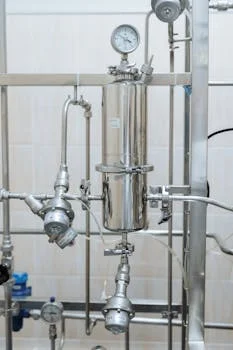
Royal Jubilee Hospital faced mounting CRD fines for pharmaceutical residues in its discharge and high municipal sewer fees, which had reached $1.10/m³. The existing treatment infrastructure was inadequate to meet tightening CRD wastewater compliance for hospitals, particularly concerning emerging contaminants and pathogen reduction. This situation presented a clear need for a more advanced and cost-effective medical effluent treatment Victoria BC solution. The hospital implemented a comprehensive upgrade, installing a 300 m³/day MBR system (HydropureWater DF Series) complemented by a 500 g/h ClO₂ generator (HydropureWater) for final disinfection. This hybrid approach was chosen to address both the complex organic and pharmaceutical loads and ensure superior pathogen removal. The integration of MBR technology provided advanced biological treatment and filtration, while the chlorine dioxide system delivered effective and safe disinfection. Following the upgrade, Royal Jubilee Hospital achieved exceptional results, including a 99.9% pathogen reduction and 95% COD removal. The operational cost significantly decreased to $0.45/m³, representing a 50% savings compared to the previous municipal fees. Critically, the hospital consistently met CRD’s stringent <10 mg/L BOD/TSS limits and successfully complied with Health Canada’s guidelines for pharmaceutical residues, effectively eliminating fines and future surcharges. This case study demonstrates how other regions handle hospital wastewater compliance and the effectiveness of modern systems.Frequently Asked Questions