What a Kathmandu data center actually has to treat
A Tier III colocation facility in the Kathmandu Valley drawing from municipal and borewell sources produces three wastewater streams that must be inventoried at the source before any equipment is selected: sanitary sewage from restrooms, pantries, and break rooms, sized to roughly 150 L per employee per shift; cooling tower blowdown (CTBD), the largest stream by volume and driven by the cycles of concentration the cooling system is run at; and once-through and emergency streams including generator test water, humidification flush, hardware-flush, and fire-system test water (per IDE-Tech, 2026).
Scaling from the published 2 million L/day for a 100 MW facility, a 1 MW Kathmandu site sits in the 20,000 L/day range and a 5 MW site in the 100,000 L/day range, which is the order of magnitude that makes blowdown the dominant stream and reuse the obvious engineering target. The Nepali-specific quirk the Yadav analysis surfaces (Medium, 2026-05) is that grid instability and dry-season supply gaps force more frequent blowdown and emergency dumps, so the design must accommodate intermittent slug loads rather than steady-state only; treating the system as if it runs on a flat profile is one of the most common sizing errors in regional projects. The same source also documents resident complaints around the Ncell Nakhhu site in Lalitpur covering noise, black smoke, dust, and heat, which makes the broader point that combined emissions, heat-rejection, and wastewater streams are now a community-relations problem as much as an engineering one.
The Nepal regulatory layer: EPR-2077, Schedule 3, and why a voluntary EIA still pays
Data centers are not listed in Schedule 3 of Nepal's Environment Protection Rules, 2077, so a full Environmental Impact Assessment is generally not mandatory for a new build (Yadav, Medium, 2026-05). That is the headline finding, but it is not the whole picture. Schedules 1 and 2 of EPR-2077 still apply to point-source discharge, and the Department of Environment retains authority to require site-specific assessment for facilities above defined thresholds or where a discharge to a Bagmati tributary is in play. Skipping a voluntary EIA in this environment inherits the regulatory and reputational risk that has already materialized at Ncell Nakhhu and that the Yadav analysis explicitly warns could scale with the Bichuten Data Vault roadmap from 240 kW to 5 MW by 2030.
The de facto benchmark a Nepali operator should design to in 2026 is straightforward: report PUE and WUE against the international norm of 1.8–2.5 L per kWh (0.47–0.65 gal/kWh, per Genesis, 2026), maintain a documented water-stewardship plan, and keep a community-consultation record on file. These are the items lenders, ESG teams, and the Department of Environment are now asking for. The EU Energy Efficiency Directive, Singapore, and Germany already require stronger water and energy reporting than Nepal; aligning early is cheap insurance if Nepal tightens rules before 2030, and the cost of doing so is small relative to the capex of a 1–5 MW facility.
Kathmandu source water and discharge realities that shape the design
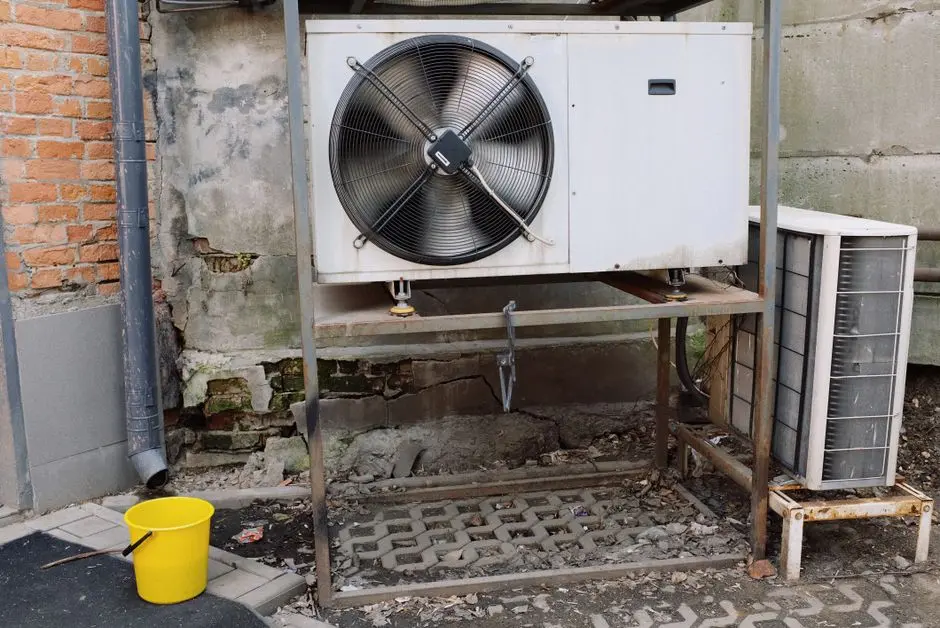
Kathmandu Valley supply is a blend of Kathmandu Upatyaka Khanepani Limited (KUKL) municipal water and private borewells, with documented dry-season yield limitations and seasonal hardness swings; the engineer should confirm current TDS, hardness, and silica values with KUKL and a recent borewell test before finalizing the design rather than relying on regional averages. Any discharge to a Bagmati tributary or to the municipal sewer must meet the Department of Environment's tolerance limits for TSS, BOD, temperature, and oil/grease, and the parameter most often missed in regional designs is thermal discharge from a once-through cooling loop, which can independently trigger non-compliance even when the chemistry is right.
These realities feed directly into CTBD chemistry. Silica, calcium carbonate, and calcium sulfate are the sparingly soluble salts that drive scaling (per IDE-Tech, 2026); in a Kathmandu dry season, makeup hardness climbs and silica can climb with it, which raises CTBD scaling risk and lowers the safe cycles of concentration. The operator should size side-stream filtration for the worst-case dry-season makeup, not the annual average. Monsoonal TSS swings are the other reality: surface or partially-treated municipal sources carry high suspended solids during the monsoon, so any roof-capture or surface-augmentation line needs a DAF for monsoonal TSS and oily-water pretreatment or lamella stage ahead of a multi-media filter ahead of RO pretreatment.
The CTBD treatment train, from cooling-tower side outward
The right-sized CTBD treatment train for a 1–5 MW Kathmandu facility, in the order water actually flows, has five steps.
Step 1 — Side-stream filtration on the cooling-tower loop. An automatic self-cleaning screen or media filter drops suspended solids so blowdown triggers do not fire on particulates rather than chemistry. Genesis (2026) notes that unmeasured losses and emergency dumps typically push actual blowdown 15–30% above theoretical; better filtration closes part of that gap before the water ever leaves the loop.
Step 2 — Chemical-free scale and biological control. Replace rotating phosphonate/dispersant/biocide programs with a non-oxidizing microbiological-control approach plus a mild scale inhibitor, so cycles of concentration can move from 4 toward 6 without fouling assets or loading the blowdown with persistent organics (per the Genesis stage-3 logic). At 4 CoC blowdown is 25% of makeup (1/(CoC−1)); at 6 CoC it is 20%, a real 20% reduction, but biological and scaling risk grow exponentially above 5–6 CoC without this chemistry control.
Step 3 — Low-recovery brackish RO on a slipstream of CTBD. Operate at 70–75% local recovery to stay safely below scaling thresholds and produce a permeate suitable for reuse as cooling-tower makeup; do not push single-stage RO past 80% recovery in this application (per the IDE-Tech constraint, 2026). The slipstream approach is the right architecture for a 1–5 MW load.
Step 4 — Concentrate management. Route RO reject to a controlled brine stream. For sub-5 MW Kathmandu sites, evaporation or sewer disposal is more economic than a hyperscale brine desalter, which IDE-Tech sizes for 95% recovery and which Genesis flags as 3–4× capex per gallon at non-hyperscale facilities.
Step 5 — Polishing and reuse loop. Blend RO permeate with fresh makeup, control conductivity and ORP, and reuse as cooling-tower makeup. Use a chemical dosing skid for inhibitor feed and a UV sterilizer for polishing of the reuse loop; the primary RO step should be an industrial RO system for cooling tower blowdown sized for 70–75% local recovery. Surplus permeate can feed toilet flushing, irrigation, or further RO polishing for humidification.
| Parameter | Kathmandu dry-season design target | Source / note |
|---|---|---|
| Makeup hardness (CaCO₃) | Confirm with KUKL and borewell test; design for worst case | Per IDE-Tech sparingly-soluble salt framework, 2026 |
| Makeup silica (SiO₂) | Confirm with KUKL and borewell test; design for worst case | Per IDE-Tech MAXH₂O framework, 2026 |
| Cooling-tower CoC target | 4 baseline; 5–6 with chemical-free scale control | Per Genesis CoC mathematics, 2026 |
| Blowdown ratio at 4 CoC | 25% of makeup | 1/(CoC−1) per Genesis, 2026 |
| Blowdown ratio at 6 CoC | 20% of makeup | 1/(CoC−1) per Genesis, 2026 |
| BWRO local recovery | 70–75% (do not exceed 80%) | Per IDE-Tech, 2026 |
| RO permeate reuse target | 50–60% of blowdown | HydropureWater field data, 2026 |
| Monsoonal makeup TSS | Spike handling via DAF/lamella ahead of MMF | Per local pretreatment guidance |
| Bagmati discharge TSS / BOD / temp / O&G | Per Department of Environment tolerance limits | Confirm with DoE, 2026 |
| WUE benchmark | 1.8–2.5 L per kWh (0.47–0.65 gal/kWh) | International norm, per Genesis, 2026 |
Sanitary sewage, oily water, and emergency dumps: the smaller streams that trip audits
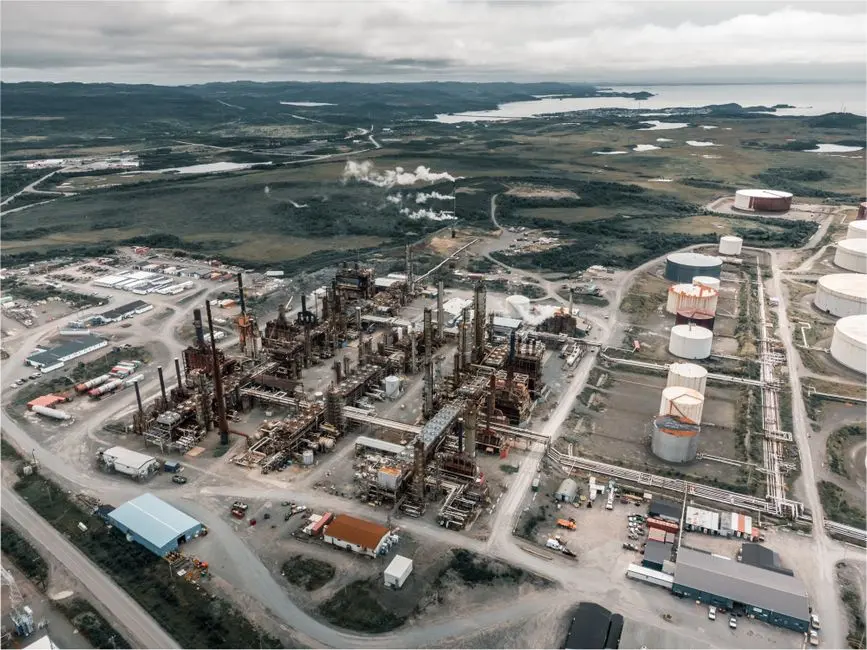
Sanitary sewage at a Kathmandu colocation site fits a packaged MBR (A/O plus submerged PVDF membrane) sized to 10–200 m³/day, producing near-reuse-quality effluent with sub-1 μm filtration suitable for toilet flushing and landscape irrigation. A packaged MBR for sanitary sewage at a colocation facility lowers freshwater draw and strengthens the WUE story without a custom plant. Oily water from generator skids and the diesel day-tank area must pass through a coalescing plate separator or small DAF before reaching the sanitary MBR; routing this directly to the municipal sewer is a common audit finding. Emergency dumps and fire-system test water should pass through an equalization tank and a rotary mechanical bar screen before the MBR, and a high-efficiency sedimentation tank in the EQ train is good insurance for slug loads. Under-sized EQ tanks are a frequent audit finding at Nepali facilities because grid instability forces more frequent unplanned blowdown events. The Ncell Nakhhu complaints about black smoke and dust underline the operational reality: noise, emissions, and visible discharges are what neighbors notice, so quiet pumps, enclosed generator setbacks, and a covered equalization tank with no visible discharges to the street should be in the design from day one.
Hyperscale brine desalter vs modular MBR + side-stream RO: which fits a 1-5 MW Kathmandu site
The hyperscale answer to CTBD is a brine desalter architecture (controlled precipitation plus dynamic RO) at ~95% recovery, as described in IDE-Tech's MAXH₂O narrative. The right-sized answer for a 1–5 MW Kathmandu site is a modular train: packaged MBR for sanitary, side-stream filtration on the cooling loop, low-recovery BWRO on a CTBD slipstream, and chemical-free scale control. Genesis (2026) makes the economic case bluntly: hyperscale water-reuse technology fails at smaller facilities because capex per gallon treated runs 3–4× higher and operational complexity exceeds the staffing a Nepali colocation team can field. The modular train delivers 50–60% blowdown recovery at 70–75% local RO recovery, enough to drop net freshwater draw materially at a 1–5 MW site without a dedicated RO crew. Operationally, the modular train survives grid instability and dry-season supply swings with standard PLC controls; a brine desalter assumes continuous, stable influent and dedicated operators, which a Kathmandu site cannot guarantee in 2026.
| Criterion | Hyperscale brine desalter (MAXH₂O-class) | Modular MBR + side-stream RO + chemical-free scale control |
|---|---|---|
| Facility fit | 100+ MW, stable grid, dedicated operators | 1–5 MW, Kathmandu Valley, standard PLC, small facilities team |
| Overall recovery | ~95% | 50–60% of blowdown (70–75% local RO recovery) |
| Capex per gallon treated | Baseline at hyperscale | 3–4× lower at sub-5 MW scale (per Genesis, 2026) |
| Operational complexity | High (multi-stage RO, salt precipitation, dynamic operation) | Low–medium (PLC, skid-mounted, no salt reactor) |
| Chemical regime | Designed to remove sparingly soluble salts as solids | Chemical-free scale and biological control; mild inhibitor |
| Grid-instability tolerance | Assumes continuous, stable influent | Handles slug loads and emergency dumps |
| Reuse output | Permeate at ~1 mg/L silica, blended as makeup | Permeate suitable for cooling-tower makeup, toilet flushing, irrigation |
| Reject stream | Dense salt pellets, periodic withdrawal | Liquid brine, sewer or evaporation disposal |
For the 1–5 MW Tier III/IV builds planned in the Kathmandu Valley, the modular train is the defensible answer. RO and UF membrane elements should be specified for silica-tolerant operation and sized for the 70–75% local recovery target, not stretched into hyperscale envelope.
Capex, opex, and payback for a Kathmandu-sized CTBD reuse project

Anchor the case in the Genesis (2026) 15 MW example: $200,000 capex for 60% blowdown recovery (3 million gallons per year), a 6.7-year simple payback on water savings alone, improving to 3–5 years once avoided discharge costs, compliance risk, and brand value are included. Scale that down for a 1–5 MW Kathmandu facility to a capex band of roughly $80,000–$250,000 for the modular MBR + side-stream RO + chemical-free scale control package, with opex dominated by membrane replacement, power, and a single maintenance technician's time. The local cost drivers that change the math are KUKL water tariffs, diesel generator runtime (which sets the oily-water treatment load), sewer discharge fees, and the avoided cost of an emergency freshwater tanker during dry-season shortages, all of which shorten payback in the Kathmandu context. A site that pays for trucked-in water during the dry season will see payback in 2–3 years; a site on cheap municipal supply may see 5–7 years but should still proceed for the compliance and community-license value, both of which have already shown they can stop a project in Lalitpur.
Equipment checklist and vendor questions for a Nepali data center build
The minimum equipment set for a 1–5 MW Kathmandu Tier III/IV build is: packaged MBR for sanitary; DAF or lamella for makeup pretreatment; multi-media filter; self-cleaning side-stream screen on the cooling loop; low-recovery BWRO with antiscalant dosing skid; UV or chlorine-dioxide for polishing; plate-and-frame filter press for any sludge; and a chlorine-dioxide generator for cooling-loop microbiological control if the chemical-free route is adopted. Polishing the reuse loop with a UV sterilizer for the reuse loop and dewatering any MBR or clarifier sludge with a plate-and-frame filter press keeps the wet end of the plant inside the facility boundary.
Ask any vendor the same five questions: reference installations in water-stressed or grid-unstable regions; RO recovery and permeate silica guarantees; membrane-cleaning interval guarantees; local service footprint or partner in Nepal; and whether the proposed CTBD train has been operated at the proposed cycles of concentration without phosphonate-heavy chemistry. Close the procurement file with the one non-engineering item that often decides Nepali projects: a written community-engagement and water-stewardship plan, delivered to the Department of Environment and to the local ward office before commissioning.
| Equipment | Function | Sizing anchor |
|---|---|---|
| Packaged MBR (A/O + PVDF) | Sanitary sewage to near-reuse quality | 10–200 m³/day, ~150 L/employee/shift |
| DAF or lamella | Monsoonal TSS and oily-water pretreatment | Peak wet-season flow |
| Multi-media filter | RO pretreatment, suspended solids | Match BWRO feed rate |
| Self-cleaning side-stream screen | Cooling-loop side-stream filtration | 10–20% of loop circulation |
| Low-recovery BWRO | CTBD to cooling-tower makeup | 70–75% local recovery, slipstream |
| Antiscalant dosing skid | Scale control on RO feed | Per RO membrane supplier |
| UV sterilizer | Reuse-loop polishing | Match permeate flow |
| Chlorine-dioxide generator | Cooling-loop microbiological control | Per loop volume, per EPA / EU 98/83/EC / WHO |
| Plate-and-frame filter press | Sludge dewatering | Per MBR + clarifier solids |
| Rotary bar screen + EQ tank | Emergency dumps and fire-system test water | Peak slug volume |
Frequently Asked Questions
What wastewater streams does a Kathmandu data center need to treat?
Three streams: sanitary sewage at roughly 150 L per employee per shift, cooling tower blowdown (the largest by volume, typically 20–25% of makeup at 4 cycles of concentration), and once-through or emergency streams including generator test, humidification flush, hardware-flush, and fire-system test water. A 1 MW site sits near 20,000 L/day and a 5 MW site near 100,000 L/day, scaling from the published 2 million L/day for a 100 MW facility (per IDE-Tech, 2026).
Is an EIA mandatory for a data center in Nepal under EPR-2077?
Full EIAs are generally not mandatory because data centers are not listed in Schedule 3 of EPR-2077, but Schedules 1 and 2 still apply to point-source discharge and the Department of Environment can require site-specific assessment above defined thresholds (per Yadav, Medium, 2026-05). A voluntary EIA is the defensible move for any 240 kW to 5 MW build on the Bichuten Data Vault roadmap.
What cooling-tower cycles of concentration can a Kathmandu CTBD reuse train realistically hold?
4 CoC is the safe baseline and produces blowdown at 25% of makeup; with chemical-free scale and biological control, 5–6 CoC is achievable and reduces blowdown to 20% of makeup (per Genesis, 2026). Pushing higher without advanced control raises scaling and microbiological risk exponentially.
Why is a modular MBR plus side-stream RO preferred over a hyperscale brine desalter for a 1–5 MW Kathmandu site?
Capex per gallon treated at hyperscale water-reuse systems runs 3–4× higher at sub-5 MW scale and operational complexity exceeds the staffing a Nepali colocation team can field (per Genesis, 2026). A modular train delivers 50–60% blowdown recovery at 70–75% local RO recovery without a dedicated RO crew.