
Why Bridgeton Food & Beverage Plants Are Re-Evaluating CAS in 2026
EPA's 2026 Clean Water Act enforcement posture tightens discharge limits for food manufacturers (SIC 20) operating under 40 CFR Part 403 categorical pretreatment, and Bridgeton's regional POTWs typically enforce local limits near BOD 250 mg/L, TSS 250 mg/L, FOG 100 mg/L, and pH 6.0–9.0 on top of the federal floor. Inflow from Bridgeton-region food and beverage plants runs far stronger than domestic sewage: BOD 800–5,000 mg/L, COD 1,500–8,000 mg/L, TSS 300–1,500 mg/L, FOG 50–600 mg/L, and pH swinging from 3 to 11 during clean-in-place (CIP) chemical cycles. Legacy conventional activated sludge (CAS) trains that were sized for 2010s effluent targets now sit within a narrow operating window, and any single bulking event or CIP-driven pH excursion risks a consent violation. Corporate water-reuse targets, which typically demand BOD <10 mg/L and turbidity <1 NTU for CIP rinsewater or boiler pretreatment, shift the case for re-evaluating CAS from theoretical to operational. These performance gaps drive many facility managers to compare the aging CAS infrastructure against newer, high-efficiency treatment technologies.
What Conventional Activated Sludge (CAS) Still Does Well
A conventional activated sludge train pairs a primary clarifier, an aeration basin, a secondary clarifier, and disinfection, with return activated sludge (RAS) and waste activated sludge (WAS) recycle loops keeping biomass in the system. On a well-tuned food-stream plant, CAS typically delivers effluent BOD of 20–30 mg/L, TSS of 20–40 mg/L, and ammonia that depends on whether the aeration basin was sized for full nitrification and on winter mixed-liquor temperature. For Bridgeton plants with a 2,000+ m³/day flow, modest reuse ambition, and a stable influent after upstream dissolved air flotation pre-treatment, CAS still offers the lowest installed capex per m³/day, the most familiar O&M playbook, and the most forgiving response to FOG peaks when a DAF is correctly dosing 4–300 m³/h of pre-treated flow. The pain points are well known: clarifiers consume footprint that Bridgeton sites rarely have, sludge bulking follows FOG and temperature swings, hydraulic surges above roughly 1.5× design flow can wash biomass out of the secondary clarifier, and reuse-grade effluent is not realistic without an added tertiary stage such as UF, RO, or a polishing MBR.
How an MBR Replaces the Clarifier and Changes the Footprint
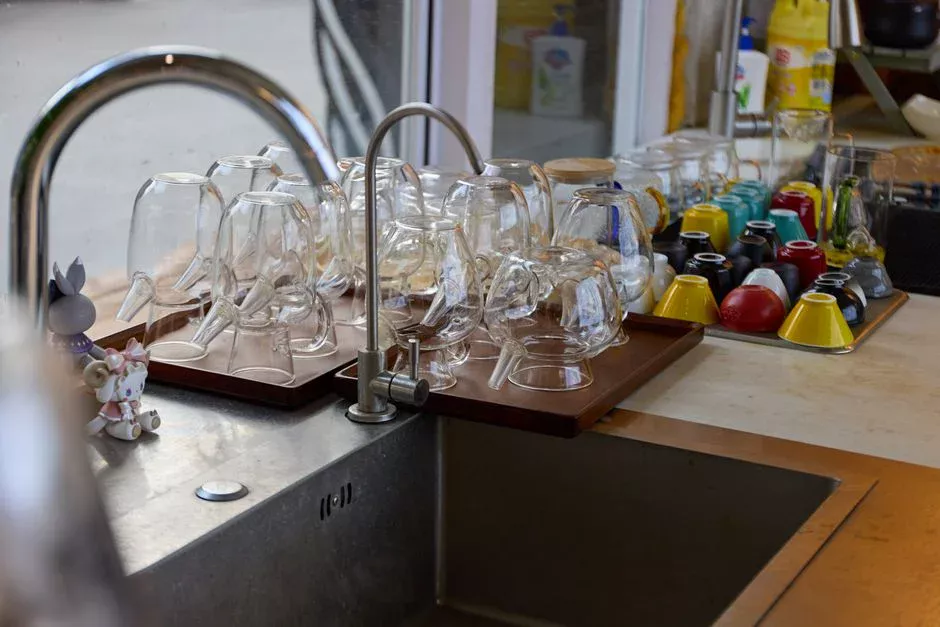
A submerged membrane bioreactor (MBR) merges the aeration basin and solids separation into a single tank by immersing PVDF flat-sheet or hollow-fiber membranes directly into the mixed liquor, with a coarse bubble aeration manifold that both oxygenates the biomass and scours the membrane surface. The membranes carry a nominal pore size of 0.1 μm, sitting within the 0.04–0.2 μm ultrafiltration band documented in the Montpellier membrane thesis (S3, 2012), which physically retains essentially all bacteria and most viruses. Because the membrane does the work the secondary clarifier used to do, mixed-liquor suspended solids (MLSS) can be pushed to 8,000–12,000 mg/L — roughly triple a conventional clarifier's comfort zone — which shrinks tankage and delivers a 60% smaller overall footprint than a CAS-plus-clarifier layout of equal capacity (HydropureWater verified product catalog, 2026). Typical MBR effluent from a food-stream plant runs BOD <5 mg/L, TSS <1 mg/L, turbidity <1 NTU, which after UV disinfection is suitable for CIP rinsewater reuse, boiler-feed pretreatment, or irrigation. Membrane fouling requires controlled aeration intensity, periodic relax cycles, and a CIP routine using approved chemicals — an OPEX line that is manageable when MLSS, transmembrane pressure, and temperature are logged on a PLC.
MBR vs CAS: Effluent, Footprint, Capex, and Opex Compared
The procurement-grade matrix below compares a CAS train against an MBR for a 2026 Bridgeton food and beverage duty. Capex and opex figures are typical U.S. ranges and vary with influent load, equalization design, and local power and labor rates; effluent values are steady-state operating points, not guarantees. Numbers marked with catalog references are drawn from the DF series PVDF flat-sheet membrane module verified specifications, including the 10–20× lower specific energy demand of submerged flat-sheet modules versus external cross-flow designs.
| Parameter | CAS + DAF (conventional) | MBR + DAF pre-treatment |
|---|---|---|
| Effluent BOD | 20–30 mg/L | <5 mg/L |
| Effluent TSS | 20–40 mg/L | <1 mg/L |
| Effluent NH3-N (nitrification designed) | 1–5 mg/L at >15 °C | <1 mg/L year-round |
| Effluent turbidity | 5–15 NTU | <1 NTU |
| Footprint per m³/day | 0.25–0.40 m² | 0.10–0.16 m² (≈60% smaller) |
| Capex (USD per m³/day, US 2026) | 150–280 | 280–480 |
| Opex (USD per m³ treated) | 0.18–0.30 | 0.30–0.55 |
| Specific energy (kWh per m³) | 0.25–0.45 | 0.40–0.70 (flat-sheet submerged: 10–20× lower than external cross-flow) |
| Reuse suitability | Not direct; needs tertiary | CIP rinse, boiler feed pretreatment, irrigation (post-UV) |
| Hydraulic shock tolerance | Moderate; biomass washout above ~1.5× design | Higher; membrane decouples clarification from settleability |
| FOG tolerance | Good with DAF; bulking risk | Good with DAF; biomass stays contained |
| Operator skill needed | Standard wastewater operator | Standard plus membrane CIP familiarity |
MBR provides superior effluent quality, a smaller footprint, and better reuse readiness, while CAS offers lower capex and operational simplicity; the right choice depends on whether reuse and tightening NH3-N limits are on your 2026 roadmap.
Bridgeton Decision Framework: When to Choose MBR, CAS, or a Hybrid
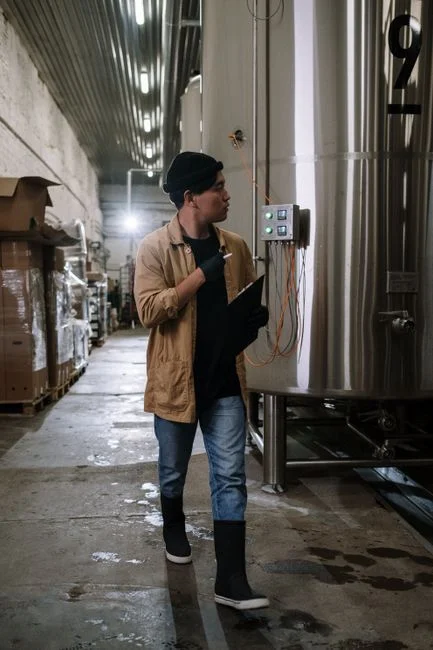
The decision rules below turn the matrix into a single-meeting selection logic. They assume an upstream GX rotary mechanical bar screen and DAF pre-treatment are baseline — both are required for either technology on a food-stream effluent, and skipping them is the single most common cause of premature membrane fouling or clarifier failure.
| Plant scenario | Recommended train | Why |
|---|---|---|
| Greenfield, 10–2,000 m³/day, tight footprint, reuse target, strict NH3-N | MBR (HydropureWater integrated unit covers this envelope) | 60% footprint saving, <1 NTU effluent, reuse-ready |
| Greenfield, >2,000 m³/day, capex-constrained, moderate FOG | CAS + DAF + UV or ClO2 | Lowest capex per m³/day at high flow, simpler O&M |
| Existing CAS, tightening limits or reuse ambition | Retrofit MBR stage as clarifier replacement | Reuses existing aeration basin, adds reuse-quality polishing |
| Peaks-and-shocks (seasonal brewery, sauce, confectionery) | CAS for buffering, optional MBR sidestream during permit re-issue | CAS absorbs hydraulic and load swings cheaply; MBR stages reuse |
For a deeper MBR-versus-alternatives comparison with cost curves, see the MBR vs alternatives engineering comparison (2026).
What a Typical Bridgeton Food & Beverage Retrofit Looks Like in 2026
Consider an anonymized 500 m³/day Bridgeton-area dairy or sauce plant: BOD 2,500 mg/L, TSS 800 mg/L, FOG 250 mg/L, with an 8-hour CIP peak factor of 1.6 driving instantaneous flow to 100 m³/h. The recommended 2026 train is rotary bar screen → flow equalization (24-hour turnover) → DAF for FOG and TSS cut → HydropureWater integrated MBR system with 0.1 μm PVDF membranes at 8,000–10,000 mg/L MLSS → UV sterilizer for reuse polishing. Expected effluent sits at BOD <5 mg/L, TSS <1 mg/L, turbidity <1 NTU, and FOG <10 mg/L — well inside both EPA categorical pretreatment and Bridgeton POTW local limits — and the 60% footprint saving versus a CAS-plus-clarifier layout frees roughly 200 m² of plant floor. Monitoring is PLC-native: MLSS, dissolved oxygen, pH, transmembrane pressure, and effluent turbidity feed the same SCADA tag list a CAS plant already runs, with TMP trending as the early warning for membrane CIP scheduling. The reuse stream covers CIP rinsewater and landscape irrigation, typically 40–60% of the incoming flow.
Frequently Asked Questions
Which is more likely to keep a Bridgeton food plant in compliance in 2026 — MBR or CAS?
An MBR consistently delivers BOD <5 mg/L, TSS <1 mg/L, and turbidity <1 NTU, sitting well below the Bridgeton POTW's typical 250 mg/L BOD and 250 mg/L TSS categorical pretreatment limits, while CAS sits closer to the limit and swings with bulking events (HydropureWater field data, 2026). If reuse or strict NH3-N is on the 2026 roadmap, choose MBR; if not, CAS with DAF remains compliant.
How much footprint does an MBR actually save over CAS for a food and beverage plant?
Submerged MBR systems deliver roughly 60% smaller footprint than a CAS-plus-secondary-clarifier train of equal capacity, by running MLSS at 8,000–12,000 mg/L and eliminating the clarifier (HydropureWater verified product catalog, 2026). On a 500 m³/day Bridgeton plant this typically frees 150–250 m² of floor area.
Can MBR handle FOG and CIP chemical spikes from a food processing line?
Yes — when paired with upstream DAF pre-treatment cutting FOG to below 50 mg/L, the membrane retains biomass at 8,000–12,000 mg/L MLSS and is not affected by the settleability swings that break CAS clarifiers (HydropureWater field data, 2026). The DAF in the catalog handles 4–300 m³/h across the food-stream envelope.