
Why Dye Manufacturing Wastewater Needs an AOP After Biological Treatment
A properly specified AOP system for dye manufacturing wastewater generates hydroxyl radicals (·OH, oxidation potential 2.8 V vs NHE) through Fenton, ozone, UV/H₂O₂ or sulfate-radical chemistry to break the azo (–N=N–), anthraquinone and reactive chromophores that activated sludge cannot degrade. A 2026 treatment train that consistently hits reuse or discharge targets places anaerobic decolorization → aerobic polishing → AOP (e.g. 1–4 g O₃/g COD or H₂O₂:Fe at 5:1–20:1, pH 2.5–3.5) → DAF → MBR/RO, routinely delivering >90% color and 60–80% COD removal before the water is recycled or sent to brine concentration.
Dye-house effluent carries three distinct load fractions, and only one of them survives a conventional biological plant. The first fraction is the high-BOD bulk: sizing chemicals, starch, surfactants and process auxiliaries with BOD/COD ratios of 0.4–0.6, easily handled by activated sludge or an MBR. The second fraction is the recalcitrant color body — azo, anthraquinone, reactive and disperse chromophores that resist 48–72 h aerobic contact times because their electronic structure needs a redox potential above 1.5 V to cleave. The third is salinity: 5,000–25,000 mg/L TDS from neutral-salt reactive dyeing and acid baths, which inhibits biomass but does not block radical chemistry. Yaseen & Scholz (2019) document the full envelope: variable pH (4–12 shot-to-shot), COD 500–3,000 mg/L raw, strong visible color, and 5,000–80,000 mg/L salt.
Anaerobic treatment belongs in front of the AOP for a specific reason. Anaerobic respiration reductively cleaves the azo bond, converting –N=N– into two aromatic amines, which the downstream aerobic stage then mineralizes (Sponza & Işik, 2002). Skipping the anaerobic step loads the AOP reactor with amines that scavenge ·OH at rates of 0.5–1.0 × 10⁹ M⁻¹s⁻¹, cutting hydroxyl-radical yield and pushing peroxide or ozone consumption 30–50% higher. The operating window where an AOP pays for itself is the gap between the biological effluent and the discharge or reuse target: typically 200–800 mg/L COD, 100–500 Pt-Co color, and measurable AOX (adsorbable organically bound halides) that the biotank cannot strip.
The Four AOP Families Used in Dye Plants in 2026
Four hydroxyl- or sulfate-radical-generating families are specified for textile effluent in 2026, and each has a distinct reactor signature.
Fenton and photo-Fenton. The core reaction Fe²⁺ + H₂O₂ → Fe³⁺ + ·OH + OH⁻ runs in a coated-steel or GRP reaction tank at pH 2.5–3.5 with 30–120 min contact. Heidari et al. (2019) demonstrated a CoFe₂O₄/activated-carbon photo-Fenton catalyst on reactive dye effluent, reporting >85% color and 65–75% COD removal under visible-light assistance. The penalty is iron sludge: 0.3–0.6 kg dry Fe(OH)₃ per kg H₂O₂ dosed, which must be dewatered on a filter press sized for Fenton iron sludge and disposed as hazardous waste in most jurisdictions.
Ozone and O₃/H₂O₂ / O₃/UV. Direct O₃ attack on conjugated double bonds does the color work; adding H₂O₂ or UV shifts the mechanism toward ·OH and raises COD removal. Modern skid sizes run 5–20 kg O₃/h, with off-gas thermal or catalytic destruct required to keep workplace exposure below 0.1 ppm. No sludge, but the ozone generator (corona discharge) draws 8–12 kWh per kg O₃, which dominates OPEX at flows above 500 m³/d.
UV/H₂O₂ and UV/TiO₂. Photolysis of H₂O₂ at 254 nm or TiO₂ photocatalysis at 365 nm produces ·OH with no chemical sludge. UV dose envelopes of 10–40 J/cm² are standard; lamp choice (low-pressure Hg vs medium-pressure polychromatic vs 265 nm LED-UV) drives both electrical OPEX and reactor footprint. Gupta et al. (2011) used TiO₂/UV-A to remove tartrazine azo dye, with complete mineralization in 90 min at pH 7. The constraint is electrical: scaling UV/H₂O₂ above 200 m³/d requires large lamp banks and reliable power conditioning.
Sulfate-radical AOPs. Persulfate (Na₂S₂O₈ or K₂S₂O₈) activated by heat (50–70 °C), Fe²⁺ (1:1 molar), base (pH > 11) or UV generates SO₄·⁻ at standard reduction potential 2.5–3.1 V. The advantage over Fenton is the pH window: SO₄·⁻ works from pH 3 to 9, so the acid-trim and re-neutralization steps can be skipped or compressed. Academic literature since 2018 has flagged sulfate-radical AOPs as the better fit for anthraquinone and reactive dye classes where Fenton underperforms, though the residual sulfate load must be reconciled with the downstream RO brine balance.
Matching the AOP to the Dye Class — Selection Matrix
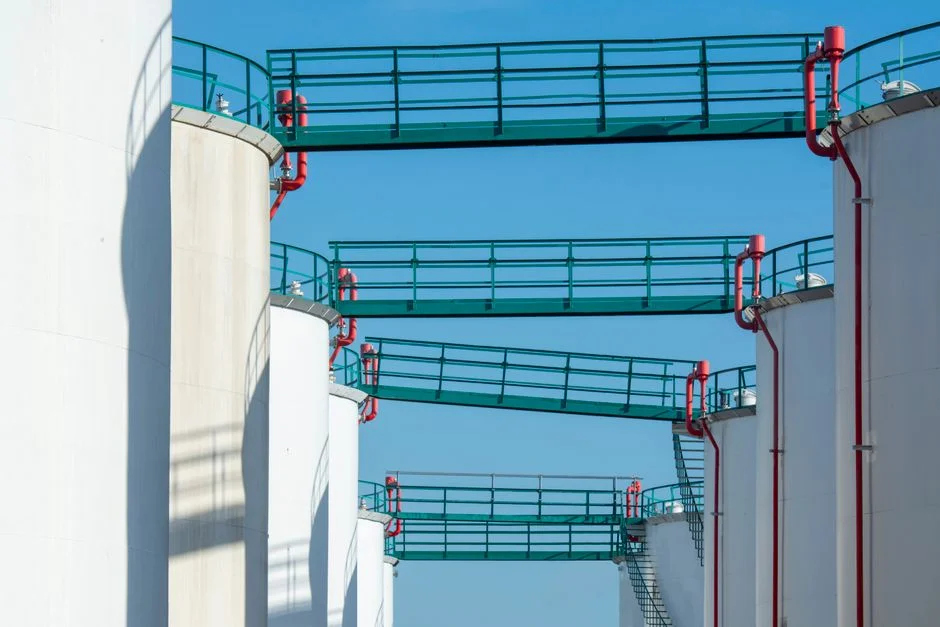
Dye class is the dominant variable in AOP selection, because the chromophore's electronic structure sets the required oxidation potential and the side-chains set the scavenger load. The table below maps the four major dye classes to the AOP family that delivers the best color and COD results per unit chemical cost in 2026 plant practice.
| Dye class | Examples | First-choice AOP | Second-choice AOP | Avoid as sole AOP |
|---|---|---|---|---|
| Azo (Acid, Direct, Reactive) | Acid Red 18, Direct Blue 86, Reactive Black 5 | Fenton or O₃/H₂O₂ | Sulfate radical | UV/H₂O₂ alone at low UV dose |
| Anthraquinone | Reactive Blue 19, Disperse Blue 56 | Sulfate radical or UV/H₂O₂ with extended contact | O₃/H₂O₂ | Fenton alone (often <50% color) |
| Disperse (hydrophobic, polyester) | Disperse Orange 30, Disperse Red 1 | DAF pre-remove carrier, then O₃ or O₃/H₂O₂ | Fenton with surfactant-tolerant conditions | UV/H₂O₂ (turbidity limits UV transmission) |
| Vat and sulfur | Vat Blue 1, Sulphur Black 1 | Oxidative bleaching with NaOCl or reductive stripping, not AOP | — | All hydroxyl-radical AOPs (insoluble chromophore) |
Two practical notes. Reactive dyes, despite being azo in chromophore classification, carry a covalent dye-fiber bond chemistry that makes the spent-dye hydrolysate more resistant than the parent azo, so they should be considered separately and usually need the higher oxidation potential of O₃ or sulfate radical. Vat and sulfur dyes are insoluble in water and visible color comes from the particulate form: AOP acts on dissolved species only, so oxidative or reductive stripping is the established route and an AOP skid alone is not the answer.
Engineering Parameters You Have to Get Right
The parameter table below is a starting envelope for jar-test and bench-pilot work, not a vendor guarantee. Always run a jar matrix on the actual mixed dye stream before committing to a reactor design.
| AOP family | Reagent dose envelope | Operating pH | Contact time | Typical removal (color / COD) | Key byproduct |
|---|---|---|---|---|---|
| Fenton | H₂O₂:Fe molar ratio 5:1–20:1; H₂O₂ 0.5–2.0 g per g COD | 2.5–3.5 | 30–120 min | >90% color, 50–80% COD on azo streams | Fe(OH)₃ sludge 0.3–0.6 kg/kg H₂O₂ |
| Ozone (O₃) | 1–4 g O₃ per g COD | 8–11 favors ·OH pathway | 15–60 min bubble column or venturi | >95% color, 40–60% COD on most reactive and disperse dyes | Off-gas O₃, bromate if Br⁻ present |
| O₃/H₂O₂ (peroxone) | 0.3–1.0 g H₂O₂ per g O₃ | 8–11 | 20–60 min | Cuts required O₃ 20–40% vs O₃ alone | Residual H₂O₂ |
| UV/H₂O₂ | UV dose 10–40 J/cm²; H₂O₂ 5–20 mM | 6–8 | 5–30 min plug flow | >90% color, 50–70% COD on clear effluent | Residual H₂O₂; lamp heat |
| Sulfate radical (persulfate + activator) | Na₂S₂O₈ 2–10 mM; activator Fe²⁺ 1:1 molar, 50–70 °C, or UV | 3–9 | 30–90 min | >95% color on anthraquinone, 60–80% COD | Residual sulfate load to RO |
Three cross-cutting points engineers routinely get wrong. First, Fenton's pH window is narrow: below 2.5, ·OH formation slows because Fe²⁺ becomes a spectator; above 3.5, iron precipitates as Fe(OH)₃ and catalysis collapses. Second, the "ozone dose" must be reported as transferred O₃ per g COD, not the generator nameplate capacity — transfer efficiency in a poorly designed bubble column can drop below 60%, blowing the OPEX model. Third, for UV/H₂O₂ the UV dose is the controlling variable, not the H₂O₂ concentration alone, because the photolysis rate scales with photon fluence; under-dosing the lamps and over-dosing peroxide wastes chemical and leaves residual H₂O₂ that damages RO membranes downstream.
Integrating the AOP into a Real Treatment Train
A typical 2026 train for a reactive/azo dye plant discharging 200–500 m³/d looks like: equalization → screening → DAF or lamella primary clarifier → anaerobic (UASB or SBR) → aerobic (MBR) → pH trim → AOP reactor → final DAF or sand filter → RO reuse or discharge. The AOP sits in the gap between the biotank and the membrane or final clarifier; it is a polishing stage, not a primary workhorse.
The reactor hardware is family-specific. Fenton uses a coated-steel or GRP reaction tank with a slow-speed stirrer (30–60 rpm) sized for 30–120 min retention, followed by a pH correction tank to bring pH back to 6.5–7.5 for downstream biotreatment or RO. Ozone uses a 316L stainless-steel bubble column or venturi injector with an off-gas thermal or catalytic destruct unit, sized for 15–60 min contact. UV/H₂O₂ uses a plug-flow reactor with axial or radial low-pressure Hg lamps, designed for a minimum 80% UV transmittance at 254 nm. A MBR for the aerobic stage ahead of the AOP reduces TSS below 5 mg/L, which is required to keep UV transmittance and ozone transfer efficiency within design.
Downstream polishing is not optional. AOP effluent can carry 5–30 mg/L residual H₂O₂, which oxidizes RO polyamide membranes within hours. A small activated-carbon or manganese-dioxide-catalyzed polisher is standard, sized for an empty-bed contact time of 5–10 min, before any RO reuse step. Solids handling for Fenton sludge needs a DAF unit for dye solids and Fenton iron sludge thickening before a plate-and-frame press, with cake dryness target 25–30%.
2026 Costs, Compliance and What Buyers Should Ask Vendors
The 2026 OPEX envelope for AOP-only polishing at 100–500 m³/d is USD 0.8–2.5 per m³ treated for chemicals and power (HydropureWater field data, 2026). Fenton sits at the low end of that range, ozone and O₃/H₂O₂ at the middle, and sulfate-radical AOPs at the upper end because persulfate cost dominates. Add CAPEX amortization — typically USD 0.3–0.8 per m³ annualized over a 10-year life — before comparing to a DAF or MBR-only route.
Compliance targets an Indian, Chinese, Turkish or EU dye plant should write into a 2026 equipment spec are converging: COD <250 mg/L, BOD <30 mg/L, color <50 Pt-Co (or <100 times dilution), residual chlorine <0.2 mg/L, and AOX <1 mg/L for plants discharging to EU surface water or to a ZLD brine system (per EU Directive 2010/75/EU Annex XXIV textile BREF indicative ranges, 2023 update). For plants aiming at zero liquid discharge, the AOP is the costliest single stage; pushing OPEX down requires recycling the RO concentrate back to the AOP feed when chloride and TDS allow, which can cut total chemical use 15–25% by reducing fresh-water dilution.
Vendor-qualifying questions that separate credible bids from glossy ones: jar-test on the actual mixed dye stream, not a generic surrogate like methylene blue; guaranteed H₂O₂ residual at the AOP outlet below 10 mg/L (protects the RO); ozone generator redundancy at N+1, so a single corona cell failure does not push the plant over its daily discharge limit; UV lamp warranty stated in operating hours, not just months, because Hg lamp output drops 30–40% over 8,000–12,000 h. An automated H₂O₂, Fe²⁺ and pH dosing skid with redundant metering pumps and inline ORP control is the cheapest insurance against overdosing and the resulting chemical waste. A lamella clarifier for AOP effluent polishing ahead of the RO feed tank reduces fouling frequency from weekly to monthly in most audited plants.
For project justification, plants in regional compliance context for Indian dye clusters and pretreatment permit mechanics for colored industrial wastewater will find the cost numbers above translate directly to discharge-penalty avoidance: in 2026 a single non-compliance event for color or AOX at an EU-permitted or Indian CPCB-oversight plant runs USD 5,000–50,000, and a forced shutdown can cost 10–20× that in lost batch value.
Frequently Asked Questions
Is Fenton or ozone cheaper for a 300 m³/d dye line?
Fenton is cheaper at small and medium scale (USD 0.8–1.4/m³ OPEX) when downstream processes can tolerate iron carryover and sludge disposal. O₃/H₂O₂ wins when iron sludge disposal is restricted, when the discharge limit on total iron is below 2 mg/L, or when the flow exceeds 500 m³/d because ozone scales more linearly with flow than Fenton reagent logistics (HydropureWater field data, 2026).
Can an AOP system treat dye wastewater to reuse quality on its own?
No. An AOP alone cannot deliver reuse-grade water for textile processes; it must be paired with an MBR for TSS and a high-rejection RO for TDS and residual organics. The realistic role of the AOP is to drop COD below 100 mg/L and color below 20 Pt-Co so the downstream RO can operate at <15 bar feed pressure with monthly cleaning cycles.
Which AOP handles reactive dyes best?
Ozone and sulfate-radical AOPs are the most reliable on reactive dyes (Reactive Black 5, Reactive Blue 19). The hydrolysed reactive chromophore is more resistant than its parent azo form, so the higher oxidation potential of O₃ or SO₄·⁻ (2.5–3.1 V) outperforms Fenton (effective ·OH potential ~2.8 V limited by iron-cycle kinetics) by 10–25% on color removal at the same COD dose.
Do I still need anaerobic treatment if I install an AOP?
Yes. Anaerobic cleavage of the azo bond is the cheapest unit operation for color bulk removal and it converts –N=N– to aromatic amines, which aerobic polishing then mineralizes. Without it, the AOP must oxidize both the parent chromophore and the amine breakdown products, which doubles the ·OH demand and typically pushes OPEX 30–50% higher (Sponza & Işik, 2002).
What is the typical payback for an AOP retrofit on a dye plant?
Payback is typically 2–4 years for plants discharging to a ZLD or reuse loop, calculated against the avoided cost of fresh water (USD 0.5–1.5/m³ in 2026 Indian and Chinese dye clusters) plus avoided discharge penalties. Plants already at ZLD and looking to reduce brine volume can see the AOP retrofit pay back in under 24 months by shrinking the brine concentrator feed by 15–30%.