Karnataka’s Industrial Wastewater Crisis: Why Factories Are Failing Compliance
Karnataka generates approximately 2,000 million liters per day (MLD) of industrial wastewater, yet the state’s current operational treatment capacity remains stagnant at roughly 1,300 MLD, leaving a 35% deficit that frequently results in untreated discharge into sensitive catchments. This gap has triggered aggressive regulatory oversight from the Karnataka State Pollution Control Board (KSPCB). Under the 2024 KSPCB Circular No. 12/2024, penalties for non-compliance now range from ₹1 lakh to ₹5 lakh per violation, often accompanied by immediate plant closure notices and the disconnection of electricity and water services. For industrial operators in clusters like Peenya, Bommasandra, and Bidadi, the financial risks are no longer theoretical; in 2023, a textile cluster in Peenya was fined ₹2.3 crore for consistently exceeding Total Dissolved Solids (TDS) and heavy metal limits, as detailed in the KSPCB Annual Report 2023–24.
Compliance failures in Karnataka typically stem from three technical bottlenecks: unmanaged pH swings in chemical processing, the presence of recalcitrant heavy metals (such as Chromium and Nickel) in electroplating effluent, and high TDS levels in pharmaceutical and textile discharge. Many legacy Effluent Treatment Plants (ETPs) were designed for lower hydraulic loads and fail to account for the increasing complexity of modern industrial waste streams. The reliance on manual dosing systems leads to inconsistent chemical application, causing effluent quality to oscillate outside of legal parameters. Addressing these failures requires a transition toward automated, high-precision treatment trains that can handle the specific chemical profiles of Karnataka’s diverse industrial base.
KSPCB Discharge Standards 2025: Industry-Specific Limits and Permit Requirements
The KSPCB General Standards for Discharge of Environmental Pollutants (2024) mandate that all industrial units maintain real-time monitoring for key parameters like pH, BOD, and COD, with data linked directly to the KSPCB Central Server. Failure to maintain these levels within the 10% tolerance band triggers automated alerts to regional officers.
| Industry Type | pH Range | BOD (mg/L) | COD (mg/L) | TSS (mg/L) | TDS (mg/L) | Heavy Metals (mg/L) |
|---|---|---|---|---|---|---|
| Textile (Dyeing) | 6.5–8.5 | <30 | <250 | <100 | <2,100 | Cr: <2.0, Cu: <3.0 |
| Pharmaceutical | 6.0–8.5 | <30 | <250 | <100 | <2,100 | Hg: <0.01, As: <0.2 |
| Food Processing | 6.5–9.0 | <30 | <250 | <50 | <2,100 | N/A |
| Electroplating | 6.0–9.0 | <10 | <100 | <30 | <2,100 | Ni: <3.0, Zn: <5.0 |
| Tannery | 6.5–9.0 | <30 | <250 | <100 | <2,100 | Total Cr: <2.0 |
The permit process in Karnataka is managed through the KSPCB e-Suvidha online portal. Industrial units must secure two primary approvals: Consent to Establish (CTE), obtained before construction begins, and Consent to Operate (CTO), required before the plant starts production. The timeline for these approvals typically spans 60 to 90 days, depending on the industry’s "Red," "Orange," or "Green" classification. Fees are tiered based on the capital investment and treatment capacity, ranging from ₹5,000 for small-scale units to over ₹50,000 for large-scale operations. Inland discharge in areas like North Karnataka faces stricter TDS limits (often <1,500 mg/L) compared to coastal units in Mangaluru, where higher salinity in receiving waters allows for slightly higher thresholds.
Industrial Wastewater Treatment Trains for Karnataka: Technology Selection by Contaminant Profile
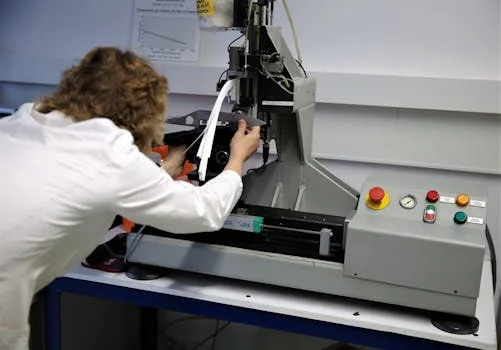
Selecting the appropriate treatment train in Karnataka requires an engineering assessment of local water quality challenges, specifically the high hardness and alkalinity prevalent in regions like Hubballi-Dharwad and parts of Bengaluru. High TDS levels (often >1,000 mg/L in raw groundwater) mean that standard biological treatment is often insufficient for water reuse; a robust tertiary stage involving Reverse Osmosis (RO) or Nanofiltration (NF) is mandatory to meet Class A reuse standards. Pretreatment is equally vital; using a GX series rotary mechanical bar screen for effluent pretreatment ensures that large debris does not foul downstream pumps or membranes.
| Contaminant Type | Primary Technology | Secondary/Tertiary Train | Removal Efficiency |
|---|---|---|---|
| Fats, Oils, & Grease (FOG) | Dissolved Air Flotation (DAF) | Activated Sludge Process | 90–95% FOG Removal |
| High Organic Load (BOD/COD) | Anaerobic Digestion | MBR (Membrane Bioreactor) | 98–99% BOD Reduction |
| Heavy Metals (Cr, Ni, Zn) | Chemical Precipitation | Ion Exchange / RO | 99.5% Metal Recovery |
| Suspended Solids (TSS) | Lamella Clarifier | Multimedia Filtration | 85–90% TSS Removal |
| Synthetic Dyes (Textiles) | Advanced Oxidation (AOP) | Nanofiltration | 95% Color Removal |
For industries dealing with high organic loads, such as food processing or pharmaceuticals, a multi-stage approach is standard. A recent case study of a pharmaceutical plant in Bengaluru demonstrated that by implementing an equalization tank followed by anaerobic digestion and an integrated MBR system for Karnataka’s space-constrained industrial zones, the facility reduced influent COD from 5,000 mg/L to less than 250 mg/L. To manage high-FOG (Fats, Oils, and Grease) wastewater, particularly in the dairy and automotive sectors, a dissolved air flotation (DAF) system for Karnataka’s high-FOG wastewater is recommended to prevent membrane fouling in subsequent stages. Engineers should also compare DAF with lamella clarifiers and tube settlers for Karnataka’s industrial wastewater to determine the most footprint-efficient solution for their specific site.
Cost Breakdown: Industrial ETP/STP Plants in Karnataka (2025 Data)
Budgeting for industrial wastewater treatment in Karnataka must account for localized economic factors, including land prices that vary significantly between the Bengaluru Urban district and Tier-2 cities like Belagavi or Mysuru. Capital expenditure (CAPEX) is driven by equipment and civil works, while long-term viability depends on operational expenditure (OPEX), which includes power, chemicals, and sludge management. In Bengaluru, land costs for ETP construction can range from ₹2,500 to ₹4,000 per square foot, whereas in Hubballi, prices drop to ₹800–₹1,200 per square foot, making decentralized, larger-footprint systems more viable in the north.
| Capacity (KLD) | CAPEX (₹ Crore) | Annual OPEX (₹ Lakh) | Primary Technology | Land Req. (Sq. Ft) |
|---|---|---|---|---|
| 50 | 0.45 – 0.75 | 4 – 6 | SBR / Phys-Chem | 800 – 1,200 |
| 200 | 0.90 – 1.40 | 8 – 12 | MBR / DAF | 2,500 – 3,500 |
| 500 | 1.80 – 3.20 | 12 – 18 | MBR + RO (Reuse) | 5,000 – 7,500 |
| 1,000 | 3.50 – 5.50 | 25 – 35 | Anaerobic + MBR | 12,000 – 15,000 |
| 2,000 | 6.50 – 9.00 | 50 – 70 | Full ZLD (Zero Liquid Discharge) | 25,000+ |
The Return on Investment (ROI) for these systems is increasingly driven by the rising cost of freshwater. In Bengaluru, industrial freshwater costs range from ₹2 to ₹4 per cubic meter (m³), while the cost of treating and reusing wastewater via MBR and RO systems averages ₹1.2 to ₹2.5 per m³. This creates a payback period of 3 to 5 years for most 500 KLD systems. However, hidden costs must be factored in, such as KSPCB annual monitoring fees (₹20,000–₹1,00,000) and hazardous sludge disposal. Sludge disposal to a Treatment, Storage, and Disposal Facility (TSDF) in Karnataka costs between ₹3,000 and ₹8,000 per ton. Implementing a high-pressure plate and frame filter press for sludge dewatering can reduce sludge volume by up to 75%, significantly lowering transportation and disposal fees.
Equipment Selection Framework: How to Choose the Right System for Your Karnataka Factory
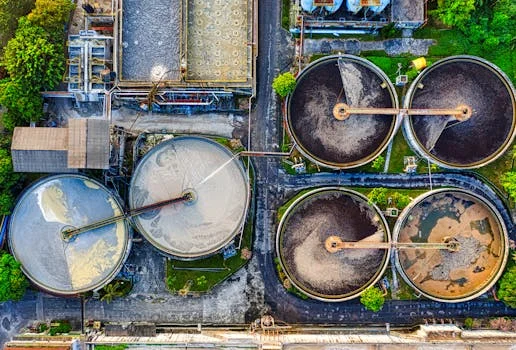
Selecting equipment for a Karnataka-based factory requires a decision framework that balances influent characteristics with local environmental constraints. The first step is determining the TSS and FOG load; if TSS exceeds 500 mg/L or FOG exceeds 100 mg/L, a DAF unit is essential to protect secondary biological units. For factories with limited space, such as those in the Peenya Industrial Area, a WSZ series underground integrated wastewater treatment unit offers a compact footprint that preserves valuable surface land.
Karnataka’s monsoon season presents a unique challenge: sudden increases in hydraulic load due to stormwater ingress. Engineering designs must include equalization tanks with at least