
Why the Bessemer Sewer Path Is the Tighter Constraint
Sewer discharge to a POTW is governed by Clean Water Act §307(b) and 40 CFR Part 403, with categorical standards under 40 CFR Part 437 (Ore Mining and Dressing) for mills, wash plants, and aggregate operations and 40 CFR Part 433 (Metal Finishing) for any site carrying plating, pickling, or anodizing lines. NPDES under CWA §402 covers direct surface-water discharge and remains a parallel authorization for any separate stormwater outfalls on the same site, but the binding number for the sanitary sewer is the local control authority's sewer-use ordinance. Civil penalties under CWA §309 run up to $25,000 per day per violation, and that is the figure a pretreatment designer should be designing against—not the federal categorical floor.
The Jefferson County Environmental Health Department's sewer-use ordinance numbers sit tighter than the federal categorical because the Valley Creek watershed has carried a hundred-plus years of iron, coke, and aggregate loadings (per the Cambridge Bessemer Process history, 2011), and the receiving POTW is a publicly owned treatment works whose headworks and biosolids program are already operating close to the practical ceiling for zinc, lead, and ammonia. Plants in the Bessemer / Valley Creek corridor therefore oversize the train versus a green-field design: a 4-hour equalization basin that would be defensible in a permit renewal elsewhere will pass every shift-change and dump-leach spike straight into the clarifier in Bessemer. The standard Bessemer pretreatment train—equalization (8–24 hr), pH correction to 6.5–9.0, hydroxide precipitation with sulfide polishing where residuals below 0.1 mg/L are required, DAF or lamella clarification, multimedia filtration, optional chlorine dioxide disinfection, and plate-and-frame sludge dewatering to 25–35% dry solids—is the same generic train you would see in the general mining pretreatment playbook, but with residence times stretched and reagent doses biased toward the tighter end of the working window.
The 2024–2026 Regulatory Shifts Changing the Number Set
Three rule changes landed in the 2024–2025 window that will redefine the local-limit number set for the 2026 permit cycle, requiring the engineer writing the equipment spec to treat them as one planning problem. First, the Lead and Copper Rule Revisions (LCRR) are driving the lead action level toward 10 µg/L and forcing POTWs to re-derive local limits at much lower concentrations; for any Bessemer discharger that runs lead-bearing ores, scrap feed streams, or brass components, this directly tightens the Pb ceiling the pretreatment train has to hit (per EPA LCRR, finalized 2024). Second, EPA's 2024 Multi-Sector General Permit added PFAS monitoring (PFOS, PFOA, PFHxS, PFNA) for sectors including metal mining, and local control authorities are adopting the same analytical suite even for indirect dischargers; even if the sewer-use ordinance has not yet written a PFAS number, sampling is now in the inspection binder (per EPA 2024 MSGP, finalized 2024-09). Third, the 2025 ore-mining BAT revisions tightened the cost-benefit envelope on total recoverable metals, which shifts the design target from "meet the old daily max" to "clear the new monthly average with margin" (per EPA 2025 ore mining BAT revisions, 2025-03).
| Rule change | Finalized | Direct effect on Bessemer discharger | 2026 design implication |
|---|---|---|---|
| LCRR (Pb action level toward 10 µg/L) | 2024 | POTW re-derives local Pb limit downward | Add sulfide polishing or ion exchange to clear <0.1 mg/L Pb |
| EPA 2024 MSGP PFAS monitoring (PFOS, PFOA, PFHxS, PFNA) | 2024-09 | PFAS appears in inspection/SAP even for indirect dischargers | Add carbon polishing or GAC contactor ahead of discharge |
| 2025 ore-mining BAT revisions (total recoverable metals) | 2025-03 | Monthly-average basis tightened; daily-max envelope narrows | Oversize equalization and clarifier to hold MA |
Treat all three as the next permit-cycle risk in 2026, and spec the train so it can be retrofitted for PFAS removal without re-piping the equalization basin.
The Standard Treatment Train for a Bessemer Mining/Metals Plant
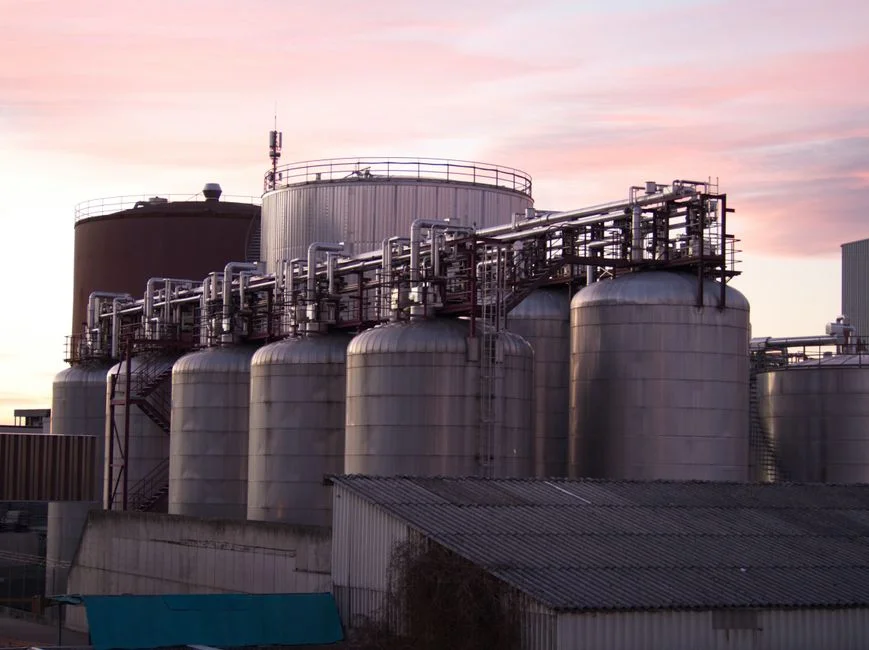
Walking the train in process order allows for precise sizing of each step. Equalization should be sized at 8–24 hours of average daily flow; a 4-hour basin will pass every batch spike into the clarifier (HydropureWater field data, 2026). pH correction follows, using lime (Ca(OH)₂) or NaOH to target 6.5–9.0; lime is cheaper per ton but generates 3–5× more sludge, so high-TDS mining streams often justify NaOH despite the reagent cost. Hydroxide precipitation is the default reagent scheme; sulfide precipitation with NaHS, FeS, or Na₂S is reserved where residuals must drop below 0.1 mg/L—sulfide residuals of 0.01–0.05 mg/L versus 0.5–2.0 mg/L for hydroxide buy an order of magnitude, but reagent cost runs 2–4× higher and operators need sealed reactors with H₂S scrubbers. Properly controlled precipitation systems in operating mining/metals installations routinely achieve 85–95% total metals removal (per Fluence, 2024-11).
The optimum pH window is parameter-specific and must be locked by jar testing on the actual plant water; copper, zinc, and nickel each have their own band inside the 8.5–11 working range, and missing the band by 1 pH unit can drop removal efficiency by an order of magnitude. A polymer coagulant aid dosed at 0.5–3 mg/L flocs the metal-hydroxide particles fast enough for the clarifier to operate at 20–40 m/h hydraulic loading without carryover, and reduces TDS bleed by collapsing the colloidal fraction before settling. A PLC-controlled chemical dosing skid that handles both pH adjustment and coagulant feed on a single controller keeps pH inside a ±0.2 band, which is the difference between meeting and missing a 0.3 mg/L zinc monthly average.
| Unit operation | Sizing parameter | Working range | Target effluent at this step |
|---|---|---|---|
| Equalization basin | HRT | 8–24 hr of ADF | <2 pH unit swing downstream |
| pH correction | Reagent | Lime or NaOH to pH 6.5–9.0 (precipitation 8.5–11) | pH stable ±0.2 |
| Hydroxide precipitation | Reagent dose | Per metal jar test | 85–95% total metals removal |
| Sulfide polishing (if used) | Residual target | 0.01–0.05 mg/L residual | <0.1 mg/L individual metal |
| Polymer coagulant aid | Dose | 0.5–3 mg/L | Visible floc, low colloidal bleed |
| Clarifier / DAF | Hydraulic loading | 5–25 m/h (DAF), 20–40 m/h (lamella) | <30 mg/L TSS to filter |
Choosing Between DAF and a Lamella Clarifier
Selecting between DAF and lamella systems depends on the stream composition: DAF is preferred when the stream carries oil, grease, or fine colloidal metals, while lamella is suitable when the stream is primarily metal-hydroxide sludge at flows above 100 m³/h where footprint is limited. A DAF system covers 4–300 m³/h across 13 models, operates at 5–25 m/h hydraulic loading, and removes 90–98% TSS and 85–95% oil/grease in mining/metal-finishing service—it floats oil-coated and colloidal particles with microbubbles. A lamella clarifier operates at 20–40 m/h surface loading in roughly one-third the footprint of a conventional clarifier, with lower chemical consumption because the sludge blanket is denser, and handles heavy metal-hydroxide flocs very well—but it does not remove free oil or colloidal fines as effectively as DAF. For most Bessemer mining streams, the stream carries enough tramp oil from mill clean-outs and equipment drip that DAF wins on robustness, and the footprint penalty is acceptable at flows under 200 m³/h. For aggregate operations with cleaner runoff at higher flow, lamella is the more defensible pick. The DAF vs clarifier decision guide walks the same comparison for adjacent sites.
| Parameter | DAF | Lamella clarifier |
|---|---|---|
| Flow range | 4–300 m³/h (13 models) | >100 m³/h typical |
| Hydraulic / surface loading | 5–25 m/h | 20–40 m/h |
| Footprint | Larger per m³/h | ~1/3 of conventional clarifier |
| TSS removal | 90–98% | 80–95% (heavy floc) |
| Oil/grease removal | 85–95% | Limited |
| Best fit | Oil, grease, colloidal fines | Metal-hydroxide sludge, high flow |
Polishing, Disinfection, and Sludge: Closing the Loop
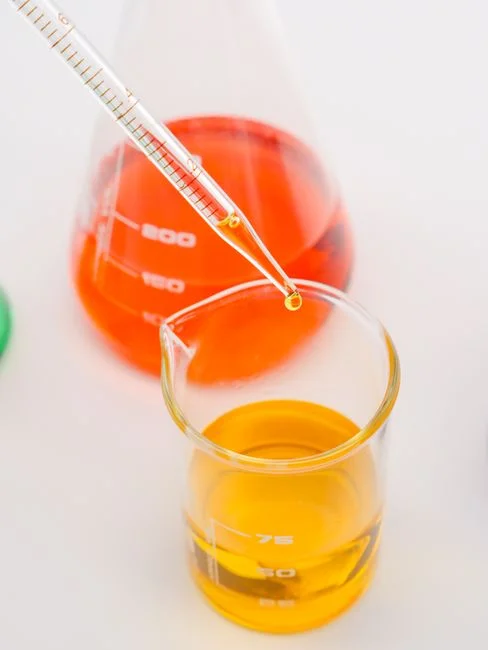
Compliance excursions often originate at the back end of the treatment train, where equipment is frequently under-specced. A multimedia safety filter with anthracite over sand over garnet at 1–2 m/h filtration rate, backwash triggered on differential pressure, strips residual TSS to below 10 mg/L and acts as the safety net for days when the clarifier underperforms. Where the local sewer-use ordinance demands a residual and where long force mains or siphons make pathogen carryover plausible, a chlorine dioxide generator dosed at 1–5 mg/L provides the required residual without forming the regulated trihalomethanes that chlorine produces. Sludge from the clarifier and DAF is a regulated waste, and a plate and frame filter press dewaters it to 25–35% dry solids, producing a stackable cake that can be hauled to a Subtitle-D landfill or returned to a smelter; filtrate returns to the head of the plant. Design the press for the peak 2-hour flow with 20–30% turndown capacity, and treat the local POTW's sewer-use ordinance as the binding number. For a parallel compliance blueprint covering adjacent industrial sectors, see the pretreatment compliance playbook for adjacent industrial sectors.
Frequently Asked Questions
What is the difference between an NPDES permit and a pretreatment program for a Bessemer mining/metals plant?
NPDES permits under Clean Water Act §402 govern direct discharge to surface water; sewer discharge to a POTW is regulated under CWA §307(b) and 40 CFR Part 403, with categorical standards at 40 CFR Part 437 (Ore Mining and Dressing) and 40 CFR Part 433 (Metal Finishing) where applicable. Most plants carry both authorizations in parallel because they have separate stormwater outfalls.
What are typical 2026 Jefferson County sewer-use ordinance numbers for zinc, copper, and lead?
Local sewer-use ordinances in 2026 typically
Frequently Asked Questions
What is the difference between an NPDES permit and a pretreatment permit for a Bessemer mining plant?
An NPDES permit regulates the direct discharge of treated mining wastewater into surface waters, such as local creeks or rivers, and is governed by the Clean Water Act via the ADEM. In contrast, a pretreatment permit is required when a facility discharges its process wastewater into the Jefferson County sewer system, which then sends the influent to a publicly owned treatment works (POTW).
The primary technical distinction is that pretreatment permits focus on preventing interference with the POTW's biological processes and the contamination of sewage sludge. While NPDES permits emphasize site-specific water quality standards for receiving streams, pretreatment permits enforce local limits designed to protect municipal infrastructure from heavy metals and corrosive pH levels.
What zinc and copper limits does the Jefferson County sewer-use ordinance typically set in 2026?
Under the Jefferson County sewer-use ordinance, categorical industrial users are typically restricted to a maximum daily limit of 2.61 mg/L for zinc and 3.38 mg/L for copper in their process wastewater. These limits are calculated based on the POTW's headworks loading capacity and the need to ensure sludge quality meets land-application standards.
Facilities must demonstrate compliance through periodic sampling and monitoring reports submitted to the local authority. Failure to remain within these mass-based or concentration-based limits can lead to surcharges, enforcement actions, or the requirement to upgrade onsite pretreatment systems to achieve higher removal efficiencies.
When is sulfide precipitation worth the cost over hydroxide for a mining wastewater stream?
Sulfide precipitation is technically superior and economically justified when the required effluent concentration for heavy metals falls below 0.1 mg/L, or when complexing agents like ammonia, EDTA, or cyanide are present in the mining stream. Unlike hydroxide precipitation, which relies on pH adjustment to reach a solubility minimum, metal sulfides have a solubility product (Ksp) several orders of magnitude lower, allowing for effective precipitation at a broader pH range.
The added cost of sulfide chemistry—including chemical handling, safety protocols for hydrogen sulfide gas, and potential post-treatment oxidation—is offset when the target discharge limits are too stringent for traditional lime or caustic soda treatment. It is particularly recommended for mining streams containing high concentrations of silver, cadmium, or mercury that cannot reach compliance via hydroxide precipitation alone.
How do I decide between a DAF and a lamella clarifier for a 150 m³/h mining flow?
For a 150 m³/h flow, the decision hinges on the density and settling velocity of the suspended solids. A lamella clarifier is the optimal choice for heavy, inorganic mining solids with specific gravities significantly greater than 1.0, as it utilizes inclined plates to increase the effective settling area within a compact footprint, achieving superior gravity separation for high-density metal precipitates.
Conversely, a Dissolved Air Flotation (DAF) unit is preferred if the process stream contains oils, greases, or low-density particles that exhibit neutral or negative buoyancy. If the mining wastewater contains significant concentrations of light-weight flocculant-aided solids or emulsified organics, the DAF will provide higher removal efficiency than a lamella clarifier, despite the higher energy consumption required for the air saturation system.
How many hours of equalization do I need before the clarifier on a batch-discharge mining line?
For a batch-discharge mining line, an equalization tank should provide a minimum of 8 to 12 hours of residence time to effectively buffer the variability in chemical composition and flow rate. This duration ensures that the influent chemistry—specifically pH, alkalinity, and metal concentrations—is sufficiently homogenized before entering the precipitation and clarification stages.
Adequate equalization is critical to prevent "shock loads" that can overwhelm the clarifier’s settling capacity or cause rapid fluctuations in the dosing of coagulants and flocculants. In systems where mining process variations are extreme, sizing the tank for a 24-hour cycle is recommended to allow for a full shift of controlled discharge, minimizing the risk of exceeding local sewer-use ordinance limits.