What Transportation Equipment Wastewater in Lincoln Actually Looks Like
Transportation equipment manufacturing — auto parts stamping, heavy-truck assembly, aerospace components, railcar fabrication — generates a wastewater signature that is distinctly different from municipal sewage and uniquely hostile to conventional clarifiers. The four dominant streams are stamping lubricants and drawing compounds (oil-in-water emulsions typically 200–2,000 mg/L), alkaline and acid wash from paint pretreatment stages, phosphate cleaners from the e-coat and iron-phosphate lines, and machining coolant blowdown carrying trace metals such as Zn, Ni, and Cr. Intermittent floor wash from assembly bays adds solids and occasional oil surges, and most plants run 1.5–3× peak-to-average diurnal swings tied to two- and three-shift production schedules.
The typical Lincoln-area plant operates between 50 and 500 m³/d. Influent envelopes cluster around COD 400–3,000 mg/L, TSS 100–600 mg/L, oil and grease 50–500 mg/L, and pH 6–10, with periodic metal spikes during coolant dumps. The City of Lincoln Wastewater System pretreatment standards (oil & grease <100 mg/L, no free oil, pH 5–11) set the floor that any technology has to meet before discharge to the POTW (per Lincoln Wastewater System Title 134, 2026).
For a CAS plant, this profile is a chronic problem. Emulsified oils coat sludge flocs, raise SVI above the 150 mL/g threshold, and trigger bulking events that bleed suspended solids over the weir. An MBR sidesteps the issue entirely: the membrane barrier is indifferent to floc settleability, and the long-SRT biology can degrade the cutting fluids and defoamers that pass through CAS only partially. For a deeper treatment of the pretreatment compliance question across transportation plants, the transportation equipment pretreatment compliance guide walks through the same influent categories in a Kentucky case study.
How MBR and CAS Handle Oily, Metal-Bearing Streams Differently
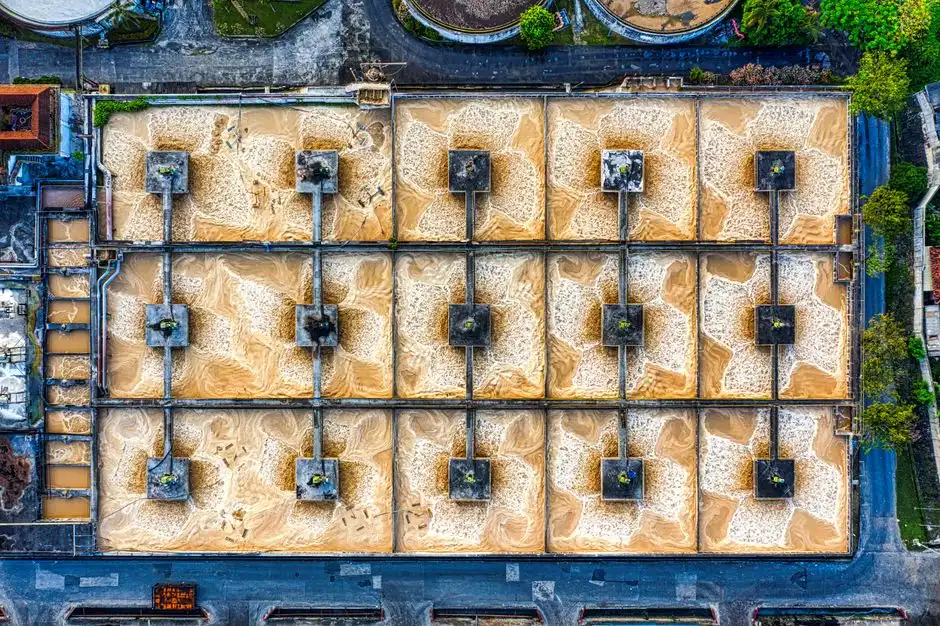
The CAS train is a four-step sequence: equalization, oil/water separator or DAF pretreatment, an aeration basin operating at F/M 0.2–0.5 d⁻¹, and a secondary clarifier. Settled sludge splits into return activated sludge (RAS) and waste activated sludge (WAS). The clarifier is the single point of failure: SVI >150 mL/g, hydraulic surge, or a temperature swing will collapse the entire train within hours.
The MBR train replaces that failing step with a defined-pore barrier. After equalization, coarse screening, and DAF or CPI oil removal, the mixed liquor moves through an anoxic/aerobic zone and is then drawn through submerged 0.1–0.4 μm PVDF membrane cassettes under vacuum. No clarifier, no RAS pumping station, and the MLSS is held at 8,000–12,000 mg/L — 2–4× the CAS ceiling (per HydropureWater engineering reference S2, 2026). The two technologies look superficially similar on a P&ID; they fail in completely different ways. CAS fails when the biology stops settling. MBR fails only when the membrane fouls, and that failure mode is mechanical and recoverable through CIP rather than biological and catastrophic.
Long SRT (20–60 d in MBR vs 5–15 d in CAS) lets slow-growing nitrifiers and hydrocarbon-degrading bacteria establish, which is decisive for cutting fluids, drawing compounds, and defoamers that pass through CAS only partially. Membrane retention at 0.04–0.2 μm cut-off practically retains bacteria and most viruses, useful when the plant shares a sewer with a downstream POTW concerned about pathogen loading (S3 academic thesis, Montpellier 2012). Stability at industrial scale is not theoretical: the 2009 Banu et al. A2O-MBR demonstration ran a reactor at 77 LMH for 270 days at high MLSS, proving that long-SRT industrial MBR operation is reproducible, not a lab artifact. An integrated MBR membrane bioreactor system packages this train into a skid that drops into an existing equalization footprint.
MBR vs CAS: 2026 Engineering Parameters Side by Side
| Parameter | MBR (PVDF, submerged) | Conventional Activated Sludge |
|---|---|---|
| MLSS (mg/L) | 8,000–12,000 | 2,000–5,000 |
| SRT (days) | 20–60 | 5–15 |
| HRT (hours) | 4–8 | 6–12 |
| F/M ratio (d⁻¹) | 0.05–0.15 | 0.2–0.5 |
| Effluent TSS (mg/L) | <5 | 10–30 (no tertiary) |
| Effluent BOD (mg/L) | <5 | 10–25 (no tertiary) |
| Turbidity (NTU) | <1 | 5–15 |
| SDI (15-min) | <3 | 5–10 (clarifier overflow) |
| Footprint factor | 0.4–0.6× of CAS (DF series modules rated at ~0.4×) | 1.0× baseline |
| Specific energy (kWh/m³) | 0.8–1.2 (30–50% is membrane scouring air) | 0.3–0.6 |
Two numbers in this table drive most of the project decisions. The 40–60% footprint reduction is the DF series flat sheet membrane module benchmark, and it is what makes MBR the only feasible option on land-constrained Lincoln industrial parcels. The SDI <3 is what unlocks direct RO feed without a multimedia filter, and that is the single biggest contributor to lower downstream CAPEX in any reuse loop (per HydropureWater engineering reference S2, 2026; energy ranges from S4, 2025-09).
Effluent Quality, Reuse, and Lincoln NPDES Compliance
The City of Lincoln Wastewater System Title 134 industrial pretreatment limits cover oil and grease, pH, metals (Zn, Ni, Cr, Pb), and COD/BOD benchmarks, with local enforcement through the Lincoln Water System pretreatment program. MBR permeate meets the bulk of these limits directly without tertiary polishing — TSS is already under 5 mg/L and the membrane barrier strips oil-bound metals that a clarifier would let pass.
For plants pursuing reuse, the MBR permeate SDI <3 is the metric that matters. It is the threshold below which RO membranes can be fed without additional clarification, which is why MBR has become the default RO pretreatment for industrial loops. Per HydropureWater field data (2025-Q4), MBR-fed RO extends CIP intervals 30–50% versus CAS-fed RO, because the membrane barrier removes colloidal and oil-bound fouling precursors that a clarifier overflow delivers straight to the RO. For plants discharging only to POTW, CAS with DAF and a clarifier remains compliant at lower first cost; the compliance argument for MBR becomes decisive only when reuse or a sub-10 mg/L TSS limit is in play. Market context supports the reuse framing: 78% of water-reuse projects implemented in the last five years have used MBR technology (S4 market data, 2025-09). The mechanics and cost math behind that pattern are covered in the MBR system fundamentals guide.
2026 CAPEX and OPEX Benchmarks for Lincoln Plants
| Cost line | CAS (2026) | MBR (2026) | Driver of the gap |
|---|---|---|---|
| Turnkey CAPEX ($/m³/d) | $80–$220 | $180–$420 | Influent strength, stainless vs carbon steel, EPC scope |
| OPEX ($/m³ treated) | $0.10–$0.22 | $0.18–$0.42 | Membrane scouring air + CIP chemicals + 5–8 yr replacement |
| WAS volume vs CAS baseline | 1.0× | 0.6–0.8× | Higher decay at long SRT (Banu et al., 2009) |
| Tertiary polishing for reuse | MMF + cartridge required | None — permeate goes direct to RO | MBR SDI <3 vs CAS SDI 5–10 |
| Specific energy (kWh/m³) | 0.3–0.6 | 0.8–1.2 | Membrane scouring air is 30–50% of MBR energy |
Sample payback for a 200 m³/d Lincoln plant: $200/m³/d MBR CAPEX premium × 200 m³/d = $40,000 capital delta. Offset by $0.08–$0.15/m³ OPEX delta plus 20–40% lower sludge hauling cost, and 3–6 year payback is realistic when reuse, land cost, or a sub-10 mg/L TSS consent is in the equation. The MBR WAS volume is 20–40% lower than CAS at matched SRT, consistent with Banu et al.'s 2009 finding of "relatively high decay rate and less sludge production due to much longer sludge age" — a recurring hauling offset that compounds across the asset life. Pairing the MBR plant with a plate and frame filter press converts the reduced WAS volume into a drier cake and pushes the disposal saving further. Cost ranges per HydropureWater engineering reference S2 (2026); market context per S4 (2025-09).
Retrofit vs Greenfield: When Existing CAS Should Be Converted
Most Lincoln transportation plants evaluating this question are not building greenfield; they are sitting on a struggling CAS plant that loses solids every time a coolant dump hits the basin. The retrofit path is straightforward: keep equalization and DAF oil removal, repurpose the existing aeration basin as the MBR zone, add submerged membrane cassettes, and remove the secondary clarifier. RAS piping, scum removal, and mixed-liquor distribution have to be redesigned, but the basin volume is largely reusable. DF series cassettes ship in 80–225 m² elements rated 32–135 m³/d each, so capacity can be added in steps rather than sized to day-one design flow — useful for plants expecting 20–30% production growth over the next five years (DF series module data, 2026).
Land-constrained Lincoln industrial sites (the Haymarket and Airpark areas are typical) often cannot expand their WWTP footprint without acquiring adjacent parcels at industrial acreage rates. In those cases MBR is the only feasible option even when greenfield lifecycle math would prefer CAS. Three trigger conditions justify a retrofit over a greenfield CAS rebuild: chronic sludge bulking from emulsified oils (SVI >150 mL/g for more than 20% of operating days), an aging clarifier with structural issues (concrete delamination, rake arm failure, or weir corrosion), or a new reuse requirement driven by a corporate sustainability mandate. Existing RAS and WAS pumps will also need reevaluation under the higher MLSS duty — the RAS and WAS pump maintenance schedule lays out the 2026 inspection intervals.
Decision Framework: Picking the Right Train for a Lincoln Transportation Plant
Four selection rules, applied in order:
- Flow <100 m³/d, no reuse obligation, ample land, no sub-10 mg/L TSS consent: CAS with DAF pretreatment. Lowest 20-year lifecycle cost; established operator skill base across the Lincoln market.
- Flow 100–500 m³/d, any reuse obligation (cooling tower makeup, paint rinse, boiler feed), or land constraint: MBR. The 40–60% footprint saving and reuse-grade permeate justify the CAPEX premium. DAF oil-removal pretreatment upstream is still required to protect the membranes from free oil.
- Flow >500 m³/d with discharge to a sensitive receiving water (Salt Creek watershed, downstream of the plant outfall): MBR or CAS + denitrifying sand filter. Choose based on whether effluent nitrate or total phosphorus limits are in the consent; MBR's higher MLSS buffer handles diurnal swings without washout.
- Influent COD regularly above 2,000 mg/L or persistent cutting fluids present: MBR regardless of flow range or reuse need. The long-SRT biology (20–60 d) outperforms CAS on these streams, and the high MLSS buffer prevents washout during shift changeovers.
For plant-specific sizing, an integrated MBR membrane bioreactor system with a DF series flat sheet membrane module is the typical 2026 packaged configuration for Lincoln-area transportation plants in the 50–500 m³/d range. The right technology choice is the one that meets the consent and the reuse obligation with the lowest 20-year lifecycle cost — not the lowest day-one CAPEX.
Frequently Asked Questions
Is MBR worth the higher CAPEX over CAS for a Lincoln transportation plant?
Yes, when reuse, land cost, or a sub-10 mg/L TSS consent applies. MBR delivers 40–60% footprint reduction versus CAS, at $180–$420 per m³/d CAPEX vs $80–$220 for CAS. The 3–6 year payback is driven by tertiary filtration elimination, sludge hauling reduction (20–40% lower WAS), and reuse credit (per HydropureWater engineering reference, 2026).
Can MBR permeate feed an RO system for cooling tower makeup?
Yes. MBR permeate runs SDI <3 and turbidity <1 NTU, which is the threshold below which RO membranes can be fed without multimedia filtration. Per HydropureWater field data (2025-Q4), MBR-fed RO extends CIP intervals 30–50% versus CAS-fed RO, because the membrane barrier removes colloidal and oil-bound fouling precursors.
How stable is MBR at high MLSS in industrial service?
Stable at industrial scale over long runs. The 2009 Banu et al. A2O-MBR study ran a reactor at 77 LMH designed flux for 270 days at two MLSS ranges, demonstrating that long-SRT industrial MBR operation is reproducible, not a lab artifact. Modern DF series flat sheet modules are designed for 8,000–12,000 mg/L MLSS as a steady-state operating point.
Does MBR permeate meet Lincoln pretreatment limits without tertiary polishing?
Yes, for the bulk of Title 134 industrial parameters. MBR permeate typically meets oil & grease, pH, TSS, and BOD limits directly, and strips oil-bound metals (Zn, Ni, Cr) that a clarifier overflow would carry. Plants with strict metal limits should still verify with jar testing on their specific influent before final design (per Lincoln Wastewater System Title 134, 2026).
What drives MBR OPEX over time?
Membrane scouring air (30–50% of MBR energy, separate from biological oxygen demand), CIP chemicals (NaOCl at 300–500 mg/L followed by citric or oxalic acid wash every 1–4 weeks depending on influent FOG), and membrane replacement amortized over a 5–8 year service life. Operating at the upper end of the SRT range (40–60 d) generally extends CIP interval from weekly to monthly but at the cost of higher MLSS viscosity (per HydropureWater engineering reference, 2026).
Related Equipment
- DAF oil-removal pretreatment — specifications, capacity range, and technical data