
What legal event triggers new wastewater obligations at a Hungary plant acquisition
Operational control transfer to a new legal operator is the trigger for re-permitting under EU IED Article 6(9) — the share-purchase contract is not. When General Motors takes operational control of a Hungary plant, both EU Industrial Emissions Directive 2010/75/EU and Hungary's Government Decree 314/2005 (XII.25.) require the new operator to file a fresh integrated environmental permit (IPPC) application. The county government office (megyei kormányhivatal) acting as the regional inspectorate has a defined clock: under Decree 314/2005 the new operator must notify the authority of the change and submit a permit application within 90 days of the legal transfer, with the authority's substantive decision due within 180 days of a complete application. Missing that window exposes the asset to operating without a valid permit, which carries administrative fines and a credible threat of injunction under Hungarian environmental liability law.
GM's own 2022 Water Security disclosure (CDP) confirms the same reporting boundary it uses for sustainability purposes — "companies, entities or groups over which operational control is exercised" (W0.5, 2022 filing). That language should be ported directly into the Hungarian notification letter to keep the corporate disclosure boundary and the regulatory boundary aligned; auditors and counsel will read them together.
Three parallel obligations activate on the same date and are often missed in early diligence. First, the Water Act (Act LVII of 1995) water-utilization right and water-utilization fee registration must be re-filed in the name of the new operator. Second, any local discharge consent issued by the municipal water utility (e.g., Fővárosi Vízművek in Budapest, or a county water utility) must be novated. Third, the seller's self-monitoring reports and accident-incident records transfer to the new operator's liability, so pre-close due diligence should pull the last three years of monitoring data into the data room before signing.
Which EU directives and Hungarian decrees govern an automotive plant's wastewater
Hungarian automotive wastewater compliance sits on a four-layer stack, and the layers are not duplicative — each one adds a constraint. The base layer is EU IED 2010/75/EU, which sets the integrated permitting regime and the obligation to apply BAT conclusions. The second layer is the BAT Reference Document for Surface Treatment Using Organic Solvents (STS BREF), whose 2020 update defines BAT-AEL ranges for the automotive paint shop specifically. The third layer is Government Decree 314/2005 (XII.25.), the Hungarian IPPC transposition that defines procedure, timelines, and the change-of-operator trigger. The fourth layer is Government Decree 27/2015, which sets the numeric effluent limit values that actually appear on the discharge permit.
Two adjacent instruments are also in scope. EU Directive 91/271/EEC (Urban Waste Water Treatment) governs the sanitary stream if it is co-discharged to a municipal collector; if the sanitary stream is segregated, the local utility's discharge rules apply instead. EU Water Framework Directive 2000/60/EC obliges the operator to assess receiving-water-body status if the plant discharges directly to a surface water body — relevant for plants on the Danube or Tisza catchments — and the stricter of chemical status and ecological status objectives will constrain the permit values.
Hungary transposed the IED framework in 2005 and revised the numeric emission limit values in 2015. Plants whose IPPC permits predate 2015 typically contain limit values that are no longer aligned with current BAT-AELs, and an operator change forces a full permit re-evaluation, not an amendment. For a 2026 M&A transaction, assume that any permit older than 10 years will need substantial revision in the first 18 months under new operator control. For comparative EU context, this approach mirrors the same compliance logic used in any EU IED compliance guide for industrial plants operating under the directive.
Wastewater streams at an automotive assembly or powertrain plant and their typical parameters
An automotive assembly or powertrain plant in Hungary typically generates four segregated wastewater streams, each with a distinct chemistry. Paint-shop pre-treatment wastewater — the rinse water from zinc-phosphating or phosphate-free conversion coating — carries COD in the 1,500–4,000 mg/L range, suspended solids 200–800 mg/L, oils 50–300 mg/L, and phosphate 5–30 mg/L when zinc-phosphating is still in use. Phosphate-free pre-treatment (silane, zirconium-based) drops phosphate below 1 mg/L at source and is now the BAT option for new lines; expect retrofit projects to drive this conversion during the permit term. Cathodic electrodeposition (CED) and electrophoretic rinse water carry heavy metals (Zn, Ni, Pb) typically below 5 mg/L each but persistent; closed-loop rinse tanks reduce volumetric load by 60–80% and are the single most cost-effective pretreatment on a paint line.
Machining and parts-washing wastewater is the most variable stream. Cutting fluids, drawing compounds, and alkaline cleaners produce oils 500–5,000 mg/L, COD 3,000–10,000 mg/L, and surfactant loads that defeat simple gravity separation. A dissolved air flotation stage preceded by chemical emulsion breaking is the standard pre-treatment; this is also where a DAF system for automotive wastewater pre-treatment typically enters the design.
Compressor and cooling-tower blowdown is low in COD but high in temperature and TDS, and it is almost always segregated and treated separately for heat recovery and RO reuse rather than blended with the paint stream. Sanitary wastewater from WASH facilities is segregated to a municipal connection under 91/271/EEC and does not normally enter the industrial treatment train.
| Stream | Typical COD (mg/L) | Typical TSS (mg/L) | Key contaminants | Typical flow share |
|---|---|---|---|---|
| Paint-shop pre-treatment | 1,500–4,000 | 200–800 | Phosphate (5–30), Zn, oils | 30–40% |
| CED / e-coat rinse | 200–800 | 50–200 | Zn, Ni, Pb (each <5) | 15–25% |
| Machining / parts washing | 3,000–10,000 | 300–1,500 | Oils (500–5,000), surfactants | 25–35% |
| Cooling-tower blowdown | 20–80 | 20–50 | TDS, temperature | 10–20% |
Hungarian and EU numeric effluent limits the new operator must meet
Government Decree 27/2015 sets the discharge values that appear on a Hungarian IPPC permit, and they are split by discharge route. For industrial wastewater entering a municipal sewer, typical limits are pH 6.5–9, COD ≤ 1,000 mg/L, TSS ≤ 50 mg/L, total Ni ≤ 0.5–1.0 mg/L, total Zn ≤ 2 mg/L, total Cr ≤ 0.5–2 mg/L, and oil & grease ≤ 20 mg/L. For direct discharge to a surface water body, the limits tighten to COD ≤ 200 mg/L, TSS ≤ 30 mg/L, and the same metal ceilings but applied to a 24-hour composite sample rather than a grab sample.
The EU STS BREF (2020 update) defines BAT-AEL ranges that are typically tighter than the Hungarian floor: COD 100–500 mg/L, Zn 0.1–2 mg/L, and Ni 0.1–0.5 mg/L for direct discharge to a receiving water body. In practice the BAT-AEL range becomes the de facto target because the inspectorate applies BAT conclusions when re-issuing the permit, and any operator claiming a derogation must demonstrate that the local receiving water body's assimilation capacity justifies it under WFD Article 4.
Two additional rules determine the binding number on the discharge pipe. First, a plant discharging more than 10 m³/day of industrial wastewater to a municipal sewer requires a separate discharge consent from the local water utility (e.g., Fővárosi Vízművek in Budapest, or a regional utility such as ALFÖLDVÍZ or Tiszamenti Vízművek), and the utility's own ordinance can impose limits stricter than 27/2015. Second, the hierarchy is always most stringent of (a) Hungarian 27/2015, (b) EU BAT-AEL, (c) the local sewer-use ordinance. A design engineer should size the treatment train to the BAT-AEL ceiling, not the 27/2015 ceiling, to avoid a permit-rewrite event at the next BAT review.
| Parameter | Hungarian 27/2015 (municipal sewer) | Hungarian 27/2015 (direct to surface) | EU STS BREF BAT-AEL |
|---|---|---|---|
| pH | 6.5–9 | 6.5–9 | 6.5–9 |
| COD | ≤ 1,000 mg/L | ≤ 200 mg/L | 100–500 mg/L |
| TSS | ≤ 50 mg/L | ≤ 30 mg/L | 10–30 mg/L |
| Total Ni | ≤ 0.5–1.0 mg/L | ≤ 0.5 mg/L | 0.1–0.5 mg/L |
| Total Zn | ≤ 2 mg/L | ≤ 2 mg/L | 0.1–2 mg/L |
| Total Cr | ≤ 0.5–2 mg/L | ≤ 0.5 mg/L | 0.1–0.5 mg/L |
| Oil & grease | ≤ 20 mg/L | ≤ 10 mg/L | 5–15 mg/L |
The treatment train Hungary automotive wastewater actually requires
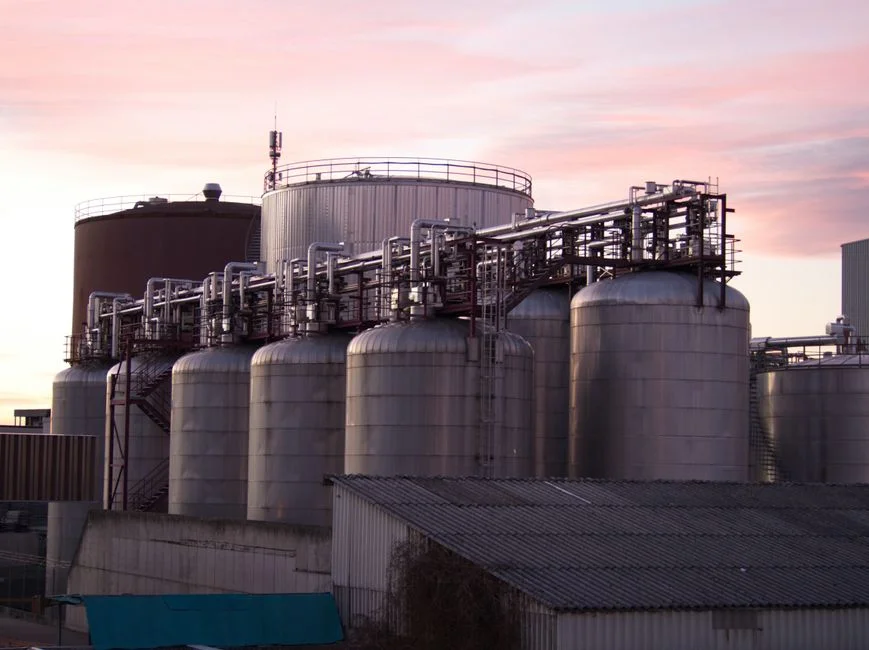
A compliant treatment train for a Hungary automotive plant runs in five stages, and each stage has a defensible vendor category. Stage 1 is headworks protection: a rotary bar screen for headworks protection with 6–10 mm openings plus a grit chamber, sized to handle paint sludge and shot-blast media carryover from the body shop. Stage 2 is flow equalization plus DAF for oils, emulsions, and floated paint solids; typical removal is 80–95% oil & grease and 50–70% TSS, which protects downstream biological stages from toxicity shocks.
Stage 3 is chemical precipitation plus a lamella clarifier for metal precipitation, operated at pH 9–10 for the hydroxide precipitation of Ni, Zn, and Cr. Stage 4 is biological treatment, either MBBR or MBR; an MBR system for automotive effluent polishing delivers a target effluent COD below 100 mg/L at the cost of higher energy and membrane replacement, while MBBR cuts capex but produces a slightly higher effluent COD. Stage 5 is polishing — sand filtration or UF — followed by optional RO for water reuse. The reuse decision is where GM's ZLD playbook ports over: the 2022 Water Security disclosure states that 5 of GM's water-stressed facilities already operate with full recycled-water loops including paint pre-treatment (W1.1, 2022 filing), which is the same paint stream a Hungary plant would need to close.
90-day post-closing compliance roadmap for the new operator
Day 1 of operator control is the start of a 90-day clock that runs in parallel with the permit procedure. The integration team should treat the period as a Gantt chart, not a to-do list, because several filings have statutory deadlines that cannot slip without legal exposure.
| Window | Action | Owner |
|---|---|---|
| Days 0–30 | Notify county government office of change of operator; commission baseline wastewater characterization; appoint Hungarian IPPC consultant (környezetvédelmi megbízott) | EHS Director / Local Counsel |
| Days 30–60 | Submit integrated environmental permit application; re-file water-utilization right registration; review 3 years of seller's self-monitoring data | IPPC Consultant / Plant Manager |
| Days 60–90 | Design treatment-plant revamp to BAT-AEL; install flow measurement and automatic sampler on discharge pipe; train operators on GM corporate EMS | Engineering / Operations |
| Throughout | Any non-compliance or unplanned discharge must be reported to the inspectorate within 24 hours under the átmeneti szabályok framework | Plant Manager |
If a non-compliance event occurs during the transition — for example a batch discharge that exceeds the existing permit values before the new permit is issued — the operator relies on Hungary's "átmeneti szabályok" (transitional rules) under Decree 314/2005, which allow continued operation under the seller's permit values for a defined bridge period provided the inspectorate has been notified within 24 hours and a complete application is in the pipeline. The 24-hour notification is non-discretionary.
Frequently Asked Questions
Can GM keep the seller's existing Hungarian permit after acquisition?
No. Under Government Decree 314/2005, a change of operator invalidates the existing permit for the new operator's purposes; a fresh IPPC application must be filed within the prescribed 90-day window. Continued operation depends on the transitional rules, not on the seller transferring the permit.
Which wastewater parameters are the hardest to meet for a paint shop?
Phosphate and zinc from pre-treatment, plus solvent-bearing rinse water, are the binding parameters. Chemical precipitation for metals plus a MBR system for automotive effluent polishing is the typical combination to hit BAT-AEL ceilings; phosphate-free pre-treatment conversion is the upstream lever.
Does a plant discharging only to a municipal sewer still need an IPPC permit?
Yes, but with a simplified procedure under Decree 314/2005. The binding numeric limit in that case is the local water utility's discharge ordinance, which can be stricter than 27/2015, so the utility consent — not the IPPC permit — is usually the operational constraint.
How long does it take to obtain a new Hungarian IPPC permit?
Typically 90–180 days from a complete application for the regional authority to issue a decision. If an Environmental Impact Assessment is triggered (common for plants over 150,000 m² or near a Natura 2000 site), add 60–90 days. Build the integration schedule around a 6-month decision window, not 90 days.
Can the plant reuse treated wastewater for paint-shop rinses?
Yes. A UF polishing stage for reuse water followed by RO is the typical reuse train. GM's ZLD practice at 5 water-stressed facilities (per its 2022 Water Security disclosure) is a proven model for closing the loop on paint-shop rinse water and is the right reference design for a Hungary retrofit. For automotive M&A wastewater compliance guidance in comparable jurisdictions, the same UF-plus-RO reuse train is the standard reference.