
Why Berlin Data Centers Face a Sharper Blowdown Problem in 2026
Berlin hyperscale and colocation campuses entering operation in 2026 draw cooling-tower makeup from a specific feed envelope: Spree and Havel surface water blended with BWB potable supply that typically carries 14-18 °dH hardness and measurable silica. As the recirculating water evaporates, those species concentrate aggressively, so a tower running at 4 cycles of concentration blows down a stream with TDS of 1,200-6,000 mg/L (Genesis Water Technologies, 2026) before any reuse credits are taken. The same arithmetic that makes freshwater cheap in Berlin — roughly EUR 1.60-2.30 per cubic meter for BWB industrial tariff customers — also makes indirect discharge to the BWB sewer a tightly regulated path: the city's Indirekteinleiterverordnung and BWB's Abwasserverordnung limits set ceilings on TDS, sulfate, AOX, phosphorus, and heavy metals that a hyperscaler cannot meet by dilution alone once blowdown enters the public sewer at scale.
On top of municipal rules, two German and EU frameworks now govern how a large cooling installation is permitted and operated. The Industrial Emissions Directive 2010/75/EU (IED) brings major cooling-water systems into the BAT-AEL review cycle, and the German WHG/AwSV stack regulates storage and handling of water-hazardous substances — relevant because most biocide and corrosion-inhibitor programs used in cooling systems fall under AwSV handling rules. A February 2026 TNFD case study (per Water Utility Report, 2026-04) flags mismanaged blowdown — high salts, heavy metals, residual treatment chemicals — as a primary nature-risk vector for AI campuses, which means investor and community scrutiny now arrives before the permit is even granted. None of the generic US/Asia guides on the first SERP address this stack, and a reader scoping a Berlin site in 2026 needs the local stack as the starting constraint, not an afterthought.
What Is Actually in Berlin Data-Center Cooling Tower Blowdown
The CTBD feed envelope for a Berlin site is not a single number; it is a band driven by cycles of concentration, makeup source, and the site's chemical program. At 4 cycles of concentration, TDS of 1,200-6,000 mg/L is the normal operating range (Genesis Water Technologies, 2026), which corresponds to 4-8x the 250-500 mg/L TDS typical of Berlin makeup water drawn from the Spree/Havel system or BWB potable blend. Suspended solids of 10-50 mg/L come from corrosion products, biofilm fragments, and airborne particulates captured by the cooling tower. The biological content — planktonic bacteria, algae, and biofilm-forming organisms — is unavoidable even in well-maintained systems and must be neutralized before any membrane step.
The species that actually constrain RO recovery in Berlin are the scaling minerals. Calcium, magnesium, and alkalinity are aggressive precipitants once the tower is pushed past 4-5 cycles, and silica is the dominant recovery-limiting species because Spree-derived surface water and BWB potable carry silica at 8-15 mg/L, which concentrates to 32-60 mg/L in the blowdown. Treatment chemicals accumulate in proportion to cycles of concentration: oxidizing biocides (chlorine, bromine, or isothiazolinones), phosphate-based scale inhibitors, dispersants, and corrosion inhibitors all show up in the bleed. Legacy phosphate programs are a particular problem because they both foul RO membranes and breach the phosphorus ceilings in BWB's indirect-discharge ordinance.
The table below summarizes the parameter envelope an engineer in Berlin should expect when sampling a 4-cycle tower. Recovery limits assume antiscalant dosing and pH adjustment per standard BWRO practice.
| Parameter | Typical Berlin CTBD at 4 cycles | RO recovery limit if untreated | Notes |
|---|---|---|---|
| TDS | 1,200-6,000 mg/L | 50-75% before scaling | Driven by makeup TDS 250-500 mg/L |
| Hardness (as CaCO3) | 400-1,200 mg/L | Limits via CaSO4 and CaCO3 | Berlin makeup 14-18 °dH ≈ 250-320 mg/L |
| Silica (SiO2) | 32-60 mg/L | ~30-40 mg/L ceiling without pretreatment | Dominant recovery limiter for Spree-derived makeup |
| Suspended solids | 10-50 mg/L | Must be <10-15 mg/L pre-RO | Corrosion products, biofilm, airborne dust |
| Free chlorine / total oxidant | 0.1-1.0 mg/L (program-dependent) | <0.1 mg/L at RO feed | Requires reducing agent or activated carbon |
| Phosphate (from legacy programs) | 2-15 mg/L | Damages RO; violates BWB P limit | Switch to non-phosphate chemistry |
| Temperature | 25-40 °C | Reduces RO flux, raises scaling risk | Cool before membrane stages |
The 2026 Process Train Berlin Engineers Actually Specify
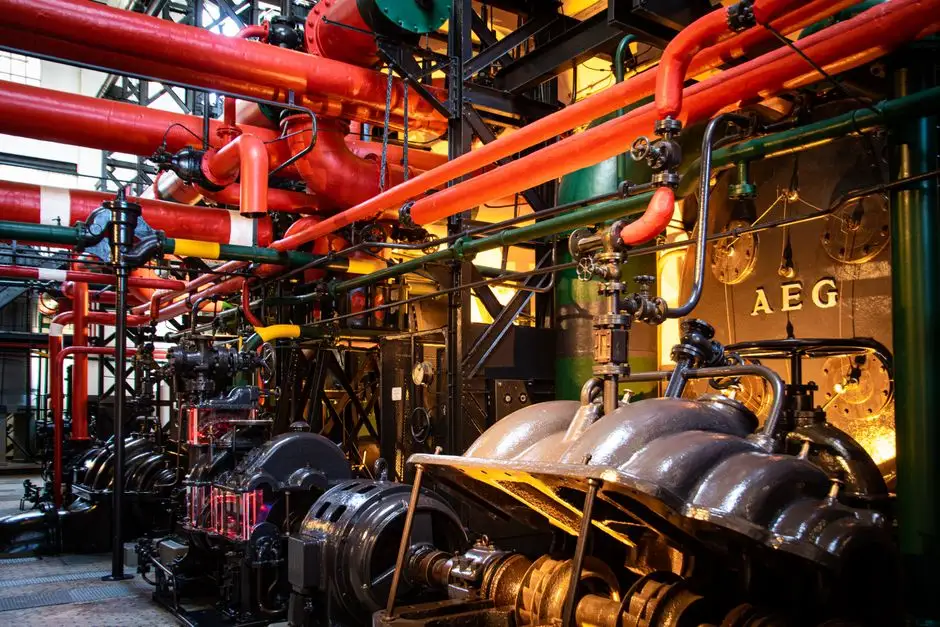
The 2026 standard train for a Berlin hyperscaler is a four-stage membrane-and-thermal stack, sized to keep both the permit reviewer and the CFO comfortable. It starts upstream of blowdown with side-stream filtration on the recirculating loop, then bleeds a cleaner blowdown to UF, then to brackish RO, and — only when the math justifies it — to MVC. Each stage has a defensible CAPEX band and a clear role.
Side-stream filtration. Self-cleaning 10-25 micron spiral filters handle 1-5% of circulation flow, cutting suspended solids before blowdown is bled off. CAPEX runs roughly USD 50,000-200,000 per the Genesis Water Technologies dataset, which converts at 0.92 EUR/USD to EUR 46,000-184,000 for a typical data-center installation. Operating cost is minimal — mainly solids disposal and mechanical maintenance.
Ultrafiltration. UF at 0.01-0.1 micron pore size, 10-30 psi, achieves 90-95% recovery and acts as the RO pretreatment and SDI guard (Genesis Water Technologies, 2026). UF strips colloids, bacteria, and biofilm fragments that would otherwise foul RO membranes within weeks. For a site integrating an industrial UF system ahead of RO, the UF step also buys tolerance for variable upstream chemistry — important when the Spree swings in hardness between summer and winter.
Brackish reverse osmosis. BWRO is the workhorse. Operating pressure 150-400 psi, recovery 50-85%, permeate TDS 10-50 mg/L — directly reusable as cooling-tower makeup (Genesis Water Technologies, 2026). Antiscalant dosing is mandatory to control silica and calcium sulfate; pH adjustment (typically 6.5-7.0) and an automatic chemical dosing system for antiscalant and biocide protect the polyamide elements from oxidative damage. A 50,000 GPD RO train lands in the USD 250,000-500,000 range installed, or EUR 230,000-460,000, with OPEX of USD 1.50-3.00 per 1,000 US gallons (EUR 1.36-2.72 per cubic meter at 0.92 EUR/USD).
Optional mechanical vapor compression. MVC processes RO concentrate to 95-98% recovery, with distillate TDS below 10 mg/L and energy use of 15-25 kWh per 1,000 US gallons of distillate (Genesis Water Technologies, 2026). MVC is the step that pushes the train toward partial or full ZLD — relevant when the BWB indirect-discharge permit is constrained or unavailable. The CAPEX jump is material: USD 1-3 million (EUR 0.92-2.76M) for 10,000-30,000 GPD capacity, plus OPEX of USD 5-15 per 1,000 US gallons (EUR 4.6-13.8 per cubic meter) for full ZLD trains that also include a crystallizer stage.
The side-by-side process-train comparison below translates the Genesis Water Technologies cost ranges into EUR at 0.92 EUR/USD and groups them by Berlin-relevant decision tier.
| Train configuration | Overall recovery | Permeate / distillate TDS | CAPEX range (EUR) | OPEX range (EUR per m³ treated) | Berlin fit |
|---|---|---|---|---|---|
| Side-stream filtration + UF only | 90-95% (UF stage) | Feed passes through; no desalination | 120,000-320,000 | 0.3-0.9 | Discharge compliance where TDS is not constrained |
| UF + BWRO | 50-85% | 10-50 mg/L | 280,000-640,000 | 1.4-2.7 | Default 2026 reuse train for Berlin makeup |
| UF + BWRO + MVC (partial ZLD) | 85-95% | <10 mg/L distillate | 1.2-3.4M | 2.7-6.9 | Permit-constrained sites needing low discharge volume |
| UF + BWRO + MVC + crystallizer (full ZLD) | 95-99% | <10 mg/L distillate; solid salt cake | 2.8-7.4M | 4.6-13.8 | No-discharge sites; ESG-driven near-zero liquid waste |
Reuse, Discharge Compliance, or ZLD: How Berlin Operators Choose
The procurement decision in 2026 reduces to three questions: how much freshwater can the site avoid drawing, how much BWB indirect-discharge volume fee is saved, and what is the local permit's tolerance for brine discharge. For most Berlin hyperscalers the answer is reuse as cooling-tower makeup, because it cuts BWB freshwater draw, reduces discharge volume, and supports a permit narrative built around water-stewardship commitments. BWRO trains hit 50-85% recovery (Genesis Water Technologies, 2026) and the permeate is clean enough to push cooling-tower cycles higher — typically from 4 up to 6-8 once RO permeate blends in.
Discharge compliance is the fallback when space, capital, or cooling layout constrains reuse. The treatment focus narrows to TDS, sulfate, and biocide neutralization, and the economic case rests on avoided discharge fees — typically USD 5-15 per 1,000 US gallons (EUR 4.2-12.6 per cubic meter at 0.92 EUR/USD) in water-stressed regions (Genesis Water Technologies, 2026). In Berlin the figure is on the lower end because BWB's industrial tariff is more moderate, but the principle is the same: a permit that requires TDS below 1,500 mg/L at the discharge point forces treatment, and the avoided fees justify UF+RO over simple blowdown disposal.
ZLD only pencils out for sites with no viable BWB indirect-discharge permit, very tight site water-stewardship commitments, or specific ESG reporting requirements. CAPEX lands in the EUR 2.8-7.4M band, OPEX in the EUR 4.6-13.8 per cubic meter range (USD 5-15 per 1,000 US gallons converted at 0.92 EUR/USD), and the technology stack shifts from membrane-dominant to thermal-dominant. A useful reference for high-recovery design is IDE's MAXH₂O approach, which operates around 95% overall recovery and reaches permeate silica of about 1 mg/L by precipitating sparingly soluble salts in a fluidized-bed reactor and running RO dynamically below scaling thresholds (IDE Technology, 2026).
Decision logic: if BWB indirect-discharge permit is available and ESG targets allow some brine discharge, specify UF + BWRO. If the permit is constrained on volume or TDS, specify UF + BWRO + MVC for partial ZLD. If no-discharge is a hard ESG or permit constraint, specify full ZLD with crystallizer. For most Berlin 2026 builds, the first option is the default. Engineers comparing train choices can review the comparable US-side CTBD treatment guide and the tropical-climate CTBD treatment guide for context, then apply the Berlin-specific regulatory overlay.
Integrating the Blowdown Train with Berlin Cooling-Water Chemistry
The blowdown train only performs if the upstream cooling-water chemistry is compatible with it. A Berlin site in 2026 should switch to non-phosphate, low-toxicity corrosion and scale inhibitor programs — tablet-based controlled-dissolution systems such as the Genclean-S reference cited in the Genesis Water Technologies dataset — to avoid membrane fouling and to keep biocide residuals inside BWB indirect-discharge limits. When RO permeate returns as ultra-pure makeup, retarget cycles of concentration upward, often 6-8, to extract more value from the reused stream without raising scaling risk. Coordinate biocide selection (stabilized bromine or DBNPA rather than free chlorine) with RO membrane compatibility to avoid oxidative damage on polyamide elements, and dose a reducing agent upstream of the RO high-pressure pump to quench any residual oxidant. The point is to make the cooling-water program and the membrane program work as one system, not as two contractors arguing about whose chemical is to blame for the fouling event.
Berlin Compliance Checklist for 2026
Use this list as a permit-readiness gate before signing an EPC contract for the CTBD train.
- Confirm IED 2010/75/EU applicability for the cooling-water installation above the IED threshold and document BAT-AEL compliance for wastewater discharges.
- Verify AwSV (Federal Water Act / Water Resources Act) requirements for substances hazardous to water, particularly biocide storage and handling around the CTBD treatment train.
- Pre-clear the BWB indirect-discharge path under the Indirekteinleiterverordnung — including TDS, sulfate, heavy metals, AOX, and phosphorus ceilings — before sizing RO or ZLD equipment.
- Document cooling-tower cycles of concentration, expected blowdown volume, and freshwater savings against Berlin's ESG and EN 50600 sustainability reporting expectations.
Frequently Asked Questions
What TDS range should a Berlin data center expect in cooling tower blowdown?
At 4 cycles of concentration, Berlin CTBD typically runs 1,200-6,000 mg/L TDS, which is 4-8x the 250-500 mg/L TDS of makeup drawn from the Spree/Havel system or BWB potable supply (Genesis Water Technologies, 2026). Pushing cycles higher concentrates scaling species — particularly silica — and reduces blowdown volume at the cost of more aggressive RO pretreatment.
Which EU directives govern CTBD discharge from a Berlin hyperscaler in 2026?
Three frameworks apply in parallel. The Industrial Emissions Directive 2010/75/EU sets BAT-AEL expectations for large cooling installations. The German WHG/AwSV framework regulates water-hazardous substances such as biocides and corrosion inhibitors. Berlin's Indirekteinleiterverordnung and BWB's Abwasserverordnung set the indirect-discharge ceilings for TDS, sulfate, AOX, phosphorus, and heavy metals.
What is the realistic 2026 CAPEX and OPEX for a UF + BWRO CTBD reuse train in Berlin?
For a 50,000 GPD (≈190 m³/day) train, CAPEX is approximately EUR 230,000-460,000 and OPEX is roughly EUR 1.36-2.72 per cubic meter treated, including energy, antiscalant, membrane replacement, and maintenance (Genesis Water Technologies, 2026, converted at 0.92 EUR/USD). Full ZLD with crystallizer raises CAPEX to EUR 2.8-7.4M and OPEX to EUR 4.6-13.8 per cubic meter.
When does ZLD make sense for a Berlin site instead of UF + BWRO?
ZLD is justified only when no BWB indirect-discharge permit is available, when ESG or water-stewardship commitments demand near-zero liquid waste, or when site water stress and permit risk make discharge untenable. For most 2026 Berlin hyperscalers, UF + BWRO with 50-85% recovery and permeate reuse as cooling-tower makeup is the default train. For broader context on high-salinity treatment economics, see the high-salinity wastewater process and cost reference and the industrial RO system for blowdown reuse product page.