Why a Hilmar-Area Plant Gets the Letter in 2026
A Notice of Violation from the local sewerage authority — not a federal inspection — is the document that reorders a Central Valley plant manager's calendar in 2026. When a Hilmar-area dairy, beverage, or food processing plant receives such a letter for elevated BOD, TSS, or FOG, the clock starts on a 30–60 day window to submit a compliance plan with measurable effluent targets. Under the National Pretreatment Program (EPA, 2024-12), local municipalities run permitting, sampling, and enforcement for indirect discharges to a POTW, which is why a single letter from the controlling authority carries the same operational weight as a federal order — and why a 2026 NOV almost always cites all four rule layers simultaneously.
Four rule layers stack on top of each other. The Clean Water Act §307(b) authorizes EPA to set national pretreatment standards for industrial users discharging to a POTW. Those standards live in 40 CFR Part 403 (general pretreatment, applicable to every industrial user) and in 40 CFR Part 432 (categorical standards for food and beverage point sources, split by subpart: dairy 432.21–432.30, beverages 432.71–432.80, meat products 432.1–432.10, grain mills 432.41–432.50, and canned/frozen fruits and vegetables 432.61–432.70). EPA delegates day-to-day enforcement to approved state and local programs, meaning the controlling authority in the Hilmar area is typically the Hilmar County Water District, the City of Turlock, or a Merced/Stanislaus County sanitation district, acting under a sewer use ordinance and any applicable Central Valley RWQCB delegation. Per EPA guidance, "local limits are site-specific and can be numeric or narrative effluent discharge limits" — and those limits can be stricter than the federal floor but never weaker, per 40 CFR 403.5 (EPA pretreatment standards and local limits guidance).
The California specificity matters. The State Water Resources Control Board and the nine Regional Water Quality Control Boards — including the Central Valley RWQCB covering the Hilmar region — closely monitor wastewater discharges and often demand stringent effluent limits and advanced treatment in water-scarcity areas, with the Central Valley RWQCB emphasizing innovative treatment methods and strict compliance measures (Integrated Water Services, 2025). A 2026 plant that cannot cite the exact 40 CFR 432 subpart, the 40 CFR 403 general standard, and the local ordinance clause being enforced will struggle to contest a BOD or FOG finding in front of the sewerage authority. For a parallel New Jersey compliance map, see the Bridgewater Township pretreatment compliance guide.
Pretreatment Parameters That Trigger a 2026 NOV in the Central Valley
Most California sewerage authorities, including the Hilmar County Water District and neighboring Merced/Stanislaus sanitation districts, set indirect-discharge limits on the same core parameters a plant engineer must verify against the actual discharge permit. The values below are typical ceilings; the engineer must confirm exact numbers in the controlling ordinance, since local limits can run stricter than the federal floor but never weaker per 40 CFR 403.5.
| Parameter | Typical Central Valley POTW Ceiling | Sub-sector that drives it |
|---|---|---|
| BOD₅ | 250–500 mg/L (daily max) | Dairy (protein-bound); beverage/confectionery (sugar/starch) |
| TSS | 250–500 mg/L (daily max) | Bakery, snack, ready-meal (pulp, seeds, grains) |
| FOG (total) | 100 mg/L (daily max); 50 mg/L (monthly avg) | Meat, poultry, dairy, snack-food |
| pH | 6.0–9.0 (instantaneous range) | Any plant with CIP (clean-in-place) surges |
| Ammonia (as N) | 10–30 mg/L (varies by POTW) | Dairy, meat, brewery |
| Temperature | ≤ 40 °C (104 °F) at POTW headworks | Any plant with hot CIP or boiler blowdown |
| Flow | Site-specific (gpd cap; surcharge trigger) | All sub-sectors |
Loads are not dropping. U.S. per-capita food waste runs 149 kg under the current EPA-2021 definition and 107 kg under the 2016 baseline; the EPA-2021 reinterpretation raised the official reduction target to 74 kg per capita, and none of the 50 states are projected to meet that goal on policy alone (Springer Nature, 2024-12). In practice, that means food-waste streams feeding industrial wastewater trains in 2026 are staying at or above current strength — and a Hilmar-area plant that ran close to the line in 2024 is statistically more likely to trip an NOV in 2026, not less. The sub-sector that drives each parameter matters because the audit response turns on matching your actual waste signature to the right 40 CFR 432 subpart (ALAR sub-sector contamination breakdown).
The Five-Stage Equipment Train That Holds Up in an Audit
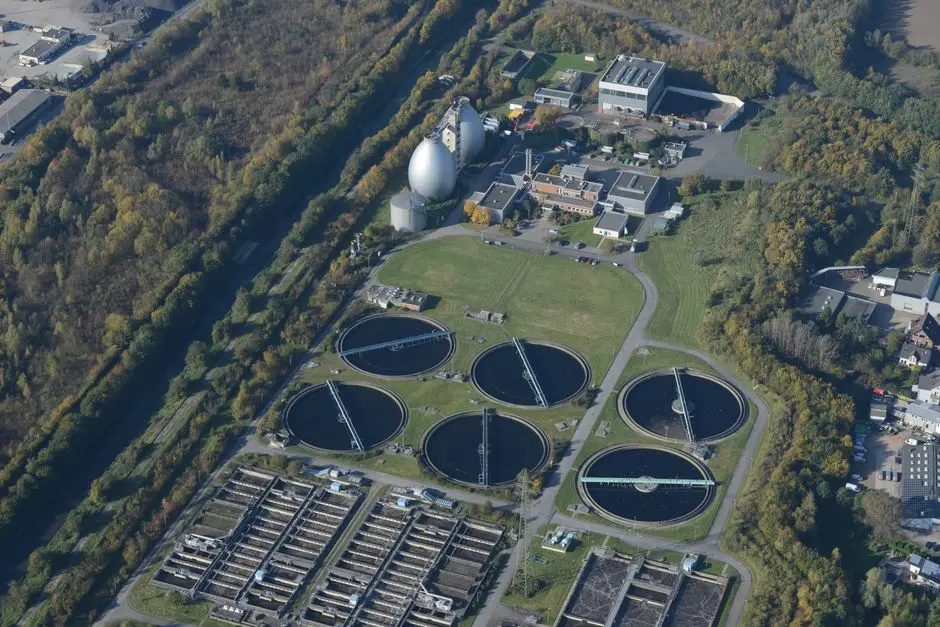
A defensible 2026 train for a Hilmar-area food or beverage plant follows a five-stage sequence, allowing the engineer to justify each performance metric to the authority during an audit or NOV response. The table below pairs each stage with its primary removal mechanism, the sub-sector where it does the heaviest lifting, and the design rule an auditor will check.
| Stage | Equipment | Primary target | Design rule / verifiable metric |
|---|---|---|---|
| 1 | Rotary mechanical bar screen (headworks) | Rags, seeds, pulp, packaging debris | ≥ 6 mm opening; protects downstream DAF pumps |
| 2 | Dissolved air flotation (DAF) | FOG, emulsified oil, colloidal TSS | FOG cut from 800–1,500 mg/L to under 100 mg/L; peak-rated |
| 3 | pH neutralization + coagulant/polymer dosing | pH excursion, colloidal load, TDS | PLC-controlled; buffers CIP swings of pH 2–12 |
| 4 | Biological polishing (MBBR, IFAS, or MBR) | Dissolved BOD, ammonia, residual organics | MBBR/IFAS at 350–500 m²/m³ for protein-bound BOD; MBR ≤ 1 µm for reuse |
| 5 | Plate-and-frame filter press (or rotary vacuum drum) | DAF float + waste activated sludge | 20–25% cake solids; 75–80% volume reduction |
Stage 1 uses a GX series rotary mechanical bar screen for headworks protection, sized to remove debris that would otherwise damage a DAF pump. A 6 mm opening is the practical floor for a Central Valley food plant; anything coarser passes almond shell, grape seed, and tomato pulp fragments that jam DAF scrapers.
Stage 2 — the DAF — is the workhorse for meat, poultry, dairy, and snack-food operations (ALAR engineering data, 2026). For meat and poultry, raw FOG runs 800–2,000 mg/L and the skimmed float must route to a separate FOG tank to prevent re-emulsification; a properly coagulated DAF typically reduces FOG from 800–1,500 mg/L to under 100 mg/L. Specify a HydropureWater dissolved air flotation system rated for peak FOG and TSS loads rather than average daily flow.
Stage 3 stabilizes CIP surges before biology. A PLC-controlled coagulant and polymer dosing skid equalizes pH and TSS at the DAF outlet, can be re-tuned for sub-sector changes without re-plumbing, and is what stops a 12-pH wash from killing the biofilm in Stage 4.
Stage 4 does the biological polishing. MBBR or IFAS with 350–500 m²/m³ of carrier media is the right call for protein-bound dairy BOD; a HydropureWater MBR system is the right call for tight-footprint polishing where effluent reuse is a 2026 stretch goal. A submerged MBR delivers ≤ 1 µm membrane filtration and effluent clean enough for clean-in-place rinsewater or irrigation.
Stage 5 closes the loop. A plate-and-frame filter press dewaters the DAF float and the waste activated sludge to 20–25% cake solids, producing a 75–80% volume reduction versus liquid sludge hauling — the figure that goes on the disposal-cost line of the audit response.
Across all five stages, repeat the design rule from the Bridgewater sister article: size the train for 1.5× the average daily flow, not the average, and rate the DAF for peak FOG and TSS loads. A 70,000 gpd (≈ 265 m³/day) food plant is the scale for which Mead & Hunt commissioned a temporary pretreatment system in 10 days (Mead & Hunt, 2024) — the same hydraulic logic applies to permanent installs.
Matching the Train to a Hilmar Sub-Sector
Each sub-sector under 40 CFR 432 stresses different stages, and identifying which stage is overloaded dictates where to add capacity. Hilmar is a heavy dairy hub, but the surrounding Central Valley also runs significant beverage, snack, and ready-meal operations — so the audit response must reflect the actual SIC/NAICS code of the discharging facility, not the regional stereotype.
Dairy and cheese plants. Protein-rich waste drives foaming and odor in the biological stage; specify MBBR or IFAS with extra biofilm surface area (350–500 m²/m³ of media) to absorb protein-bound BOD. The DAF still does the FOG cut, but the polish stage is where this sub-sector lives or dies.
Beverage, brewery, and confectionery plants. Sugar- and starch-dominated waste spikes BOD within hours of a batch; mandate a robust equalization basin (≥ 8 hours of retention) and a high-rate biological stage. For high-starch waste streams, see the DAF configuration for high-starch food wastewater guide.
Meat and poultry processors. The DAF is the critical stage; route skimmed float to a separate FOG tank to prevent re-emulsification and downstream load shock. The biology here is forgiving compared to dairy — the FOG cut is what determines compliance.
Bakery, snack, and ready-meal plants. High suspended solids from pulp, seeds, and grains push the burden onto screening and DAF sizing; verify screen opening and DAF surface loading before sizing biology, or the biomass gets buried in inert TSS and the BOD removal efficiency collapses (ALAR sub-sector contamination breakdown).
CIP surges shift pH from 2 to 12 in a single shift and push TDS into the biological stage across all sub-sectors. The fix is an equalization tank paired with a PLC-controlled coagulant and pH dosing skid between the DAF and the biological reactor (ALAR engineering data, 2026) — this is non-negotiable for any plant with a clean-in-place loop.
The 2026 Compliance Path for a Hilmar-Area Plant

The defensible sequence is six steps, each with a verifiable deliverable. Aligning these with the 2026 permit renewal window is the difference between a clean audit and an enforcement order.
- Baseline sampling. Pull 24-hour composite samples across at least five operating days; characterize BOD, TSS, FOG, pH, ammonia, and temperature. Without a baseline, any equipment claim is a guess.
- Jar testing and DAF pilot. Run a jar test and a DAF pilot on real plant water to validate coagulant dose, polymer type, and float quality before committing to a full-scale unit. The pilot is what defends the design numbers in the audit.
- Written confirmation of local limits. Get a written confirmation of local limits from the controlling sewer district (Hilmar County Water District, City of Turlock, or applicable Merced/Stanislaus authority) and confirm the Central Valley RWQCB delegation path. Verbal confirmation is not a defense.
- Final equipment selection and PO. Issue the purchase order and start foundation work. Permanent DAF-plus-biological installs typically require 8–16 weeks from PO to commissioned operation.
- Temporary pretreatment if an NOV precludes the permanent install. If the 30–60 day NOV window will not cover an 8–16 week permanent install, deploy a temporary pretreatment system. Mead & Hunt delivered a 70,000 gpd pilot with pH control, FOG removal, one day of effluent storage, a temporary lift station, and a sampling plan within a 10-day window (Mead & Hunt, 2024) — a direct precedent for acute permit pressure in the Central Valley.
- 90-day shakedown with monthly DMRs. Run a 90-day shakedown and submit monthly Discharge Monitoring Reports before the next permit renewal window closes. This is the operating period where the design numbers either hold up or get re-tuned.
Frequently Asked Questions
Which 40 CFR Part 432 subpart applies to a Hilmar-area dairy or beverage plant?
For a Hilmar-area dairy processor, the controlling subpart is 40 CFR 432.21–432.30 (dairy products), which defines daily maximum and monthly average limits for BOD, TSS, and FOG by sub-category (fluid milk, cheese, butter, etc.). For a beverage or brewery plant, the controlling subpart is 40 CFR 432.71–432.80 (beverages). Plants should bookmark EPA's Attachment 3-1: Summary of Categorical Standards (December 2024) and confirm the subpart against the plant's SIC/NAICS code before any equipment commitment.
What FOG removal performance should a DAF deliver to satisfy a Central Valley sewer authority in 2026?
A properly coagulated DAF typically cuts FOG from 800–1,500 mg/L in the raw stream to under 100 mg/L in the DAF effluent, and handles raw loads of 800–2,000 mg/L for meat and poultry with the skimmed float routed to a separate FOG tank to prevent re-emulsification. The DAF should be sized for 1.5× the average daily flow and rated for peak FOG and TSS loads rather than the daily average.
How dry does dewatering cake need to be to reduce hauling costs for a Hilmar-area food plant?
A plate-and-frame filter press or rotary vacuum drum typically dewaters combined DAF float and waste activated sludge to 20–25% cake solids, producing a 75–80% volume reduction versus liquid sludge hauling. At that dryness, the cake is typically acceptable for landfill or renderer pickup and the per-ton disposal cost drops proportionally to the volume reduction.
Who actually sends the NOV — EPA, the State Water Board, or the local sewer district?
For an indirect discharger in the Hilmar area, the NOV almost always comes from the local sewerage authority — most commonly the Hilmar County Water District, the City of Turlock, or a Merced/Stanislaus County sanitation district — acting under its own sewer use ordinance with Central Valley RWQCB delegation. EPA enforces the underlying 40 CFR 403 and 40 CFR 432 standards but delegates day-to-day permitting, sampling, and NOV issuance to approved local programs, which is why a single letter from the local authority carries the same operational weight as a federal order.