
Why "Power Plant Sludge" Is Not the Same as Municipal Biosolids
Power plant wastewater sludge treatment in 2026 covers four distinct streams — flue gas desulfurization (FGD) gypsum, cooling-tower blowdown solids, boiler blowdown, and coal-ash contact water — handled by thickening, chemical conditioning, and mechanical dewatering (typically plate-and-frame filter press to 55–75% cake solids) before landfill, beneficial reuse, or thermal recovery. Discharge limits are set by the U.S. EPA ELG rule (40 CFR Part 423) and the EU Industrial Emissions Directive 2010/75/EU. If you landed here expecting a biosolids story, the mismatch is the point: most search results conflate power-plant residuals with municipal sewage sludge, and the process trains are not interchangeable.
For scale, U.S. WWTPs process roughly 62.5 billion gallons (~235 million tons) of sewer water per day, yielding about 2 million tons of biosolids with a calorific value comparable to low-grade coal at ~12 MJ/kg (International Plasma Technology Center). Power-plant sludge volumes are site-specific and far lower per facility, but the chemistry is more variable: calcium sulfite/sulfate in FGD, high-TDS iron-rich solids in boiler blowdown, and trace metals (As, Se, Hg, B) in coal-ash contact water. That variability — not the volume — is what forces a power-industry process train. Energy content still matters: sewage sludge calorific value ranges 9–23 MJ/kg (PMC review), roughly equivalent to 2.52–6.44 kWh of electricity per kilogram, so the thermal-reuse decision turns on dry-solids percentage and trace-metal ceiling rather than raw volume. For a complementary look at industrial pretreatment framing, see this electroplating sludge treatment guide.
The Four Power-Plant Sludge Streams and How They Behave
FGD gypsum is the largest stream by mass at any coal-fired plant fitted with a wet limestone scrubber. The slurry enters thickening at 2–10% suspended solids, dominated by calcium sulfite hemihydrate and calcium sulfate dihydrate; the design target is dewatering to >65% cake solids for wallboard-grade reuse (per EPA and ASTM C471 specifications). Cooling-tower blowdown is thinner — suspended solids typically 50–500 mg/L — but carries high TDS, scaling ions (Ca, Mg, SiO₂), and residual biocides; a DAF pre-thickener is the workhorse for lifting it to 3–5% solids before downstream dewatering. Boiler blowdown is low-volume and hot, depositing iron-rich sludge (Fe₂O₃, Fe₃O₄) that is normally cooled and settled. Coal-ash contact water — runoff from ash handling and landfill leachate — is the regulatory pinch point: it carries regulated trace metals (As, Se, Hg, B) under 40 CFR Part 423, and any discharge permit will live or die on its treatment train.
For global context, total sewage sludge generated worldwide is approximately 8.16 million tonnes per day (PMC review) — a figure that has nothing to do with power-plant volumes but illustrates why municipal biosolids dominates the search results. Power-plant engineers should plan around their own stack-gas chemistry and water chemistry, not municipal analogies.
| Stream | Typical Feed Solids | Dominant Species | Critical Contaminants | Primary Dewatering Target |
|---|---|---|---|---|
| FGD gypsum | 2–10% | CaSO₃·½H₂O, CaSO₄·2H₂O | Cl⁻, trace Hg, fine limestone | >65% cake for wallboard reuse |
| Cooling-tower blowdown | 50–500 mg/L SS | CaCO₃, SiO₂, biocides | TDS, residual oxidizers | 3–5% thickened, then press/centrifuge |
| Boiler blowdown | <1% | Fe₂O₃, Fe₃O₄, hardness salts | Hot temperature (60–95 °C) | Sedimentation + sludge press |
| Coal-ash contact water | 100–2,000 mg/L SS | Silicates, Al/Fe oxides | As, Se, Hg, B (40 CFR 423) | Chemical precipitation + filter press |
Process Train for Power-Plant Sludge: Equalization → Conditioning → Dewatering
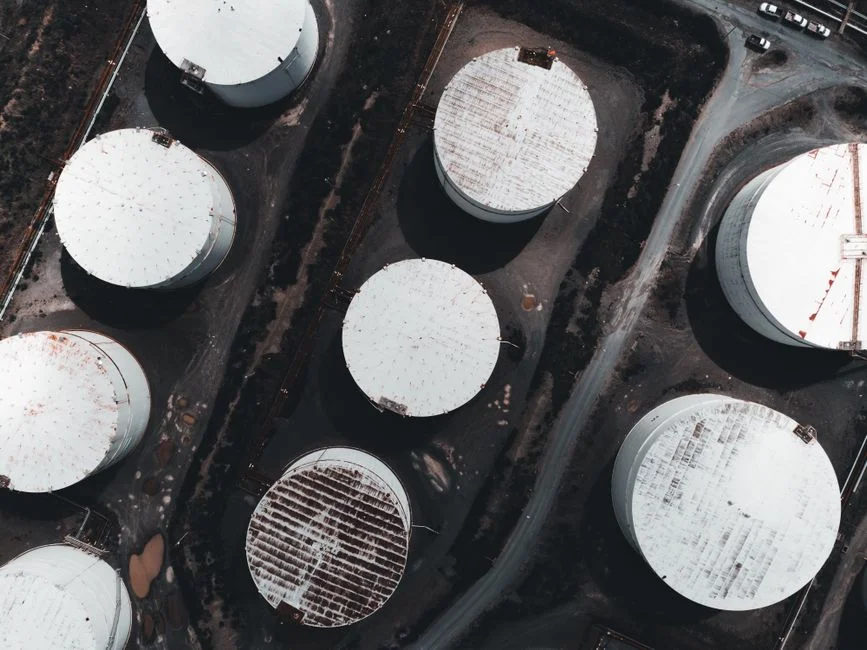
The canonical 2026 process train is a four-stage block: equalization, chemical conditioning, mechanical dewatering, and effluent polishing. Equalization is sized for 8–24 h hold to smooth swings in FGD gypsum production during load-following; a 50 MW unit cycling between 60% and 100% load can swing scrubber slurry flow by 30–40% over a shift, and the equalization basin dampens that variability so the dewatering equipment runs at steady state. Basin sizing typically follows 1 m³ of hold per kg/h of peak FGD solids, but site-specific ash chemistry and gypsum purity set the final number.
Chemical conditioning uses cationic polyacrylamide (CPAM) at 8–15 kg/dry tonne for FGD gypsum; dose is tuned by charge density (typically 40–70%) and molecular weight (8–12 MDa). When CCR/ELG compliance requires trace-metal stabilization, lime (Ca(OH)₂) at 10–20% dry weight or ferric chloride (FeCl₃) at 5–10% is added upstream of the press to lock As, Se, and Hg into the cake. Mechanical dewatering options — plate-and-frame filter press, decanter centrifuge, belt filter press, DAF pre-thickener — are compared in the next section. Effluent polishing is non-negotiable for any recycle loop: a multi-media filter targeting filtrate suspended solids <200 mg/L is the 2026 baseline for cooling-tower blowdown recycle to the FGD scrubber, with RO added where chloride control matters.
Where thermal recovery is on the table, the engineering numbers matter: gasification operates at ~1,000 °C with limited O₂ to produce syngas (PMC review), and dried sludge self-ignites in the 420–500 °C range (PMC review) — both relevant to kiln and co-firing decisions. Below ~55% dry solids, autothermal combustion is not feasible without auxiliary fuel, which is why the mechanical-dewatering target is non-negotiable for any thermal pathway.
Dewatering Equipment Compared: Filter Press, Centrifuge, Belt Press, DAF
The 2026 buyer's decision between the four workhorse technologies hinges on cake dryness target, footprint, OPEX, and CAPEX. The plate-and-frame filter press delivers 55–75% cake solids on FGD gypsum — the highest of any mechanical option — at the cost of higher CAPEX and batch duty. It fits plants running 1–3 dewatering cycles/day, where the press can be fed from an equalization basin rather than continuously. A DAF pre-thickener sits upstream of either a press or a centrifuge, lifting feed solids from <1% to 3–5% and shrinking the downstream machine by a factor of 3–5x.
Decanter centrifuges run continuously, occupy ~1/3 the footprint of a filter press, and produce cake in the 25–35% solids range — adequate for landfill but below wallboard reuse spec. Belt filter presses sit at 18–25% cake solids, the lowest CAPEX of the four, but their polymer demand is 20–40% higher and their use in 2026 new builds is declining. For pre-thickening and TSS reduction on thin streams, a high-rate sedimentation tank is often paired with DAF to handle hydraulic surges. Energy benchmarks from municipal-scale references illustrate what a mature sludge train can deliver: the Gresham, USA facility now produces 92% of its own power and reduces monthly electricity bills by $40,000–$50,000 (Veolia).
| Technology | Cake Solids (% DS) | Polymer Dose (kg/dry t) | Footprint | Duty Cycle | 2026 Use Case |
|---|---|---|---|---|---|
| Plate-and-frame filter press | 55–75% | 8–15 | Large | Batch (1–3 cycles/day) | FGD gypsum for wallboard, low-volume CCR |
| Decanter centrifuge | 25–35% | 5–10 | Small | Continuous | High-throughput blowdown, landfill cake |
| Belt filter press | 18–25% | 10–20 | Medium | Continuous | Declining; legacy retrofits only |
| DAF pre-thickener | 3–5% (thickened feed) | 2–5 | Compact | Continuous | Pre-thickens thin streams upstream of press/centrifuge |
2026 Regulatory Drivers: EPA ELG, CCR Rule, and EU IED
Three regulatory frameworks dictate process choice for a power plant specifying sludge equipment in 2026. In the U.S., the EPA Effluent Limitation Guidelines under 40 CFR Part 423 set FGD wastewater limits for arsenic, mercury, selenium, and nitrate/nitrite in the µg/L to low-mg/L range, with the 2020 revisions tightening discharge ceilings and pushing plants toward zero-liquid-discharge (ZLD) configurations. The Coal Combustion Residuals (CCR) Rule governs landfill and surface impoundment of coal-ash contact sludge; Phase 2 reporting has driven measurable dewatering CAPEX as utilities close ash ponds and switch to dry-handling. In the EU, the Industrial Emissions Directive 2010/75/EU and its BAT conclusions for common wastewater treatment set comparable ceilings, with BAT-AELs for total suspended solids, heavy metals, and total nitrogen that any new permit must address.
State-level overlays can be stricter than federal ELG and must be checked permit-by-permit — particularly for FGD wastewater in the Ohio River Basin, Chesapeake Bay watershed, and any plant discharging to an impaired water body. For pretreatment-program context outside the power sector, see this 2026 DEQ sewer limits guide and this petroleum bulk plant pretreatment analysis. The net effect: a 2026 dewatering spec that ignores 40 CFR Part 423, the CCR Rule, and EU IED BAT will fail the regulatory review before it reaches commissioning.
Energy Recovery and Beneficial Reuse: When Sludge Becomes a Fuel
Thermal recovery for power-plant sludge is realistic only above ~55% dry solids, and three pathways are economically defensible in 2026. FGD gypsum to wallboard manufacturing is the highest-value route: gypsum purity >95% and moisture <10% meet ASTM C471 wallboard spec, and a 500 MW coal unit can supply 200–400 tonnes/day of wallboard-grade gypsum. Co-firing dried sludge in the plant's own boiler is the second route, viable where the boiler is fitted with a FGD scrubber system and the dried cake is below regulatory thresholds for Hg, Cl, and S loading on the fireball. Landfill with leachate control is the baseline fallback; a pulse-jet baghouse on the dryer off-gas keeps the dry-handling train compliant with particulate MACT.
For scale, sewage sludge energy content averages 9–23 MJ/kg, and one tonne yields roughly 4,480 kWh of electricity (PMC review). Plasma gasifier modeled thermal efficiency approaches 85% (International Plasma Technology Center), but that figure is municipal-scale and rarely economic for a single power plant. The Veolia Urumqi installation — 80,000 m³ sludge/month, 930,000 m³ biogas/month, 800,000 kWh/month (Veolia) — is the benchmark for what a serious energy-recovery train can deliver, and it underscores why power-plant sludge alone rarely justifies a digester unless co-located with municipal or food-processing waste.
Sizing a Plate-and-Frame Filter Press for Power-Plant Duty
Filter area selection is the first number a vendor will ask for. The 2026 rule of thumb for FGD gypsum is 1 m² of filtration area per 5–8 kg dry solids/h, scaling with cake thickness target: a 30 mm cake at 60% moisture needs more area per kg than a 25 mm cake at 40% moisture. For a 500 MW unit producing 15 tonnes/h of FGD gypsum dry solids, filtration area lands in the 190–300 m² range, typically configured as two presses in parallel for redundancy. Cycle time is 60–120 minutes including fill (20–30 min), press (25–40 min at 6–15 bar), cake wash (5–10 min), and discharge (5–10 min); PLC-controlled hydraulic closure is standard in 2026 units.
Filtrate quality is typically <200 mg/L suspended solids, suitable for recycle to the FGD scrubber makeup or to a downstream RO step. The HydropureWater plate-and-frame range covers 1–500 m² filtration area, with recessed-chamber and membrane-squeeze variants for the higher cake-solids targets. For a related look at chemical-feed sizing that pairs with the press, see this flocculant dosing unit guide.
| Parameter | 2026 Typical Range (FGD Gypsum) | Design Driver |
|---|---|---|
| Filtration area per kg dry solids | 1 m² per 5–8 kg DS/h | Target cake thickness & moisture |
| Operating pressure | 6–15 bar | Solids capture vs. cycle time |
| Cycle time (fill → press → wash → discharge) | 60–120 min | Hydraulic closure rate |
| Cake thickness | 25–32 mm | Filter cloth wear, discharge |
| Filtrate SS | <200 mg/L | Recycle to scrubber or RO feed |
| CPAM polymer dose | 8–15 kg/dry tonne | Gypsum purity, fines fraction |
Frequently Asked Questions
What are the four main sludge streams at a power plant?
The four streams are flue gas desulfurization (FGD) gypsum, cooling-tower blowdown solids, boiler blowdown, and coal-ash contact water. FGD gypsum is the largest by mass and is dewatered to >65% cake solids for wallboard reuse. Coal-ash contact water is the most heavily regulated due to arsenic, selenium, mercury, and boron under 40 CFR Part 423.
What cake dryness can a plate-and-frame filter press reach on FGD gypsum?
A plate-and-frame filter press on FGD gypsum typically achieves 55–75% cake solids, with 8–15 kg/dry tonne of cationic polyacrylamide conditioning. This dryness is the threshold for wallboard-grade reuse and for autothermal combustion in a co-firing configuration.
Which 2026 regulations govern power plant wastewater sludge discharge?
U.S. plants operate under the EPA Effluent Limitation Guidelines (40 CFR Part 423) and the Coal Combustion Residuals (CCR) Rule, which set discharge ceilings for arsenic, mercury, selenium, and nitrate/nitrite in FGD wastewater. EU plants operate under the Industrial Emissions Directive 2010/75/EU and the BAT conclusions for common wastewater treatment, which set comparable ceilings for total suspended solids, heavy metals, and total nitrogen.
Is thermal energy recovery from power plant sludge economic in 2026?
Energy recovery is economic only when cake solids exceed ~55% DS. Sewage sludge energy content ranges 9–23 MJ/kg (PMC review), and one tonne yields roughly 4,480 kWh of electricity, but power-plant volumes are site-specific. FGD gypsum to wallboard and co-firing in the plant's own boiler are the realistic 2026 routes; plasma gasification at 85% modeled efficiency remains municipal-scale economics.
How is a plate-and-frame filter press sized for power plant duty?
Size 1 m² of filtration area per 5–8 kg dry solids/h for FGD gypsum, scaling with cake thickness target. A 500 MW unit producing 15 tonnes/h of dry FGD solids lands at 190–300 m², typically two presses in parallel. Cycle time is 60–120 minutes at 6–15 bar operating pressure, with PLC-controlled hydraulic closure standard. For the broader 2026 equipment market context, see the 2026 wastewater equipment market trends overview and this cable manufacturing sludge process guide for cross-industry pretreatment context.