Why Sedalia's POTW Limits Are a Special Case
In December 2012, Alliance Water Resources — the firm that has managed the City of Sedalia Water Pollution Control Department since 2008 — published a case study that reshaped how local limits are derived for industrial dischargers in Pettis County. Alliance's team, led by Phil Webster, ran a year of site-specific hardness testing on the receiving stream and proved that the default hardness numbers previously held by the Missouri Department of Natural Resources (DNR) were "low compared to the actual numbers" — meaning metals in the discharge had been over-estimated as toxic, and allowable loadings could be raised without harming water quality. The corrected numbers saved the city $2.5–5 million in capital and saved local industries "several hundreds of thousands" in pretreatment upgrades that would otherwise have been forced on them (per Alliance Water Resources, 2012-12).
That 2012 derivation is the operating precedent for any new local-limit work in the 2026 permit cycle. Under the Lead and Copper Rule Revisions (LCRR) and any 2025 ore-mining BAT revision, the control authority will rerun the same hardness-based site-specific methodology — and the numbers that fall out of the rerun, not the federal categorical ceiling, are what drive equipment sizing. Mayor Elaine Horn framed the local industrial base as "large" and predominantly manufacturers who could not have absorbed a forced retrofit; in 2026 that mix is still tilted toward fabricated-metals and metal-finishing operations rather than primary ore mining, which determines which federal standard actually applies (see next section). A Sedalia engineer scoping a 2026 compliance program should plan for a re-derivation cycle, not a static permit.
Which Federal Standards Actually Apply to a Sedalia Mining or Metals Plant
A facility discharging to a US sewer is not governed by an NPDES permit — it is governed by the Clean Water Act §307(b) pretreatment program at 40 CFR Part 403, which delegates enforcement to the local POTW through its sewer-use ordinance (per the canonical HydropureWater pretreatment guide). The federal framework is the floor; the local ordinance is the ceiling. The categorical standard that binds the plant depends on the process, not the zip code.
40 CFR Part 437 (Ore Mining and Dressing) applies if the operation is a primary ore mine; representative subcategory limits per 40 CFR 437.40–437.47 are the baseline numbers. 40 CFR Part 433 (Metal Finishing) is the controlling standard for the typical Sedalia fabricator with plating, pickling, or anodizing lines: copper is capped at 3.38 mg/L daily-max / 2.07 mg/L monthly-average and total chromium at 2.77 mg/L daily-max / 1.71 mg/L monthly-average (per 40 CFR 433.15). Most Sedalia-area plants also carry an NPDES permit for separate stormwater outfalls — that is a parallel authorization under CWA §402 and does not replace the sewer-discharge pretreatment program (per Fluence, 2024-11).
| Parameter | 40 CFR Part 433 Daily Max (mg/L) | 40 CFR Part 433 Monthly Avg (mg/L) | 40 CFR Part 437 Daily Max (mg/L) | 40 CFR Part 437 Monthly Avg (mg/L) |
|---|---|---|---|---|
| Copper (Total) | 3.38 | 2.07 | 1.0 | 0.5 |
| Total Chromium | 2.77 | 1.71 | 1.0 | 0.5 |
| Lead (Total) | 0.69 | 0.43 | 0.5 | 0.25 |
| Zinc (Total) | 2.61 | 1.48 | 1.0 | 0.5 |
| pH Range (instantaneous) | 6.0–9.0 (standard categorical band across both parts) | |||
The first scoping decision is which of those two columns applies. Conflating them is the single most common reason a Sedalia fabricator invests in the wrong treatment train.
Federal Categorical Floor vs Typical 2026 Sedalia Local Limit
The local Sedalia-area sewer-use ordinance is typically tighter than the federal categorical ceiling on zinc, copper, and lead, but the Alliance-era hardness correction can also loosen the local number on a parameter-by-parameter basis when the receiving stream's actual hardness is higher than the DNR default. The table below uses the 40 CFR Part 437 column as the federal floor and a representative Sedalia-tier local monthly average as the local ceiling; plant engineers must always confirm against the current ordinance and the LCRR-driven re-derivation before sizing equipment.
| Parameter | 40 CFR Part 437 Daily Max (mg/L) | 40 CFR Part 437 Monthly Avg (mg/L) | Typical 2026 Sedalia POTW Local Monthly Avg (mg/L) |
|---|---|---|---|
| Zinc | 1.0 | 0.5 | 0.3–1.0 (hardness-dependent) |
| Copper | 1.0 | 0.5 | 0.3–0.5 |
| Lead | 0.5 | 0.25 | 0.1–0.3 (LCRR pressure toward 10 µg/L action level) |
| Total Chromium | 1.0 | 0.5 | 0.5–1.0 |
| pH (instantaneous) | 6.0–9.0 | 6.5–9.0 | |
| Total Suspended Solids | 250 (typical categorical) | 200–250 | |
For hardness-corrected streams, the local ceiling can be looser than the federal ceiling on metals — that is the Alliance precedent. But LCRR (per EPA LCRR, 2024) is pushing lead action levels toward 10 µg/L, which will re-tighten the numbers through the 2026 permit cycle regardless of hardness. Treat the local column as a moving target.
Equalization, pH Correction, and Metals Precipitation
Equalization is the unit operation most commonly undersized in operating pretreatment plants, and the most expensive civil item to retrofit after the fact. Spec the basin at 8–24 hours of average daily flow to dampen batch discharges from shift changes, dump-leach cycles, and mill clean-outs; a 4-hour basin passes every upstream spike straight into the clarifier and overwhelms it. Include mechanical or jet mixing sized to turn the basin over at least once per hour, with pH and TSS probes mounted downstream of the mix zone so the operator reads a representative sample rather than a dead-zone value.
pH correction is the unit operation where a 0.2-band control error becomes a 10× effluent excursion. Target pH 6.5–9.0 to satisfy virtually every POTW's instantaneous range, and stage the dose across two reactors if the influent swings more than 2 pH units between dump-leach and steady-state flows. Lime (Ca(OH)₂) is cheaper per ton but generates 3–5× more sludge, so high-TDS mining and metal-finishing streams usually justify the NaOH premium once Subtitle-D landfill hauling is priced in.
Precipitation chemistry is parameter-specific. Copper precipitates near pH 9, zinc near 9, lead near 9.5, nickel near 10, and cadmium near 10.5; each 1 pH unit off optimum cuts removal efficiency by roughly an order of magnitude (per Fluence, 2024-11). Properly controlled hydroxide systems achieve 85–95% total metals removal in operating mining/metals installations. Sulfide polishing with NaHS or FeS on a slipstream drives residual Cu/Zn/Cd/Ni down to 0.01–0.05 mg/L when the local limit is below 0.3 mg/L — at 2–4× the reagent cost and with sealed reactors plus H₂S scrubbers. A PLC-controlled chemical dosing skid that holds pH inside a ±0.2 band is the difference between meeting and missing a 0.3 mg/L zinc monthly average.
DAF or Lamella: Choosing the Right Clarifier for a Sedalia Plant
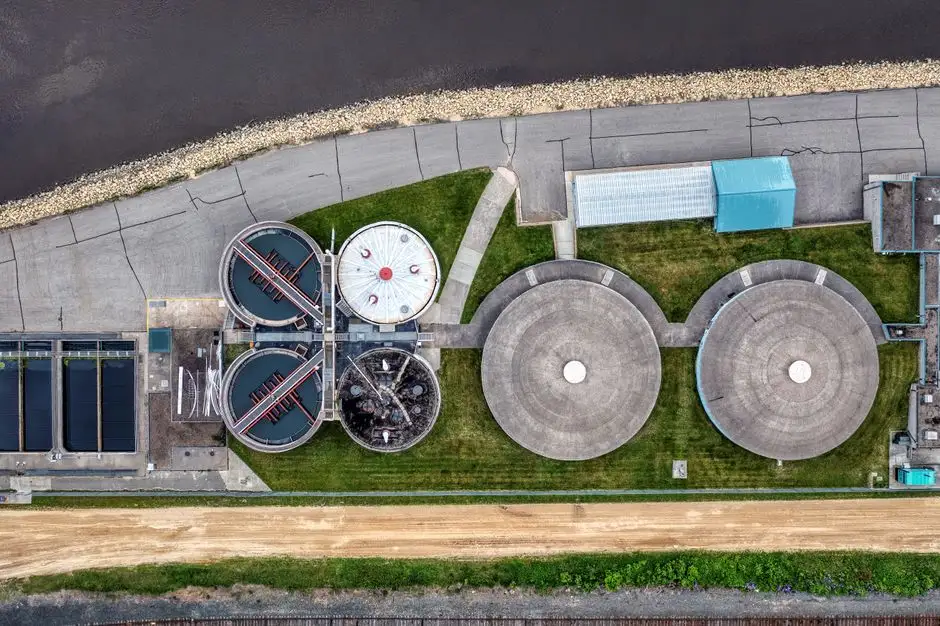
This is the decision most engineers actually face in a real vendor meeting. Both units work; neither is universally better, and the tiebreaker is the stream chemistry, not the price.
| Selection Criterion | DAF | Lamella Clarifier |
|---|---|---|
| Hydraulic / Surface Loading | 5–25 m/h | 20–40 m/h |
| Flow Range | 4–300 m³/h (13 standard models) | Best above 100 m³/h |
| TSS Removal | 90–98% | 85–95% |
| Oil/Grease Removal | 85–95% | Limited |
| Footprint | Larger than lamella at equivalent flow | ~1/3 of conventional clarifier |
| Best Fit | Oil, colloidal fines, flow < 200 m³/h | Metal-hydroxide sludge, flow > 100 m³/h, footprint-constrained |
A DAF system floats oil-coated and colloidal particles with microbubbles and pulls oil/grease at 85–95% — the right call when the stream carries cutting fluids, lubricants, or fine colloidal metals. A HydropureWater lamella clarifier runs at 20–40 m/h surface loading, has lower chemical consumption because the sludge blanket is denser, and handles heavy metal-hydroxide flocs very well, but it does not remove free oil as effectively as DAF. A polymer coagulant aid at 0.5–3 mg/L floccs the metal-hydroxide particles fast enough for either clarifier to operate without carryover. For a typical Sedalia fabricated-metals plant at 10–80 m³/h, packaged DAF skids or a single lamella unit both fit; the decision is oil/FOG loading, not flow.
Polishing, Disinfection, and Sludge Dewatering
The last three unit operations are where the project engineer either catches clarifier upsets or explains them to the regulator. A multimedia filter with anthracite over sand over garnet, operating at 1–2 m/h filtration rate, strips residual TSS to below 10 mg/L and is the safety net for the days the clarifier underperforms because of a polymer mis-dose or a hydraulic surge. Size the vessel for the backwash cycle, not the average flow — a filter sized to mean flow will differential-pressure-fault on the first shift that runs 20% over design.
UV or chlorine dioxide disinfection shows up in the local sewer-use ordinance whenever the collection system has long force mains or siphons, or whenever pathogen-bearing co-tenants are plausible. A chlorine dioxide generator dosed at 1–5 mg/L provides the residual the POTW asks for without forming the regulated trihalomethanes that chlorine produces — and LCRR-driven reviews are starting to flag THMs in local-limit re-derivations. Sludge from the clarifier and DAF is itself a regulated waste; a plate and frame filter press dewaters it to 25–35% dry solids, producing a stackable cake for a Subtitle-D landfill or, if metal values justify, a smelter. Filtrate returns to the head of the plant.
Penalty Economics: What a Sedalia Excursion Actually Costs
Three EPA actions between 2024 and 2026 are tightening what counts as compliant, and any 2026 retrofit budget should price them in as permit-cycle risk rather than surprise. Civil penalties run up to $25,000/day per violation under CWA §309 — a single quarter of excursions can exceed the capex of a properly sized DAF or lamella retrofit. Significant Noncompliance (SNUR) publication triggers a state-led audit cycle under the Missouri DNR, which compounds the direct penalty with consultant and sampling costs (per the Jackson MS pretreatment compliance blueprint, which carries the same penalty arithmetic).
EPA's 2024 Multi-Sector General Permit (finalized 2024-09) added PFAS monitoring requirements for PFOS, PFOA, PFHxS, and PFNA in metal-mining sectors, and Sedalia-area control authorities are adopting the same analytical suite for indirect-discharge permitting. The 2025 ore-mining BAT revisions (EPA, 2025-03) tighten total recoverable metals limits, and LCRR is pushing lead action levels toward 10 µg/L — both of which flow into the 2026 permit cycle. Treat the cycle as a balance-sheet event, not a footnote, and price activated-carbon or ion-exchange polish into the capex envelope if the influent carries any fluorinated reagent stream.
Frequently Asked Questions
Which federal standard controls a typical Sedalia fabricator — 40 CFR Part 433 or Part 437?
For a Sedalia-area fabricated-metals or metal-finishing plant with plating, pickling, or anodizing lines, 40 CFR Part 433 (Metal Finishing) is the controlling categorical standard: copper is capped at 3.38 mg/L daily-max / 2.07 mg/L monthly-average and total chromium at 2.77 mg/L daily-max / 1.71 mg/L monthly-average (per 40 CFR 433.15). Part 437 (Ore Mining) applies only to primary ore mining operations.
Where do Sedalia's local sewer-use limits come from?
Local limits are derived site-specifically under 40 CFR 403.5(c) using receiving-stream hardness, as Alliance Water Resources demonstrated in the 2012 Sedalia hardness study that saved the city $2.5–5 million and local industries several hundred thousand dollars. Representative 2026 Sedalia-tier monthly averages run 0.3–1.0 mg/L zinc and 0.3–0.5 mg/L copper.
Should a Sedalia plant use DAF or lamella clarification?
Use DAF when the stream carries oil, grease, or fine colloidal metals and flow is below 200 m³/h — the DAF line covers 4–300 m³/h at 5–25 m/h hydraulic loading. Use a lamella clarifier when the stream is primarily a metal-hydroxide sludge, flow is above 100 m³/h, and footprint is constrained; lamellas run at 20–40 m/h surface loading in roughly one-third the footprint of a conventional clarifier.
How do LCRR and PFAS change a 2026 Sedalia pretreatment upgrade?
EPA's 2024 Multi-Sector General Permit (finalized 2024-09) added PFAS monitoring for PFOS, PFOA, PFHxS, and PFNA in metal-mining sectors, and LCRR is pushing the lead action level toward 10 µg/L. Both flow into the 2026 permit cycle through local-limit re-derivation; budget for expanded analytical and, if the influent carries fluorinated reagents, an activated-carbon or ion-exchange polish step.