
What 2026 Compliance Looks Like for a Quebec City ETP
An effluent treatment plant in Quebec City in 2026 must meet Quebec Regulation Q-2, r.6 surface-water limits — typically CBOD₅ ≤ 30 mg/L, TSS ≤ 30 mg/L, and total phosphorus ≤ 1 mg/L for lacustrine receivers — with site-specific values often stricter in St. Lawrence Action Plan zones (TP ≤ 0.1 mg/L). Federal Fisheries Act Section 36(3) overlays a deleterious-substance prohibition, and any unit above 10 m³/day requires an OIQ-sealed attestation filing with MELCCFP.
The exact 2026 envelope, drawn from Q-2, r.6 Schedule I typical industrial values (2026) and current MELCCFP attestation practice, is summarized below.
| Parameter | Lacustrine receiver | St. Lawrence Action Plan zone | Metals (Cu/Ni/Zn/Cr(VI)) |
|---|---|---|---|
| CBOD₅ | ≤ 30 mg/L | ≤ 25 mg/L common | — |
| TSS | ≤ 30 mg/L | ≤ 30 mg/L | — |
| Total phosphorus | ≤ 1.0 mg/L | ≤ 0.1 mg/L typical | — |
| Metals (site-specific) | sub-1 mg/L range | sub-0.5 mg/L common | Set in attestation |
| Federal overlay | — | Fisheries Act s.36(3) | Acute toxicity test |
For Quebec City specifically, three receivers raise the bar differently: a direct discharge to the Saint Lawrence estuary triggers both Q-2, r.6 and Fisheries Act Section 36(3); the Rivière Saint-Charles corridor in the Saint-Charles and Beauport sectors falls inside the St. Lawrence Action Plan priority zones where TP ≤ 0.1 mg/L is now the working number; and lacustrine receivers north of the urban perimeter (Lac Saint-Charles, Lac Beauport) are governed by the lacustrine schedule but still face stricter metals expectations when cold-water trout habitat is documented upstream. MELCCFP — not CAPSA, CMQ, or the Assemblée nationale watershed overlay — is the issuing authority, and that distinction matters because CAPSA jurisdiction covers only the agricultural watersheds of the surrounding MRCs.
Two words the attestation will use precisely: effluent is the water leaving the plant after treatment; influent is the raw wastewater entering. The attestation will state both, and your OPEX will move with the influent load, not the effluent target. Engineers specifying a 2026 build should also treat this year as the first year of the post-2026 framework: the St. Lawrence Action Plan 2011–2026 closes this December, and tighter TP limits (≤ 0.3 mg/L is plausible for select tributaries) are likely to be normalized across new attestations issued in 2026 even before the 2027 regulation text is finalized. Designing to the 2026 numbers and verifying the 2027 envelope with your engineer is cheaper than retrofitting in 2028.
Sewer vs Surface-Water Discharge in Quebec City
Quebec City plants discharging to the municipal sewer fall under the City's Règlement (modelled on Règlement 2008-47 used in Montreal) — typically CBOD₅ ≤ 500 mg/L, TSS ≤ 600 mg/L with surcharges above those bands. Plants discharging to a watercourse, lacustrine receiver, or storm sewer fall under Q-2, r.6 plus Fisheries Act Section 36(3) for any direct release to fish-bearing water. Direct discharge to the Saint Lawrence estuary or a tributary is the highest-cost path because both regimes apply and the stricter of the two controls — but for a Quebec City industrial site near the Saint-Charles or Beauport corridor, surface-water compliance is almost always the binding constraint, because the City's combined-sewer overflows rule out indirect discharge during spring melt for any facility generating more than 50 m³/day. Engineers should request a written confirmation from Quebec City's Service de l'environnement before locking the design basis: the choice between Q-2, r.6 and the City Règlement changes both the equipment train and the 10-year OPEX curve.
The Four-Stage Process Train Adapted to Quebec City Winter
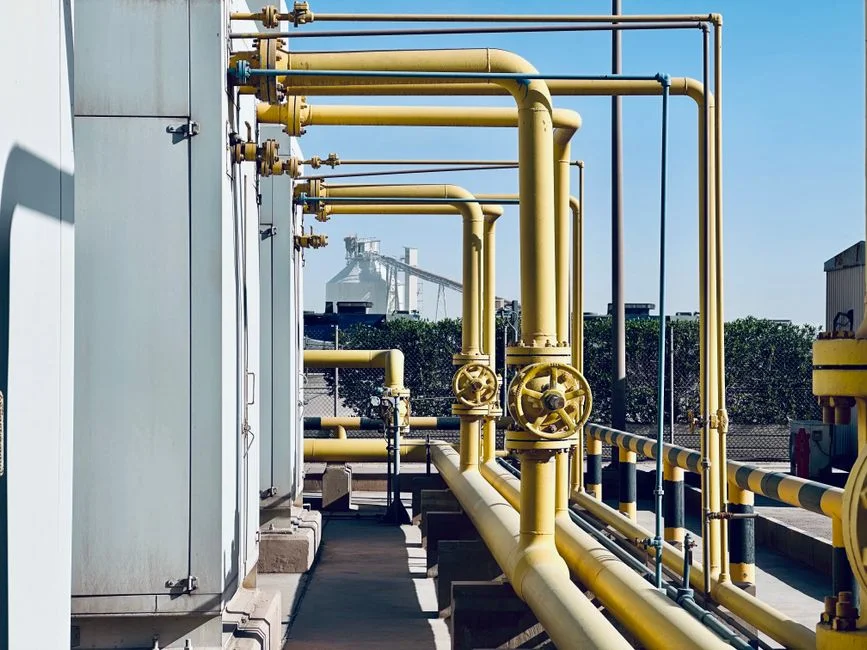
A Quebec City ETP cannot be designed to a 15–20°C catalog curve. Winter air temperatures drop below –20°C from December through March, and biological kinetics in an uncovered CAS basin slow to 30–40% of design rate below 10°C. Every stage needs a cold-clause.
Stage 1 — Preliminary. A heated rotary bar screen with 6 mm spacing protects downstream pumps; the headworks itself must be enclosed and trace-heated to prevent grease solidification in January — a routine Quebec failure mode where FOG coats bars and downstream DAF nozzles. Heated grit classifiers follow. From November through April (roughly 165–180 days in Quebec City, longer than Montreal's 140–155), uncovered headworks freeze.
Stage 2 — Primary. For the high-FOG streams typical in Quebec City dairy, meat, and vegetable processing, a heated-enclosure DAF for high-FOG Quebec City streams achieves 90%+ SS and 70–80% FOG removal before biological treatment. Outdoor DAF units need a heated enclosure and lamella cover; open-tank DAFs freeze by mid-December.
Stage 3 — Biological. This is the central MBR vs CAS decision. An integrated MBR system with PVDF flat sheet membranes retains all biomass and most particulates under 1 µm, holds MLSS at 8,000–12,000 mg/L (versus 2,000–4,000 mg/L for CAS), and tolerates winter temperature drops down to 5–8°C with only modest HRT extension. CAS is cheaper on CapEx but requires covered, heated basins and 4–6× larger aeration volume below 10°C to keep CBOD₅ removal above 85%.
Stage 4 — Tertiary and disinfection. UV is the 2026 default for sites without chlorinated byproduct constraints. For hospital or pharma co-contamination, an on-site chlorine dioxide generator closes the compliance path on certain parameters aligned with EU Drinking Water Directive 98/83/EC.
Sludge handling. A plate-and-frame filter press for Quebec winter sludge dewaters waste-activated sludge to 20–25% dry solids — a meaningful reduction from belt-press yields of 16–20% and one of the largest single OPEX levers in the train.
| Stage | Equipment | Quebec City cold-climate requirement | Key parameter |
|---|---|---|---|
| 1. Preliminary | 6 mm rotary bar screen, heated | Enclosed, trace-heated headworks | FOG solidification prevented |
| 2. Primary | DAF with lamella cover | Heated enclosure, indoor installation | 90%+ SS, 70–80% FOG removal |
| 3. Biological | MBR (PVDF flat sheet) or covered CAS | Operates at 5–8°C winter mixed liquor | MLSS 8,000–12,000 mg/L (MBR) |
| 4. Tertiary | UV or ClO₂ | UV sized on 254 nm UVT | No DBPs (UV); on-site ClO₂ for pharma |
| 5. Sludge | Plate-and-frame press | Indoor dewatering, freeze-protected | 20–25% dry solids |
MBR vs CAS vs DAF + Biolac for Quebec City Loads
For a 50–500 m³/day Quebec City industrial load — the most common 2026 specification window — three configurations dominate. MBR is the premium option for sites with tight effluent targets and limited footprint; CAS is the lowest CapEx but struggles in winter; DAF followed by a Biolac-style extended-aeration basin sits between them and is the default for high-FOG food and dairy.
The decision rule: pick DAF+Biolac when influent FOG is >100 mg/L — common in Quebec City dairy, slaughterhouse, and vegetable processing; pick MBR when the discharge target is <10 mg/L CBOD₅ and <10 mg/L TSS and the site footprint is below 0.5 m² per m³/day; pick CAS only when you can cover the basin, heat the mixed liquor, and accept a 4–6× larger aeration tank. The Chicago hybrid MBR + chemical precedent shows that MBR scales beyond small municipal loads — Chicago's combination reduced energy consumption by over 30% (per waterandwastewater.com best-practices guide, 2025-11).
| Criterion | MBR (PVDF flat sheet) | CAS (conventional) | DAF + Biolac (extended aeration) |
|---|---|---|---|
| Effluent CBOD₅ at 5–8°C | <10 mg/L | 30–40% slip below 10°C | Moderate slip; covered basin needed |
| Effluent TSS | ~1 mg/L | 10–20 mg/L | 15–25 mg/L |
| MLSS (mg/L) | 8,000–12,000 | 2,000–4,000 | 3,000–5,000 |
| Footprint (m² per m³/day) | <0.5 | 2–3 | 1–1.5 |
| Winter readiness | Maintains effluent; minor HRT bump | Heating required | Cover + partial heating |
| CapEx (CAD per m³/day) | $1,200–$2,500 | $800–$1,400 | $1,000–$1,800 |
| OPEX (CAD per m³ treated, 2026) | $0.55–$0.95 | $0.45–$0.80 | $0.50–$0.85 |
An integrated MBR system with a PVDF flat sheet MBR module with 0.1 μm pore size (80–225 m² per cassette, 10–20× lower energy than external cross-flow) is the configuration that holds design removal at 5–8°C without covering the basin — a meaningful difference for Quebec City sites where structural covering adds 15–25% to civil cost.
CapEx, OPEX, and Reuse Economics for a 2026 Quebec City ETP
MBR CapEx runs $1,200–$2,500 CAD per m³/day for a 2026 Quebec City build; CAS CapEx is lower, but winterization (basin covering, mixed-liquor heat tracing, enclosure HVAC) eats most of the gap. OPEX is $0.55–$0.95 CAD per m³ treated at Hydro-Quebec's L category industrial rate near $0.075 CAD/kWh. The Quebec Cap-and-Trade market at $30–$50 CAD/tonne CO₂e (2026 estimate, Quebec carbon market) means electrified sludge heating and RO pumping materially shift the 10-year OPEX line — aeration energy and on-site heat tracing both feed the carbon line, which is why electrification of sludge drying and RO pumping matters.
Zero liquid discharge (ZLD) via an RO polish with RO membrane elements followed by a brine evaporator is viable where water value supports it. At Quebec City industrial water rates near $2.50–$4.00 CAD/m³, a 200 m³/day reuse train recovers roughly $180,000–$290,000 CAD per year in offset purchases. Nanofiltration as direct pretreatment for WWTP effluent polishing to EU WFD reuse standards for agricultural or indirect potable use is documented (Schrader PhD thesis, University of Twente) and transfers to a Quebec City facility exploring on-site reuse for cooling-tower makeup or boiler feed.
| Cost line | 2026 Quebec City benchmark | Notes |
|---|---|---|
| MBR CapEx | $1,200–$2,500 CAD per m³/day | Winterization adds 10–20% over catalog |
| CAS CapEx (with covering) | $1,000–$1,800 CAD per m³/day | Gap to MBR narrows after winterization |
| OPEX | $0.55–$0.95 CAD per m³ treated | Hydro-Quebec L rate ≈ $0.075 CAD/kWh |
| Carbon | $30–$50 CAD/tonne CO₂e | Quebec Cap-and-Trade, 2026 estimate |
| Water reuse offset | $180,000–$290,000 CAD/year | 200 m³/day at $2.50–$4.00 CAD/m³ |
Buyer Verification Checklist Before Signing a Quebec City PO
Most catalog ETP ratings are taken at 15–20°C and overstate cold-climate performance by 30–50%. Before signing a purchase order, require the following from any Quebec ETP supplier:
- OIQ-sealed drawings (GA, P&ID, electrical) for any unit >10 m³/day — the MELCCFP attestation will stall without this.
- A documented Quebec reference site, not a generic North American reference list — and ideally a Quebec City reference within 50 km of the Saint-Charles watershed.
- A winter pilot or winter-rated performance curve, because 15–20°C catalog ratings overstate cold-climate performance by 30–50%.
- On-site O&M training and a remote-monitoring option — Quebec City's operator pool is smaller than Montreal's, and a service call from a Montreal-based vendor costs the engineer a half-day each way.
If a supplier cannot produce OIQ stamps, a Quebec reference site, and a winter pilot, the equipment is not yet specified for Quebec City — and the attestation filing will stall.
Frequently Asked Questions
What are the 2026 Q-2, r.6 surface-water limits for an effluent treatment plant in Quebec City?
Under Q-2, r.6, surface-water discharges from a Quebec City industrial ETP in 2026 must typically meet CBOD₅ ≤ 30 mg/L, TSS ≤ 30 mg/L, and total phosphorus ≤ 1 mg/L for lacustrine receivers, with site-specific values often stricter in St. Lawrence Action Plan zones (per MELCCFP Q-2, r.6 attestation norms). The Saint-Charles and Beauport corridors commonly see TP ≤ 0.1 mg/L.
How does MBR performance at Quebec City winter temperatures compare to CAS?
An integrated MBR system with PVDF flat sheet membranes maintains <5 mg/L CBOD₅ and ~1 mg/L TSS down to 5–8°C with only a modest HRT bump from 6 to 10 hours, whereas uncovered CAS shows 30–40% CBOD slip below 10°C and needs covered, heated basins. For more on cold-climate selection, see the Cold-climate ETP selection framework in Calgary.
Is an OIQ engineer seal required to file a MELCCFP attestation in Quebec?
Yes — any unit greater than 10 m³/day in Quebec requires drawings sealed by an Ordre des ingénieurs du Québec (OIQ) member before the MELCCFP will accept the attestation filing, and the seal must cover the GA, P&ID, and electrical drawings. The Q-2, r.6 and Fisheries Act compliance framework is described in the parallel Montreal guide for cross-reference.
What CapEx and OPEX should a Quebec City plant engineer budget for a 2026 MBR?
CapEx for a 2026 Quebec City MBR typically runs $1,200–$2,500 CAD per m³/day, with OPEX of $0.55–$0.95 CAD per m³ treated at Hydro-Quebec industrial rates near $0.075 CAD/kWh and Quebec Cap-and-Trade at $30–$50 CAD/tonne CO₂e. The 10-year OPEX curve is more sensitive to electricity and carbon price than to the upfront equipment spread.
Does a Quebec City ETP need to meet Fisheries Act Section 36(3) in addition to Q-2, r.6?
Yes — sewer discharges to the Quebec City municipal system follow the City Règlement (CBOD₅ ≤ 500 mg/L, TSS ≤ 600 mg/L with surcharges), while surface-water discharges to the Saint Lawrence estuary, the Rivière Saint-Charles, or Rivière Beauport follow Q-2, r.6 (CBOD₅ ≤ 30 mg/L, TSS ≤ 30 mg/L) plus Fisheries Act Section 36(3) toxicity controls. The Saint Lawrence estuary triggers the federal overlay in nearly every case.
Related Equipment
- PVDF flat sheet MBR module with 0.1 μm pore size — specifications, capacity range, and technical data
- heated-enclosure DAF for high-FOG Quebec City streams — specifications, capacity range, and technical data
- plate-and-frame filter press for Quebec winter sludge — specifications, capacity range, and technical data
- on-site chlorine dioxide generator — specifications, capacity range, and technical data
- heated rotary bar screen with 6 mm spacing — specifications, capacity range, and technical data