
The Georgia Precedent: Why the German Permit Stack Is Not a Translation Exercise
On April 25, 2025, the Georgia Environmental Protection Division signed a $30,000 consent order against Hyundai Motor Group Metaplant America for discharging industrial wastewater to a publicly owned treatment works without an industrial pretreatment permit and for misusing a sewage holding tank for 143 days beginning October 1, 2024 (per the Current GA, 2025-05-12). The exposed copper and zinc parameters that triggered Savannah's Travis Field to cut flow on September 26, 2024 are the same signature parameters a German Wasserbehörde would flag under Abwasserverordnung (AbwV) Anh. 40. The maximum theoretical fine of $7.15 million ($50,000/day × 143 days) frames what a single permit-layer omission costs a Korean OEM at the deal-closing boundary.
The German equivalent is not a 1:1 translation. There is no federal pretreatment programme in Germany; the municipal Abwasserverbandssatzung (Satzung) substitutes and frequently runs tighter than the federal AbwV floor. Direct discharge to a Gewässer is governed by Wasserhaushaltsgesetz (WHG) §8 Erlaubnis; indirect discharge via the municipal Klärwerk routes through WHG §13 Anzeige and the Indirekteinleiter regime under §58 of the relevant Landeswassergesetz. A deal team that maps 40 CFR 433 metal-finishing ceilings onto a German rule that no longer reflects the 2024 AbwV overhaul will underwrite a non-compliant retrofit. The right pre-screen reads the consent order as a list of permit layers, then asks which German rail each layer maps to — and where the mapping breaks.
Five Permit Rails That Re-Paper on Closing Day
Five parallel permits, not one, define the post-closing compliance surface. Each rail has a different agency, a different filing window, and a different penalty schedule; missing one does not excuse the others. The rail diagram below is the document-request list for the data room.
Rail 1 — WHG §8 Erlaubnis or §13 Anzeige. Direct discharge into a Gewässer requires a formal permit (Erlaubnis) with a finite term, typically 10–20 years. Indirect discharge into a municipal Abwasseranlage routes through the Indirekteinleiter regime under §58 LWG (Länder) and the local Abwasserverbandssatzung, which is the German equivalent of U.S. POTW pretreatment and frequently tighter than the federal AbwV floor. Most German auto plants discharge indirectly because the municipal Klärwerk can handle FOG and metals loadings at scale.
Rail 2 — AbwV Eigenüberwachung. The operator must run accredited self-monitoring and report quarterly to the Wasserbehörde. This is the German equivalent of the U.S. Discharge Monitoring Report, but with a different parameter list and a Bußgeldrahmen that can reach €50,000 per parameter per missed sample under §103 WHG. Closing does not pause the calendar; the Eigenüberwachung reporting calendar transfers with the asset and must be on the buyer's compliance dashboard by Day 30.
Rail 3 — IED Annex I 6.7. Surface treatment installations processing more than 20 t/day of input require a BImSchG Genehmigung with BAT-AEL compliance. The 2024 BAT conclusions under Implementing Decision 2024/2995/EU set COD ≤30–100 mg/L, total N ≤10–15 mg/L, total P ≤0.3–2 mg/L, plus metal-specific BAT-AEL for Ni, Cr, and Pb at the wastewater discharge point (per EU Implementing Decision 2024/2995/EU, 2024).
Rail 4 — BImSchG §4 Genehmigung for the paint shop. VOC, paint overspray washwater with high COD, and Lösemittel-RL compliance (IED Chapter V) are reviewed under TA Luft 2021 and AbwV jointly. A paint-shop capacity increase triggers a BImSchG Genehmigungsverfahren that typically runs 4–9 months including Beteiligung der Öffentlichkeit public participation.
Rail 5 — TRGS surface treatment and Abfallrecht / Nachweisverordnung. NMP, Ni, and Co sludges classified as gefährlicher Abfall under AVV 11 01 09* trigger the European PRTR regulation (EC 166/2006) for TRI-equivalent reporting, with a March 31 deadline and a separate threshold schedule from the U.S. EPCRA Section 313 rail.
| Rail | Legal Basis | Triggering Event | Filing Window | Source |
|---|---|---|---|---|
| 1. WHG Erlaubnis / Anzeige | WHG §8 / §13; §58 LWG | Operator change | §16 Anzeige within 1 month of closing | WHG (2024 consolidated) |
| 2. AbwV Eigenüberwachung | AbwV; WHG §103 | Continuous discharge | Quarterly reporting; Bußgeldrahmen to €50,000/parameter | §103 WHG |
| 3. IED 6.7 BImSchG | IED Annex I 6.7; Decision 2024/2995/EU | >20 t/day surface treatment | Genehmigungsverfahren 4–9 months | EU 2024/2995/EU |
| 4. Paint-shop BImSchG | BImSchG §4; TA Luft 2021; IED Ch. V | Capacity change | 4–9 months incl. public participation | TA Luft 2021 |
| 5. TRGS / Abfallrecht / PRTR | TRGS; AVV 11 01 09*; EC 166/2006 | Threshold exceedance | March 31 deadline (prior calendar year) | EC 166/2006 |
Hyundai EV Plant Stream-to-Annex Mapping: Where the PFOS CAPEX Hides
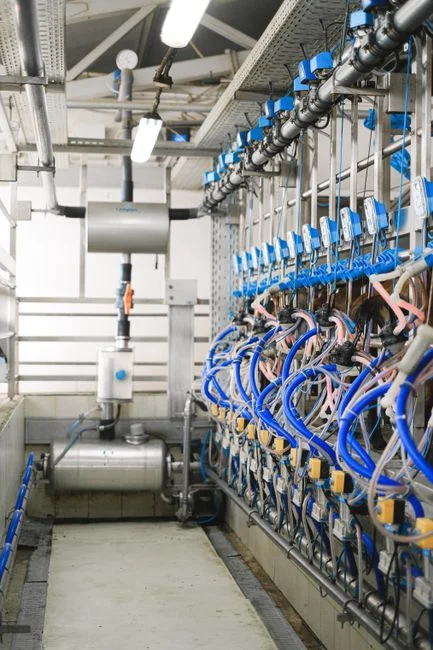
Body-in-white streams (Ni, Co, Zn, lubricant emulsions) route through AbwV Anh. 40; equalization must absorb pH swings from 2 to 11 when the streams converge at the headworks. The paint shop adds phosphate pretreatment, E-coat rinse, and solvent-bearing overspray washwater with high COD; the German plant is also subject to Lösemittel-RL (IED Chapter V) for VOC, with an EU SOLV register filing analogous to U.S. NESHAP paint-shop limits. A paint-shop capacity increase triggers a BImSchG Genehmigungsverfahren that includes a Beteiligung der Öffentlichkeit phase and typically runs 4–9 months.
EV-specific streams are where the Korean parent's chemistry no longer maps cleanly to a legacy body-in-white permit. Cathode coating carries NMP solvent (recovered via closed-loop vacuum distillation); anode rinse carries graphite slurries; electrolyte salt flushes carry LiPF6, which drives a separate fluoride and organic load. These streams fall under AbwV Anh. 40 plus Gefahrstoffrecht (TRGS 900 workplace exposure) and the EU CLP regulation (EC 1272/2008). For a deal team benchmarking against a comparable German OEM acquisition, the BMW Germany plant acquisition compliance guide applies the same AbwV Anh. 40 framework to a German EV line.
The 2024 AbwV PFOS cap of 50 ng/L at 24h-Mischprobe is below the detection limit of legacy online analysers — it forces a Phase 1 CAPEX line for LC-MS sampling or new on-line PFAS sensors. The visual diagnostic that resets retrofit CAPEX is the equalization-basin influent channel count. One channel means streams were never segregated, and segregation retrofit becomes the single highest-impact Phase 1 CAPEX line. Five or more channels means the prior owner already paid for the discipline (HydropureWater field data, 2026).
| Process Stream | Signature Parameter(s) | AbwV Annex | Key Limit (24h-Mischprobe) |
|---|---|---|---|
| Body-in-white rinse | Ni, Co, Zn, FOG | Anh. 40 | Ni ~0.5 mg/L (process-specific, 2-h composite) |
| Paint overspray washwater | COD, phosphate, paint solids | Anh. 40 + Lösemittel-RL | COD 30–100 mg/L (IED BAT-AEL 2024) |
| Cathode coating (NMP) | NMP, TOC, solvent COD | Anh. 40 + TRGS | Process-specific; closed-loop recovery target |
| Electrolyte salt flush (LiPF6) | Fluoride, organic load | Anh. 40 | Fluoride process-specific; Li monitored |
| Coating rinse / surface finish | PFOS, PFOA | Anh. 40 (2024 revision) | PFOS 50 ng/L; PFOA capped (2024 AbwV) |
The 2024 AbwV Overhaul: Stricter Ni, Co, and the New PFAS Caps
The 2024 AbwV revision set stricter Ni and Co values, added PFOA and PFOS caps, and is the regulation most U.S. deal teams miss because the 40 CFR 433 mapping habit is no longer current. AbwV Anh. 40 Ni values are parameter- and process-specific, typically 0.5 mg/L at the 2-hour composite — frequently stricter than the U.S. 40 CFR 433 ceiling of 1.0 mg/L total Ni/Co. The 50 ng/L PFOS 24h-Mischprobe ceiling is the deal-breaking new parameter: legacy online analysers at most German plants were specced to older microgram-per-litre detection limits, so the 2024 cap is effectively invisible to the existing instrument set. The Indirekteinleiter municipal Satzung layers a second, often tighter limit on top of the federal AbwV floor, and the municipal Klärwerk's own STP inlet envelope (as the Tesla/Grünheide WSE dispute shows) can be the binding constraint, not the federal rule.
Reference Treatment Train and Euro CAPEX Envelope
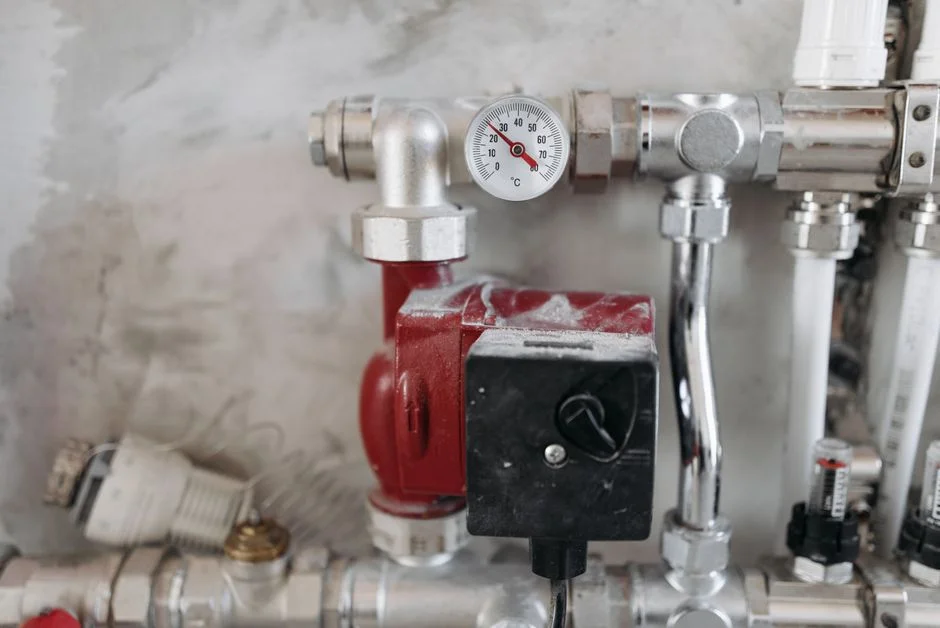
The reference train below is the benchmark a buyer's engineer should gap any acquired site's drawings against. Stage 1 equalization uses 6–12 hour surge basins with PLC-controlled coagulant and pH dosing to pH 6.5–7.5. Stage 2 uses a HydropureWater DAF system in the 4–300 m³/h skid range for 80–95% FOG removal with downstream TSS below 100 mg/L — DAF versus lamella is the highest-impact equipment choice for a German retrofit because FOG loads in the body shop typically exceed 800 mg/L. Stage 3 uses coagulation/flocculation with FeCl3 or polyaluminium chloride at pH 9–10 to precipitate dissolved Ni, Co, and Li as hydroxides, followed by a HydropureWater lamella clarifier at 20–40 m/h surface loading, which can cut chemical consumption by up to 30% compared with conventional settling.
Stage 4 is closed-loop NMP vacuum distillation to recover solvent from cathode wastewater concentrate for reuse in coating operations — skip this stage if cells are outsourced to a Tier 1 supplier. Stage 5 is a submerged HydropureWater MBR system with PVDF hollow-fiber modules delivering effluent turbidity below 1 NTU at MLSS 8,000–12,000 mg/L, sized to peak flows near 5,000 m³/day at full EV scale. Stage 6 is two-pass RO polishing for cooling-tower makeup with permeate conductivity below 50 µS/cm, 70–85% recovery, and 15–30% reject. Stage 7 is disinfection via a ClO₂ generator in the 50 g/h to 20,000 g/h range, or a UV bank.
Full-train CAPEX (DAF + MBR + RO, no NMP, no evaporator) runs €1,000–€3,800 per m³/day (HydropureWater field data, 2026). A ZLD-ready configuration adds 1.5x–2.5x to align with 2030 OEM zero-liquid-discharge targets. For a 1,500 m³/day design capacity, the defendable envelope is €1.4M–€5.5M before ZLD-ready adders. Comparable German retrofit pricing for related EV streams is detailed in the breakdown of battery cell manufacturing wastewater treatment cost in 2026.
100-Day Post-Closing Compliance Sequence
Days 0–30: file the §16 WHG Anzeige (notification) with the competent Wasserbehörde within one month of closing. The existing permit does not lapse, but missing the Anzeige triggers a Bußgeldrahmen of up to €50,000 under §103 WHG. In parallel, file the BImSchG Anzeige for operator change with the Genehmigungsbehörde and verify the Indirekteinleiter status under the municipal Satzung. The Eigenüberwachung reporting calendar transfers with the asset and must be on the buyer's compliance dashboard by Day 30.
Days 30–60: commission a 2-hour-Mischprobe baseline against the AbwV Anh. 40 parameter list and compare to the prior operator's last 8 quarters of self-monitoring records. Pull the seller's PRTR filings (EC 166/2006) for Ni, Co, and NMP and reconcile the tonnage figures against the 2024 AbwV cap. Flag any parameter that has been within 80% of its limit — those are the parameters most likely to tip into non-compliance under new operating conditions.
Days 60–90: confirm PRTR reporting status for the prior calendar year; schedule the March 31 successor filing if the seller missed it. Verify AVV 11 01 09* hazardous-waste manifests and the Nachweisverordnung electronic register are current. Commission the equalization-basin influent channel count as a single visual retrofit diagnostic.
Days 90–180: complete a 12-month forward compliance projection against the 2024 AbwV PFOS/PFOA cap (50 ng/L), the IED BAT-AEL 2024 COD/N/P envelope, and the Indirekteinleiter Satzung. If a paint-shop capacity increase is contemplated, start the BImSchG Genehmigungsverfahren now because the 4–9 month clock starts at scoping.
The Hidden OPEX: Brine Reject and the Evaporator Decision
Brine reject at 15–30% on a 1,500 m³/day plant is 225–450 m³/day. At German Abfallgebühren of €30–€60/m³, annual off-site disposal runs €2.5M–€9.9M/year, which is the single largest hidden OPEX line and the strongest economic argument for an evaporator to align with 2030 OEM zero-liquid-discharge targets. Sludge dewatering belongs as a discrete budget line because the AVV 11 01 09* classification routes the cake to a specific disposal channel at a specific price — bundling it into "treatment upgrades" hides the cost. A HydropureWater plate and frame filter press is the standard dewatering step for Ni/Co/Li hydroxide cake at German retrofit sites. For a side-by-side framework on a different Chinese OEM acquisition, the BYD Germany plant compliance guide applies the same brine-disposal math to LFP cathode streams.
Frequently Asked Questions
Does the German WHG water permit transfer automatically to the acquirer on closing?
No. The permit does not lapse, but the buyer must file a §16 WHG Anzeige (notification) with the competent Wasserbehörde within one month of closing; missing the Anzeige triggers a Bußgeldrahmen of up to €50,000 under §103 WHG. Direct-discharge Erlaubnis permits are re-issued in the successor's legal name on the next amendment cycle, while indirect-discharge arrangements under §58 LWG are confirmed by the municipal Abwasserverband.
Which AbwV annexes govern an EV or battery line at a Hyundai plant, and which IED BAT conclusions layer on top?
AbwV Anh. 40 governs surface treatment of metals and plastics, including the Ni, Co, Cr, Zn, and fluoride parameters. AbwV Anh. 9 covers metal processing more broadly. Where the installation is an IED Annex I 6.7 activity processing more than 20 t/day of input, the EU BAT-AEL 2024 conclusions under Implementing Decision 2024/2995/EU layer additional COD (≤30–100 mg/L), total N (≤10–15 mg/L), total P (≤0.3–2 mg/L), and metal-specific limits on top of the AbwV floor.
What is the German equivalent of EPCRA Form R / TRI reporting for a Hyundai closing?
The closest analogue is the European PRTR regulation (EC 166/2006). It is threshold-based, requires reporting on Ni, Co, NMP, and other standard auto-plant substances, and runs on a March 31 deadline for the prior calendar year. Reports are filed with the German federal environment agency (Umweltbundesamt) through the PRTR online portal, and liability for missed filings survives closing under German Umweltrecht successor-liability principles.
What CAPEX envelope should the deal team defend for a 1,500 m³/day German EV retrofit?
A full train (DAF + MBR + RO, no NMP distillation, no evaporator) fits a €1.4M–€5.5M CAPEX envelope, or roughly €1,000–€3,800 per m³/day of design capacity (HydropureWater field data, 2026). A ZLD-ready configuration adds 1.5x–2.5x to align with automaker 2030 zero-liquid-discharge targets. The hidden OPEX is brine reject off-site disposal at €2.5M–€9.9M/year, which is typically the strongest economic argument for an evaporator.
How long does a BImSchG Genehmigungsverfahren take for a paint-shop capacity increase?
A combined BImSchG and WHG Genehmigungsverfahren for a paint-shop capacity increase typically runs 4–9 months, including the Beteiligung der Öffentlichkeit public participation phase. Lead time depends on whether an Umweltverträglichkeitsprüfung (UVP) is triggered and on the Land-specific Genehmigungsverfahren rules. Pre-scoping with the Genehmigungsbehörde before formal submission can shave 1–2 months off the clock.