

The Compliance Stack a Waterbury Plant Actually Has to Hit
40 CFR Part 433 (Metal Finishing) sets the federal floor, 40 CFR 403.5 local limits set the ceiling you actually design to, CT DEEP's Industrial Wastewater Stormwater (IWWS) general permit and the Waterbury Water Pollution Control Authority (WPCA) industrial pretreatment program enforce both. A Waterbury plant that designs only to the federal table is the plant that gets the non-compliance letter when the WPCA inspector pulls a 24-hour composite and finds copper 0.5 mg/L over the local cap.
40 CFR Part 433 splits limits into PSES (Pretreatment Standards for Existing Sources) and PSNS (Pretreatment Standards for New Sources), with PSNS tighter because it applies to sources constructed after the rule's promulgation date (per EPA Metal Finishing Effluent Guidelines, 2026). Most POTWs, including Waterbury WPCA, enforce PSNS-equivalent local limits on all industrial users as a conservative baseline, so even a 1990s-era shop should design to PSNS numbers. The rule covers 33+ process operations typical of a Brass City floor: electrolytic and electroless plating, anodizing, chemical etching, machining rinse, conversion coating, and printed circuit board manufacture (per 40 CFR 433.10–433.102).
The daily-maximum envelope a design has to clear, from 40 CFR 433.102, is TSS 52 mg/L, O&G 52 mg/L, Cu 4.1 mg/L, Ni 4.1 mg/L, Zn 4.2 mg/L, Pb 0.69 mg/L, and Cr(T) 2.77 mg/L. Local limits issued under 40 CFR 403.5 are always at least as stringent and frequently tighten the metals caps, add silver and cadmium caps, and pin pH to a 6.0–9.0 instantaneous window. The design envelope is the stricter of the two on each parameter, not the federal table alone.
EPA's 2026 PFAS rulemaking is scoped to chrome finishing facilities with no numerical limit yet published (per EPA Metal Finishing Effluent Guidelines, 2026). The right 2026 move is to design the upstream train so anion exchange or GAC polish bolts on later without re-plumbing — not to install the polish now. Any batch discharge over 50 m³ to the Waterbury WPCA requires a slug control plan; that threshold is also the equalization-basin sizing trigger most plants miss until the permit renewal. For a broader walk-through of how the federal and local tables interact across US hubs, see the broader US sewer pretreatment compliance walkthrough.
| Layer | Authority | What it controls | Key 2026 reference |
|---|---|---|---|
| Federal categorical | EPA, 40 CFR Part 433 | PSES/PSNS daily max & monthly avg for Cd, Cr, Cu, Pb, Ni, Ag, Zn, TTO | 33+ process operations; 40 CFR 433.102 limits |
| General pretreatment regs | EPA, 40 CFR 403.5 | Local-limits development by POTW; SIU categorical; slug control >50 m³ | Local limits always ≥ as stringent as categorical |
| State permit | CT DEEP IWWS general permit | Stormwater/industrial wastewater overlap, reporting cadence, inspection rights | IWWS active in 2026 |
| Local program | Waterbury WPCA | Administers 40 CFR 403.5 locally; tighter metals caps; slug plan trigger | 50 m³ batch-discharge threshold |
What the Influent Actually Looks Like on a Waterbury Floor
Four contaminant families appear on every fabricated metals floor regardless of the process mix: free and emulsified oils from stamping, machining, and drawing compounds; dissolved heavy metals (Zn, Ni, Cu, Cr, Pb, Cd) from plating rinsewater and acid pickling; hexavalent chromium from chromic acid anodizing, hard chrome, and conversion coating; and TSS from grinding swarf, casting sand, and hydroxide floc. Cyanide appears wherever alkaline Zn, Cu, Cd, or Ag plating is still in use and must be destroyed upstream of metals precipitation, or it resolubilizes the precipitates and ships the metals straight through to the sewer.
HydropureWater 2026 field data on mixed floor-drain influent from Waterbury screw machine, stamping, and plating shops shows oils at 50–500 mg/L, total dissolved metals at 5–200 mg/L, TSS at 100–1,000 mg/L, and pH swinging between 2 and 12 across batch dumps. A stamping cell may hold pH at 7 with low metals; a hard chrome line will spike Cr(VI) above 50 mg/L and drop pH below 2 on a rinse dump. The chemistry downstream cannot be designed for steady state if equalization upstream is undersized.
Two design consequences follow. First, sample a full week of 24-hour composite flow before specifying equipment, because a 4-hour composite that misses the Friday-afternoon bath dump undersizes the equalization basin by 30–50% (HydropureWater field data, 2026). Second, the four contaminant families do not all respond to the same chemistry: oils need physical separation or chemical break, hex chrome needs reduction at ORP 250–300 mV, cyanide needs oxidation, and dissolved metals need pH-driven precipitation. Trying to drop them all into one reaction stage produces an effluent that fails on at least one parameter and usually on three.
Equalization is the unit operation that makes everything else work. Target a smoothed pH window of 6–9 and a flow coefficient of variation below 0.5 at the outlet of the basin. Anything looser and the chemistry train chases the influent instead of treating it.
The Pretreatment Train, Stage by Stage
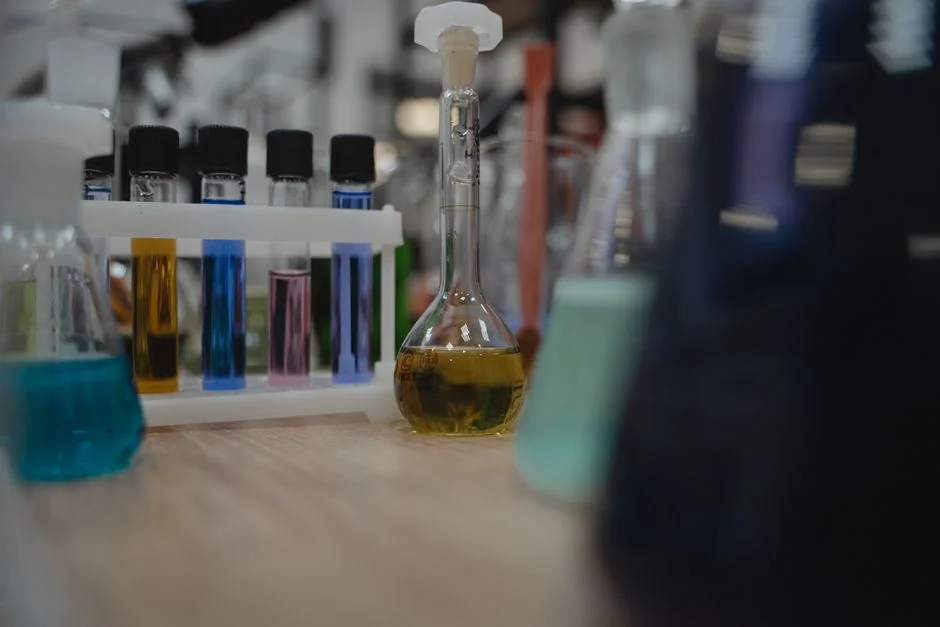
The standard sequence a Waterbury plant runs to clear PSNS-equivalent local limits is: flow equalization → oil/water separation → hex chrome reduction (sodium metabisulfite, pH 2–3, ORP 250–300 mV) → cyanide oxidation (NaOCl at pH >10) → pH-driven hydroxide precipitation (Zn pH 9–10, Cu/Ni pH 8–9, Cr(III) pH 8.5–9.5) → DAF or lamella clarification → pH trim → optional polishing.
Coagulant (ferric chloride or alum) at 50–150 mg/L plus anionic or cationic polymer at 2–10 mg/L is non-optional for charge neutralization on colloidal metal hydroxides and emulsified oils. Skipping it is the single most common reason a DAF underperforms on a plating rinse line (per HydropureWater 2026 spec). DAF sizing is governed by three knobs: hydraulic surface loading 4–20 m/h, air-to-solids ratio 0.005–0.060 with 0.02 as a typical design point, and recycle rate 10–30% of forward flow at saturator pressure 4–6 bar, which nucleates 30–50 µm microbubbles. Lamella surface loading runs 20–40 m³/m²·h versus 1–3 m³/m²·h on a conventional clarifier, with a plate angle of 55–60° and sludge recirculation cutting polymer demand roughly 30%.
Chemical dosing belongs on a skid-mounted PLC-controlled automatic chemical dosing skid with feedforward (flow-paced) and feedback (pH/ORP) loops. Each pump needs a calibration column and a stroke-count totalizer; without those, the operator is dosing blind and the effluent proves it. The four chemicals are NaOH or H₂SO₄ for pH trim, sodium metabisulfite for chrome reduction, NaOCl for cyanide destruction, and anionic/cationic polymer for floc.
Sludge out of a DAF runs 2–5% dry solids; a plate-and-frame filter press dewaters it to 25–35% DS. A belt press is cheaper and continuous but caps out at roughly 22% DS on metal hydroxide — if the hauler is paying by wet ton, plate-and-frame pays back (per HydropureWater 2026 spec). A rotary mechanical bar screen upstream of the equalization basin keeps rags, wipes, and tramp metal out of the sludge train; that screen is the single most common fix for premature press-cloth failure. Alarm and shutdown interlocks on pH excursion, ORP out of range, and high TSS must auto-divert flow back to the equalization basin header so a chemistry upset does not become a discharge violation. Skimmer cycle is 4–8 hours on a high-FOG line, 2–4 hours on a hydroxide floc line; trigger to scum hopper level, not the clock. For the primary clarifier itself, the DAF system for industrial wastewater covers 4–300 m³/h, the PLC-controlled automatic chemical dosing skid packages the four chemicals with feedforward/feedback control, the plate-and-frame filter press dewaters the floated sludge, and the rotary mechanical bar screen protects the upstream.
| Stage | Outlet spec | Sizing knob | Failure mode if skipped |
|---|---|---|---|
| Equalization | pH 6–9 smoothed, flow CV < 0.5 | Min 24 h residence at avg flow; longer on batch-dump shops | Downstream chemistry chases influent; PSNS breach |
| Hex chrome reduction | ORP 250–300 mV, pH 2–3, Cr(VI) < 0.1 mg/L | Sodium metabisulfite 1.5–2.0× stoichiometric on Cr(VI) | Cr(VI) passes through, breaches 40 CFR 433 Cr(T) cap |
| Cyanide oxidation | CN < 0.1 mg/L, pH > 10, ORP > 600 mV | NaOCl 2.5–3.0× stoichiometric; 30 min contact | CN resolubilizes metal precipitates downstream |
| Hydroxide precipitation | Dissolved metals < local limit | pH 8.5–9.5; 15–20 min floc time | Cu, Ni, Zn, Pb breach local limits |
| Coagulation/flocculation | Turbidity < 15 NTU before clarifier | Ferric chloride 50–150 mg/L + polymer 2–10 mg/L | Emulsified oil passes through, O&G breach |
| DAF or lamella | TSS < 52 mg/L, O&G < 52 mg/L | DAF HSL 4–20 m/h, A/S 0.02; lamella 20–40 m³/m²·h | Solids and oil carry through, 433.102 breach |
| pH trim | pH 6.0–9.0 instantaneous | NaOH or H₂SO₄ on feedforward loop | Local pH excursion; WPCA violation |
DAF vs Lamella for a Waterbury Retrofit
DAF wins on any stream with free oils, cutting fluids, or emulsified FOG because the 30–50 µm microbubbles attach to flocculated oil droplets and lift them to the surface in 3–5 minutes. A well-conditioned DAF removes 90–95% of FOG and floated metal hydroxides in one pass (per HydropureWater 2026 spec). Lamella wins on grinding swarf, lapping, scale wash, and dust-laden coolant blowdown where oil content is low and settleable solids dominate; the 55–60° inclined plates shorten the effective settling path and push surface loading to 20–40 m³/m²·h.
The bright line is the 52 mg/L O&G daily maximum in 40 CFR 433.102. A standalone lamella or conventional clarifier cannot hit that number on most Waterbury stamping and machining lines because emulsified synthetic cutting fluid is neutrally buoyant, does not settle, does not coalesce on inclined plates, and does not report to the sludge hopper. The single most common one-piece-of-equipment compliance failure in older Waterbury shops is a standalone clarifier on a high-FOG line (per HydropureWater 2026 field data). When FOG is below roughly 30 mg/L going into the lamella — that is, after a working oil-water separator upstream — a lamella polish becomes viable. Above that, the lamella becomes a $90k–$180k oil-pass-through device.
Hybrid DAF + lamella polish trains are the realistic answer for 150–300 m³/h platers running mixed acid/alkaline rinses where both FOG and TSS/metals co-precipitation matter. The DAF carries the FOG load; the lamella polishes TSS and thickens sludge. Retrofit constraint matters as much as chemistry: a skid-mounted DAF fits through a standard 36-inch doorway of a multi-story Brass City mill building, while a cast-in lamella basin rarely fits the floor-loading and craneway access of an older shop. The Waterbury DAF-vs-clarifier factory selection guide walks the same decision in more detail, and the HydropureWater high-efficiency sedimentation tank is the lamella option when the stream is grinding-dominated rather than oil-dominated.
CapEx framing for 2026: a skid-mounted 50 m³/h DAF lands at $180k–$320k installed depending on the 316SS upgrade for acid rinses and the controls scope; a lamella clarifier of equal duty runs $90k–$180k but demands the floor space many older Waterbury shops cannot spare. The defensible 2026 decision is rarely the cheaper line item — it is the unit that avoids the downstream polishing the other one would force.
| Parameter | DAF (primary) | Lamella / Conventional Clarifier (primary) |
|---|---|---|
| FOG removal | 90–95% with polymer conditioning | ~70% on free oil; near 0% on emulsified oil |
| TSS removal | 70–90% on metalworking influent | 85–95% on particulate-heavy influent |
| Emulsified cutting fluid | Effective after coagulant + polymer | Not effective; passes through |
| Surface loading | 4–20 m/h hydraulic | 20–40 m³/m²·h (lamella); 1–3 m³/m²·h (conventional) |
| Sludge %DS | 3–6% floated; auger-removed settled fraction | 2–4% hopper underflow; higher water content |
| Footprint, 50 m³/h | ~10–20 m² skid | ~30–50 m² (lamella basin + plate pack) |
| CapEx band 2026 (50 m³/h, skid-mounted, no building) | $180k–$320k installed | $90k–$180k installed |
| Best-fit 40 CFR 433 subcategory | Stamping, machining, plating rinse, electroless Ni, anodizing rinse | Grinding swarf rinse, lapping, scale wash, dust-laden coolant blowdown (low oil) |
| Footprint-constrained older building retrofit | Skid-mounted DAF retrofits through standard doorways | Difficult — basin and plate pack dominate floor area |
Waterbury Retrofit Checklist Before You Sign the PO
Sample a full week of composite flow including Friday batch dumps and spec equalization to a smoothed pH 6–9 and a flow CV below 0.5. Confirm local limits with the Waterbury WPCA in writing before locking chemistry; the local caps on Cu, Ni, Zn, or Pb may be tighter than 40 CFR 433, and the local-limits letter is the design basis of record. For Ni, Cr, and acid chloride Zn baths, budget 316SS or polypropylene on the DAF saturator and all wetted contact surfaces as a 2026 line item, not an afterthought (per HydropureWater 2026 spec).
Specify alarm and shutdown interlocks for pH excursion, ORP out of range, and high TSS — every one of those must auto-divert to the equalization header so a chemistry upset does not become a discharge violation. Design the pretreatment train so a future PFAS or tighter-local-limit polish skid (GAC or anion exchange) bolts on without re-plumbing the upstream. Flag any batch discharge over 50 m³ to the WPCA; a slug control plan is a permit condition, not paperwork. Match the skimmer and auger cycle to the scum hopper level, not the clock, on lines with variable plating bath dumps. For the wider framing on how this fits into a national compliance walkthrough, return to the broader US sewer pretreatment compliance walkthrough.
Frequently Asked Questions
Does a Waterbury plant have to meet 40 CFR Part 433 limits or the local POTW limits?
Both. The design envelope is the stricter of the two on each parameter, per 40 CFR 403.5, which requires local limits to be at least as stringent as the federal categorical standard. Waterbury WPCA local limits frequently tighten Cu, Ni, Zn, and Pb below the 40 CFR 433.102 numbers, so the POTW table is the design basis of record.
Why does a standalone clarifier fail the 52 mg/L O&G limit on a stamping or machining line?
Emulsified synthetic cutting fluid and stamping lubricant are neutrally buoyant, do not settle, do not coalesce on inclined plates, and pass through to the effluent. A standalone lamella or conventional clarifier on a high-FOG line typically removes less than 10% of emulsified oil and breaches the 40 CFR 433 daily maximum of 52 mg/L O&G; DAF after coagulant + polymer conditioning removes 90–95% in one pass.
What are the three sizing knobs on a DAF for a fabricated metals stream?
Hydraulic surface loading (4–20 m/h), air-to-solids ratio (0.005–0.060, 0.02 typical), and recycle rate (10–30% of forward flow at 4–6 bar saturator pressure). Pushing A/S higher dries the float but costs blower power; pushing recycle higher improves TSS removal but dilutes the chemistry (per HydropureWater 2026 spec).
What chemistry reduces hexavalent chromium to a precipitable form?
Sodium metabisulfite at pH 2–3 with ORP controlled at 250–300 mV reduces Cr(VI) to Cr(III), which then precipitates as Cr(OH)₃ in the pH 8.5–9.5 stage where hex chrome would otherwise remain soluble. The trivalent hydroxide drops out with the DAF float and dewaters with the rest of the metal-hydroxide sludge.
Should a Waterbury plant install PFAS polish in 2026?
No numerical PFAS limit has been published for chrome finishing under the EPA 2026 rulemaking. The defensible 2026 move is to design the upstream train so anion exchange or GAC polish bolts on later without re-plumbing, not to install the polish now and pay to operate it ahead of any actual limit (per EPA Metal Finishing Effluent Guidelines, 2026).