
The Regulatory Floor and Ceiling for a Chicken-Area Mining Discharge
A facility discharging to a US sewer is governed by Clean Water Act §307(b) and the General Pretreatment Regulations at 40 CFR Part 403, with categorical standards in 40 CFR Part 437 (Ore Mining and Dressing) for mills, concentrators, and leach operations, and 40 CFR Part 433 (Metal Finishing) for any on-site plating, pickling, or anodizing line (per EPA 40 CFR 437.40–437.47 and 40 CFR 433.15). The state APDES permit governs the parallel surface-water path; the sewer path is the binding constraint for a 2026 capex cycle because the local POTW's sewer-use ordinance sets a tighter ceiling than the federal floor on zinc, copper, and lead, and a single excursion triggers a CWA §309 civil penalty of up to $25,000 per day per violation. Mining and metals plants near Chicken, AK meet 2026 pretreatment limits by treating to the tighter of the two — not the categorical standard alone — and by building 25–40% of design margin under that tighter number to absorb Alaska's antidegradation review.
| Parameter | 40 CFR 437 Daily Max (mg/L) | 40 CFR 437 Monthly Avg (mg/L) | Typical 2026 Local POTW Limit (mg/L) |
|---|---|---|---|
| Total Suspended Solids (TSS) | 50 | 25 | 20–30 monthly avg |
| Total Recoverable Lead | 0.6 | 0.3 | 0.05–0.2 monthly avg |
| Total Recoverable Zinc | 1.0 | 0.5 | 0.3–1.0 monthly avg |
| Total Recoverable Copper | 1.0 | 0.5 | 0.3–0.5 monthly avg |
| Total Recoverable Iron | 2.0 | 1.0 | 1.0–2.0 monthly avg |
| pH (instantaneous range) | 6.0–9.0 | 6.0–9.0 | 6.5–9.0 |
| Oil & Grease | 10 | — | 5–10 |
For a Chicken-area site carrying a plating or pickling line, 40 CFR Part 433 metal-finishing categorical numbers are additive: copper 3.38 mg/L daily-max / 2.07 mg/L monthly-average, total chromium 2.77 mg/L daily-max / 1.71 mg/L monthly-average (per 40 CFR 433.15). The local sewer-use ordinance for the receiving Fairbanks-area POTW sits inside the federal envelope, so the practical design number is whichever is tighter, and the local POTW is the enforcer. For comparable treatment of an adjacent sector, see the Brandon-area mining pretreatment compliance guide.
The Alaska Overlay: 18 AAC 70, APDES Mixing Zones, and the Chicken Logistics Factor
Alaska's 18 AAC 70 antidegradation review and ADEC's APDES mixing-zone demonstration are the second regulatory layer a generic lower-48 selection guide ignores. For a discharge near salmon-bearing waters, ADEC routinely demands a mixing-zone demonstration before issuing or renewing the APDES permit, and the in-stream concentration after mixing sets the operating target below the federal daily-max — a 25–40% design margin under the federal limit is the defensible starting point for the 2026 cycle (HydropureWater field data, 2026). That margin is not a contingency; it is the cost of compliance with the state overlay.
The Chicken logistics factor then converts that margin into a hardware and format decision. Chicken's 2025 population sits under 30, the Taylor Highway ice-closes October through April, and the nearest rail-served chemical terminal is roughly 300 air miles away. That combination eliminates civil-built concrete vaults, custom-built clarifier basins, and any equipment path that depends on a winter construction window. It favors packaged modular skids that ship on a standard flatbed during the summer build season, insulated or housed sludge hoppers, and chemical systems with on-site tankage sized for 6–8 months of reagent autonomy. For a 2026 capex review in interior Alaska, the format decision is upstream of the equipment decision; the freight math drives the procurement logic before the chemistry does.
Equalization, pH Correction, and the Chemistry of the Metals Window
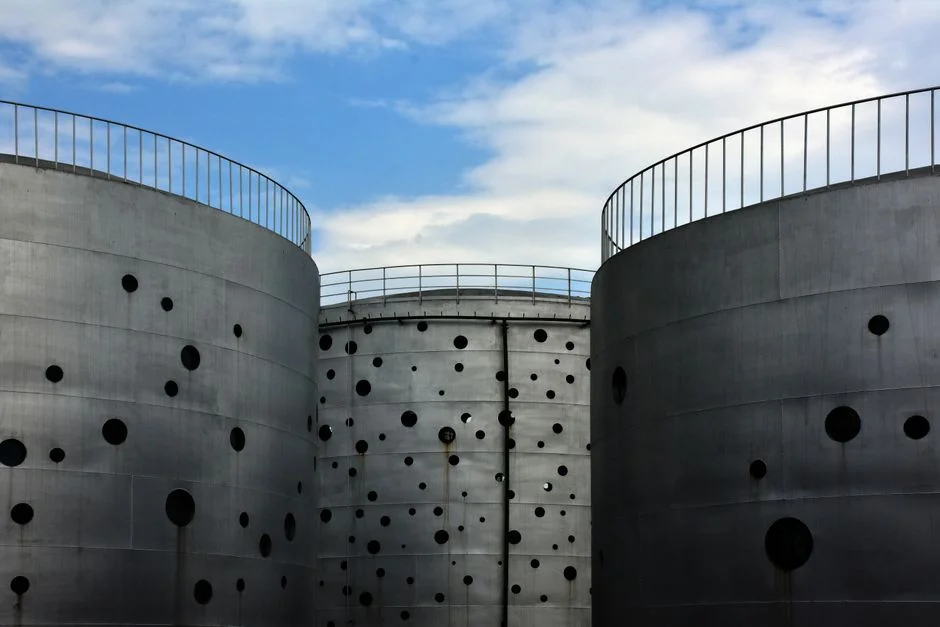
The equalization basin is the most undersized piece of equipment in most mining/metals pretreatment plants, and the most expensive to retrofit. Spec the basin at 8–24 hours of average daily wet flow (ADWF) to dampen batch discharges from shift changes, dump-leach cycles, and mill clean-outs; a 4-hour basin passes every spike from the upstream process straight into the clarifier and overwhelms it. At a Chicken-area concentrator running 200 m³/h average and 1,200 m³/h two-hour peak, an 8-hour basin is 1,600 m³ and a 24-hour basin is 4,800 m³ — the capex delta is small compared with the cost of one permitted excursion, and the operating benefit compounds across the permit cycle.
pH correction sits immediately downstream. Lime (Ca(OH)₂) is cheaper per ton but generates 3–5× more sludge, so high-TDS mining streams — typical of interior Alaska groundwater and leach-pad runoff — often justify the higher reagent cost of NaOH. Target pH 6.5–9.0 to satisfy virtually every POTW's instantaneous range, and stage the dosing in two reactors if the influent swings more than 2 pH units. The downstream consequence of sloppy pH control is severe: each 1 pH unit away from the metals-precipitation optimum can cut removal efficiency by an order of magnitude, sending zinc from under 1 mg/L to 10+ mg/L with no other change to the chemistry. A PLC-controlled chemical dosing skid that handles both pH adjustment and coagulant feed on a single controller keeps pH inside a ±0.2 band — the difference between meeting and missing a 0.3 mg/L zinc monthly average.
Hydroxide vs Sulfide Precipitation: Which to Use at Chicken Flow Bands
Hydroxide precipitation with NaOH or lime is the default for most plants because the reagent is cheap and the chemistry is well understood. Sulfide precipitation (NaHS, FeS, Na₂S) is reserved for streams where residual metal must drop below 0.1 mg/L — sulfide residuals are typically 0.01–0.05 mg/L for Cu, Zn, Cd, and Ni, an order of magnitude lower than hydroxide — but the reagent cost runs 2–4× higher and operators must control H₂S off-gassing with sealed reactors and scrubbed vents (per Fluence, 2024-11). Properly controlled precipitation systems in operating mining/metals installations routinely achieve 85–95% total metals removal.
The optimum pH window is parameter-specific and must be locked in with jar testing, not vendor literature:
| Target Metal | Hydroxide Optimum pH | Theoretical Minimum Residual (mg/L) | Notes for Chicken-Area Streams |
|---|---|---|---|
| Iron (Fe³⁺) | 8.0–9.0 | ~0.05 | Strong response; co-precipitates As at pH > 8.5 |
| Copper (Cu²⁺) | 9.0–10.5 | 0.2–0.5 | Amphoteric above pH 10; avoid over-alkalization |
| Zinc (Zn²⁺) | 9.0–10.0 | 0.5–1.0 | Amphoteric above pH 10.5; sulfide polish if local limit < 0.3 mg/L |
| Lead (Pb²⁺) | 9.5–10.5 | 0.1–0.3 | Often co-precipitates with iron at pH 8.5–9.5 |
| Cadmium (Cd²⁺) | 10.5–11.5 | 0.1–0.5 | Requires staged pH; sulfide polish typical |
| Nickel (Ni²⁺) | 10.0–11.0 | 0.5–1.0 | Sulfide polish to 0.01–0.05 mg/L for sub-0.3 limits |
A polymer coagulant aid dosed at 0.5–3 mg/L floccs the metal hydroxide particles fast enough for the clarifier to operate at 20–40 m/h hydraulic loading without carryover, and reduces TDS bleed by collapsing the colloidal fraction before settling. For most Chicken flow bands, hydroxide precipitation with sulfide polishing on a slipstream is the cost-effective compromise when the local monthly-average zinc is below 0.3 mg/L.
DAF vs Lamella vs Conventional Clarifier for a Cold, Remote Mining Site

For most mining and metals operations in interior Alaska, the equipment decision is not which technology is universally best but which fits the flow band, the FOG/colloidal load, the cold-weather reality, and the modular-skid freight constraint. The table below is the one to hand to a non-technical decision-maker on a Chicken capex review.
| Criterion | DAF | Lamella Clarifier | Conventional Clarifier |
|---|---|---|---|
| Hydraulic / surface loading | 5–25 m/h | 20–40 m/h (projected plate area) | 1–2 m/h |
| Footprint per m³/h | 0.2–0.4 m² | 0.3–0.6 m² | 5–8 m² |
| TSS removal (mining/metals service) | 90–98% | 80–95% on dense hydroxide floc | 70–90% |
| FOG / emulsified oil capture | 85–95% | Poor on emulsified oil | Poor |
| Float / underflow dryness | 4–8% DS | 2–5% DS | 1–3% DS |
| Air system energy | 8–15 kWh per m³ | None | None |
| CAPEX multiplier (lamella = 1.0×) | 1.5–2.5× | 1.0× | 0.7–0.9× (but huge civil cost) |
| Cold-weather (< 10°C) operation | Good with 10–15% margin on recycle pump and saturation vessel | Moderate — size and insulate the sludge hopper | Poor — large unheated vault freezes |
| Modular skid freight (Chicken) | Strong — packaged units across 4–300 m³/h | Strong for plate packs; tank ships separately | Poor — civil construction required |
| Best fit | FOG, emulsified oil, colloidal fines, light floc, < 200 m³/h | Dense settleable hydroxide floc, > 100 m³/h, no oil | Legacy installations, very large settling basins |
Micro-bubble nucleation kinetics slow 20–30% at 5°C versus 20°C, so a 10–15% sizing margin on the recycle pump and saturation vessel is prudent for plants that run through an Alaska winter (HydropureWater field data, 2026). A representative packaged DAF system covers 4–300 m³/h across 13 standard models, which keeps custom-engineering markup out of mid-band flows and matches the modular-skid logistics the site requires. A high-rate lamella clarifier plate pack at 20–40 m/h on the projected plate area delivers the surface loading that makes the column competitive, but it does not remove free oil or colloidal fines as effectively as a DAF. The conventional gravity clarifier's 2026 problem is not the mechanism but the civil cost: a 5–8 m² per m³/h vault in a cold climate is uneconomical to build, and an unheated sludge hopper in a Chicken winter is a freeze-risk liability that keeps re-appearing on the maintenance log. For a deeper side-by-side of the two primary options, see the DAF vs clarifier mining guide.
For a Chicken plant, the worked example is concrete: a 100 m³/h stream at average flow needs roughly 30 m² of DAF footprint (with the cold-weather margin) versus 600 m² of conventional clarifier footprint. The DAF CAPEX premium is largest in cold, space-rich sites and smallest in dense urban industrial corridors; interior Alaska sits on the cold and space-rich end, which is why the modular-skid DAF typically wins on total installed cost once civil work, excavation, and housing are tallied. For a sector-adjacent precedent, the Greenwood, IN mining pretreatment guide walks through the same DAF-or-clarifier decision under a milder climate.
Polishing, Disinfection, and Sludge: Closing the Loop Before the Sewer Manhole
A multimedia filter (anthracite over sand over garnet) is the safety net between the clarifier and the sewer manhole. At 1–2 m/h filtration rate with backwash triggered on differential pressure, it strips residual TSS to under 10 mg/L and provides a buffer for the days when the clarifier underperforms because of a polymer mis-dose or a hydraulic surge. Size the filter for the backwash cycle, not the average flow.
UV or chlorine dioxide disinfection shows up in the local sewer-use ordinance whenever the POTW's collection system has long force mains or siphons, or whenever the industrial discharge could plausibly carry pathogens from co-tenants. A chlorine dioxide generator dosed at 1–5 mg/L provides the residual the POTW asks for without forming the regulated trihalomethanes that chlorine produces — a meaningful difference in any collection system discharging to a surface-water drinking source.
Sludge from the clarifier and DAF is itself a regulated waste. A plate and frame filter press dewaters the sludge to 25–35% dry solids, producing a stackable cake that can be hauled to a Subtitle D landfill or, in the case of recoverable metals, sent to a smelter. Filtrate returns to the head of the plant. The DAF float at 4–8% DS dewateres more cheaply than the lamella underflow at 2–5% DS, which is one of the OPEX items that closes the apparent DAF premium.
Three 2026 Risk Items That Will Hit the Next Permit Cycle
Three regulatory changes are already reshaping what counts as compliant, and a 2026 capex decision that ignores them risks a stranded asset at the next renewal. First, the Lead and Copper Rule Revisions (LCRR) are pushing lead action levels toward 10 µg/L and forcing POTWs to re-derive local limits at much lower numbers — a 0.2 mg/L local lead limit today is plausibly 0.05 mg/L by 2027. Second, EPA's 2024 Multi-Sector General Permit (finalized 2024-09) added PFAS monitoring requirements for PFOS, PFOA, PFHxS, and PFNA for sectors that include metal mining, and local control authorities are adopting the same analytical suite for sewer discharges even where the categorical rule does not yet require it. Third, the 2025 ore-mining BAT revisions (2025-03) are tightening the cost-benefit envelope on total recoverable metals. Treat all three as the next permit-cycle risk in 2026, and build the design margin — and the analytical budget — to absorb them.
Frequently Asked Questions
What federal authority governs a sewer discharge from a Chicken-area mining or metals plant?
Federal authority is the Clean Water Act §307(b) pretreatment program at 40 CFR Part 403, with categorical standards in 40 CFR Part 437 (Ore Mining and Dressing) or 40 CFR Part 433 (Metal Finishing) where applicable. The local POTW's sewer-use ordinance sets the tighter ceiling, and the state APDES permit governs any parallel surface-water discharge under 18 AAC 70.
What equalization basin size and pH target should a 2026 Chicken pretreatment design use?
Spec the equalization basin at 8–24 hours of average daily wet flow to dampen shift-change, dump-leach, and mill clean-out spikes. Stage pH correction to 6.5–9.0 in two reactors if the influent swings more than 2 pH units, and hold the band inside ±0.2 with a PLC-controlled dosing skid to defend a sub-0.3 mg/L zinc monthly average.
When is sulfide precipitation required instead of hydroxide at a Chicken-area site?
Sulfide precipitation is required when the local POTW limit on copper, zinc, cadmium, or nickel drops below approximately 0.3 mg/L, because sulfide residuals of 0.01–0.05 mg/L are an order of magnitude lower than hydroxide. Reagent cost runs 2–4× higher and the system must use sealed reactors with scrubbed H₂S vents.
What DAF or lamella model range covers a typical Chicken mining flow band?
Standard DAF units cover 4–300 m³/h across 13 models and are the typical packaged choice for cold, remote, mid-band flows. Below 10 m³/h, packaged skid systems are common; above 100 m³/h, multiple DAF trains in parallel or a lamella clarifier typically becomes more economical. Size the recycle pump and saturation vessel with a 10–15% cold-weather margin.
How should a 2026 Chicken pretreatment plant be sized against the permit envelope?
Design for the peak 2-hour flow with 20–30% turndown capacity, and treat to the local POTW sewer-use ordinance rather than the federal categorical standard alone, because the local numbers are tighter and the penalty structure (SNUR plus CWA §309 civil penalties up to $25,000/day per violation) is enforced by the POTW, not EPA. Build in a 25–40% margin under the federal daily-max to absorb Alaska's 18 AAC 70 antidegradation and mixing-zone review.