Why Yorktown Mining and Metals Plants Are on the Pretreatment Clock in 2026
A single 30-minute batch slug from a haul-out rinse can put a Yorktown-area Categorical Industrial User (CIU) on the Significant Noncompliance (SNC) path inside one quarterly reporting cycle. A high-TDS, low-pH dump-leach overflow enters the equalization basin, the basin underflows, the DAF solids loading doubles for an hour, and the next 24-hour composite at the monitoring manhole returns at 180 mg/L TSS against a 50 mg/L monthly-average ceiling. The Hampton Roads Sanitation District (HRSD) flags the sample, the Industrial User (IU) permit enters SNC, and the Clean Water Act (CWA) §309 clock starts. Civil penalties under §309 are capped at $25,000/day per violation at the statutory baseline, but the 2026-adjusted EPA civil penalty policy now lists the daily maximum at $64,618 per violation per day (per EPA civil penalty policy, 2025).
The local control authority in the Yorktown sewer shed is HRSD; the receiving plant is the York River Wastewater Treatment Plant (York River WWTP). The federal floor is the National Pretreatment Program at 40 CFR Part 403, layered with categorical effluent guidelines from 40 CFR Part 437 (Ore Mining and Dressing) for mines and 40 CFR Part 433 (Metal Finishing) for plating, pickling, and anodizing lines. HRSD's sewer-use ordinance sits on top, and that local ceiling — not the federal categorical floor — is what the operator has to hit every day. Three 2024–2026 EPA rulemakings are tightening that ceiling: the 2024 Multi-Sector General Permit (MSGP) addition of PFAS monitoring for metal-mining sectors (PFOS, PFOA, PFHxS, PFNA), the Lead and Copper Rule Revisions (LCRR) pushing lead action levels toward 10 µg/L, and the 2025 ore-mining Best Available Technology (BAT) revisions tightening the cost-benefit envelope on total recoverable metals (per EPA 2024 MSGP, finalized 2024-09; per EPA 2025 ore-mining BAT revisions, 2025-03).
The Two Compliance Floors Every Yorktown IU Has to Hit
Every discharge decision at a Yorktown CIU sits between a federal categorical floor and a HRSD local ceiling, and the two are never the same number. The categorical floor for 40 CFR Part 437 subcategories typically sets TSS at 50 mg/L monthly-average and 75 mg/L daily-maximum, total metals at subcategory-specific levels (e.g., 1.0 mg/L daily-max / 0.5 mg/L monthly-avg for zinc in Part 437.40-series), pH inside 6.0–9.0, and oil & grease at 10–15 mg/L. The HRSD local limit is tighter on the parameters that pass through to the York River or accumulate in POTW biosolids — zinc, copper, lead, and total mercury. Plants with plating, pickling, or anodizing lines additionally meet 40 CFR Part 433, where copper is capped at 3.38 mg/L daily-max / 2.07 mg/L monthly-average and total chromium at 2.77 mg/L daily-max / 1.71 mg/L monthly-average (per 40 CFR 433.15).
The 2026 risk sits in the re-derivation cycle. LCRR is forcing POTWs to push the lead action level toward 10 µg/L, and HRSD's local limits on lead are being re-derived downward in the 2026 permit cycle — meaning an IU permittee whose internal control is set to the old 0.1 mg/L lead ceiling will exceed the new local limit without any change in operating practice. The 2025 ore-mining BAT revisions tighten the cost-benefit envelope on total recoverable metals across Part 437 subcategories, raising the bar on what counts as Best Demonstrated Available Technology (BDAT) for the next permit cycle. Treat both as the next-cycle enforcement trigger, not background noise.
| Parameter | 40 CFR Part 437 (daily-max / monthly-avg) | 40 CFR Part 433 (daily-max / monthly-avg) | Typical HRSD local ceiling (monthly-avg) |
|---|---|---|---|
| pH | 6.0–9.0 | 6.0–9.0 | 6.0–9.0 (instantaneous) |
| TSS | 75 / 50 mg/L | 60 / 31 mg/L | 30 / 20 mg/L (typical SUO) |
| Total Cu | 1.0 / 0.5 mg/L (subcat.-specific) | 3.38 / 2.07 mg/L | 0.3–0.5 mg/L |
| Total Zn | 1.0 / 0.5 mg/L | 2.61 / 1.48 mg/L | 0.3–1.0 mg/L |
| Total Pb | 0.6 / 0.3 mg/L | 0.69 / 0.43 mg/L | 0.1 mg/L (moving toward 10 µg/L under LCRR re-derivation) |
| Total Cd | 0.4 / 0.2 mg/L | 0.69 / 0.26 mg/L | 0.05–0.1 mg/L |
| Total Ni | 1.0 / 0.5 mg/L | 3.98 / 2.38 mg/L | 0.5–1.0 mg/L |
| Total As | 0.6 / 0.3 mg/L | 2.77 / 1.71 mg/L | 0.1–0.2 mg/L |
| Oil & Grease | 10–15 mg/L | 52 mg/L (Part 433.15) | 10–15 mg/L |
The 2026 Pretreatment Train: Equalization, pH Correction, Precipitation
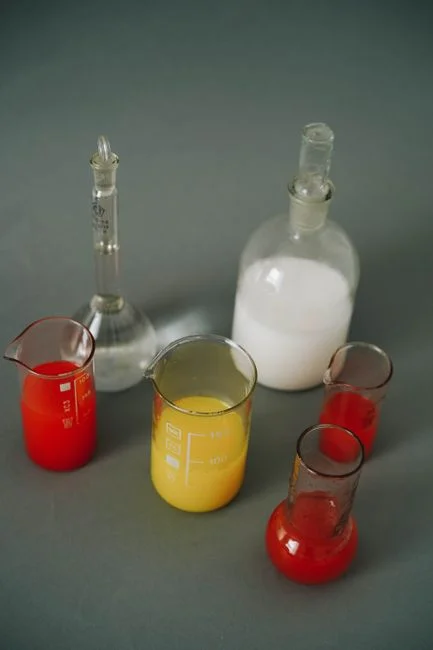
Stage 1 is the equalization basin, and it is the most undersized piece of equipment in most Yorktown-area pretreatment plants — and the most expensive to retrofit. Spec the basin at 8–24 hours of average daily flow to dampen batch discharges from haul-out rinses, dump-leach cycles, and mill clean-outs. A 4-hour hydraulic retention time (HRT) passes every spike from the upstream process straight into the clarifier and overwhelms it. Design around the 30-minute slug failure mode: any surge that can deliver more than 1.5× the average daily flow in less than an hour must be captured in the basin, not passed downstream.
Stage 2 is pH adjustment. Lime (Ca(OH)₂) and caustic soda (NaOH) are the workhorses; lime is cheaper per ton but generates 3–5× more sludge by dry weight, so high-TDS Yorktown mining streams often justify the higher reagent cost of NaOH on total cost of ownership. Target pH 6.5–9.0 to satisfy HRSD's instantaneous range, and stage dosing in two reactors if the influent swings more than 2 pH units. The downstream consequence of sloppy pH control is severe: each 1 pH unit away from the metals-precipitation optimum can cut removal efficiency by an order of magnitude, sending zinc from below 1 mg/L to above 10 mg/L with no other change in chemistry.
Stage 3 is precipitation. Hydroxide is the default because the reagent is cheap and the chemistry is well understood; properly controlled systems in operating mining/metals installations routinely achieve 85–95% total metals removal (per Fluence, 2024-11). Sulfide precipitation (NaHS, FeS) is reserved for streams where residual metal must drop below 0.1 mg/L — sulfide residuals are typically 0.01–0.05 mg/L for Cu, Zn, Cd, and Ni, an order of magnitude lower than hydroxide — but reagent cost runs 2–4× higher and operators must control H₂S off-gassing with sealed reactors and scrubbed vents. A PLC-controlled automatic chemical dosing skid that handles both pH adjustment and coagulant feed on a single controller holds the reactor in a ±0.2 pH band, which is the difference between meeting and missing a 0.3 mg/L zinc monthly average.
DAF or Lamella: The Clarification Decision Yorktown Engineers Actually Face
Both work; neither is universally better, and the choice is driven by the upstream pollutant profile and the available footprint. A Dissolved Air Flotation (DAF) system operates at 5–25 m/h hydraulic loading, floats oil-coated and colloidal particles with microbubbles, and achieves 90–98% TSS removal and 85–95% oil/grease removal in mining and metal-finishing service. A lamella clarifier operates at 20–40 m/h surface loading in roughly one-third the footprint of a conventional clarifier, has lower chemical consumption because the sludge blanket is denser, and handles heavy metal-hydroxide flocs very well — but it does not remove free oil or colloidal fines as effectively as a DAF.
The decision heuristic: DAF when the stream carries oil, grease, or fine colloidal metals (haul-out rinse with hydraulic fluid carryover, mill coolant blowdown, anodizing-line rinse with surfactant); lamella when the stream is primarily a metal-hydroxide sludge at high flow and footprint is constrained. Below 10 m³/h, packaged skid systems are common; above 100 m³/h, multiple DAF trains in parallel or a single lamella typically becomes more economical. The DAF system covers 4–300 m³/h across 13 models, which fits most plant scales without civil redesign; the HydropureWater lamella clarifier handles the high-flow metal-hydroxide case at one-third the footprint of a conventional unit. For an extended side-by-side of the two on mining streams, see the DAF vs clarifier for mining wastewater decision guide and the DAF vs lamella mining wastewater factory guide.
| Decision criterion | DAF | Lamella clarifier |
|---|---|---|
| Hydraulic loading | 5–25 m/h | 20–40 m/h |
| TSS removal | 90–98% | 80–95% |
| Oil & grease removal | 85–95% | 30–50% (poor on free oil) |
| Footprint (relative) | 1.0× baseline | ~0.33× baseline |
| Flow range | 4–300 m³/h (13 models) | Typically > 50 m³/h economic |
| Chemical consumption | Baseline | Up to 30% lower |
| Best fit | Oil/grease, colloidal fines, < 200 m³/h | Metal-hydroxide sludge, > 100 m³/h, footprint-constrained |
Polishing, Disinfection, and Sludge Dewatering to Close the Loop

A multimedia filter (anthracite over sand over garnet) is the safety net between the clarifier and the sewer manhole. With a 1–2 m/h filtration rate and backwash triggered on differential pressure, a properly sized multimedia filter strips residual TSS to below 10 mg/L and provides a buffer for the days when the clarifier underperforms because of a polymer mis-dose or a hydraulic surge. Size the unit for the backwash cycle, not the average flow — undersized backwash cycles are the most common cause of media fouling in field installations.
Disinfection shows up in the local sewer-use ordinance whenever the HRSD collection system has long force mains or siphons, or whenever a co-tenant discharge could plausibly carry pathogens. A chlorine dioxide generator dosed at 1–5 mg/L provides the residual HRSD asks for without forming the regulated trihalomethanes (THMs) that chlorine produces. Avoid chlorine gas on a Yorktown footprint — ClO₂ on-site generation eliminates the ton-container storage that triggers additional HRSD industrial safety review.
Sludge from the clarifier and DAF is itself a regulated waste under 40 CFR Part 503. A plate-and-frame filter press dewaters the combined sludge to 25–35% dry solids, producing a stackable cake that can be hauled to a Subtitle-D landfill or, where metals content justifies it, sent to a smelter for recovery. Filtrate returns to the head of the plant — close the mass balance and avoid re-treating the same water twice.
CAPEX vs Cost of Non-Compliance: The 2026 Business Case
A representative 50 m³/h mining/metals pretreatment train — equalization basin, pH/precipitation reactors, DAF or lamella, multimedia filter, plate-and-frame press, with PLC-controlled dosing — lands in the $400K–$700K CAPEX range as a packaged skid, and $900K–$1.4M as a fully civil-installed system (HydropureWater field data, 2026). Operating cost runs $0.08–$0.18 per cubic meter treated, dominated by NaOH consumption and sludge hauling.
Compare that against avoided SNC exposure. A single monthly-average zinc exceedance at 0.6 mg/L against an HRSD ceiling of 0.3 mg/L carries a CWA §309 penalty of up to $64,618 per day per violation in 2026-adjusted figures (per EPA civil penalty policy, 2025). Two SNC quarters in a single permit cycle — a routine outcome for an underbuilt train — produce penalty exposure north of $1.5M even before consent-order corrective-action costs. The breakeven is simple: a $400K–$700K train that prevents two SNC quarters in a five-year permit cycle returns its capital in under twelve months, and the residual benefit is an IU permit that stays in good standing through the 2026 LCRR re-derivation and the 2025 ore-mining BAT revision cycle. The design heuristic: spec to the peak 2-hour flow with 20–30% turndown, and treat to HRSD's local limits, not the federal floor — the federal categorical is the floor, not the target.
| Scenario | CAPEX (50 m³/h train) | Annual OPEX | Penalty exposure (one SNC quarter) | Payback vs avoided penalty |
|---|---|---|---|---|
| Packaged skid, hydroxide-only | $400K–$700K | $35K–$80K/yr | Up to $5.8M @ $64,618/day × 90 days | < 12 months if one SNC avoided |
| Civil install, hydroxide + sulfide polish | $900K–$1.4M | $50K–$110K/yr | Same as above | < 18 months if one SNC avoided |
| No upgrade, current train | $0 | Existing | 2 SNC quarters = $11.6M+ penalty exposure | Negative — penalty exposure dominates |
Frequently Asked Questions
What regulatory stack governs a Yorktown-area mining or metals plant discharging to HRSD?
The federal floor is the National Pretreatment Program at 40 CFR Part 403, with categorical limits from 40 CFR Part 437 (Ore Mining and Dressing) for mines and 40 CFR Part 433 (Metal Finishing) for plating/pickling/anodizing lines. The local control authority is the Hampton Roads Sanitation District (HRSD), and the receiving plant is the York River Wastewater Treatment Plant. HRSD's sewer-use ordinance sits on top of the federal floor and is the binding compliance number for the 2026 permit cycle.
How do I choose between DAF and lamella clarification for a Yorktown mining wastewater stream?
Use DAF when the stream carries oil, grease, or fine colloidal metals — hydraulic loading 5–25 m/h, 90–98% TSS removal, 85–95% oil/grease removal. Use a lamella clarifier when the stream is primarily a metal-hydroxide sludge at high flow and footprint is constrained — 20–40 m/h surface loading, roughly one-third the footprint of a conventional clarifier. The DAF range covers 4–300 m³/h across 13 models, fitting most plant scales without civil redesign; lamella becomes more economical above 100 m³/h.
When does sulfide precipitation beat hydroxide for a Yorktown mining wastewater train?
Use hydroxide as the default — 85–95% total metals removal at the lowest reagent cost. Switch to sulfide precipitation (NaHS, FeS) on a slipstream when residual metal must drop below 0.1 mg/L; sulfide residuals are typically 0.01–0.05 mg/L for Cu, Zn, Cd, and Ni, an order of magnitude lower than hydroxide. The trade-off is reagent cost — sulfide runs 2–4× higher per pound of metal precipitated — and the need for sealed reactors with H₂S scrubbing. For most Yorktown flows, hydroxide with sulfide polishing on a slipstream is the cost-effective compromise.
What equalization basin size prevents the 30-minute slug failure mode at a Yorktown mining facility?
Spec the equalization basin at 8–24 hours of average daily flow. A 4-hour HRT will pass every spike from a haul-out rinse, mill clean-out, or shift-change dump straight into the clarifier and overwhelm it. The 30-minute slug failure mode — a high-TDS, low-pH batch discharge that lifts manhole TSS to 180 mg/L — is the most common SNC trigger in the field; longer HRT is the cheapest mitigation.
How are 2024–2026 EPA rule changes reshaping what counts as compliant for Yorktown metal-mining discharges?
Three rulemakings matter. First, EPA's 2024 MSGP addition of PFAS monitoring (PFOS, PFOA, PFHxS, PFNA) for metal-mining sectors, finalized 2024-09, and HRSD is adopting the same analytical suite for sewer discharges. Second, the Lead and Copper Rule Revisions (LCRR) are pushing lead action levels toward 10 µg/L and forcing HRSD to re-derive local limits downward for the 2026 permit cycle. Third, the 2025 ore-mining BAT revisions, finalized 2025-03, are tightening the cost-benefit envelope on total recoverable metals and raising the bar on Best Demonstrated Available Technology. Treat all three as next permit-cycle enforcement risk in 2026.