
What Makes Snack Food Wastewater a Membrane Job, Not a Settling Job
Snack plants generate four sub-streams that defeat primary settling on a daily basis: potato chip and tortilla wash water, extrusion cooker condensate, seasoning and sugar-coating rinse, and fryer condensate. Each typically carries 3,000–25,000 mg/L COD plus 5,000–15,000 mg/L of emulsified fats, oils and grease (FOG) — a pollutant band that floccs and gravity clarifiers were never designed to hit (per Al Aani et al., 2020 statistical review of 4,547 UF publications). Emulsified FOG and soluble proteins form stable colloidal dispersions with particle sizes in the 0.1–10 µm range; they do not settle, they do not float without chemical aid, and they carry enough organic load to push a downstream biological plant past its F/M ratio within a single shift.
Fouling is the dominant research topic in the field — 27% of all UF publications indexed in the 2009–2018 ScienceDirect corpus were fouling-focused, more than modelling (17%) and wastewater applications (12%) combined (per Al Aani et al., 2020). That statistic maps directly onto snack duty, where starch slurries, cheese powders and coating slurries create the four fouling modes a process engineer has to plan for before specifying a pump.
Some of these streams carry recoverable value. Extrusion cooker starch water mirrors the mungbean starch anchor that returns 87.8% of protein at 30 kDa MWCO (per Ko et al., 1994); seasoning and sugar-coating rinse carries sugar and protein that a 5–10 kDa membrane can fractionate. 1990s snack literature still classified the industry by unit operation — fryer, extruder, coater (per Booth, 1990) — but in 2026 the wastewater engineer classifies the same plant by pollutant band, and the bands are membrane territory.
How a UF System Separates Snack Wastewater Contaminants
Ultrafiltration is a pressure-driven size-exclusion separation: hydrostatic pressure forces water and low-MW solutes through a porous membrane while macromolecules, colloids, emulsified oil and bacteria above the molecular weight cut-off (MWCO) are retained. The pores sit in the 0.01–0.1 µm band, well above the non-porous skin of an RO membrane and well below the visible pore geometry of microfiltration (per Al Aani et al., 2020). The mechanism is mechanical, not diffusive — that is why UF rejects emulsified FOG and starch granules that pass straight through a clarifier.
MWCO, not nominal pore size, is the right selection parameter for snack streams. Five to 10 kDa suits sugar/protein fractionation in coating rinse; 20–50 kDa covers starch and oil emulsions on fryer and extrusion duty; 100–500 kDa is reserved for large polysaccharide work and returns noticeably less recovery on the same feed — at 500 kDa the starch study anchor only returned 50.3% protein against the 87.8% delivered at 30 kDa (per Ko et al., 1994).
Three operating variables define performance on any datasheet. Flux, measured in litres per square metre per hour (LMH), runs 20–80 LMH on food duty. Transmembrane pressure (TMP) for UF sits at 0.5–2 bar, an order of magnitude below the 10–30 bar band of an industrial UF system that feeds an RO. Cross-flow velocity at 1–3 m/s sweeps retained material off the membrane surface and limits cake build-up. Module geometry is the fourth design choice and it matters on snack feeds: PVDF hollow-fibre outside-in dominates because it tolerates suspended solids and supports air-scour cleaning; spiral-wound elements foul faster on protein-rich feeds; tubular ceramic handles the highest TSS and viscosity but carries a capital penalty (per Al Aani et al., 2020).
UF rarely sits alone. The standard 2026 train is screens → DAF pre-treatment → UF, with an RO or biological polishing step downstream. A broader food-processing UF reference covers the same logic in non-snack streams, and a regional compliance benchmark shows how the same train maps to permit envelopes outside North America.
Snack Sub-Stream UF Parameter Table
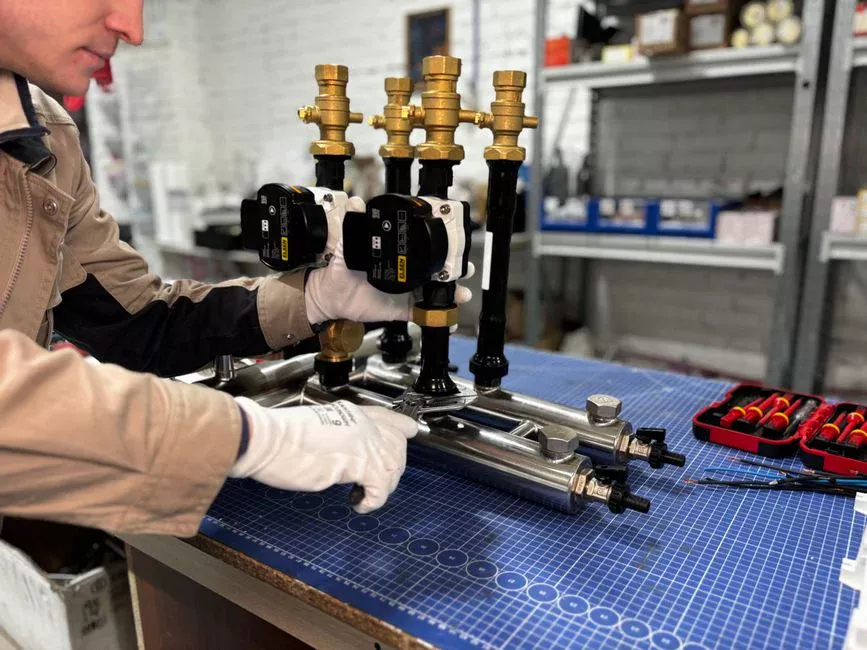
The table below is sized to drop into a process datasheet or an RFQ response. Values are anchored to the mungbean starch study (per Ko et al., 1994), the HydropureWater food-plant field database (2026), and typical food-industry operating ranges (per Al Aani et al., 2020).
| Sub-stream | Pre-treatment | MWCO | Temperature | TMP / Flux | Target rejection |
|---|---|---|---|---|---|
| Fryer wash water (chips, tortilla, nuts) | DAF → fine screen | 30–50 kDa | 40–50 °C | 1–2 bar / 30–60 LMH | FOG >95%, COD >80% |
| Extrusion cooker condensate & starch rinse | Screens, pH 6.2–6.6 | 20–30 kDa | 40 °C | ~4 kg/cm² / 30–50 LMH | 87.8% protein recovery (S4 anchor) |
| Seasoning & sugar-coating rinse | pH 4.5 stabilisation, screens | 5–10 kDa | 30–40 °C | 0.5–1.5 bar / 20–40 LMH | Sugar/protein fractionation |
| Snack-bar & confectionery washdown | Screens + DAF | 10–20 kDa | Ambient–40 °C | 0.5–2 bar / 30–50 LMH | Suspended solids, oil, protein |
Across all four rows, PVDF hollow-fibre outside-in is the default module format, with air-scour at 0.5–1.0 Nm³/m²·h between CIP cycles to keep flux recovery above 90% (per Al Aani et al., 2020). Starch and sugar feeds demand tighter MWCO; fryer condensate can tolerate the looser end of the range because FOG rejection is the priority, not protein fractionation.
Four Fouling Modes on a Snack Plant and the CIP Sequence That Beats Them
Cake formation is the first mode and the easiest to recognise — protein and starch concentrates build a compressible layer on the membrane surface, flux drops on a curve, and TMP rises. The chemical response is an alkaline wash at pH 11–12 (typically NaOH) at 50–60 °C, which hydrolyses proteins and saponifies residual fats (per Al Aani et al., 2020). This single step recovers the largest fraction of lost flux in dairy, slaughterhouse and starch duty.
Pore blocking from emulsified fat droplets is the second mode and it is largely a pre-treatment problem. Free oil that reaches the membrane blinds the surface within hours. The right defence is upstream: a DAF sized to drop free FOG to below ~50 mg/L before the feed ever sees the membrane, paired with pH control to keep emulsified droplets from re-stabilising.
Adsorption of surfactants and pigments onto PVDF is the third mode and the one that determines acid-wash frequency. A pH-2 acid stage (citric or nitric) at 35–45 °C lifts mineral-bound deposits and breaks protein–mineral complexes in hard-water regions. Snack plants that run CIP surfactant residues into the same drain as the process stream typically need this step every second alkaline cycle.
Biological fouling from lactose- and starch-fed biofilms is the fourth mode. An enzymatic CIP stage with proteases, lipases and amylases follows the alkaline step and removes the residual biofilm that chemistry alone leaves behind — particularly important in brewery and starch plants where the feed is essentially a bacterial growth medium at process temperature (per Al Aani et al., 2020). Air-scour backwash at 0.5–1.0 Nm³/m²·h between CIP cycles is the cheapest insurance on a hollow-fibre UF.
Temperature is the operating variable that ties membrane life to process economics. Protein-rich streams run at 40–55 °C to drop viscosity and lift flux, but every 10 °C above 40 °C roughly halves PVDF membrane life expectancy (per Al Aani et al., 2020). The 40 °C value in the starch anchor is therefore a design hint, not just an experimental condition — push the loop above 50 °C only when the viscosity argument is quantitatively stronger than the membrane-replacement cost. Sourcing UF membrane spares from at least two qualified vendors and pairing the membrane with a properly sized automatic chemical dosing skid is the cheapest way to keep life expectancy in the 3–5 year band instead of the 1–2 year band seen when pre-treatment is inadequate.
UF vs MBR for Snack Food Wastewater: When to Pick Which
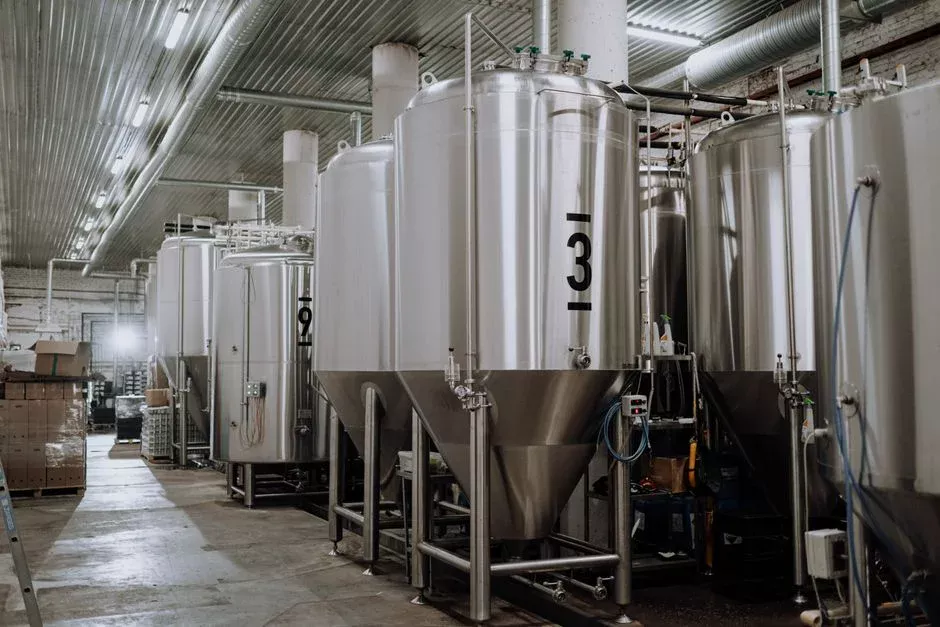
The decision rule is direct. Pick UF when the goal is to recover a value fraction (extrusion starch protein, seasoning sugar, edible oil) or to feed an RO for reuse or zero-liquid-discharge. Pick MBR when the goal is discharge compliance on a dilute wash stream below roughly 5,000 mg/L COD with no fractionation value. Many snack plants end up running both, with UF on the protein or sugar concentrate stream and MBR on the combined wash water.
On CAPEX, a typical food-plant UF splits 35–45% on membranes and modules, 20–25% on skids and piping, 10–15% on controls and instrumentation, and 15–20% on installation and commissioning (HydropureWater field data, 2026). On OPEX, UF energy runs 1–3 kWh/m³ permeate, well below the 4–6 kWh/m³ of a downstream RO, and comparable to MBR's 0.5–1.5 kWh/m³ — but MBR carries biological management overhead and sludge handling that UF avoids. UF pays back first when the recovered product has market value; MBR pays back first when the goal is simply meeting a discharge permit.
| Selection criterion | UF (hollow-fibre PVDF) | MBR |
|---|---|---|
| Primary goal | Value recovery + RO pre-treatment | Discharge compliance on dissolved organics |
| Feed window | 3,000–25,000 mg/L COD, high FOG/starch/protein | <5,000 mg/L COD, low fractionation value |
| Energy | 1–3 kWh/m³ | 0.5–1.5 kWh/m³ + biology management |
| Effluent | Retentate concentrated; permeate to RO | Single clarified effluent for discharge |
| PFAS handling | Defensible when paired with RO or NF | Does not reject PFAS; needs polishing |
PFAS context is the 2026 wild card. Standard UF does not reject PFOA or PFOS, which sit below 0.5 kDa, but a UF → RO (or UF → NF → RO) train is the defensible 2026 PFAS flowsheet because UF protects the high-pressure membrane from fouling while the RO does the actual molecular rejection (per Al Aani et al., 2020). Supply concentration is a real risk: Koch and Dow historically control over 51% of UF membrane unit volume, so qualifying a second supplier and stocking critical spares is the cheapest insurance against a forced re-spec mid-campaign (per Al Aani et al., 2020).
Payback Worked From the 87.8% Protein Recovery Anchor
The cleanest economic case in 2026 is the protein-recovery anchor. A snack or starch plant losing roughly 80% of its protein to drain can capture 87.8% of that stream with a 30 kDa MWCO membrane at 40 °C and ~4 kg/cm² TMP (per Ko et al., 1994). At recovered-solids values typical of 2026 starch and extrusion-cooker markets, UF CAPEX pays back in 12–30 months (HydropureWater field data, 2026).
Water-reuse driven sites should pair UF with RO to hit zero-liquid-discharge or to meet tightening 2026 industrial wastewater expectations, including PFAS scrutiny (per Al Aani et al., 2020). The dual driver — recovered product plus reduced fresh-water intake — is the strongest combination a procurement manager can take into a capital review.
Frequently Asked Questions
Which MWCO should I specify for each snack sub-stream?
30–50 kDa for fryer wash water, 20–30 kDa for extrusion cooker starch rinse, 5–10 kDa for seasoning and sugar-coating rinse, and 10–20 kDa for snack-bar and confectionery washdown — all at 40 °C where starch and protein feeds are concerned, with PVDF hollow-fibre outside-in as the default module format (per Ko et al., 1994; HydropureWater field data, 2026).
How often should I run CIP on a snack-plant UF, and with which chemicals?
Every 8–24 hours of operation, with alkaline NaOH at pH 11–12 and 50–60 °C to break protein and fat fouling, followed by a pH-2 acid stage weekly, and an enzymatic protease/lipase/amylase stage weekly to remove biofilm — air-scour backwash at 0.5–1.0 Nm³/m²·h between cycles holds flux recovery above 90% on PVDF hollow-fibre (per Al Aani et al., 2020).
Should I pick UF or MBR for my snack wastewater train?
Pick UF when the goal is protein or sugar recovery, or feeding an RO for reuse, and pick MBR when the goal is discharge compliance on a dilute wash stream below ~5,000 mg/L COD with no fractionation value — most mid-size snack plants end up running UF on the concentrate stream and MBR on the combined wash water (HydropureWater field data, 2026).
Does UF reject PFAS, or do I still need RO?
Standard UF does not reject PFOA or PFOS, which sit below 0.5 kDa, so a 2026 PFAS-defensible train is UF → RO or UF → NF → RO — UF protects the high-pressure membrane from fouling while the RO does the actual molecular rejection (per Al Aani et al., 2020).