Why Food Processing Wastewater Treatment is Critical in South Africa
Food processing operations in South Africa are a significant contributor to the national economy, but they also generate substantial volumes of wastewater. An estimated 120–150 million m³/year of wastewater is produced by the sector, posing environmental challenges if not adequately treated. The nation’s municipal wastewater treatment plants (WWTPs) struggle with compliance, with only about 13% meeting minimum discharge standards, placing increased pressure on industrial facilities to manage their effluent responsibly. This wastewater is often characterized by high organic loads, with Chemical Oxygen Demand (COD) typically ranging from 1,000–5,000 mg/L and Biochemical Oxygen Demand (BOD) from 500–3,000 mg/L. Suspended solids (TSS) can reach 300–1,500 mg/L, and Fats, Oils, and Grease (FOG) are commonly found at 100–800 mg/L. Fruit and vegetable processing, in particular, can also contribute significant levels of nitrogen and phosphorus. The consequences of non-compliance are severe; in 2023, a Western Cape fruit cannery faced fines totaling R2.5 million for exceeding COD discharge limits, as reported by Department of Water and Sanitation (DWS) enforcement data. with the ongoing threat of water scarcity, exemplified by past "Day Zero" risks, effective wastewater treatment and reuse have become strategic imperatives for ensuring operational continuity and sustainability within the food processing industry.
South African Compliance Standards for Food Processing Wastewater
Navigating the regulatory landscape for wastewater discharge in South Africa is paramount for food processing facilities. The Department of Water and Sanitation (DWS) General Authorisation, issued in 2016, sets national minimum standards for treated wastewater discharged into water bodies. These typically include limits of <75 mg/L for COD, <30 mg/L for BOD, <25 mg/L for TSS, <10 mg/L for FOG, and a pH range of 6–9. However, provincial and local variations exist, often reflecting specific environmental sensitivities. For instance, the Western Cape may impose more stringent FOG limits, particularly for discharges affecting coastal environments. In Gauteng, stricter nitrogen and phosphorus limits are often enforced to mitigate eutrophication risks in receiving waters. Discharging into municipal sewer systems introduces another layer of regulation; local bylaws, such as those in Johannesburg, may dictate even tighter parameters, potentially requiring COD levels below 50 mg/L. For facilities aiming for wastewater reuse, the South African National Standards (SANS) 241:2015 provides guidelines for non-potable reuse applications like irrigation or cooling tower makeup. The permitting process for industrial wastewater discharge can be extensive, often requiring an Environmental Impact Assessment (EIA) and a Water Use License, with timelines that can range from 6 to 12 months. Common pitfalls include incomplete monitoring data and a lack of understanding of specific regional requirements.
| Parameter | DWS General Authorisation (National Minimum) | Provincial/Municipal (Example) | SANS 241:2015 (Non-Potable Reuse) |
|---|---|---|---|
| COD (mg/L) | <75 | <50 (Johannesburg Municipality) | Varies by application |
| BOD (mg/L) | <30 | <20 (Example) | Varies by application |
| TSS (mg/L) | <25 | <15 (Example) | Varies by application |
| FOG (mg/L) | <10 | <5 (Western Cape Coastal Example) | Varies by application |
| pH | 6–9 | 6–9 | 6–9 |
| Nitrogen (Total N, mg/L) | Varies by region | <10 (Gauteng Eutrophication Control Example) | Varies by application |
| Phosphorus (Total P, mg/L) | Varies by region | <1 (Gauteng Eutrophication Control Example) | Varies by application |
Treatment Technologies Compared: DAF vs MBR vs Anaerobic Digestion
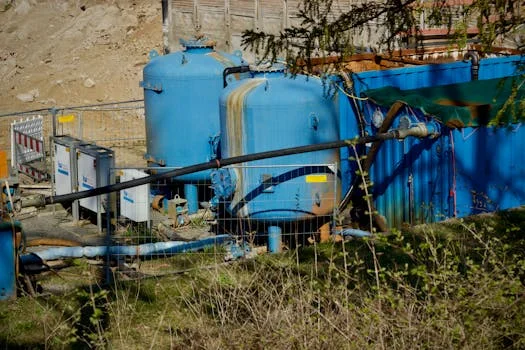
Selecting the appropriate wastewater treatment technology is crucial for food processing plants in South Africa, dictating compliance, operational costs, and the potential for water reuse. Dissolved Air Flotation (DAF) systems are highly effective for removing suspended solids and FOG, achieving over 95% TSS reduction. They are characterized by a relatively low footprint and are particularly well-suited for wastewater streams from meat and dairy processing plants with high FOG content. Membrane Bioreactor (MBR) systems, on the other hand, produce effluent of near-reuse quality, with BOD levels often below 1 mg/L. Their compact footprint makes them ideal for space-constrained facilities or water-scarce regions like the Northern Cape. However, MBRs typically have higher energy consumption, ranging from 0.8–1.2 kWh/m³. Anaerobic Digestion (AD) offers a unique advantage by recovering energy in the form of biogas, with a potential of 0.3–0.5 m³ biogas per kg of COD removed. This technology is most effective for high-COD waste streams, common in breweries and fruit processing, but it necessitates pre-treatment to remove FOG and post-treatment for nutrient removal and polishing. Hybrid systems, such as combining DAF with MBR, can address both FOG and nutrient removal challenges, while AD followed by aerobic polishing can optimize energy recovery and meet stringent discharge standards. Based on South African field data, DAF systems can handle flow rates from 50–500 m³/h with high efficiency, while MBR systems treat 10–200 m³/day, consistently achieving over 99% BOD removal.
| Technology | Primary Application | Typical Performance | Footprint | Energy Use (kWh/m³) | Key Benefits | Key Considerations |
|---|---|---|---|---|---|---|
| DAF | FOG & TSS Removal | 95%+ TSS Reduction | Low | 0.1–0.3 | Effective FOG removal, cost-effective for high FOG loads. | Limited nutrient removal, produces sludge requiring disposal. |
| MBR | High-Quality Effluent & Reuse | <1 mg/L BOD, 99%+ BOD Removal | Very Low | 0.8–1.2 | Compact design, superior effluent quality for reuse. | Higher energy consumption, membrane fouling potential, higher CAPEX. |
| Anaerobic Digestion | High COD Streams & Energy Recovery | Up to 90% COD Reduction, Biogas Production | Medium to High | Low (energy producer) | Biogas generation for energy recovery, significant organic load reduction. | Requires pre- and post-treatment, sensitive to shock loads, higher CAPEX. |
Step-by-Step: Designing a Food Processing Wastewater Treatment System
A systematic approach is essential for designing an effective wastewater treatment system for South African food processing plants. The process begins with a thorough characterization of the influent wastewater. This involves analyzing key parameters such as COD, BOD, TSS, FOG, nutrient levels, flow rate, pH, and temperature. Utilizing composite samples over a 24-hour period provides a more accurate representation of diurnal variations than grab samples. Following characterization, pre-treatment steps are implemented. These typically include screening to remove large solids like seeds and peels, often achieved with a rotary mechanical bar screen like the GX series screen, and equalization to buffer flow and concentration fluctuations. pH adjustment is also critical at this stage. Primary treatment focuses on removing settleable solids and FOG. This can involve sedimentation tanks or, more commonly for food processing, a DAF system. Chemical dosing using coagulants and flocculants, managed by an automatic chemical dosing system, is often employed here to enhance the removal efficiency of suspended solids and FOG. Secondary treatment aims to remove dissolved organic matter. Technologies vary based on desired effluent quality: MBR systems like the integrated MBR system are ideal for water reuse, while activated sludge processes are common for direct discharge. For energy recovery, anaerobic digestion is selected. Tertiary treatment may be necessary to meet stringent discharge or reuse standards, including disinfection using methods like UV or chlorine dioxide generators (e.g., HydropureWater’s), and further nutrient removal. Sludge management is an integral part of the design, typically involving dewatering using equipment such as a plate and frame filter press, which can achieve 30–40% dry solids content, followed by appropriate disposal. Finally, rigorous compliance testing, conducted by DWS-approved laboratories, and continuous monitoring of critical parameters are essential to ensure the system consistently meets regulatory requirements.
Cost Breakdown: CAPEX, OPEX, and ROI for Food Processing WWTPs in South Africa
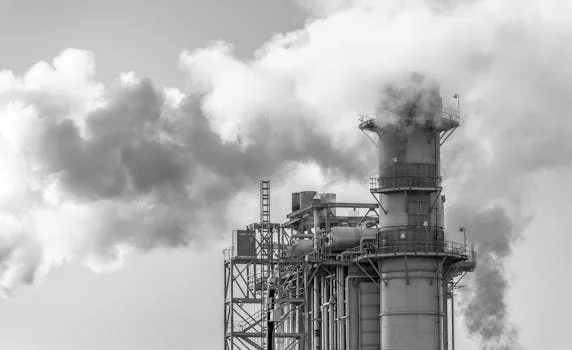
Budgeting for industrial wastewater treatment requires a comprehensive understanding of both capital expenditure (CAPEX) and operational expenditure (OPEX). For South Africa in 2025, CAPEX for DAF systems treating 50–300 m³/h can range from R500,000 to R3 million. MBR systems for 10–200 m³/day typically fall between R2 million and R10 million, while anaerobic digestion plants for 100–1,000 m³/day can cost R3 million to R15 million. OPEX is driven by several factors. Energy consumption for treatment typically ranges from 0.5 to 1.5 kWh/m³. Chemical costs can vary significantly, from R5 to R20 per cubic meter, depending on the influent characteristics and treatment process. For MBR systems, membrane replacement is a significant recurring cost, potentially R200,000–R500,000 annually. Sludge disposal costs can range from R1,000 to R3,000 per ton of dewatered sludge. Despite these costs, substantial return on investment (ROI) is achievable. DAF systems can achieve ROI within 1–3 years through efficient FOG recovery and avoided discharge fees. MBR systems can justify their investment over 3–5 years through water reuse savings. Anaerobic digestion typically offers a 2–4 year ROI due to energy savings from biogas utilization. South African food processors can explore funding opportunities such as GreenCape incentives, Development Bank of Southern Africa (DBSA) loans, and the Section 12L energy efficiency tax allowance. It is also crucial to account for potential hidden costs, including permitting delays which can add R200,000–R500,000, operator training at R50,000–R150,000, and the installation of emergency bypass systems costing R300,000–R800,000.
| Technology | CAPEX Range (R) | Typical OPEX Drivers | Estimated ROI (Years) |
|---|---|---|---|
| DAF (50-300 m³/h) | 500,000 – 3,000,000 | Chemicals, sludge disposal, energy | 1–3 (FOG recovery, avoided fees) |
| MBR (10-200 m³/day) | 2,000,000 – 10,000,000 | Energy, membrane replacement, chemicals | 3–5 (Water reuse savings) |
| Anaerobic Digestion (100-1,000 m³/day) | 3,000,000 – 15,000,000 | Pre/post-treatment chemicals, maintenance, energy | 2–4 (Biogas energy savings) |
Case Study: Upgrading a Western Cape Fruit Processing Plant for Compliance
A medium-sized fruit processing plant in the Western Cape faced significant challenges with seasonal wastewater discharge. During peak harvest periods, their effluent exhibited extreme COD spikes, reaching up to 4,500 mg/L, and high FOG levels of 600 mg/L. These excursions resulted in substantial annual surcharges from the local municipality, amounting to R1.2 million. To address this, the plant invested in a hybrid treatment solution. A DAF-100 system with a capacity of 100 m³/h was installed for primary treatment, coupled with a 200 m³/day integrated MBR system for polishing and water reuse. Enhanced FOG removal was achieved through optimized chemical dosing using PAC and polymer. The results were transformative: the plant now consistently achieves 98% COD removal and 99% FOG removal. This upgrade enabled them to reuse approximately 60% of their treated wastewater for irrigation, leading to annual savings of R800,000 on municipal wastewater fees alone. A key challenge encountered during the peak season was membrane fouling in the MBR, which was successfully mitigated by implementing an automated clean-in-place (CIP) system. Operator training also required a dedicated 3-month ramp-up period. The lessons learned highlighted the critical importance of correctly sizing equalization tanks to manage seasonal variability, with a recommendation for a minimum capacity of 2x daily flow. the installation of an online COD meter proved invaluable for real-time monitoring, significantly reducing compliance risks and enabling proactive process adjustments.
Frequently Asked Questions
What are the primary pollutants in food processing wastewater in South Africa?
The main pollutants are high organic loads (COD and BOD), suspended solids (TSS), and fats, oils, and grease (FOG). Depending on the specific process, nutrients like nitrogen and phosphorus can also be significant. Typical ranges include COD up to 5,000 mg/L and BOD up to 3,000 mg/L.
What are the typical discharge limits for food processing wastewater in South Africa?
The DWS General Authorisation sets national minimums, often around 75 mg/L for COD and 30 mg/L for BOD. However, stricter provincial or municipal bylaws may apply, and reuse standards (SANS 241:2015) have different requirements.
Which treatment technology is best for FOG removal in food processing wastewater?
Dissolved Air Flotation (DAF) systems are highly effective for FOG removal, achieving over 95% TSS reduction, making them ideal for meat, dairy, and other high-FOG waste streams.
Can I reuse treated wastewater in my food processing plant?
Yes, with appropriate treatment technologies like MBR systems, wastewater can be treated to near-reuse quality (BOD <1 mg/L) for applications such as cooling tower makeup or general plant cleaning, subject to SANS 241:2015 compliance.
What is the role of anaerobic digestion in food processing wastewater treatment?
Anaerobic digestion is primarily used for high-COD wastewater streams, such as those from breweries or fruit processing. Its main benefit is the production of biogas, which can be used for energy generation, offsetting operational costs.
How long does it take to obtain wastewater discharge permits in South Africa?
The permitting process, which often involves an EIA and a Water Use License, can typically take between 6 to 12 months to complete.
What are the main cost components of a wastewater treatment system?
Costs are divided into CAPEX (equipment purchase and installation) and OPEX (energy, chemicals, maintenance, operator salaries, sludge disposal, and membrane replacement for MBRs).
Are there any financial incentives available for wastewater treatment in South Africa?
Yes, food processors can explore options like GreenCape incentives, DBSA loans, and the Section 12L energy efficiency tax allowance.