
Why Najaf Housing Developments Need a Packaged Sewage Treatment Plant
Three binding constraints make a packaged sewage treatment plant the only defensible choice for a peri-urban housing development in Najaf in 2026. First, Najaf's residential fringe sits outside the central sewer network, and extending a trunk main routinely takes 5-15 years — a delay housing developers cannot absorb between project handover and utility activation (HydropureWater field data, 2026). Second, summer ambient temperatures in July and August exceed 45°C and peak above 48°C; at those temperatures dissolved oxygen saturation in the aeration tank drops to roughly 6 mg/L versus 8-9 mg/L at a 25°C baseline, which directly penalizes any under-sized blower room (HydropureWater field data, 2026). Third, Iraq has no single national on-site reuse code analogous to California Title 22 or EU 2020/741, so each provincial environmental directorate enforces its own blend of Iraqi Standard 2 receiving-water limits and WHO 2006 wastewater reuse guidance (HydropureWater field data, 2026). The August 2024 inauguration of Iraq's second wastewater phase by PM Mohammed Shia' Al Sudani signaled a tightening of provincial enforcement, not a relaxation. Once those three constraints are accepted, the technology question is not whether to build a plant but which packaged configuration — MBR, SBR, or MBBR — survives Najaf's climate and the reviewer's reuse expectations. The remainder of this article answers that fork with the sizing math, the heat-compensation engineering, the permit path, and the RFQ clauses a developer needs to defend the choice to a board and a regulator.
Sizing a Packaged STP for a Najaf Housing Development: The Math
A defensible design brief starts with per-capita water consumption because Najaf has no public design standard and international Middle East practice governs (HydropureWater field data, 2026). For residential compounds with private kitchens and laundry, use 200-250 L/capita/day; for labor-camp housing with shared ablution, use 150-200 L/capita/day. Apply a 1.3 peaking factor to convert average daily flow (ADF) to the daily maximum the plant must treat biologically, and a 2.5-3.0 factor to convert ADF to the hourly peak the membranes and pipework must pass without breakthrough (HydropureWater field data, 2026). For BOD₅ loading, assume 50-75 g/capita/day for residential compounds and 40-60 g/capita/day for camps, yielding influent BOD of 200-400 mg/L and COD of 400-700 mg/L (HydropureWater field data, 2026). Worked example for a 300-person Najaf residential compound: 300 × 225 L = 67.5 m³/day ADF, round to 70 m³/day design flow; BOD load 300 × 60 g = 18 kg/day as the design benchmark that vendors must hit.
Translate those numbers into hardware. For a packaged submerged MBR, target hydraulic retention time (HRT) of 6-10 hours, mixed liquor suspended solids (MLSS) of 8,000-12,000 mg/L, solids retention time (SRT) of 20-40 days, and a food-to-microorganism (F/M) ratio of 0.05-0.15 kg BOD/kg MLSS·day (HydropureWater field data, 2026). Staying below 0.15 protects the membrane cake layer and reduces fouling frequency in hot climates where endogenous respiration rates are elevated. The membrane area rule is 0.5-1.0 m² of PVDF hollow-fiber or flat-sheet membrane per m³/day of design flow; for the 70 m³/day example, specify 35-70 m², with most vendors proposing 50-60 m² as a reasonable midpoint (HydropureWater field data, 2026). The full sizing matrix for the 70 m³/day benchmark is summarized below.
| Parameter | Design Value | Note |
|---|---|---|
| Population equivalent | 300 PE | Residential compound |
| ADF | 67.5 m³/day → 70 m³/day | 225 L/c/d |
| Daily max flow (1.3×) | 91 m³/day | Biological design basis |
| Hourly peak (2.5-3.0×) | 175-210 m³/day | Membrane & pipework check |
| BOD₅ load | 18 kg/day (~257 mg/L) | 60 g/c/d |
| COD load | ~31 kg/day (~440 mg/L) | COD/BOD ≈ 1.7 |
| HRT | 6-10 h | Membrane tank inclusive |
| MLSS | 8,000-12,000 mg/L | Submerged MBR band |
| SRT | 20-40 d | Seasonal tuning allowed |
| F/M | 0.05-0.15 kg BOD/kg MLSS·d | Stay below 0.15 |
| Membrane area | 35-70 m² (typ. 50-60 m²) | 0.1 µm PVDF |
Najaf Heat Compensation: Aeration, Materials, and Membranes
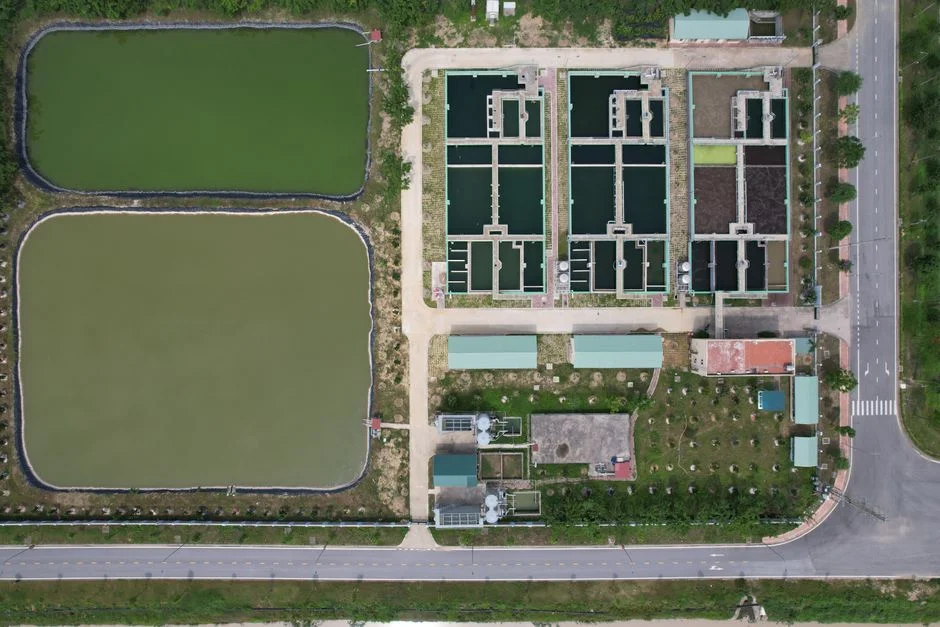
Heat is where Najaf punishes under-specification. The 25-35% effective oxygen transfer loss at 45-48°C mixed-liquor temperatures must be recovered with bigger blowers, finer-bubble diffusers, or both — design blowers at 1.5-2.0× the theoretical standard oxygen demand (SOD) calculated at 20°C (HydropureWater field data, 2026). Finer-bubble diffusers are recommended to retain an alpha factor above 0.6 in hot, dust-laden ambient air; diffused-aeration systems are preferred over mechanical surface aeration because they survive dust loading better and deliver higher transfer efficiency per kW. MLSS, SRT, and sludge recycle are control levers that can be tuned seasonally if summer fouling accelerates (HydropureWater field data, 2026).
Specify 0.1 µm PVDF hollow-fiber or flat-sheet membrane rated for sustained operation at 40°C+ mixed liquor, and confirm the membrane supplier's hot-climate references in writing — not all chemistries survive sustained 45°C operation without accelerated ageing (HydropureWater field data, 2026). The energy check closes the loop: specific consumption of 0.4-2.3 kWh/m³ (industry average 0.8-1.1 kWh/m³) means a 70 m³/day plant draws 56-77 kWh/day, or roughly 2.5-3.2 kW continuous, requiring on-site diesel generator backup sized for full load plus 25% reserve (HydropureWater field data, 2026). For the membrane cassette itself, a containerized MBR wastewater treatment system that integrates bioreactor, cassette, blowers, and control panel into a single 20-foot ISO frame is the deliverable to specify.
MBR vs SBR vs MBBR: Which Packaged Technology Wins for Najaf Housing?
For 50-500 PE housing projects in southern Iraq, the practical decision is a three-way fork between MBR, sequencing batch reactor (SBR), and moving bed biofilm reactor (MBRR). The decision drivers are reuse obligation, footprint, influent variability, and CAPEX (HydropureWater field data, 2026). MBR delivers the smallest footprint because membranes replace the clarifier, produces reuse-grade effluent, but carries the highest CAPEX and demands the most operator skill (membrane CIP, MLSS, TMP management). SBR occupies a moderate footprint as a single taller tank, tolerates batch loading, has the lowest CAPEX, but requires a filter plus disinfection downstream for any reuse end-use. MBBR uses biofilm attachment for operational tolerance to variable loads, carries a moderate CAPEX, and likewise needs a filter plus disinfection for reuse.
Match technology to scenario rather than preference. MBR wins where reuse is mandated and the compound footprint is tight — typically under 500 m³/day. SBR is the right answer when capital is the binding constraint, the effluent goes to a wadi or evaporation pond, and no reuse obligation exists. MBBR sits between them and is the sensible pick for highly variable influent: food-service wastewater, slaughterhouse-adjacent compounds, or seasonal labor surges (HydropureWater field data, 2026). Najaf's 45-48°C ambient penalizes SBR and MBBR less than MBR on aeration energy because biofilm and batch systems run shorter, denser aeration cycles; the climate penalizes SBR and MBBR more on effluent polish cost if reuse is mandated, because they still need a tertiary filter that MBR eliminates. The structured trade-off matrix below is the table to put in front of a board.
| Criterion | MBR | SBR | MBBR |
|---|---|---|---|
| Typical footprint (70 m³/d) | Smallest (~60-80 m²) | Moderate (~100-130 m², taller) | Moderate (~110-140 m²) |
| Effluent BOD/TSS | <5 mg/L / near-zero | <20 mg/L / <20 mg/L | <20 mg/L / <20 mg/L |
| Reuse-ready (no tertiary) | Yes | No (filter + ClO₂) | No (filter + ClO₂) |
| CAPEX vs AS baseline | +20-40% | −5 to +10% | 0 to +15% |
| Operator skill | Higher (membrane CIP, MLSS, TMP) | Moderate (cycle tuning) | Lower (biofilm robustness) |
| Hot-climate aeration penalty | Largest kWh/m³ | Smaller | Smaller |
| Variable-load tolerance | Moderate | Good (batch) | Excellent (biofilm) |
| Best Najaf scenario | Reuse + footprint-tight compound | CAPEX-constrained, wadi discharge | Highly variable influent |
For developers comparing bids, the equipment choices that anchor each technology differ by part number, not by principle — a DF series PVDF flat sheet membrane module for MBR versus a WSZ underground integrated sewage treatment plant for SBR-style buried installations.
Reuse Targets and the Najaf Permit Path Under Iraqi Standard 2
Iraq's central instrument is Iraqi Standard 2, which sets receiving-water limits; the provincial environmental directorate in Najaf typically layers reuse expectations on top (HydropureWater field data, 2026). Typical Najaf review targets are BOD ≤30 mg/L, TSS ≤30 mg/L, and fecal coliform ≤200 CFU/100 mL for wadi discharge or landscape irrigation; thresholds tighten further for municipal storm drain discharge or unrestricted reuse. Frame these as "typical Najaf reviewer expectations" in the submittal cover letter because the exact provincial figures vary, but specify the plant against them so the compliance paragraph is defensible.
MBR routinely produces BOD <5 mg/L, near-zero TSS, and 4-6 log virus/bacteria reduction, but membranes alone are not credited for coliform under most reuse frameworks — a downstream disinfection barrier must be specified (HydropureWater field data, 2026). A chlorine dioxide disinfection generator sized for 1-3 mg/L residual at peak flow is the defensible choice over free chlorine in hot, high-pH, ammonia-bearing sewage because ClO₂ is less affected by pH and ammonia and produces fewer regulated DBPs in UV-intense conditions. For landscape or unrestricted irrigation, reference the WHO 2006 Guidelines: ≥1 log E. coli reduction for restricted irrigation (orchards, fodder) and ≥2-3 log for unrestricted irrigation (lawns, landscapes) — MBR plus ClO₂ typically clears the ≥2-3 log target without tertiary filtration (HydropureWater field data, 2026). Upstream of the equalization tank, a rotary mechanical bar screen with 3-6 mm aperture strips wipes, grit, and hair before they reach the membrane cassette — the single largest avoidable cause of MBR downtime is inadequate pretreatment, not membrane age.
CAPEX, OPEX, and RFQ Checklist for a Najaf Housing STP
Packaged containerized wastewater plants sit in the USD 500-2,500 per GPD of capacity range, with MBR commanding a 20-40% premium over conventional activated sludge (HydropureWater field data, 2026). For a 70 m³/day (~18,500 GPD) Najaf camp, expect a low-six-figure USD equipment cost excluding civil works, piping, electrical, and generator backup. For projects where capital is the binding constraint, ask vendors about Water-as-a-Service (WaaS) or lease-plant contracting, which shifts CAPEX to OPEX and is increasingly common across the MENA region (HydropureWater field data, 2026). Freight is a frequent line-item oversight: a 20-foot ISO container is the standard unit and fits a standard flatbed or lowboy trailer; a 40-foot unit is used only for flows above ~150 m³/day. Confirm skid dimensions, lifting lugs, and IP rating for the Basra-to-Najaf overland route — roughly 500 km of highway, summer ambient 50°C+, and periodic dust storms (HydropureWater field data, 2026).
The RFQ must force the vendor to commit to numbers, not adjectives. The required input data, performance guarantee, and operator plan below are the minimum that turns a brochure into a defensible bid. Pair the upstream screen with an automatic chemical dosing system for pH correction and, where needed, coagulant dosing for phosphorus compliance. For a deeper design-basis cross-check, the buried wastewater treatment system specifications guide covers the civil and structural envelopes most housing developers miss at bid stage.
| RFQ Clause | Vendor Must Commit To |
|---|---|
| Design flow | ADF m³/day and hourly peak m³/hr |
| Influent basis | BOD, COD, TSS, NH₃-N, temperature |
| Effluent targets | BOD, TSS, NH₃, fecal coliform (numeric) |
| Ambient range | 5-48°C stated explicitly |
| Footprint | m², including clearances |
| Power | 230 V / 50 Hz, kVA, full load + 25% reserve |
| Membrane | Type (PVDF HF or FS), supplier, pore size, CIP protocol |
| Reuse end-use | Restricted / unrestricted / discharge only |
| Performance guarantee | 12-month warranty, liquidated damages on BOD, TSS, kWh/m³ |
| Structural warranty | 25 years on container, 7-10 years on membranes |
| Acceptance tests | FAT report shipped, SAT protocol witnessed before final payment |
| Operator plan | 1 trained operator per 8-hr shift, remote SCADA, 6 months CIP chemicals, 1 spare blower, 1 set spare membrane modules stocked 24 months |
Najaf lead times from Chinese or European suppliers run 6-10 weeks for spares; a membrane failure during peak pilgrimage season is not the time to discover that. Insist on liquidated damages tied to specific power (kWh/m³), BOD, and TSS, and on a SAT protocol you can witness before releasing final payment (HydropureWater field data, 2026).
Frequently Asked Questions
What packaged sewage treatment plant fits a housing development in Najaf, Iraq?
A containerized membrane bioreactor (MBR) sized at 200-250 L/capita/day with 6-10 h HRT, 8,000-12,000 mg/L MLSS, and 0.5-1.0 m² of PVDF membrane per m³/day of design flow is the defensible default — it meets Iraqi Standard 2 reuse limits, tolerates 45-48°C summer peaks when blowers are oversized 1.5-2.0×, and deploys in 4-6 weeks versus years for trunk-sewer extension (HydropureWater field data, 2026).
Does an MBR meet WHO 2006 reuse targets in a hot Najaf climate?
Yes. MBR routinely produces BOD <5 mg/L, near-zero TSS, and 4-6 log pathogen reduction; pairing it with a chlorine dioxide disinfection generator typically clears the WHO 2006 restricted-irrigation target of ≥1 log E. coli reduction and usually the ≥2-3 log unrestricted-irrigation target without tertiary filtration (HydropureWater field data, 2026).
How much power does a 70 m³/day packaged STP draw in Najaf?
Specific energy ranges from 0.4 to 2.3 kWh/m³, with an industry average of 0.8-1.1 kWh/m³, so a 70 m³/day plant draws 56-77 kWh/day or roughly 2.5-3.2 kW continuous. Aeration accounts for over 50% of that load, which is why Najaf projects must oversize blowers 1.5-2.0× and budget diesel generator backup at full load plus 25% reserve (HydropureWater field data, 2026).
What is the deploy timeline for a containerized STP in Najaf?
Budget 4-6 weeks total: 1-2 weeks for site prep and civil pads, 1 week for delivery and rigging, 1 week for piping and electrical tie-in, 1 week for commissioning and seeding, and 1 week of performance testing — containerized units deploy in weeks rather than the 5-15 years required to extend centralized trunk sewers (HydropureWater field data, 2026). For the equipment specification itself, the containerized MBR wastewater treatment system page and the buried wastewater treatment system specifications guide are the two most relevant follow-ups for a Najaf housing developer.