Why San Pedro Refineries Are Re-evaluating Biological Treatment in 2026
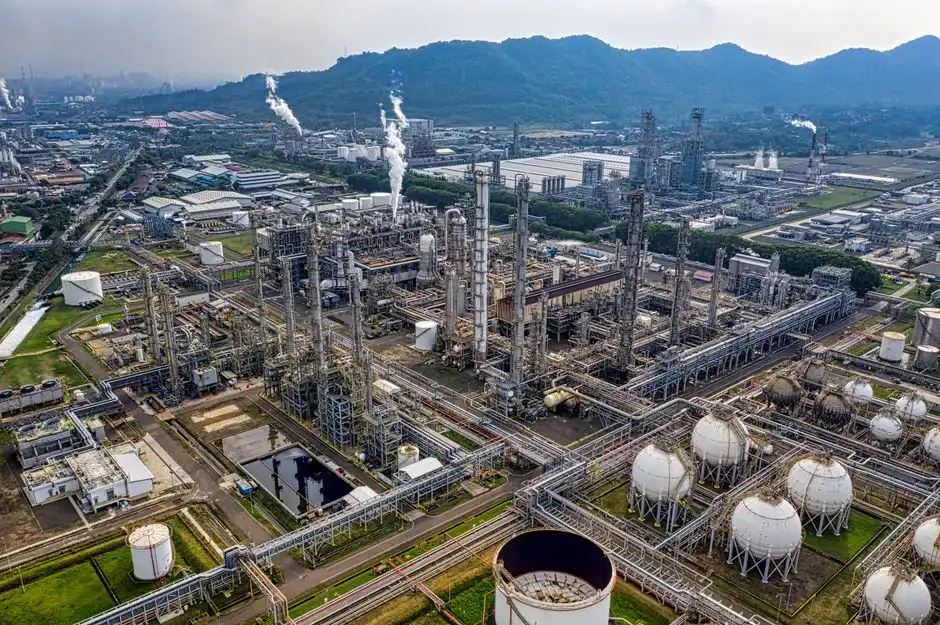
San Pedro Bay is the largest petroleum import gateway in the United States, handling roughly 575,000 barrels per day of crude receipts across the LA San Pedro Bay Ports complex, and the refinery and bulk-terminal wastewater stream that comes with it is high-strength, intermittent, and dominated by emulsified oil, sulfides, phenols, and ammonia (per Port of LA 2025 tonnage data). Federal effluent limits fall under 40 CFR Part 419, subpart D — Crude Oil and Natural Gas Processing subcategory, which caps oil and grease at 15 mg/L daily maximum and sets BOD, TSS, phenol, sulfide, and ammonia limits that most legacy activated-sludge plants struggle to meet during upset events. The Los Angeles Regional Water Quality Control Board (RWQCB Region 4) layers on additional local limits through the general industrial NPDES permit and, since 2024, has tightened salinity and trace-metal triggers for San Pedro Bay discharges. The 2026 drivers pushing engineers back to the drawing board are: (1) Title 22 industrial recycled-water opportunities at terminals that want reuse for ballast or cooling, (2) nutrient and salinity limits that are tightening under the 2024 State Water Board stormwater order, and (3) aging secondary clarifiers at the older San Pedro and Wilmington refineries that are at or past their 30-year design life. None of those problems is solved by spending more on a clarifier rebuild; they are solved by changing the separation mechanism.
MBR vs CAS: Process Fundamentals for Petroleum Influent
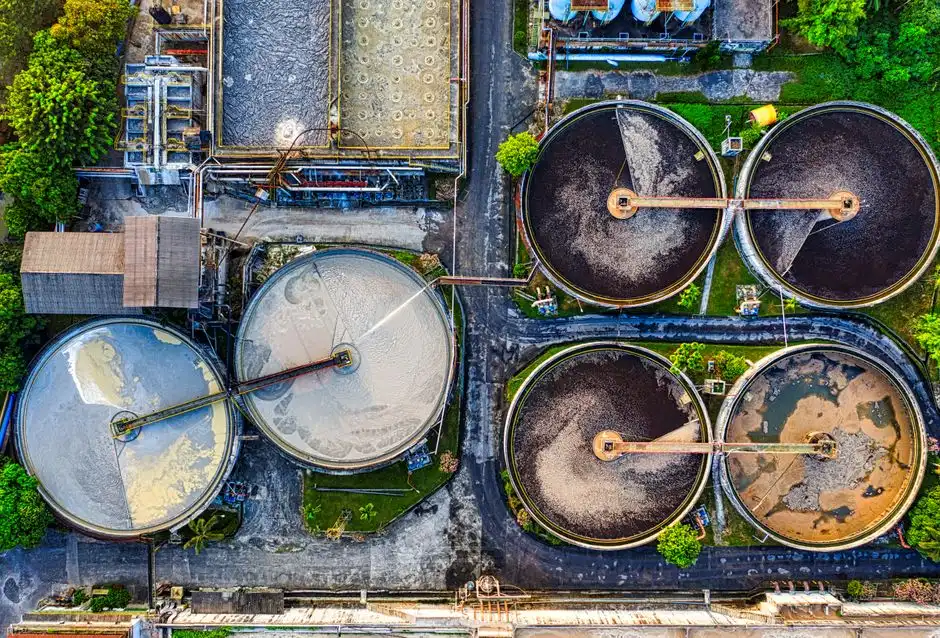
Conventional activated sludge (CAS) relies on floc aggregation followed by gravity settling in a secondary clarifier, with mixed liquor suspended solids (MLSS) typically held between 2,000 and 4,000 mg/L. A membrane bioreactor (MBR) replaces the clarifier with submerged MF or UF membranes — most commonly PVDF flat sheet in the 0.04–0.2 µm range, as documented in the Grasmick thesis on membrane bioreactor viability (theses.fr, 2012) and in the HydropureWater DF series flat sheet MBR module spec. Because the membrane is a physical barrier rather than a settling step, the MBR can operate at MLSS of 8,000–12,000 mg/L and decouple hydraulic retention time (HRT) from solids retention time (SRT). That decoupling is the headline difference on petroleum streams: nitrifiers and the slow-growing hydrocarbon-degrading specialists (e.g., Pseudomonas, Rhodococcus) that thrive on phenols and BTEX wash out of CAS clarifiers at typical SRT of 5–10 days, but persist in MBRs running at SRT of 20–40 days (Mannina et al., 2020; Bioresour. Technol. plant-wide MBR/CAS comparison, ScienceDirect 2020). For oil and grease, the mechanism is even more direct: a CAS clarifier loses solids on hydraulic or FOG upsets, and a thin oily sheen exits with the overflow; the MBR's 0.04–0.2 µm membrane physically retains emulsified oil droplets. The trade-off is membrane fouling, which is mitigated by aeration scouring and periodic clean-in-place (CIP) with NaOCl and citric acid. For a deeper mechanistic walkthrough, see the MBR working principle guide.
Side-by-Side Parameter Comparison: Refinery Influent to Treated Effluent
The table below consolidates the petroleum-specific parameter comparison that the academic sources never assemble in one place. Influent values are typical refinery sour-water stripper bottoms, desalter effluent, and tank-farm draw blended into the oily-water sewer; MBR values reflect the Alsalhy 2016 Al-Daura refinery study (71% COD, 60% BOD, 100% oil and 100% phenol removal at 1,000 mg/L MLSS, 55 °C preheat) and the Frontiers 2024 review petroleum refinery wastewater row (submerged hollow-fibre MF, PVDF 0.04 µm, permeate TOC 12.7 mg/L, ammonium-N 1.6 mg/L). CAS effluent values are typical literature ranges — confirm with a site pilot because they swing widely with clarifier condition and FOG events.
| Parameter | Typical refinery influent | CAS effluent (typical range) | MBR effluent (typical) | 40 CFR Part 419 limit (BPT–BAT) | MBR + RO/NF polished |
|---|---|---|---|---|---|
| COD (mg/L) | 500–1,200 | 80–180 | 30–70 (≈71% removal, Alsalhy 2016) | NSPS BAT 168 (30-day avg) | <10 |
| BOD₅ (mg/L) | 200–500 | 20–50 | 5–20 (≈60% removal, Alsalhy 2016) | NSPS BPT 47 (30-day avg) | <2 |
| Oil & grease (mg/L) | 50–500 (slug to 1,000+) | 10–25 (sheen on upset) | <2 (≈100% removal, Alsalhy 2016) | 15 daily max | <1 |
| Total phenols (mg/L) | 10–100 | 0.5–5 | <0.1 (≈100% removal, Alsalhy 2016) | 1.0 max (Crude subpart) | <0.05 |
| Sulfide (mg/L, as S) | 5–60 (sour H₂O) | 0.5–5 | <0.5 | 1.0 max (BPT) | <0.1 |
| NH₃-N (mg/L) | 20–80 | 5–25 (SRT-limited) | <2 (Frontiers 2024 refinery row: 1.6 mg/L) | Site-specific NPDES | <0.5 |
| TSS (mg/L) | 100–400 | 20–60 | <1 (membrane barrier) | NSPS BPT 30 (30-day avg) | <1 |
| Turbidity (NTU) | — | 5–30 | <1 | — | <0.1 |
Two headlines from this table: an MBR's oil and phenol effluent sits at or below 40 CFR Part 419 BAT limits without a polishing step, while CAS needs a tertiary coalescer or polishing filter to do the same. For a terminal targeting Title 22 reuse, MBR permeate typically needs only cartridge filtration plus RO to meet recycled-water criteria; CAS effluent almost always needs an MBR-like polishing stage anyway.
Operating Reality: Footprint, Energy, Sludge and Maintenance
Translate the technology choice into the four metrics a refinery procurement team will actually score against: footprint, kWh, sludge, and maintenance hours.
| Metric | CAS (open tank + clarifier) | Submerged flat-sheet MBR |
|---|---|---|
| Biological-tank footprint | Benchmark (aeration basin + clarifier + RAS well) | ≈60% smaller (HydropureWater integrated MBR spec) |
| Specific energy (kWh/m³) | 0.3–0.6 (aeration + RAS) | 0.5–1.2 (membrane aeration scour is the load) |
| Cross-flow MBR comparator | — | 10–20× higher than submerged flat sheet (HydropureWater DF series spec) |
| Observed sludge yield (kg TSS/kg COD) | 0.35–0.45 | 0.20–0.30 (higher SRT suppresses yield, Mannina et al. 2020) |
| WAS disposal (kg dry/d) | Benchmark | ≈30–40% less, meaningful under RCRA non-hazardous hauling cost |
| Maintenance burden | Rake/scum/RAS pumps, polymer system | Membrane CIP (NaOCl + citric acid, typically 2–4×/yr per train), aeration blower |
| Payback horizon | Lower CAPEX wins short-term | MBR CAPEX premium pays back over very long horizons (≥67 years per Karim & Mark 2017, cited in Mannina et al. 2020) through effluent quality |
For a brownfield San Pedro site where secondary tankage already exists and the operator's ten-year OPEX is the dominant line, CAS rebuild wins on paper. For a greenfield or a site where footprint and Title 22 reuse credit change the math, the MBR — particularly a submerged flat-sheet design — closes the gap. The cross-flow MBR note matters because the older refinery MBR literature (Rahman & Al-Malack, 2006) overstates the energy penalty by 10–20× when extrapolated to a modern submerged cassette; pick the comparison carefully when vendors cite "MBR is too energy-hungry for refining."
Refinery-Specific Design Choices for a San Pedro Retrofit
Whether the engineer ends up on MBR or CAS, pre-treatment is not optional on a refinery stream: a dissolved air flotation system (HydropureWater DAF, 4–300 m³/h range) or a corrugated-plate interceptor (CPI) must drop bulk oil and grease to under 50 mg/L before the biology, or the membrane will foul in days and the clarifier will float. Equalization with oil skimming follows, sized for at least 8 hours of residence so that a 30-minute slug from a desalter upset does not propagate into the aeration basin. A more detailed walkthrough of DAF sizing and chemistry is in the DAF systems engineering guide. For an MBR retrofit, the project-specific items are cassette layout against existing concrete (most refineries are tight on the east side of the process plot), aeration scour blower sizing at 0.3–0.5 m³ air per m² membrane area per hour for PVDF flat sheet, and a membrane-walkway plus hoist path for cassette change-out — every refinery MBR I have seen that underperformed had a 6 m ceiling or a 90° pipe rack that blocked cassette removal. A drop-in skid is easier: the HydropureWater integrated MBR system packages the membrane tank, aeration, CIP, and controls in a single 10–2,000 m³/day skid that can sit on a refinery containment pad with vapor balancing back to the oily-water sewer. For CAS retrofits, the dominant scope is clarifier rebuild (drive, rake, launder, density-current baffles), RAS/WAS pumping, scum handling, and a polymer system for the FOG events. API-1542 and API-2510A implications show up primarily in the upstream oil-water separation train and in vapor-handling of the equalization tank, not in the biological step itself — but any retrofit that changes tank geometry should be re-screened against API-2510A venting tables.
Decision Framework: When MBR Wins, When CAS Is Still the Right Answer
The honest answer for a San Pedro engineer is that neither technology is plug-and-play on petroleum wastewater. The table below maps the dominant decision drivers to a recommended train. Always verify with a 90–120 day on-site pilot using real refinery wastewater, because influent swings between sour-water draw, desalter effluent, and ballast treatment can flip the economics in two weeks.
| Project condition | Recommended train | Why |
|---|---|---|
| Footprint-constrained brownfield, no spare plot | Submerged flat-sheet MBR skid | ≈60% smaller biological footprint, no clarifier (per HydropureWater integrated MBR spec) |
| Title 22 industrial reuse is a 2026–2027 goal | MBR → RO/NF | MBR permeate already at <1 NTU; RO polish reaches recycled-water criteria with lower fouling than polishing CAS effluent |
| High phenol/oil variability, frequent desalter upsets | MBR with high-SRT operation | Membrane barrier stops emulsified oil; SRT ≥20 d retains slow-growing phenol degraders that wash out of CAS |
| Existing working clarifier, OPEX-dominant ten-year horizon | CAS rebuild | Lower absolute kWh/m³; CAPEX-limited retrofit, discharge-only acceptable |
| Brownfield with no plot expansion and a tight discharge-only permit | Hybrid: existing CAS + side-stream MBR polish | Preserves tankage, uses MBR only where it earns its keep (effluent polishing), option not in the vendor literature |
The hybrid row is the one vendor brochures do not present: keep the legacy CAS as a roughing/equalization stage, then divert a side stream of clarifier overflow through a small MBR cassette to polish it. The CAPEX of the MBR drops because the MBR no longer has to absorb the full hydraulic load, and the existing tankage stays in service. For a deeper comparison of footprint economics in another heavy industry, see the MBR vs CAS footprint guide for mining wastewater.
Frequently Asked Questions
Does an MBR actually meet 40 CFR Part 419 oil and grease limits without a polishing step?
Yes. The Alsalhy 2016 refinery MBR study reports 100% oil and 100% phenol removal at 1,000 mg/L MLSS and 55 °C preheat, putting the permeate well under the 40 CFR Part 419 daily maximum oil and grease limit of 15 mg/L and the 1.0 mg/L total phenols cap for the crude oil subcategory. Confirm with a 90-day pilot on the actual refinery stream because influent oil character (emulsified vs free) drives the result.
How much extra energy does an MBR draw compared with CAS on a refinery stream?
Submerged flat-sheet MBRs typically run 0.5–1.2 kWh/m³ versus 0.3–0.6 kWh/m³ for CAS, with the membrane aeration scour as the dominant load. External cross-flow MBR designs are 10–20× more energy-hungry (HydropureWater DF series spec) and should be screened out for refinery duty unless the wastewater is unusually hot or viscous.
What local permits govern a refinery wastewater biological-treatment retrofit in the Port of Los Angeles area?
Discharge to the LA San Pedro Bay is regulated under the federal NPDES program (40 CFR Part 419, subpart D for petroleum refining) with local limits set by the Los Angeles RWQCB (Region 4) through your facility's individual or general industrial permit; verify exact numeric limits with your current NPDES permit. If the goal is reuse, the California State Water Board Title 22 recycled water criteria apply through an RWQCB-issued water reuse permit.
Can a side-stream MBR polish an existing CAS clarifier overflow at a refinery?
Yes, and it is often the most capital-efficient retrofit on a brownfield with a working clarifier. A small submerged MBR cassette treating 30–60% of the clarifier overflow can pull oil and grease below 2 mg/L and TSS below 1 mg/L without rebuilding the biological basin; the existing tankage stays in service and the MBR CAPEX is sized to the polishing duty, not the full flow.
Is submerged flat-sheet MBR or hollow-fibre MBR better for refinery duty?
Both configurations appear in the petroleum MBR literature, with submerged hollow-fibre PVDF at 0.04 µm being the configuration cited in the Frontiers 2024 refinery wastewater row (permeate TOC 12.7 mg/L, NH₃-N 1.6 mg/L). Flat-sheet is mechanically simpler to clean and tolerant of particulate spikes; hollow-fibre packs more area per cassette. For a refinery with FOG slugs, the DF series flat-sheet MBR module is generally the lower-risk choice.
Related Equipment
- DF series flat sheet MBR module — specifications, capacity range, and technical data
- Dissolved air flotation system — specifications, capacity range, and technical data