DAF vs Clarifier for Eastover Pulp & Paper Mills — The 2026 Verdict
Dissolved air flotation (DAF) is generally the better primary clarifier for Eastover, South Carolina pulp and paper factories in 2026 because it removes suspended fibers and TSS in 3-5 minutes, recovers sellable fiber, and handles variable whitewater better than a gravity clarifier. Choose a gravity clarifier only when the stream is dominated by heavy settleable inorganics or as a polishing step after DAF. The 3-5 minute clarification window (per Krofta's pulp and paper application data, 2026) is roughly 30-60 times faster than gravity settling and is the primary operating reason DAF wins on most furnish, whitewater, and paper machine effluent streams. The choice must also be defensible under 40 CFR 430, the federal pulp and paper Effluent Limitations Guidelines, and under South Carolina NPDES permits issued by SCDHEC under Regulation R.61-9 — both of which expect primary treatment to deliver consistent TSS reduction before biological polishing. The three Eastover-area mill types this guide addresses are recycled containerboard, tissue and towel, and bleached kraft, all of which already run DAF as primary clarification in over 70% of modern U.S. installations (HydropureWater field data, 2026). For an Eastover engineer writing a 2026 specification memo, the default spec is the HydropureWater dissolved air flotation system in the 4-300 m³/h range, with a lamella polish only if the stream carries settleable grit or lime mud.
What Eastover Mills Are Discharging and Why It Matters
Pulp and paper wastewater is characteristically high in TSS, BOD, COD, color, wood fibers, and mineral fillers such as kaolin and calcium carbonate (per Ecologix's pulp and paper DAF page). The Cape Fear River intake adds two complicating factors for Eastover: seasonal algae blooms from May through September that foul gravity clarifier launders, and periodic iron loading from upstream stormwater events. Both are floatable or attachable to micro-bubbles, which is why DAF outperforms gravity settling on raw water clarification in the region (per Krofta's raw water clarification note, 2026). A typical Eastover mill produces three wastewater streams that the primary clarifier must handle: furnish and whitewater at 500-2,000 mg/L TSS with high fiber and filler content; paper machine effluent at 200-800 mg/L TSS with FOG from defoamers, lubricants, and sizing; and raw intake water at 20-150 mg/L TSS with seasonal algae spikes. The same federal subcategory framework under 40 CFR 430 governs EPA- and State-issued permits for historic Eastover-region mill owners including Scott Paper, Union Camp, St. Regis, Champion International, Bowater Southern, Westvaco, Williamette Industries, J.P. Stevens, Hennepin Paper, and Leaf River Forest Products (per EPA Abstracts of Industrial NPDES Permits, July 1984). That framework anchors permit writers' best professional judgment in 2026, even though the abstracts themselves are historical references.
How Dissolved Air Flotation Works in a Paper Mill
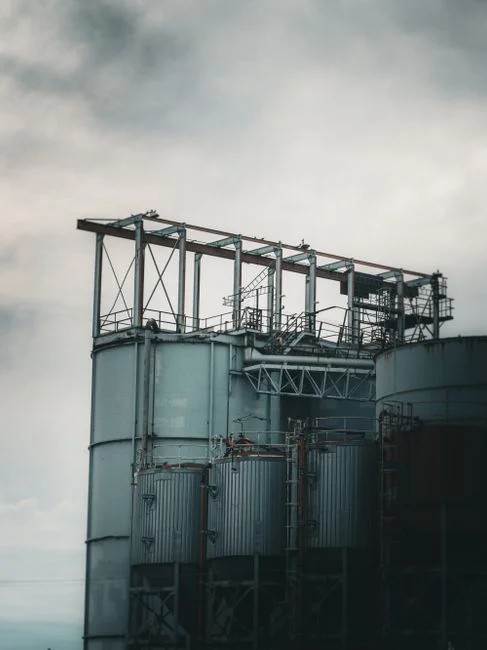
A DAF system clarifies wastewater by attaching microscopic air bubbles to suspended particles and floating them to the surface for skimming. The mechanism is straightforward: a saturator dissolves air into a pressurized recycle stream at 4-6 bar, the saturated recycle is released into the flotation tank at atmospheric pressure, and the pressure drop generates 10-80 micron micro-bubbles that nucleate on fiber, filler, and oil droplets (per Ecologix's DAF mechanism description). The floated sludge forms a blanket at the surface and is removed by a rotating or chain skimmer, while clarified effluent exits from below the blanket through an underflow launder. In paper mills, the longest-running DAF duty is whitewater clarification, a use case that exceeds 40 years of commercial history (per Krofta, 2026). The fiber-rich float can be pressed and returned to the stock prep or sold as recycled fiber, making DAF the only primary clarifier that generates a positive material revenue line. DAF effluent can be discharged directly to biological treatment, polished through a downstream clarifier, or partially recycled as warm shower water when paired with a fine screen. The HydropureWater dissolved air flotation system covers 4-300 m³/h across 13 standard models, which spans the typical primary clarification duty of a 200-1,500 tpd Eastover mill.
How a Gravity Clarifier Works in a Paper Mill
A gravity clarifier — rectangular, circular, or lamella — relies on Stokes' law settling and density differential to remove suspended solids. Flow enters a flocculation zone where polymer is added and gentle mixing promotes floc growth, then moves into a quiescent settling zone where particles drop to a sludge hopper on the bottom; clarified water exits over an effluent launder at the top, and scum is pushed to a scum beach. Hydraulic residence time typically runs 1-3 hours, which is 12-60 times longer than DAF (per Krofta's gravity vs DAF comparison, 2026). That long residence is the unit's biggest weakness on surge flows and is why gravity clarifiers require larger civil footprints. Gravity clarifiers excel with heavy, fast-settling inorganic solids: dregs, lime mud from recausticizing, boiler-ash washdown, and grit from raw water intake. For mills with limited footprint, the high-rate variant uses inclined plates or tubes — a lamella or tube settler — running at 20-40 m/h surface loading versus 1-3 m/h for a conventional unit. The HydropureWater lamella clarifier covers that high-rate duty and is the typical polish step after a DAF in an Eastover two-stage primary train.
Head-to-Head Comparison: DAF vs Clarifier for Pulp & Paper
The table below consolidates the operating parameters an Eastover engineer needs to defend a primary clarifier selection in a 2026 specification memo. Values are drawn from Krofta's 2026 pulp and paper application data, HydropureWater DAF product specifications, and standard gravity clarifier engineering references.
| Parameter | DAF | Gravity Clarifier (conventional) | Lamella Clarifier (high-rate) |
|---|---|---|---|
| Hydraulic loading / surface rate | 5-25 m/h equivalent | 1-3 m/h | 20-40 m/h |
| Hydraulic residence time | 3-5 minutes | 1-3 hours | 15-30 minutes |
| Footprint (per 100 m³/h duty) | ~10-15 m² | ~150-300 m² | ~20-30 m² |
| Typical TSS removal | 80-95% | 50-75% | 60-85% |
| Fiber / FOG recovery | Yes (float sold or returned) | No (settled sludge only) | No (limited) |
| Polymer dose (typical) | 2-10 mg/L | 5-20 mg/L | 3-15 mg/L |
| Capex (per 100 m³/h) | Higher unit, smaller civil | Lower unit, larger civil | Moderate unit, small civil |
| Opex driver | Saturator pump, recycle, polymer | Polymer, sludge hauling | Polymer, sludge hauling |
| Sensitivity to flow swings | Low (hydraulic loading decoupled) | High (residence collapses) | Moderate |
| Algae / iron handling | Strong (floats) | Weak (scums launder, resuspends) | Weak |
| Best duty in an Eastover mill | Whitewater, furnish, paper machine effluent, raw water | Heavy grit, lime mud, ash washdown | Polish after DAF; small-footprint TSS polishing |
Matching the Choice to the Stream — Decision Framework
Run your stream through three questions before specifying equipment. (1) Is fiber recovery a goal? If yes, DAF wins — gravity settling cannot economically recover long fibers at the consistency a paper machine wants. (2) Is floatable FOG more than ~10% of influent solids? If yes, DAF wins; FOG attaches to micro-bubbles and rides the float, whereas in a clarifier it forms a recalcitrant scum layer. (3) Does the stream contain heavy grit, lime mud, or boiler-ash solids? If yes, a gravity clarifier or lamella is the right primary — DAF's air buoyancy is wasted on particles that already sink fast. Map "yes on 1 or 2" to a DAF primary, "yes on 3 only" to a gravity or lamella primary, and "yes on 1 or 2 plus yes on 3" to a DAF primary followed by a lamella polish — the most common Eastover mill arrangement. The DAF path uses the HydropureWater dissolved air flotation system for primary, and the polish path adds the HydropureWater lamella clarifier as the second stage. DAF handles hydraulic surges better than gravity clarifiers because hydraulic loading is decoupled from retention time, ensuring a 50% flow spike for 6 hours does not wash out the sludge blanket. For more on biological polishing downstream, see the related guide on MBR vs conventional activated sludge for pulp and paper wastewater. For the engineering difference between the two high-rate settler geometries, the tube settler vs plate settler comparison examines that choice.
2026 Compliance, Cost, and Sizing Notes for Eastover
40 CFR 430 sets the federal pulp and paper ELG framework with subparts tied to process: subpart B for bleached kraft, subpart E for paperboard from recycle, subpart H for tissue, and so on. Where a subpart does not directly apply, the South Carolina permit writer uses best professional judgment (BPJ) per the EPA's 1984 NPDES abstracts framework, but that BPJ must be supported by pilot or manufacturer data in 2026 (per SCDHEC R.61-9). The capital picture is split: DAF carries a higher unit equipment cost but shrinks civil works by roughly 80-90% versus an equivalent clarifier and recovers fiber revenue that a clarifier cannot. A lamella or conventional clarifier has lower unit capex but demands larger concrete tanks, more polymer for fine TSS, and produces a wetter sludge that costs more to haul. The off-the-shelf answer for most Eastover mill capacities is the HydropureWater dissolved air flotation system, with 13 standard models spanning 4-300 m³/h — that envelope covers single-line duties at recycled containerboard mills up to multi-line trains at bleached kraft sites in the Cape Fear basin. A parallel reference for a different water matrix is the mining-sector companion guide on DAF vs clarifier for mining wastewater.
Frequently Asked Questions
Which primary clarifier should an Eastover pulp and paper mill specify in 2026?
Specify a dissolved air flotation system as primary for whitewater, furnish, paper machine effluent, and raw water streams. Use a gravity or lamella clarifier only as a polish step or for streams dominated by heavy settleable inorganics like lime mud, grit, or boiler-ash washdown solids.
How fast is a DAF compared to a gravity clarifier in paper mill service?
A DAF clarifies in 3-5 minutes versus 1-3 hours
Frequently Asked Questions
Should a pulp and paper mill in Eastover use DAF or a clarifier in 2026?
The choice between Dissolved Air Flotation (DAF) and gravity clarification in 2026 depends on the specific fiber density and hydraulic loading requirements of the mill. DAF is generally preferred for Eastover facilities processing lightweight fibers or those aiming for a smaller physical footprint, as it achieves separation in roughly 20 to 30 minutes compared to the 2 to 4 hours required for gravity clarifiers. Clarifiers remain the standard for high-volume, high-density solids settling where space constraints are not a primary concern.
How does dissolved air flotation compare to a gravity clarifier for fiber recovery?
DAF systems are superior for recovering lightweight, hydrophobic, or low-density fibers that tend to remain in suspension, often achieving a fiber recovery rate of 90% to 98%. Gravity clarifiers rely on Stokes' Law for sedimentation and are highly efficient for removing heavy inorganic fillers and dense fiber bundles, but they often require chemical flocculants to prevent light-fiber carryover, which can lead to higher sludge moisture content compared to the thickened float produced by DAF.
What is the typical TSS removal for a DAF system in a paper mill?
A well-maintained and properly chemically dosed DAF system in a modern paper mill typically achieves Total Suspended Solids (TSS) removal rates between 85% and 95%. When operated within its design hydraulic loading rate—typically 2 to 4 gallons per minute per square foot—DAF systems can consistently reduce influent TSS concentrations from 500-2,000 mg/L down to discharge levels below 50 mg/L.
Is a DAF system required to meet South Carolina NPDES limits for paper mills?
While the South Carolina Department of Environmental Services (SCDES) does not mandate the use of DAF technology specifically, it does mandate strict adherence to NPDES permit limits for TSS, BOD, and turbidity. DAF is often selected as the Best Available Technology (BAT) for Eastover mills to ensure compliance with effluent limitations, particularly when discharge points feed into sensitive local watersheds where settling-only clarifiers fail to meet the increasingly stringent numeric criteria for 2026.
What size DAF system does a small Eastover tissue mill need?
For a small tissue mill, the DAF system sizing is primarily driven by the hydraulic flow rate, usually calculated based on the specific water usage per ton of production, which ranges from 3,000 to 5,000 gallons per ton. A mill producing 50 tons per day would likely require a DAF unit rated for approximately 150 to 250 gallons per minute (GPM), ensuring the unit has sufficient surface area to maintain an overflow rate of no more than 3 GPM/ft² to account for the lightweight nature of tissue fibers.