
The Critical Need for Advanced Sewage Treatment in Johor, Malaysia
Industrial discharge in Johor is governed by the Environmental Quality (Industrial Effluent) Regulations 2009, which mandate strict limits on BOD, COD, and suspended solids to protect the state’s water basins and coastal ecosystems. As Johor undergoes rapid industrial and urban expansion—particularly within the Iskandar Malaysia region and the heavy industrial hubs of Pasir Gudang and Tanjung Langsat—the volume of complex wastewater has increased significantly. This growth places immense pressure on existing infrastructure and necessitates on-site treatment solutions for factories, residential developments, and commercial complexes.
In Malaysia, the Department of Environment (DOE) enforces Standard A and Standard B discharge limits based on the location of the facility relative to water intake points. Facilities located upstream of water supply intakes must meet the more stringent Standard A requirements. Failure to comply can result in heavy fines, operational shutdowns, and reputational damage. Consequently, B2B stakeholders in Johor are moving beyond basic septic systems toward integrated, automated technologies that ensure consistent compliance with the Water Services Industry Act 2006 (WSIA).
The challenges faced by industries in Johor include high organic loads from food processing, chemical residues from manufacturing, and the need for space-efficient systems in densely developed urban zones. Modern wastewater management now integrates sustainability as a core pillar, with many facilities seeking to treat sewage to a level suitable for non-potable reuse, such as cooling tower make-up or landscape irrigation. This shift not only reduces the environmental footprint but also mitigates the rising costs of industrial water tariffs.
Effective sewage treatment is no longer just a regulatory hurdle; it is a critical component of operational resilience. By implementing robust treatment systems, facilities in Johor can ensure long-term viability, meet corporate social responsibility (CSR) goals, and contribute to the preservation of Malaysia’s vital water resources, including the Johor River and the Straits of Johor.
Key Considerations When Choosing a Sewage Treatment Equipment Supplier in Johor
Selecting a wastewater partner requires evaluating the Life Cycle Cost (LCC) of the equipment, where energy and chemical consumption often exceed the initial capital expenditure by 300% over a ten-year period. For procurement managers and engineers in Johor, the decision-making process must extend beyond the lowest bid to include technical reliability, local support, and technological adaptability. A reputable supplier should demonstrate deep familiarity with Malaysian environmental standards and the specific climatic conditions of Southeast Asia.
Supplier experience is a primary indicator of project success. While the market features various players, benchmarks like EcoClean Solutions have established that a 15-year track record in the local market is often necessary to navigate the nuances of Malaysian soil conditions and regulatory approvals. The ability to offer a diverse technology range—from a compact WSZ series package sewage treatment plant to high-flux MBR systems—allows for a tailored approach based on specific influent characteristics and flow rates, which typically range from 1 to 80 m³/h for modular units.
Operational efficiency is another critical factor. Advanced Membrane Bioreactor (MBR) systems, for instance, utilize flat sheet or hollow fiber modules that can offer significantly lower energy consumption compared to traditional activated sludge processes when optimized for specific flux. Additionally, the physical footprint of the equipment is a major consideration in Johor’s industrial parks where land value is high; MBR systems can offer up to a 60% reduction in space requirements compared to conventional clarifier-based systems.
| Selection Criteria | B2B Buyer Requirement | Technical Benchmark/Standard |
|---|---|---|
| Regulatory Compliance | Guaranteed Standard A/B compliance | DOE Environmental Quality Regs 2009 |
| Technology Versatility | MBR, DAF, and Package Plants | Customization for 1–300 m³/h flow |
| Operational Footprint | Minimal land usage for urban sites | 60% smaller footprint via MBR tech |
| Energy Efficiency | Low kWh per m³ of treated water | High-efficiency blowers & automation |
| Local Support | Johor-based maintenance & spares | 24–48 hour response time capability |
Finally, after-sales service and the availability of spare parts in Johor are non-negotiable. Wastewater treatment is a continuous process; any downtime can lead to non-compliant discharge and environmental penalties. Buyers should prioritize suppliers who provide comprehensive commissioning, operator training, and long-term maintenance contracts to ensure the system operates at peak efficiency throughout its lifespan.
Advanced Sewage Treatment Technologies for Johor's Industries and Communities
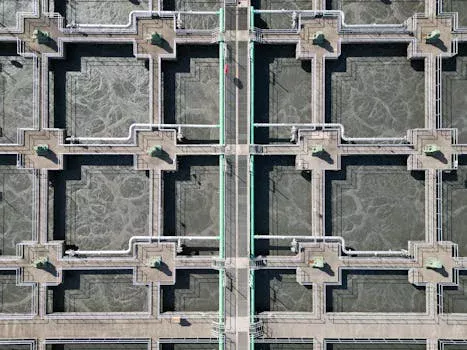
The advanced MBR membrane bioreactor wastewater treatment system utilizes submerged PVDF membranes with pore sizes typically below 0.1 μm to achieve high-quality effluent suitable for non-potable reuse. This technology integrates biological degradation with membrane filtration, eliminating the need for secondary clarifiers. For Johor-based facilities facing strict discharge limits, MBR provides a robust barrier against suspended solids and pathogens, consistently producing effluent with turbidity levels below 0.2 NTU.
For decentralized applications, such as worker accommodations, rural schools, or hotels in the Desaru area, the Integrated Package Sewage Treatment Plants (WSZ Series) offer a highly effective solution. These systems are typically buried underground to save space and minimize aesthetic impact. They utilize a multi-stage process involving anoxic denitrification, aerobic biological contact oxidation, and sedimentation. The WSZ series is designed for automated operation, handling capacities from 1 to 80 m³/h with minimal manual intervention, making it ideal for sites without dedicated wastewater engineers.
Industrial applications involving high concentrations of fats, oils, and grease (FOG)—common in Johor’s food processing and oleochemical sectors—require Dissolved Air Flotation (DAF) systems. DAF technology works by dissolving air under pressure and then releasing it as micro-bubbles into the wastewater. These bubbles attach to suspended matter, causing it to float to the surface for mechanical removal. Modern DAF systems can handle flow rates from 4 to 300 m³/h, providing essential primary treatment that protects downstream biological processes from fouling.
Specialized sectors like healthcare require unique solutions. The specialized medical wastewater treatment system is engineered specifically for clinics and hospitals. These compact units (often as small as 0.5 m²) combine multi-stage filtration with high-intensity ozone disinfection. Ozone is a powerful oxidant that achieves a 99% kill rate for bacteria and viruses without the residual chemical issues associated with chlorine, ensuring that medical facilities comply with specific healthcare waste regulations.
| Technology Type | Primary Application | Key Technical Advantage |
|---|---|---|
| WSZ Package Plant | Residential & Commercial | Buried design, low noise, automated |
| MBR System | Industrial & Reuse | Superior effluent quality, 60% smaller footprint |
| DAF System | Food/Oil Processing | High FOG and SS removal efficiency |
| Compact Medical System | Clinics & Hospitals | Ozone disinfection, compact footprint |
| Sludge Dewatering | Industrial Sludge | Plate & Frame Press (1–500 m² area) |
Supporting these primary technologies are ancillary systems such as automatic chemical dosing units and sludge dewatering equipment. For instance, plate and frame filter presses are essential for reducing sludge volume, significantly lowering disposal costs for Johor manufacturers. For a deeper technical analysis of biological options, readers may consult a definitive comparison of MBR vs MBBR systems to determine the best fit for their specific organic loading requirements.
Why HydropureWater is Your Trusted Partner in Johor, Malaysia
HydropureWater integrates international manufacturing standards with specific engineering adaptations required for the humid, tropical climate of Peninsular Malaysia. With extensive experience in global markets, the company provides Johor-based clients with equipment that meets stringent international benchmarks, including EPA and EU directives, while remaining fully compliant with Malaysia’s DOE Standard A and B. This dual focus ensures that B2B buyers receive world-class technology backed by local relevance.
The company’s strength lies in its comprehensive project capabilities. Rather than simply supplying hardware, HydropureWater offers a full-cycle partnership—from initial influent analysis and system design to manufacturing, installation, and commissioning. This "turnkey" approach is particularly valuable for facilities directors in Johor who need a single point of accountability for their wastewater infrastructure. By leveraging advanced manufacturing techniques, HydropureWater ensures that every component, whether a stainless steel DAF tank or a PVDF membrane module, is built for durability and long-term performance.
In addition to equipment supply, HydropureWater emphasizes operational cost optimization. By utilizing high-efficiency aeration systems and smart automation, the systems are designed to minimize kWh per cubic meter of treated water. This focus on efficiency is detailed in our B2B buyer's guide for package wastewater treatment plants, which outlines how modular designs can be scaled to meet future expansion without requiring a complete system overhaul. For those looking at international benchmarks, our global buyer's guide to sewage treatment equipment suppliers provides further context on the quality standards HydropureWater maintains across its global operations.
The Procurement Process: Partnering with a Sewage Treatment Equipment Supplier
Once the design is finalized, the process moves into manufacturing and rigorous quality assurance. B2B buyers should expect detailed technical drawings and performance guarantees. Following production, the equipment is transported to the site in Johor for installation. This phase includes mechanical and electrical integration, followed by commissioning—where the system is "seeded" with biological cultures and tuned to reach steady-state operation. Training for local facility staff is a critical final step, ensuring they can manage daily operations, monitor sensors, and perform routine maintenance to maximize the equipment's lifespan, which typically exceeds 15–20 years for well-maintained steel or concrete-integrated systems.
Frequently Asked Questions About Sewage Treatment in Johor
What are the main types of sewage treatment equipment suitable for industrial use in Johor?For industrial use, the most effective systems are MBR (Membrane Bioreactor) for high-quality effluent and reuse, DAF (Dissolved Air Flotation) for removing oils and fats, and integrated package plants (WSZ series) for general sewage in areas with limited space.
How do I ensure my sewage treatment plant complies with Malaysian environmental regulations?Compliance is ensured by selecting equipment designed to meet DOE Standard A or B limits. You should require your supplier to provide a performance guarantee and ensure the system design accounts for the specific influent characteristics of your facility.
What is the typical lifespan and maintenance requirement for a package sewage treatment plant?A high-quality package plant typically lasts 15 to 20 years. Maintenance involves regular checking of blowers and pumps, monitoring sludge levels, and periodic cleaning of sensors. MBR systems also require routine chemical cleaning (CIP) of the membranes.
Can HydropureWater provide customized solutions for specific industrial wastewater challenges in Johor?Yes, HydropureWater specializes in tailoring systems to specific needs, such as high-strength organic waste from food processing or specialized disinfection for medical facilities, ensuring both efficiency and regulatory compliance.
What factors influence the cost of a sewage treatment plant in Malaysia?The primary factors include the daily flow volume (m³/day), the strength of the influent (BOD/COD levels), the required discharge standard (A or B), and the choice of technology (e.g


