
Why Fabricated Metals Wastewater in Brigham City Is a Different MBR-vs-CAS Question
Conventional activated sludge (CAS) and membrane bioreactor (MBR) comparisons in the trade press almost always use municipal sewage as the reference stream. Fabricated metals wastewater in Box Elder County breaks every one of those assumptions. A typical Brigham City cutting, stamping, machining and finishing shop generates a blend of water-soluble and straight cutting fluids, stamping lubricants, quench oils, alkaline cleaning rinses, acidic pickling rinses, metal hydroxide sludge from precipitation, and intermittent hexavalent chromium and nickel discharges from plating or chromate-conversion lines. Influent oil and grease commonly runs 200–2,000 mg/L before any pretreatment, total suspended solids (TSS) routinely exceeds 500 mg/L from metal-hydroxide flocs, and pH can swing from 2 to 12 inside a single shift.
Utah DEQ administers industrial wastewater through Utah Pollutant Discharge Elimination System (UPDES) permits that incorporate the EPA Metal Finishing categorical standards at 40 CFR Part 433. Those standards set daily maximum and monthly average limits on total copper, nickel, total chromium, zinc, lead, and on TSS and oil & grease for any facility discharging metal-bearing process wastewater to a publicly owned treatment works (POTW). On top of the federal categorical limits, Box Elder County POTWs and Utah DEQ are tightening phosphorus and total dissolved solids (TDS) expectations for industrial users because the Bear River and other tributaries feeding the Great Salt Lake are already over-enriched and the lake's salinity is a documented management concern. The biological step is one of four decisions in the train, setting the floor under everything that follows, including whether your effluent can be reused as cooling-tower makeup.
What Each Technology Actually Does Inside a Metals Plant
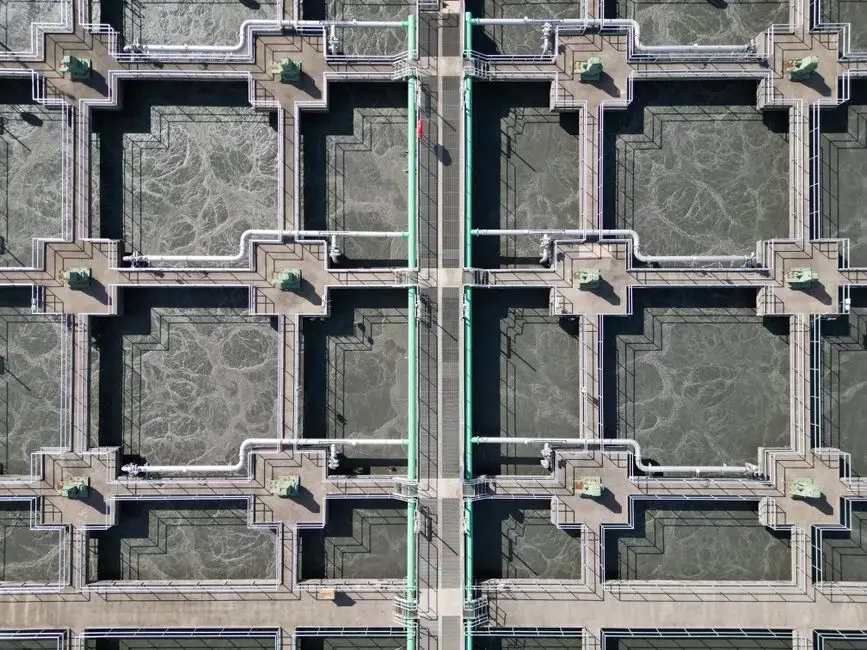
CAS utilizes an aerobic basin where floc-forming bacteria oxidize dissolved organics and the mixed liquor is separated from the cleaned water in a downstream gravity clarifier. Operators control the system with mixed liquor suspended solids (MLSS) of roughly 2,000–4,000 mg/L, a sludge retention time (SRT) of 5–15 days, and a hydraulic retention time (HRT) of 6–12 hours, while watching the sludge volume index (SVI) to avoid bulking. Clarifier performance depends on floc settleability, which is exactly where metals wastewater punishes CAS: free and emulsified oils coat flocs, tramp oil rises and forms a scum blanket, and metal-hydroxide precipitates add fine, low-density solids that wash out over the weir. The classic symptom is a rising SVI and a turbid effluent that drifts above 20–30 NTU the morning after a plating rinse dump.
MBR keeps the same biological basin but replaces the clarifier with a submerged PVDF flat-sheet or hollow-fiber membrane module, typically rated at 0.04–0.2 µm pore size (Grasmick and Heran, research on MBR viability). Solids are retained physically rather than by settling, so the basin can run at MLSS 8,000–12,000 mg/L and SRT 20–60 days. The higher MLSS and longer SRT give the biomass more buffering capacity against pulse loads of FOG, hexavalent chromium, and pH swings from rinse baths. The trade-off is energy: membrane aeration and periodic clean-in-place (CIP) cycles with sodium hypochlorite and citric acid add roughly 10–30% to specific energy demand versus CAS (Bertanza et al., 2017, plant-wide comparison cited in Mannina 2020). An integrated MBR system built around submerged DF series flat-sheet MBR modules with integrated aeration scouring keeps that penalty near the low end of the range, because flat-sheet geometry and coarse-bubble scour cut specific aeration demand compared to external cross-flow designs.
MBR vs CAS for Metals: Head-to-Head Parameters
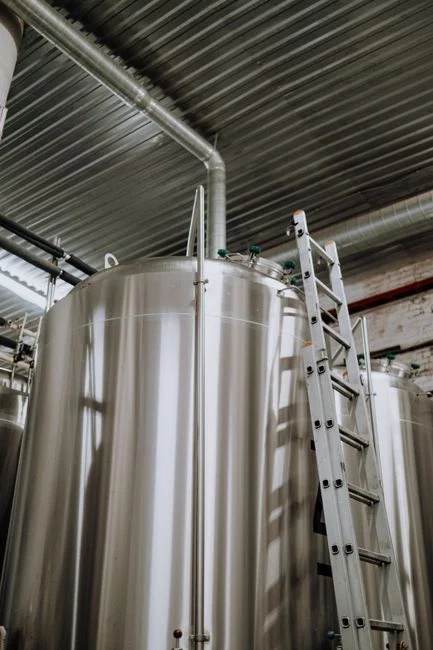
The numbers below are drawn from peer-reviewed plant-wide comparisons and from typical 2026 design ranges for industrial packaged systems. These figures anchor capital-meeting discussions.
| Parameter | CAS | Submerged MBR | Source / note |
|---|---|---|---|
| MLSS (mg/L) | 2,000–4,000 | 8,000–12,000 | Judd 2010; typical industrial design |
| SRT (days) | 5–15 | 20–60 | Judd 2010; Ma et al. 2018 |
| HRT (hours) | 6–12 | 4–8 | Typical metals design |
| Effluent TSS (mg/L) | 10–30 | < 1–5 | HydropureWater field data, 2026 |
| Effluent turbidity (NTU) | 5–30 | < 0.5–2 | Ma et al. 2018 |
| Membrane pore size (µm) | n/a (clarifier) | 0.04–0.2 | Grasmick and Heran |
| FOG tolerance to basin | Low — clarifier upset | Moderate — DAF protects membranes | HydropureWater field data, 2026 |
| Sludge yield (kg TSS/kg COD) | 0.3–0.5 | 0.15–0.30 | Judd 2010 |
| Footprint factor (same throughput) | 1.0× baseline | ~0.4× (~60% smaller) | Ma et al. 2018; Judd 2010 |
| Direct GHG (kgCO2eq/m³) | 0.85 | 0.91 | Mannina 2020 plant-wide model |
| Particulate proxy (MP/L effluent) | 1.0 | 0.4 | Lares et al. 2018 |
| Specific energy (kWh/m³) | 0.3–0.6 | 0.5–0.9 | Bertanza et al. 2017 |
| Capex vs CAS (200 m³/d) | 1.0× baseline | 1.20–1.35× | Karim & Mark 2017; 2026 market |
| Oil & grease effluent (mg/L) | 10–25 (after DAF) | < 5–10 (after DAF) | HydropureWater field data, 2026 |
Two takeaways from the table matter at a Brigham City site. First, the direct GHG gap between CAS and MBR is only about 7% (0.85 vs 0.91 kgCO2eq/m³, Mannina 2020), so an MBR retrofit is not a meaningful ESG penalty; it is roughly the same carbon footprint as the clarifier-based system it replaces. Second, the long-term economics flip: Karim & Mark (2017) found that over a multi-decade operating horizon, MBR's higher first cost is offset by tighter effluent, smaller building, and lower sludge handling, which matters if you are sizing an integrated MBR system against a 20-year asset life. For a more general framing of the same comparison in a different industry, see our MBR vs conventional activated sludge footprint guide for pharma.
Pretreatment and Post-Treatment: The Train Around the Biological Step
Picking a biological step in isolation is a planning error that metals plants often make. The chemistry forces a fixed train around it. Upstream of either CAS or MBR, you need oil and solids removal so the biology is not asked to digest what a simple physical separator can skim in seconds, plus equalization to dampen the rinse-bath pulse that arrives at 09:00 every Monday. A dissolved air flotation unit — for metals duty, a dissolved air flotation system — typically removes 60–90% of free and emulsified oil and grease and a large fraction of floating metal-hydroxide flocs before the biological basin. An equalization basin sized at 8–24 hours HRT smooths the next shock. The upstream chemistry also includes chromium(VI) reduction to Cr(III) with sodium bisulfite at pH < 3, followed by pH raise to 8.5–9.0 for hydroxide precipitation of all target metals, before the stream hits the DAF or biology. We have covered the DAF-versus-clarifier side of this question separately in our DAF vs clarifier guide for fabricated metals plants.
Downstream of the biological step, the train is a polishing block plus a dewatering step. pH adjustment to 6.5–7.5, multimedia filtration for residual turbidity, optional reverse osmosis for closed-loop reuse, and a plate-and-frame filter press for the waste biological sludge. If MBR is selected, the clarifier is gone and polishing can be lighter, but the waste activated sludge is denser and lower-volume, which actually shrinks filter-press sizing rather than enlarging it. If CAS is retained, the clarifier underflow becomes a continuous, dilute sludge stream that the filter press must handle, often with polymer conditioning.
2026 Decision Framework for Brigham City Fabricated Metals Plants
The decision rule below is intentionally binary. If you answer yes to two or more rows in the CAS column, stay with CAS; if you answer yes to two or more rows in the MBR column, retrofit to MBR.
| Site / process condition | Favors CAS | Favors MBR |
|---|---|---|
| Site footprint available | Generous (> 2× MBR footprint) | Tight / expansion constrained |
| Discharge limits (TSS, O&G, metals) | Loose vs 40 CFR 433 | Tight, near categorical limits |
| FOG and tramp-oil load | Low and steady | Variable, batch rinse dumps |
| Water-reuse target (2026–2030) | No reuse planned | Cooling-tower or rinse reuse |
| Remaining plant life | 5–15 years | 20+ years |
| Capex budget pressure | Tight — defer major rebuild | Available — long-horizon ROI |
| Hexavalent chromium present | Rare / batch | Recurring from plating line |
| Box Elder County reuse expectations | Discharge-only permitted | Reuse-ready effluent expected |
For most Brigham City fabricated-metals shops facing a 2026 UPDES renewal and tightening Great Salt Lake nutrient pressure, the MBR column wins on at least three rows: footprint, reuse, and tightening discharge limits. A useful hybrid is to keep the existing CAS basin as a buffer/polisher and add a side-stream integrated MBR system on the plating-rinse sidestream, a common 2026 retrofit path that preserves capex phasing. Pairing either biological step with RO polishing makes the effluent reusable as cooling-tower makeup, which is increasingly what Utah DEQ and Box Elder County utilities want to see in a 5–10 year compliance plan.
Frequently Asked Questions
Does MBR really handle tramp oil and cutting fluid in a metals plant?
Yes, but only if the upstream DAF and equalization are doing their job. Once free and emulsified oil is cut to roughly 20–50 mg/L by flotation, the MBR's high MLSS (8,000–12,000 mg/L) and long SRT (20–60 days) tolerate the residual FOG far better than a CAS clarifier, because the membrane physically retains the biomass instead of relying on floc settleability.
How much more does MBR cost than CAS for a 200 m³/d fabricated-metals plant?
A typical 2026 capex premium is 2
Frequently Asked Questions
What is the difference between MBR and conventional activated sludge for fabricated metals wastewater?
The primary difference lies in the solid-liquid separation process. Conventional Activated Sludge (CAS) relies on gravity clarification, which is often hindered by the fine metal particles and low-density flocs common in fabricated metals wastewater. Membrane Bioreactor (MBR) technology replaces the secondary clarifier with membrane filtration (typically 0.04 to 0.4 microns), providing a physical barrier that ensures complete solids retention regardless of sludge settleability.
MBR systems operate at higher Mixed Liquor Suspended Solids (MLSS) concentrations, typically ranging from 8,000 to 15,000 mg/L, compared to 2,000 to 4,000 mg/L in CAS. This allows for a significantly smaller footprint and longer Sludge Retention Times (SRT), which are critical for the biological degradation of complex organic compounds often found in metalworking fluids.
How much does an MBR cost compared to conventional activated sludge for a 200 m3/d metals plant?
For a 200 m3/d facility, the initial capital expenditure (CAPEX) for an MBR system is typically 20% to 40% higher than a comparable CAS system due to membrane modules, specialized aeration systems, and automated control requirements. Estimated CAPEX for a turnkey MBR package plant in this capacity range typically falls between $450,000 and $700,000, depending on the complexity of the pretreatment train.
Operationally, MBR systems generally incur higher costs due to electricity consumption for membrane scouring and the periodic chemical cleaning (CIP) of membranes. However, when accounting for total cost of ownership, MBR can be more economical if the facility intends to reuse treated water or faces stringent discharge surcharges, as the superior effluent quality reduces downstream treatment needs.
Can an MBR handle tramp oil and cutting fluid from a metal stamping or machining shop?
MBR systems are highly sensitive to free-phase oils and greases, which can cause membrane fouling and hydrophobic blinding. While MBRs can effectively treat the dissolved organic load from cutting fluids, the influent must be pre-treated to reduce oil and grease concentrations to below 50 mg/L before entering the biological zone.
To ensure system longevity, a robust pretreatment stage including oil-water separators (API or coalescing plate) and Dissolved Air Flotation (DAF) is mandatory for fabricated metals applications. Failure to remove tramp oils upstream will lead to frequent membrane cleaning cycles and irreversible flux decline, significantly increasing maintenance costs.
Is MBR effluent good enough for reuse as cooling tower makeup in a metals plant?
Yes, MBR effluent is generally of high enough quality for cooling tower makeup, provided that targeted post-treatment is applied. The membrane process consistently achieves turbidity levels below 0.2 NTU and near-complete removal of suspended solids, which prevents fouling of heat exchanger surfaces.
However, because MBRs do not remove dissolved inorganic salts, the high cycles of concentration in a cooling tower may lead to scaling. Operators must monitor conductivity and potentially utilize a small-scale Reverse Osmosis (RO) polisher or antiscalant dosing to ensure the water chemistry is compatible with the cooling tower metallurgy.
What Utah DEQ discharge limits apply to fabricated metals wastewater in Brigham City?
Discharge limits in Brigham City are governed by the Utah Division of Water Quality (DWQ) through the Utah Pollutant Discharge Elimination System (UPDES) program. Facilities discharging to local surface waters or municipal sewer systems must comply with categorical pretreatment standards under 40 CFR Part 433 (Metal Finishing Point Source Category).
Typical discharge parameters include strict limits on heavy metals (e.g., Total Chromium < 2.77 mg/L, Copper < 3.38 mg/L, Zinc < 2.61 mg/L) and pH control (typically 6.0 to 9.0). Because Brigham City may impose local limits based on the capacity of the municipal Publicly Owned Treatment Works (POTW), facility managers must consult their specific UPDES permit or the local sewer use ordinance for site-specific mass loading and concentration constraints.