
Why 2026 Brine Mandates Are Forcing a Midstream Rethink
High-recovery RO with a small thermal polish (MLD-style, 5–10% of feed to crystallizer) usually beats full ZLD on capex and energy for midstream oily and produced water in 2026, while still meeting brine-volume mandates. Standard RO only reaches 50% recovery at up to 70 g/L feed; high-pressure RO pushes recovery to 98% at 200 g/L, allowing operators to comply without running 100% of the flow through evaporators.
Class II Underground Injection Control (UIC) volume caps, Railroad Commission of Texas Mining Injection Well rules, and seismicity-driven injection-pressure limits across Oklahoma and Kansas are squeezing the historical disposal pathway for Permian and Anadarko produced water. Operators who ran 100% of brine to a Saltwater Disposal (SWD) well in 2022 are now budgeting for treatment trains because the available injection window has narrowed. The 2026 pinch stems from the cumulative effect of EPA NPDES produced water reuse pilots, state-level UIC caps, and induced-seismicity response plans that cap daily volumes well below 2024 baselines.
Midstream produced water differs from generic industrial brine. It typically runs 50,000–200,000 mg/L TDS, co-mingled with free oil, dissolved organics, suspended solids, and scaling cations — barium, strontium, and silica — that precipitate on membrane surfaces and cap recovery (Membranes/2025). Globally, brine effluents from desalination alone exceed 128 million m³/day, a scale that has pushed membrane and thermal vendors to commercialize high-recovery designs. The two competing responses are full Zero Liquid Discharge (ZLD), the historical default, and high-recovery RO with a selective thermal polish, a cost-rebalanced newcomer. Most midstream facilities will land on a hybrid MLD architecture rather than true ZLD, because the energy penalty of full evaporation no longer pencils out under capped disposal volumes.
How Oily Produced Water Differs from a Generic Industrial Brine
Generic ZLD vs RO comparisons break down at the wellhead because oil/grease, scaling ions, and TDS variability force pretreatment and recovery caps that industrial spec sheets ignore.
Midstream produced water is high-TDS brine co-mingled with free oil, dissolved organics, suspended solids, and scaling cations. Free oil must be removed before any reverse osmosis membrane sees the feed: typical limits of less than 1–2 mg/L oil-in-feed are required to prevent irreversible fouling, and the standard front-end is a DAF system for oil and grease removal backed by walnut-shell filters and CPI separators. Skipping that step is the most common cause of premature membrane replacement in midstream pilots.
Scaling constraints are the second gate. Silica, barium sulfate, strontium sulfate, and calcium carbonate recovery limits typically cap conventional RO at 60–75% recovery in real produced water, not the 80–90% a generic spec sheet claims. Push past those indices and the membrane fouls within hours, not weeks. Feed variability is the third gate: shale-by-shale swings in TDS and organics (Bakken vs Eagle Ford vs Wolfcamp) force a flexible train with softening or media filtration ahead of the RO, rather than a single-pass membrane skid. Both ZLD and high-recovery RO assume the same clean feed to the membrane — the difference is what happens after the membrane.
Recovery and Salinity Envelopes: What Each Technology Can Actually Do
Vendor claims of 90% recovery on standard RO collapse in real produced water, as the membrane envelopes below are anchored to the MDPI high-recovery review (Membranes/2025).
| Technology | Max Feed Salinity (g/L) | Water Recovery | Notes |
|---|---|---|---|
| Standard RO | 70 | up to 50% | Workhorse for brackish feeds; underperforms on Permian brines |
| High-pressure RO / 2nd-pass RO | 200 | up to 98% | Modern high-recovery train backbone |
| Osmotically Assisted RO (OARO) | 140 | up to 72% | Lower energy than HP-RO at high salinity |
| Membrane Distillation (MD) | 350 | up to 90% | Thermal gradient 30–80 °C feed, <20 °C permeate |
| Electrodialysis / EDR | 200 | up to 86% | Tolerant of higher silt density index |
| MVR evaporation | near saturation | up to 98% | Thermal terminal step in hybrid trains |
Conventional RO alone only recovers 50–80% in industrial practice, leaving 20–50% as concentrated brine — that gap is the slice high-recovery designs target (wcponline.com/2026). For oily produced water specifically, expect the practical ceiling to be 60–75% on a single pass because of the silica and barium indices, regardless of what the membrane data sheet says. Operators use the high-recovery architectures above to close that gap without evaporating 100% of the feed.
Full ZLD vs High-Recovery RO + Thermal Polish: A Head-to-Head Comparison
The decision for a midstream engineer in 2026 is a capex memo with a recovery number and a per-m³ opex attached.
| Dimension | Full ZLD (RO + Evaporation + Crystallizer) | High-Recovery RO + 5–10% Thermal Polish (MLD) |
|---|---|---|
| Water recovery | 95–99% (multi-stage train) | 90–95% |
| Capex band (annualized capacity) | USD 5–15/m³ | roughly 30–50% of full ZLD |
| Opex band | USD 5–15/m³ all-in (thermal-dominated) | USD 0.8–1.4/m³ for multi-tech integrations at 78–89% recovery (Membranes/2025) |
| Energy intensity | Thermal stage dominates; MVR alone hits up to 98% recovery with the lowest energy among thermal options (KLC/2025) | HP-RO pump work dominates; only 5–10% of feed reaches thermal stage |
| Salt end-product | Dry crystalline salts (NaCl, CaCl₂) for landfill or resale | Small brine bleed (5–10%) — typically still routed to a permitted Class II well |
| Footprint | Large (evaporator + crystallizer) | Compact (membrane-skid dominated) |
| Oil/grease tolerance | High — thermal stage oxidizes residual organics | Lower — requires tight DAF + walnut-shell pretreatment to protect membrane |
| 2026 brine-mandate fit | Exceeds any cap (no liquid discharge) | Meets 90–95% volume reduction; small bleed still needs a permitted pathway |
Full ZLD pushes recovery to 99% but requires higher capex and energy. The opex band of USD 5–15/m³ is dominated by evaporator steam or MVR electricity. High-recovery RO plus a small thermal polish, often called MLD, cuts opex to the USD 0.8–1.4/m³ range documented for multi-tech integrations (Membranes/2025) and confines the thermal energy bill to a 5–10% bleed. For midstream operators with a permitted Class II well still in scope, that residual bleed closes the loop without producing dry salts. An industrial RO system serves as the membrane backbone of the high-recovery train.
How the High-Recovery Train Actually Works
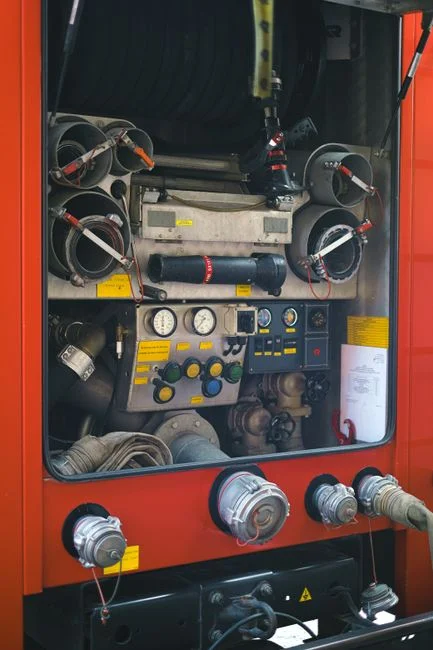
The high-recovery architecture is a sequence that keeps the thermal stage small.
The train runs: oil removal (DAF / CPI / walnut-shell filter) → softening or media filtration (a multi-media filter for RO pretreatment handles TSS and turbidity) → cartridge guard → primary RO at 50–75% recovery → high-pressure RO pass to push overall recovery to 90–95% → small thermal polish (MVR or MVC crystallizer) on the final 5–10% of feed. The DAF system for oil and grease removal is the same front-end both ZLD and high-recovery RO assume. Advancements in pretreatment and membrane management have enabled these systems to operate more efficiently. Three innovations make the train pencil out: fluidized-bed crystallization reactors that precipitate scaling ions onto seed particles, cyclic or pulsed-flow RO that dislodges fouling layers, and AI-based scaling-index control that forecasts osmotic spikes. The net effect is that only 5–10% of feed reaches the thermal stage, keeping the rest within the low-energy membrane envelope.
Which Architecture Wins Your 2026 Brine Mandate? A Decision Framework
The framework below serves as a guide for project memos, where the first step that disqualifies an option ends the analysis.
| Step | Question | If Yes | If No |
|---|---|---|---|
| 1. Disposal pathway | Is a permitted Class II SWD well with spare capacity still in scope for 2026? | High-recovery RO alone (no thermal) may meet the cap. | Move to Step 2. |
| 2. Salinity / scaling | Is feed TDS > 150,000 mg/L, or are barium/strontium/silica indices aggressive? | Specify HP-RO plus a fluidized-bed or OARO step; standard RO will not hit the recovery target. | Single-pass RO + brine-volume check. |
| 3. Oil/grease variability | Does the feed swing shale-by-shale on oil load? | Specify DAF + walnut-shell polishing on the front-end (both ZLD and high-recovery RO assume clean membrane feed). | Standard CPI / skim-vat pretreatment. |
| 4. Energy / heat source | Is low-grade waste heat or steam available on-site? | Full ZLD becomes more competitive — the thermal stage is the cheapest it will ever be. | High-recovery RO + MVR polish is the lower-energy path. |
| 5. Salt end-product | Can the operator sell dry NaCl or CaCl₂ salts, or are they a disposal liability? | Full ZLD pays back on salt revenue. | High-recovery RO avoids producing them. |
High-recovery RO plus a 5–10% thermal polish wins for most midstream produced-water mandates, while full ZLD is reserved for sites with no disposal pathway and a viable salt market. The pharma-focused ZLD vs high-recovery RO comparison provides additional context on these technologies, and the US petroleum pretreatment compliance guide covers the front-end in more detail.
Frequently Asked Questions
What recovery can a standard RO hit on midstream produced water before scaling forces a back-off?
Standard RO is rated up to 70 g/L feed salinity and 50% freshwater recovery (Membranes/2025). On real oily produced water, silica, barium sulfate, and strontium sulfate indices typically cap single-pass recovery at 60–75%, not the 80–90% generic spec sheets claim.
How much does a high-recovery RO + thermal polish train cost per cubic meter versus full ZLD?
Multi-tech high-recovery integrations (RO + HP-RO + FO/MD/OARO) run USD 0.8–1.4 per m³ at 78–89% recovery (Membranes/2025). Full ZLD with evaporation and crystallizer typically runs USD 5–15 per m³ all-in, with the thermal stage dominating energy cost.