The Two Streams Every CMP Fab Must Treat Together
CMP accounts for roughly 40% of total fab water consumption in semiconductor manufacturing (PMC 2021), making the polishing step the volume-dominant decision in any utilities-side water strategy. Two distinct waste streams converge at that polishing step, and they do not behave alike. Post-CMP rinse water carries fluoride in the tens to low-hundreds of mg/L range, depending on slurry chemistry and tool setpoint, while slurry carryover delivers colloidal silica in the 200–500 mg/L band (HydropureWater 2026 field data). The first is ionic, low-TDS, and a natural fit for an ion-exchange polishing column; the second is particulate, scale-forming, and a known killer of resin beds not designed for it.
Cooling-tower make-up is the reuse target that makes this comparison interesting. Tower demand is volumetrically large, the purity bar is lower than UPW, but two constraints still rule the spec: silica below ~150 mg/L on the make-up stream to prevent tower scale, and low hardness to keep cycles of concentration honest. Any polishing technology that drops the fluoride but fouls on colloidal silica, or that strips ions but then needs a second-stage RO polish anyway, is leaking OPEX. The decision the engineer must make is not "RO or IX" — it is "at what flow rate, and at what reuse target, does each technology pay back?" This article answers that question with numbers.
RO Fundamentals for Fluoride and Silica Rejection
Thin-film composite polyamide RO rejects fluoride at >99% in a properly designed system and rejects dissolved silica effectively as long as the pH window prevents silica polymerization on the membrane surface (HydropureWater 2026 reference design). The recovery ceiling is 85% — that is the industry cost-effective target, and exceeding it cuts membrane life by roughly 40% (HydropureWater 2026 reference design citing 2025 ASTM D4516). At 85% recovery, a 50 m³/h feed becomes ~42.5 m³/h of permeate and ~7.5 m³/h of concentrate, which is the ratio that lets the OPEX math close against a $3/m³ municipal make-up baseline.
The influent spec is non-negotiable. SDI must stay below 3, turbidity after pretreatment must be under 1 NTU, and silica must be held under 150 mg/L to prevent rapid membrane fouling. Cleaning intervals track the pretreatment discipline: a well-run UF-RO train cleans every 3–6 months; a system with no pretreatment fouls on a scale of days (HydropureWater 2026). A 2004 IWA pilot study demonstrated the chemistry works at real CMP wastewater scale, using ceramic MF + GAC + RO to remove fluoride and sulfate from polishing wastewater to reuse quality (IWA 2004, pilot study). For an engineer defending the spec to a capital committee, the relevant parameter table looks like this:
| Parameter | RO Influent Spec | Source |
|---|---|---|
| SDI (after pretreatment) | < 3 | HydropureWater 2026 |
| Turbidity (after pretreatment) | < 1 NTU | HydropureWater 2026 |
| Silica | < 150 mg/L | HydropureWater 2026 / SEMI S23-0718 |
| Recovery | 85% target | HydropureWater 2026 (ASTM D4516) |
| Membrane life (with UF pretreatment) | 3–5 years | HydropureWater 2026 |
| Cleaning interval (with UF pretreatment) | 3–6 months | HydropureWater 2026 |
For design context, a 50 m³/h CMP RO system sized for one wafer-fab cluster is a real module class — it includes UF pretreatment, RO skids, antiscalant and cleaning-chemical dosing, and PLC automation (HydropureWater 2026 reference design).
Ion Exchange Fundamentals for Fluoride Polishing
Strong-base anion resin selectively loads fluoride on real CMP water, but the selectivity story is more complicated than the chemistry text suggests. Sulfate and nitrate compete for the same sites, and both are present in post-CMP rinse streams, so regeneration frequency climbs the moment a real slurry profile hits the column. The deeper problem is colloidal silica from slurry carryover. Silica blinds resin beads by surface fouling, not by ionic exhaustion, and the failure mode is invisible until throughput collapses and the column comes offline for resin replacement. This is the operational pain that drives IX operators toward RO at fab scale.
Regeneration OPEX is dominated by NaCl for the cation softener, NaOH for the anion resin, and the rinse-water volume that becomes a new waste stream requiring neutralization. Resin life on fluoride duty is 2–3 years, shorter when silica breakthrough is uncontrolled (HydropureWater 2026 field data). Where IX genuinely wins is on CapEx simplicity: no moving membranes, no high-pressure pump train, no pretreatment stack. At low flow, on a slipstream, or at a legacy site, that is a legitimate case for keeping IX. At fab-scale combined CMP and post-CMP rinse flows, it is usually a temporary case.
Head-to-Head OPEX: What Cooling-Blowdown Reuse Actually Costs
This table outlines the costs for a 50 m³/h combined CMP and post-CMP rinse stream at a 200–300 mm wafer fab, using a $3/m³ municipal make-up baseline and the HydropureWater 2026 reference designs. Regeneration OPEX of $0.40–$0.90/m³ plus 2–3 year resin replacement is the opening cost-frustration; the table shows what it competes against.
| Cost Line (per m³ permeate) | RO (85% recovery, CUR train) | IX (anion polish, regeneration duty) |
|---|---|---|
| Energy | $0.18–$0.30 (high-pressure pump) | $0.05–$0.10 (regen pumps only) |
| Chemicals (antiscalant, NaCl/NaOH, citric acid) | $0.08–$0.15 | $0.40–$0.90 |
| Membrane / resin replacement (amortized) | $0.05–$0.10 (3–5 yr life) | $0.15–$0.30 (2–3 yr life) |
| Labor (CIP, regen, resin changeout) | $0.04–$0.08 | $0.10–$0.18 |
| Hidden second-stage RO or mixed-bed polish | $0.00 (permeate meets SEMI S23-0718 reuse) | $0.20–$0.40 (required for cooling make-up) |
| Cooling make-up cost offset ($3/m³ avoided) | −$2.55 | −$1.50 to −$2.00 (lower recovery, hidden polish) |
| Net OPEX (after offset) | −$2.10 to −$1.85 (negative = savings) | −$0.45 to −$0.95 |
Two things matter in this table. First, the hidden second-stage RO or mixed-bed polish that IX effluent usually still requires before cooling-tower make-up is on-spec — that line is the real OPEX killer for IX. Second, the crossover rule is clean: below ~30 m³/h combined flow, IX can win on simple CapEx because the regen waste stream is manageable and the hidden polish step is still cheaper than a full RO skid. Above 30 m³/h, RO wins on OPEX within 18–30 months. The industrial RO system sized for this duty is the asset the OPEX math assumes, and the UF pretreatment skid is what keeps the cleaning interval and membrane life in spec.
Failure Modes and What Each Technology Hides From You
RO failure mode #1 is silica scale when influent slips above 150 mg/L. Antiscalant alone will not save you here; the answer is UF polish upstream that physically removes colloidal silica before it polymerizes on the membrane. RO failure mode #2 is colloidal fouling when SDI drifts above 3 — the symptom is rising differential pressure, and the consequence is membrane life collapsing from 3–5 years to under 1 year (HydropureWater 2026). Both failure modes are preventable with pretreatment discipline, and recent work on material-specific fouling in semiconductor UF/RO has tightened the diagnostic picture (recent Korean research on semiconductor UF/RO fouling).
IX failure mode #1 is silica blinding of the anion resin. It is invisible until throughput collapses, and the fix is expensive resin replacement rather than a clean-in-place cycle. IX failure mode #2 is fluoride slip on breakthrough, especially when competing sulfate concentration is high — the column exhausts faster than the regen schedule assumes, and the engineer discovers it on the downstream fluoride analyzer, not on the column instrumentation. Both technologies share one low-pH risk: HF and low-pH rinse excursions damage RO polyamide, while IX is more pH-tolerant but still suffers when free fluoride excursions break through the bed (semiconductor UPW system engineering spec guide).
The Hybrid That Wins: Coagulation + UF + RO for Blowdown Reuse
The hybrid coagulation + UF + RO train (CUR) turns CMP and rinse wastewater from a discharge line item into a cooling-tower asset. Each step has a discrete job: chemical aggregation destabilizes colloidal silica and grows particles into a range UF can catch; UF provides the physical barrier that holds SDI under 3 and turbidity under 1 NTU; RO does the ionic rejection that puts fluoride and dissolved silica into the concentrate and delivers cooling-tower-quality permeate. Per 2025 EPA case studies, this combination cuts RO fouling by ~70% — that is the figure that justifies the higher upfront CapEx versus a coagulation-only or DAF-only front end (HydropureWater 2026 reference design).
For a 200–300 mm wafer fab at the typical CMP water share, a 50 m³/h CMP RO system is a realistic module for one wafer-fab cluster. The reference design includes UF pretreatment, RO skids, antiscalant and coagulant dosing on a PLC-controlled antiscalant and coagulant dosing platform, and a multi-media filter ahead of the UF for bulk turbidity and silt reduction. IX still has a place: as a fluoride-polishing trim on a small slipstream, or at legacy sites below the 30 m³/h crossover where the regen waste stream is manageable. For sites already evaluating a ZLD-style reuse loop, the same CUR front end is the first three unit operations of a larger ZLD train (semiconductor wastewater ZLD hybrid design).
Decision Rule and ROI for Cooling-Tower Make-Up Offset
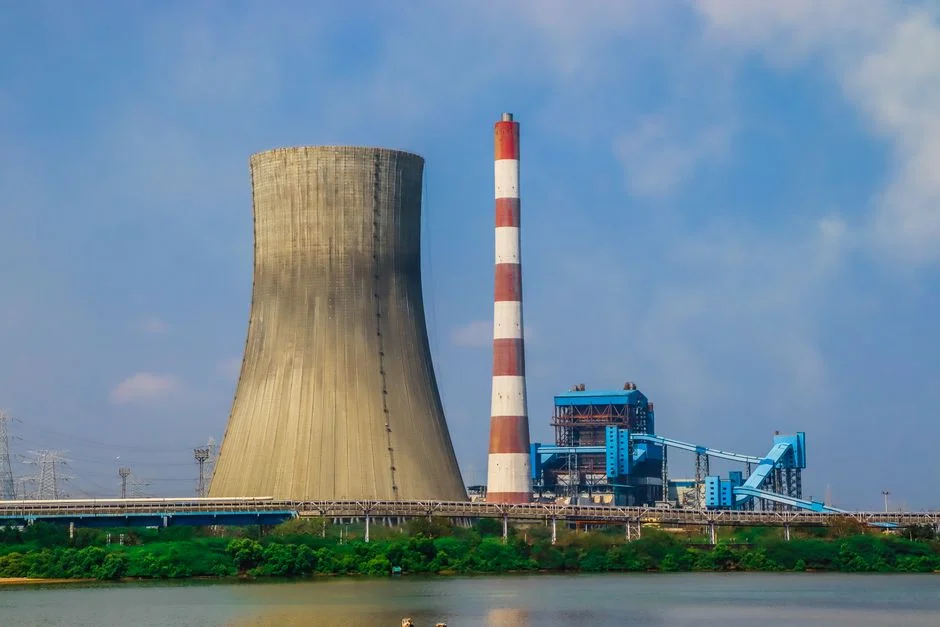
Decision rule for the capital-committee memo: above 30 m³/h combined flow with a >85% reuse target, specify RO; below 30 m³/h with reuse optional, IX is defensible; in between, run a small IX polish on an RO permeate slipstream. Breakeven logic at the $3/m³ municipal baseline: at 85% RO recovery, every m³ of CMP RO permeate offsets roughly $2.55 of cooling make-up cost. At 50 m³/h, that is over $1M/year in offset value, which pays back the CUR CapEx inside 18–30 months on the OPEX delta alone. Verify the figure against local discharge limits, SEMI S23-0718 reuse quality, and site-specific influent testing before locking the equipment proposal.
Frequently Asked Questions
Frequently Asked Questions
Is RO or ion exchange better for fluoride removal in CMP wastewater?
Ion exchange is generally superior for achieving ultra-low fluoride concentrations, particularly when influent levels exceed 50 mg/L or require polishing to sub-1 mg/L levels to meet stringent discharge regulations. Reverse Osmosis (RO) typically achieves 90-95% rejection, which is often insufficient for high-load CMP streams without significant dilution or multi-stage configurations.
While RO is more effective for high-volume bulk volume reduction, ion exchange is the industry standard for final polishing. The choice depends on the specific chemical oxygen demand (COD) and abrasive particle loading, as high-solids CMP wastewater can foul RO membranes rapidly, making ion exchange the more robust, albeit chemically intensive, option.
How much does ion exchange regeneration cost per cubic meter for semiconductor fluoride polishing?
Operating expenditures for ion exchange regeneration typically range from $1.50 to $3.50 per cubic meter of treated water. This cost is heavily dependent on the influent fluoride concentration and the frequency of regeneration required to maintain target breakthrough levels.
These costs include the consumption of regenerant chemicals, such as sodium hydroxide or hydrochloric acid, wastewater neutralization for the regenerant stream, and the periodic replacement of specialized fluoride-selective resin beads. Facilities with higher fluoride loads may see costs exceed $4.00 per cubic meter if resin degradation rates are accelerated by chemical oxidation.
Can RO permeate from CMP wastewater be reused as cooling tower make-up?
Yes, RO permeate from CMP wastewater is frequently reused as cooling tower make-up, provided that silica, calcium, and fluoride levels are managed to prevent scale formation. RO permeate typically meets the conductivity requirements for cooling systems, often measuring below 50 µS/cm.
However, successful reuse requires strict monitoring of residual silica and fluoride to ensure they do not exceed the cycles of concentration limits established for the cooling tower. If silica levels are not adequately reduced during the primary treatment phase, the permeate may require additional softening or antiscalant dosing to prevent silica-based scaling on cooling tower heat exchangers.
What influent silica level will kill an RO membrane on CMP duty?
Influent silica levels exceeding 100-150 mg/L pose a severe risk of irreversible membrane fouling and scaling in CMP wastewater applications. While RO membranes can technically handle higher concentrations with aggressive antiscalant programs, concentrations above 150 mg/L frequently lead to rapid flux decline and permanent polymerization of silica on the membrane surface.
In practice, most semiconductor facilities operate RO systems with influent silica levels maintained below 50 mg/L to ensure membrane longevity. Exceeding these limits typically necessitates frequent chemical clean-in-place (CIP) cycles, which shorten the operational lifespan of the membrane elements and increase the overall maintenance OPEX.
When does ion exchange still make sense over RO for a semiconductor fab?
Ion exchange remains the preferred choice when the primary objective is meeting ultra-low effluent fluoride limits, such as those mandated by local environmental agencies requiring < 1 mg/L. It is also the most sensible solution for low-flow, high-concentration streams where the capital expenditure of an RO system cannot be justified by the volume of water recovered.
Additionally, ion exchange is the safer technical choice when CMP wastewater contains high levels of colloidal silica or organic particulates that would lead to catastrophic fouling of RO membranes. In these specific chemical profiles, the operational reliability of ion exchange outweighs the energy efficiency and water recovery benefits typically associated with membrane-based systems.