Why EV Factory Wastewater Is a Different Problem for STPs
An EV/automotive plant generates three chemically distinct waste streams that converge at one sewage treatment plant. The e-coat ultrafiltration reject runs at pH 4–6 with high phosphate and 50–200 mg/L nickel, paint spray booth washwater carries organic solvents, surfactants and trace heavy metals, and battery cell formation wastewater releases lithium hexafluorophosphate (LiPF₆) hydrolysis products, N-methyl-2-pyrrolidone (NMP) solvent and dissolved Co/Ni salts. Domestic sewage adds 80–120 L/worker/day of high-ammonia, high-BOD load from a 2,000–5,000-person workforce that must be co-treated under one consent (HydropureWater field data, 2026). When these streams mix, the combined liquor attacks concrete through sulfuric acid biogenesis in clarifier crowns, chloride penetration at process-water interfaces above 500 mg/L Cl⁻, and FOG infiltration into hairline shrinkage cracks — the three failure modes that underground packaged STP for EV factory domestic sewage and lined cast-in-place tanks are engineered to defeat. Compliance envelopes diverge by jurisdiction: CPCB/SPCB consent for India, EPA categorical standards (40 CFR 467) for U.S. plants, EU IED for European sites, with Ten States Standards (S1) as the U.S. municipal benchmark for sizing and redundancy. A pre-treatment step such as DAF vs clarifier for EV/auto wastewater selection is standard before any biological stage.
What 'Packaged' and 'Cast-in-Place Concrete' STPs Actually Mean in 2026
A packaged STP is a skid- or ISO-container-factory-built reactor in HDPE, FRP or factory-coated carbon steel, delivered with blowers, fine-bubble diffusers, transfer pumps and a PLC pre-commissioned; the standard capacity window in 2026 is 1–500 m³/day per unit, parallel-skid for higher flows. A cast-in-place (CIP) concrete STP is a civil tank poured on site using M30+ structural concrete (typically 25–40 MPa at 28 days), with internal PVC/EPDM waterproofing, surface-applied epoxy, or polyurethane lining; its capacity window is 100 m³/day up to multi-MLD. Gainey's Concrete (S1) anchors the upper precast envelope at 0.2 m³/day to 3,785 m³/day (1,000,000 GPD), and Gainey confirms the "Ten States Standards" compliance basis used by U.S. EPC firms for sizing redundancy. The engineering subtlety regarding mass concrete is the SJSU 2007 (S3) finding: heat-of-hydration in CIP pours can exceed 70 °C at the core and drive thermal-gradient cracking in tank walls if lift height, cement content and curing are not controlled. A packaged steel or HDPE tank bypasses that failure mode, which is why containerized STPs are specified where ground conditions or schedules are tight. For the biological core of either architecture, see the MBR sizing guide for e-coat UF reject.
Side-by-Side Comparison: Packaged vs Cast-in-Place Concrete STP
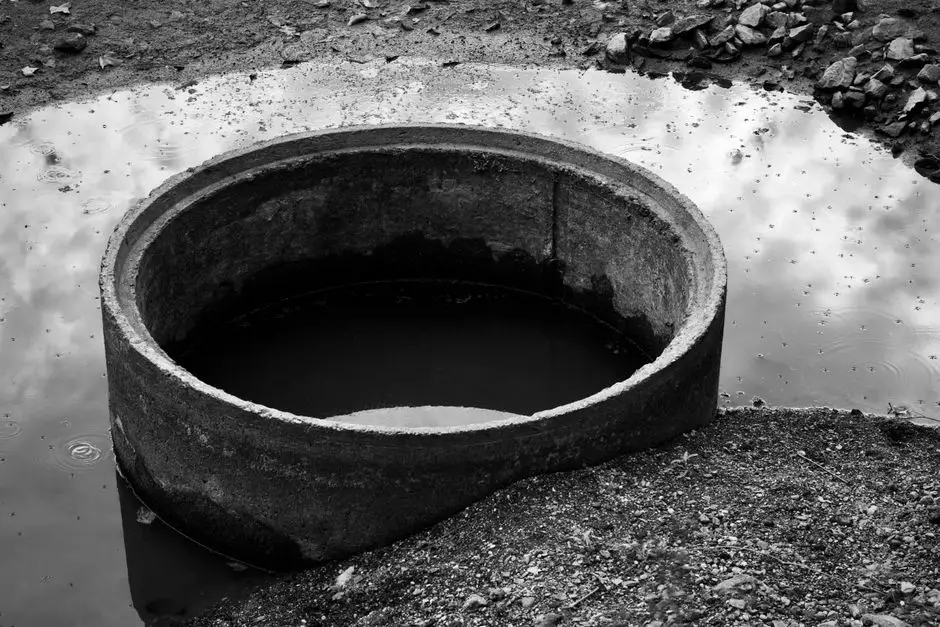
The table below provides the data procurement and EHS teams require for planning. Values are 2026 typical ranges drawn from EPC bid tabs and HydropureWater field data.
| Parameter | Packaged STP | Cast-in-Place Concrete STP | Winner by Use Case |
|---|---|---|---|
| Install time | 8–12 weeks (factory lead + 2–3 weeks site) | 6–9 months (form, pour, cure, line, commission) | Packaged — greenfield with tight construction window |
| CAPEX per m³/day (2026 typical) | USD 1,800–2,600 up to 300 m³/d; crossover ~350 m³/d | USD 1,400–2,200 above 500 m³/d; less competitive below 300 m³/d | Packaged <300 m³/d; CIP >500 m³/d |
| Footprint | 30–50% smaller (MBR integration, no separate clarifier) | Larger; gravity flow dictates chamber footprint | Packaged — high water table / limited laydown |
| Design life | 20–25 years (coating-dependent) | 40+ years (structural concrete; lining 12–18 yr) | CIP — 25-year+ plant horizon |
| Chemical resistance | Factory HDPE/FRP or 100%-solids epoxy; consistent QC | Field-applied; depends on surface prep, ambient RH, applicator skill | Packaged — aggressive EV chemistry |
| Expansion path | Modular skid add — no civil interruption | New pour, new tie-in, new cure cycle | Packaged — phased EV line ramp-up |
| Seismic / corrosive zone suitability | Steel/HDPE; engineered base-isolation possible | Monolithic; heavy, but vulnerable to chloride if unlined | Packaged seismic; CIP with proper lining otherwise |
| Civil redundancy / access | Limited — internal access via manways | Full — large hatches, crane access, on-grade chambers | CIP — multi-MLD operations |
Sherwin-Williams Dura-Plate 6000 (S4) — a 100%-solids, high-build reinforced epoxy with a 10-hour return-to-service and single-leg application — and Dura-Plate 6100 (S4), rated for chemical resistance on concrete and steel, are the field-applied systems that close the chemical-resistance gap for CIP tanks. Precast phasing from Gainey (S1) allows for installation in stages to match project ramp-up, which is increasingly common for EV plants. For screening upstream of either STP, the rotary mechanical bar screen sets the TSS ceiling for downstream biology.
Paint and Battery Wastewater: Where Each Architecture Wins and Loses
The following performance metrics apply to specific EV streams:
| Stream | Aggressive Species | Packaged STP Performance | CIP Concrete Performance |
|---|---|---|---|
| E-coat UF reject (pH 4–6, Ni, phosphate) | Low pH, Ni²⁺, PO₄³⁻ | HDPE/FRP chemically inert; equalization chamber unaffected | Uncoated concrete fails in 3–5 years; Dura-Plate 6100 (S4) extends to 12–15 years |
| Paint spray washwater | Solvents, surfactants, heavy metals | Factory-coated steel withstood in factory QC | Requires Tank Clad HS or equivalent amine-cure epoxy (S4) |
| Battery electrolyte traces (NMP, LiPF₆, Co/Ni) | Fluorides, Co/Ni salts, NMP solvent | Fluoropolymer lining or 100%-solids epoxy arrives pre-applied | Dura-Plate 6100 mandatory on any concrete contact; pre-neutralization to pH 6–9 required |
| Battery formation (high-temperature wastewater, ~40–55 °C) | Thermal cycling, fluoride | HDPE tolerant; not designed for thermal cycling above 45 °C | Poly-Cote 115 polyurethane (S4) — 100%-solids, crack-bridging elastomer |
| Domestic sewage load (2,000–5,000 workers) | BOD, NH₃, FOG | Treated identically once through MBR/DAF; smaller sludge access | Treated identically; full desludging access via large hatches |
A DAF pre-treatment for paint-shop FOG and TSS stage is standard before the biological reactor, and the MBR membrane bioreactor module handles the residual solvent and heavy-metal load after equalization.
2026 CAPEX and OPEX Ranges for an EV-Factory STP
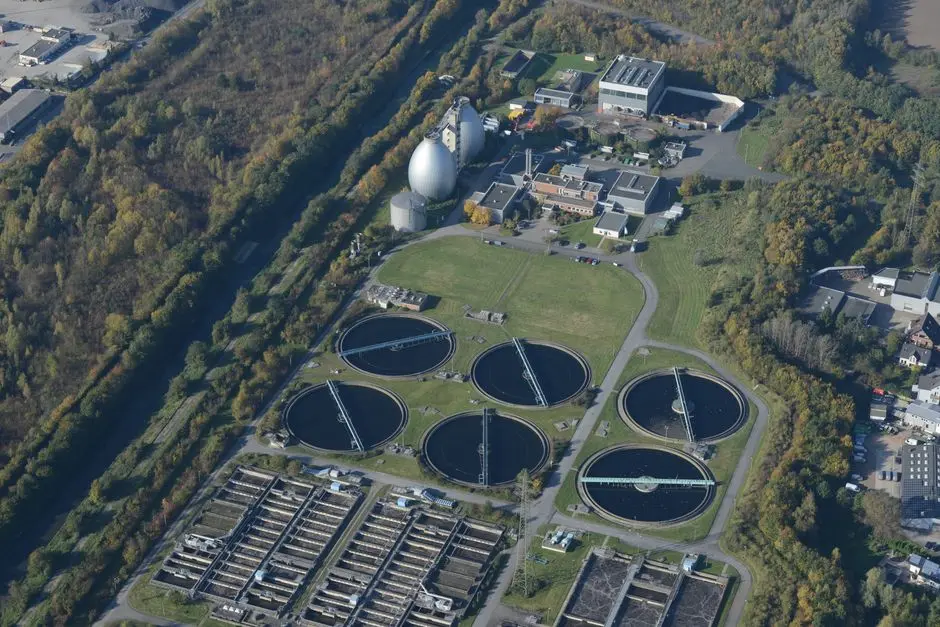
The following costs represent typical 2026 EPC turnkey ranges for India/Southeast Asia and U.S. Gulf Coast benchmarks. Use the 2026 packaged STP pricing guide for granular line items.
| Capacity Band | Packaged STP CAPEX (USD/m³/day) | CIP Concrete CAPEX (USD/m³/day) | OPEX (USD/m³ treated, packaged vs CIP) |
|---|---|---|---|
| < 100 m³/d | 2,200–2,800 | 3,000–4,500 (civil mobilization dominates) | 0.38 vs 0.32 |
| 100–500 m³/d | 1,800–2,400 | 1,800–2,400 (crossover band) | 0.30 vs 0.24 |
| 500–2,000 m³/d | 1,500–1,900 (multi-skid) | 1,400–1,800 | 0.24 vs 0.18 |
| > 2,000 m³/d | Not economic as all-packaged | 1,200–1,600 | 0.20 vs 0.14 |
Packaged plants consume 10–20% more energy per m³ because blowers and controls run 24/7, but they save 60–80% on operator labor through full PLC/SCADA automation. CIP plants require daily operator presence, desludging logistics, and crane access. Maintenance reserves diverge: factory coating on packaged tanks typically needs renewal at 12–15 years, whereas field-applied concrete linings need re-lining at 8–12 years depending on stream aggressiveness. India and Southeast Asia turnkey pricing in 2026 sits 20–35% below U.S. Gulf Coast benchmarks (HydropureWater field data, 2026). The automatic chemical dosing system is essential for either architecture.
Decision Framework: Which STP Should Your EV Plant Specify
Choose packaged STP when total flow is below ~300 m³/day, influent carries aggressive battery electrolyte or e-coat chemistry, the construction window is under 16 weeks, or the site has a high water table and limited laydown area. Choose cast-in-place concrete STP when total flow is above ~500 m³/day, the plant is on a 25-year horizon, capex favors civil over mechanical, and the influent can be pre-neutralized to pH 6–9 before reaching the biological stage. Choose the hybrid build — MBR packaged skid for paint and battery wastewater installed inside a cast-in-place civil basin — when flow sits in the 300–2,000 m³/day band and the project needs both biological performance and civil redundancy. This is the 2026 default for new EV plants. Packaged plants reach consent faster and avoid construction-phase discharge events, and the South Korea underground STP precedent covered in South Korea underground STP reference project is the closest international analogue. For downstream solids handling, the filter press for STP sludge dewatering closes the residuals loop.
Frequently Asked Questions
Which STP architecture wins for an EV factory treating paint
Frequently Asked Questions
What is the difference between a packaged STP and a cast-in-place concrete STP?
A packaged STP is a modular, factory-fabricated system typically constructed from coated carbon steel, stainless steel, or reinforced fiberglass, designed for rapid onsite assembly. In contrast, a cast-in-place concrete STP is a site-specific civil engineering project requiring extensive excavation, steel reinforcement, and poured-on-site concrete, resulting in a permanent, fixed-location structure.
Packaged systems utilize standardized, pre-engineered components that are skid-mounted or containerized for portability, whereas concrete STPs are custom-built to meet unique hydraulic load requirements and site-specific geotechnical conditions.
Which STP is better for an EV factory handling paint and battery wastewater?
For EV factories managing complex streams like paint shop effluent and battery-related wastewater, a modular packaged STP is generally superior due to its flexibility in process integration. These systems allow for the easy addition of specialized pre-treatment stages, such as electrocoagulation, membrane bioreactors (MBR), or advanced oxidation processes (AOPs), which are necessary to handle heavy metals and high COD loads.
Because EV manufacturing processes evolve rapidly, packaged systems offer the agility to reconfigure treatment trains or upgrade filtration technology without the structural demolition required by a fixed concrete basin.
How long does it take to install a packaged STP versus a concrete STP?
A packaged STP can typically be installed and commissioned within 4 to 8 weeks, as the bulk of the manufacturing occurs offsite. The onsite work is limited to foundation preparation, utility connections, and system integration, significantly reducing the project timeline.
A cast-in-place concrete STP typically requires 4 to 8 months for completion. This extended timeline accounts for excavation, civil works, concrete curing times—which must reach structural maturity—and the subsequent installation of mechanical and electrical components, making it a much slower deployment option.
What is the typical 2026 cost of a packaged STP for 500 m³/day?
As of 2026, the capital expenditure for a high-spec packaged STP with a capacity of 500 m³/day typically ranges from $350,000 to $650,000, depending on the level of automation and the complexity of the treatment technology. Systems utilizing MBR or tertiary treatment stages for water reuse in EV factory processes sit at the higher end of this range.
While the initial cost is influenced by material selection—such as SS316 versus epoxy-coated carbon steel—these figures include factory testing and modular delivery, though they exclude civil work costs for the pad and site piping infrastructure.
Can a packaged STP treat both industrial and domestic sewage together?
Yes, packaged STPs can be configured to treat combined influent, provided the system is designed with a robust equalization tank to mitigate the fluctuations in organic loading from domestic sources and the chemical volatility of industrial waste. This often requires a hybrid treatment approach, such as an initial physico-chemical stage followed by a biological process.
However, stringent industrial discharge standards often necessitate the segregation of streams. If combined, the system must be engineered to handle specific contaminants like high-concentration surfactants or heavy metals to ensure the biomass in the biological stage is not inhibited, typically requiring an automated dosing system for pH correction and nutrient balancing.