
Why Parkesburg Food and Beverage Wastewater Forces a Treatment Choice
Parkesburg and the surrounding Chester County food and beverage corridor — dairy, meat processing, and beverage bottling — discharge streams that sit well above typical municipal limits before any treatment. Raw F&B wastewater typically carries FOG at 200–2,000 mg/L, TSS at 500–3,000 mg/L, and BOD at 800–5,000 mg/L, with peaks during CIP releases and shift changeovers (per EPA F&B point source characterization). The federal ceiling that governs most sub-sectors is 40 CFR Part 432, which sets Best Practicable Control Technology (BCT) and Best Available Technology (BAT) daily maximums for BOD, TSS, and O&G; subcategory limits range from 26 mg/L O&G and 50 mg/L BOD (meat products) to roughly 200–400 mg/L combined limits for fruit and vegetable processing. Local surcharges compound the pressure: Chester County POTWs typically levy $0.05–$0.40 per pound on BOD, TSS, and FOG exceeding pretreatment limits (per typical mid-Atlantic municipal rate cards), so every 100 mg/L of BOD that slips past the clarifier becomes a recurring line item on the sewer bill. The practical consequence is that the DAF-or-clarifier question is not a brand preference — it is the lever that determines whether the plant stays under its daily maximums and its surcharge threshold. For most Parkesburg F&B streams in 2026, the answer is rarely DAF or clarifier; it is DAF as the primary, with a lamella polish only when reuse or sediment-heavy wash water is in play.
DAF vs Lamella Clarifier: How the Two Technologies Actually Separate F&B Pollutants
A dissolved air flotation system saturates a side stream of clarified water with air at 60–80 psig, then releases it through needle valves into the main flow, producing a cloud of 30–50 µm microbubbles (per SigmaDAF/Compact and DAF Corp Micro Bubble Generator specifications). Those bubbles attach to coagulated FOG droplets, protein flocs, and fine TSS, lowering the effective density of the particle-bubble aggregate and floating it to the surface in a 20–30 minute hydraulic retention time. A skimmer sweeps the float layer into a sludge hopper; the float thickens to 2–4% dry solids before being pumped to disposal or a press.
A lamella clarifier does the opposite: it relies on gravity settling across a stack of inclined plates spaced at 50–80 mm, giving an effective surface loading of 20–40 m/h in a footprint that is roughly a quarter of a conventional clarifier. It works on particles denser than water — grit, settleable inorganic TSS, fruit and vegetable fines, and starch granules. It does not work on emulsified FOG, protein curd, or colloidal particles with a specific gravity near 1.0, because those droplets are buoyantly stable and will pass through the plate pack with the clarified water.
This is the mechanical reason F&B streams favor DAF. Emulsified fats from dairy separators, protein fines from meat deboning, and oils from bottle rinse water are exactly the particles a microbubble cloud can lift and a gravity plate cannot catch. Where lamella genuinely wins is in low-FOG streams with mainly settleable solids — produce flume water, starch recovery, and some beverage bottle rinses — and as a polishing step after a DAF to catch TSS that escapes the float layer, especially when the next stage is an MBR or RO for reuse. For the underlying bubble physics and the trade-off between bubble size, contact time, and air-to-solid ratio, the DAF microbubble engineering deep-dive lays out the math; the short version is that 30–50 µm is the practical sweet spot, small enough to attach to fine floc, large enough to rise fast.
Side-by-Side Comparison: DAF vs Lamella Clarifier for F&B
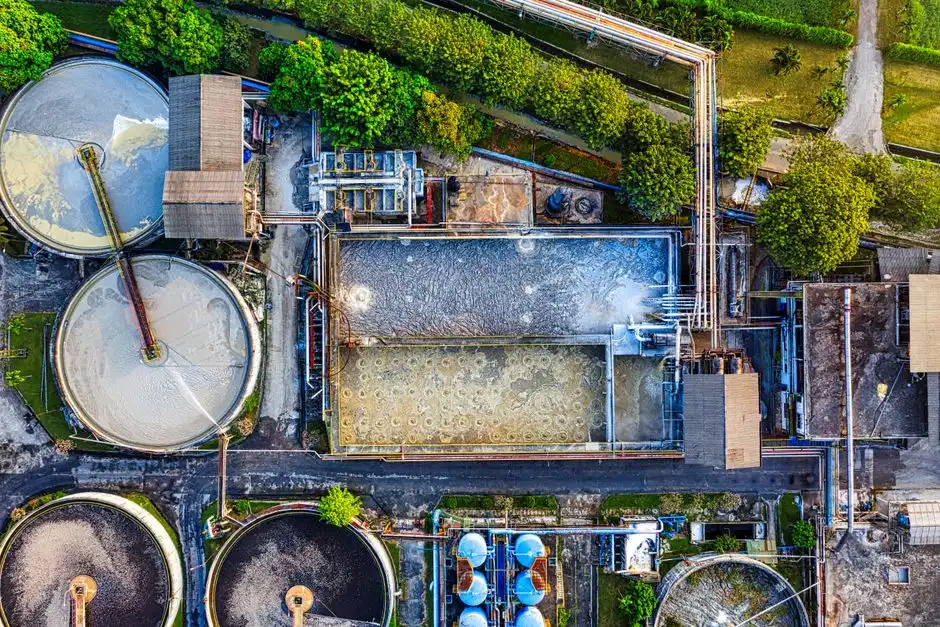
The table below is the artifact to circulate internally when a Parkesburg project engineer is asked to justify the equipment choice to an EHS lead or a procurement director. All values are typical operating ranges from manufacturer data and the field experience summarized in the research sources; treat them as starting points for a jar test or pilot, not as a guaranteed bid spec.
| Parameter | DAF (round FC or rectangular RC) | Lamella / Inclined Plate Clarifier | Recommendation |
|---|---|---|---|
| FOG removal | 85–98% with coagulant (dairy/meat) | 10–30% standalone; emulsified oil passes through | DAF for any stream >200 mg/L FOG |
| TSS removal | 92–98% (round FC, zero-velocity); 85–90% (rectangular RC) | 40–70% standalone; up to 80% with heavy coagulant | DAF when discharge ceiling is <100 mg/L TSS |
| COD reduction | 50–80% on FOG/protein-bound COD; weaker on dissolved sugars | 20–40% standalone; mainly settles particulate COD | DAF for FOG-bound COD; both need bio polish for dissolved COD |
| Footprint | Containerized skid 1–250 m³/h; round tanks 6–70 ft diameter | Compact plate pack; 20–40 m/h surface loading | Lamella for tight retrofits; DAF skid where floatables dominate |
| Hydraulic retention time | 20–30 minutes | ~2 hours | DAF handles flow spikes better |
| Sludge dryness | 2–4% dry solids, pre-thickened | 1–2% dry solids, dilute | DAF sludge roughly halves hauling frequency |
| Chemical demand | Polymer + coagulant; round DAF uses ~15% less polymer than rectangular | Coagulant only; polymer optional | Tie — depends on jar test, not technology |
| CapEx order of magnitude (2026) | Skid FC 48–450 GPM packages; rectangular 10–1,000 GPM; full-scale round up to 11,000 GPM | Lower per GPM for low-FOG streams; plate pack is the dominant cost | Lamella wins on low-FOG, low-flow; DAF wins on total installed cost for FOG |
| Sensitivity to flow spikes | Moderate; equalization tank recommended upstream | High; plate pack overflows and resuspends solids | DAF is the safer pick for batch CIP discharges |
If a Parkesburg plant is weighing a packaged plate-pack unit for a low-FOG polishing duty, the relevant spec is a high-efficiency sedimentation tank with 20–40 m/h surface loading; if the duty is primary FOG removal, the same comparison leads to a dissolved air flotation DAF machine as the primary clarifier.
When DAF Is the Right Primary Clarifier for a Parkesburg F&B Plant
The decision rule is straightforward: if the wastewater is floatable-dominated, the DAF goes in first. Three local sub-sectors fit that profile.
Dairy processors in southeastern Pennsylvania run separator water, cheese curd fines, and CIP rinses that carry emulsified butterfat, whey protein, and lactose. COD in this stream is tightly linked to FOG and protein — exactly the matrix where DAF is rated "strong" because the microbubbles lift the floc before it can re-emulsify (per ClearFox F&B performance matrix). A round FC-style DAF with pH control and polymer dosing routinely hits 92–98% TSS removal and drops FOG below 50 mg/L on a single pass.
Meat, poultry, and slaughter operations generate stickwater, rendering condensate, and blood-rich wash water with emulsified fats at 500–2,000 mg/L and TSS that swings with the kill schedule. A cross-flow DAF with a high free-surface area — the SigmaDAF FPAC geometry is built for exactly this — handles the high instantaneous solids loading without burying the skimmer. In published field data, an FC-150 unit treats 500 GPM of 2,000 PPM feed down to 50 PPM clarified water with 20 PPM filterable solids, and the float thickens to 2–4% dry solids in the same vessel (per DAF Corp FC-150 specification).
Beverage bottling with high-sugar wash water and concentrate overrun is a partial DAF win. The floatable organics — label adhesives, fruit solids, and some yeast — come out easily, but the dissolved sugars usually need biological polishing downstream (per ClearFox F&B matrix, beverage bottling DAF performance is moderate standalone). In practice, bottling plants that pair a DAF with an MBBR or MBR hit both 40 CFR 432 daily maximums and any water-reuse targets on the back end. For a packaged primary clarifier, the HydropureWater dissolved air flotation system is sized for the 1–250 m³/h range that covers most bottling lines in the county.
When a Lamella Clarifier Is the Better Choice
There are honest cases where a lamella clarifier is the correct answer, and a Parkesburg EHS lead should not feel railroaded into a DAF.
Low-FOG, sediment-heavy streams. Produce washing, starch recovery, and some bottle rinse waters carry mainly settleable inorganic TSS with FOG under 100 mg/L. A lamella plate pack at 20–40 m/h surface loading will deliver 60–80% TSS removal without the polymer and saturator systems a DAF requires, and the capital cost per GPM is lower. The same logic applies to rainwater and truck-wash streams co-mingled with the process sewer.
Polishing after a DAF when the next stage is an MBR, UF, or RO for water reuse. DAF effluent typically runs 30–80 mg/L TSS; a lamella polish drops that consistently under 20 mg/L and protects the membrane train from fouling. The HydropureWater lamella clarifier in this role is sized on the surface-loading rate and the target TSS ceiling rather than on FOG, and the chemical program collapses to pH adjustment only.
Footprint-constrained retrofits where the existing concrete tank cannot be enlarged. Inclined plates deliver 20–40 m/h in a fraction of the footprint of a circular DAF of equal capacity, and the install is a crane lift plus pipe tie-ins. For a Parkesburg plant discharging to a municipal sewer with a generous surcharge band, this is often the lowest-total-cost route to compliance.
CapEx, Footprint, Sludge and Operating Cost in 2026
The procurement lens sharpens the comparison. DAF capacity bands drive CapEx: a skid-mounted FC Maximizer covers 48–450 GPM in a pre-assembled package, a rectangular RC pilot runs 80–100 GPM, and full-scale round tanks go up to roughly 11,000 GPM at 6–70 ft diameter (per DAF Corp product range). Containerized DAF units in the 1–250 m³/h range now ship as plug-and-play skids, which collapses field install time and is the cheapest path for a small dairy or meat plant (per ClearFox containerized DAF spec).
Sludge economics usually tip the decision. A DAF thickens float to 2–4% dry solids in the same vessel; a conventional clarifier produces sludge at roughly 1% dry solids (per DAF Corp and ClearFox data). The DAF sludge volume is therefore roughly half, which roughly halves hauling frequency to a Philadelphia-area biosolids facility — a meaningful line item when Parkesburg haulage runs $80–$150 per cubic yard in 2026. Pairing the DAF with a small decanter or belt press downstream drops volume further but adds CapEx only if the haulage savings clear the payback.
Chemical use is the third lever. A vertical upward-flow round DAF mixes the full reactor volume, eliminating the dead zones that rectangular horizontal-flow designs carry, and uses up to 15% less polymer to hit the same TSS target (per ClearFox operating data). On a dairy CIP stream that already spends heavily on caustic and nitric acid, that 15% polymer reduction is a small but real OpEx improvement. A HydropureWater automatic chemical dosing system tied into the equalization tank keeps coagulant and polymer on setpoint across shift changes, which is where most DAF underperformance actually originates.
The Parkesburg decision framework collapses to five numbers: design flow, FOG percent of total COD, BOD percent that is floatable versus dissolved, current haulage cost per cubic yard, and the probability that the plant will face a zero-liquid-discharge requirement in the next permit cycle. If FOG is more than 30% of COD and the plant is on a tight sewer cap, DAF first, lamella polish if reuse is in scope. If FOG is under 10% and the stream is mainly settleable, the lamella wins on its own.
Frequently Asked Questions
Is a DAF or a clarifier better for food and beverage wastewater in Parkesburg?
For most F&B streams in Parkesburg, a DAF is the better primary clarifier because floatable FOG at 200–2,000 mg/L and TSS up to 2,000 PPM favor 30–50 µm microbubbles over gravity settling. A lamella clarifier is the better choice for low-FOG, sediment-heavy streams or as a polishing step after a DAF ahead of an MBR or RO.
What TSS and FOG removal can a DAF realistically hit on a food processing stream?
A round zero-velocity DAF typically removes 92–98% TSS on F&B feed, while a rectangular DAF delivers 85–90%; FOG removal with coagulant and polymer routinely lands between 85% and 98% on dairy and meat streams (per DAF Corp and SigmaDAF performance data).
What does 40 CFR Part 432 require for food and beverage discharge?
40 CFR Part 432 sets BCT and BAT daily maximums for BOD, TSS, and O&G by subcategory — meat products limits can be as tight as 26 mg/L O&G and 50 mg/L BOD, while fruit, vegetable, and dairy subcategories have higher but still numeric ceilings that drive the clarifier choice.
How dry is DAF sludge compared to a conventional clarifier?
DAF float thickens to 2–4% dry solids in the same vessel, roughly twice the dryness of a conventional clarifier at ~1% dry solids, which roughly halves hauling frequency and the related Parkesburg-to-Philadelphia disposal cost (per DAF Corp and ClearFox field data).