What Counts as 'Fabricated Metals' Wastewater in Columbus
U.S. EPA maps SIC 34xx (Fabricated Metal Products) and NAICS 332xxx onto 40 CFR Part 433 — Metal Finishing, the categorical pretreatment standard that governs every plating, anodizing, coated-fabrication, and job-shop machine line discharging to a publicly owned treatment works (POTW) in the Columbus metropolitan area. Within the 332xxx band, the most common Columbus operations are NAICS 332312 (fabricated structural metal), 332710 (machine shops), 332813 (electroplating, plating, polishing, anodizing, and coloring), and 332323 (sheet metal work). Influent streams from these plants mix rinsewater from plating and anodizing lines, spent cutting oils, quenching baths, alkaline cleaning rinses, weld-fabrication wash water, and stamping coolants, each with a different TSS and FOG profile. Local sewer use ordinances in the City of Columbus (administered through the Division of Water at Southerly and Jackson Pike) re-adopt 40 CFR 433 and frequently impose tighter local metals ceilings, particularly on Cu and Ni, plus surcharges above 250 mg/L TSS or 100 mg/L O&G (per Columbus Code Chapter 1145). A specifier who skips the categorical step ends up choosing equipment against the wrong effluent envelope.
| Parameter | 40 CFR 433 Daily Maximum (mg/L) | Local POTW Surcharge Trigger (mg/L) | Source |
|---|---|---|---|
| Oils & Grease (O&G) | 52 | 100 | 40 CFR 433.11; Columbus Code 1145 |
| Total Suspended Solids (TSS) | 86 | 250 | 40 CFR 433.11; Columbus Code 1145 |
| Copper (Cu) | 2.38 | 1.0 (local ceiling) | 40 CFR 433.11; City of Columbus IU limits |
| Nickel (Ni) | 2.38 | 1.0 (local ceiling) | 40 CFR 433.11; City of Columbus IU limits |
| Total Chromium (Cr) | 1.71 | — | 40 CFR 433.11 |
| Lead (Pb) | 0.69 | — | 40 CFR 433.11 |
| Zinc (Zn) | 1.52 | — | 40 CFR 433.11 |
| pH | 6.0 – 10.0 | 5.0 – 11.0 | 40 CFR 433.11; Columbus Code 1145 |
How DAF Works in a Metal-Finishing Line
Dissolved air flotation is, in the Filtrasystems reference phrasing, "a separation or clarification process that removes suspended solids, grease, or oils from a solution by the use of injecting air into the liquid stream." In a metal-finishing train, a saturated recycle sidestream (typically 20–50% of the forward flow) is released into the contact zone through needle-valve orifices; the pressure drop nucleates a cloud of 10–80 µm micro-bubbles that attach to oil droplets, metal fines, and floc, lifting them to the surface for skimming. The standard HydropureWater DAF system covers 4–300 m³/h across 13 skid models with automatic skimming, paired with a HydropureWater automatic chemical dosing system that meters coagulant and polymer to condition the floc before saturation. Field performance on fabricated-metals streams: 50–90% free-oil removal, 60–85% TSS removal, and 30–60% on emulsified oils unless the polymer program is tuned to the coolant formulation. In a typical 40 CFR 433 train, DAF sits upstream of hydroxide precipitation for dissolved metals and a downstream lamella clarifier, the same sequence documented at the Al-Russayl industrial-estate WWTP, where a 200 m³/h DAF precedes coagulation–flocculation tanks and a 1,250 m³ clarifier (per MDPI Sustainability, 2021).
How a Lamella (High-Efficiency) Clarifier Works on Metals Hydroxide Sludge
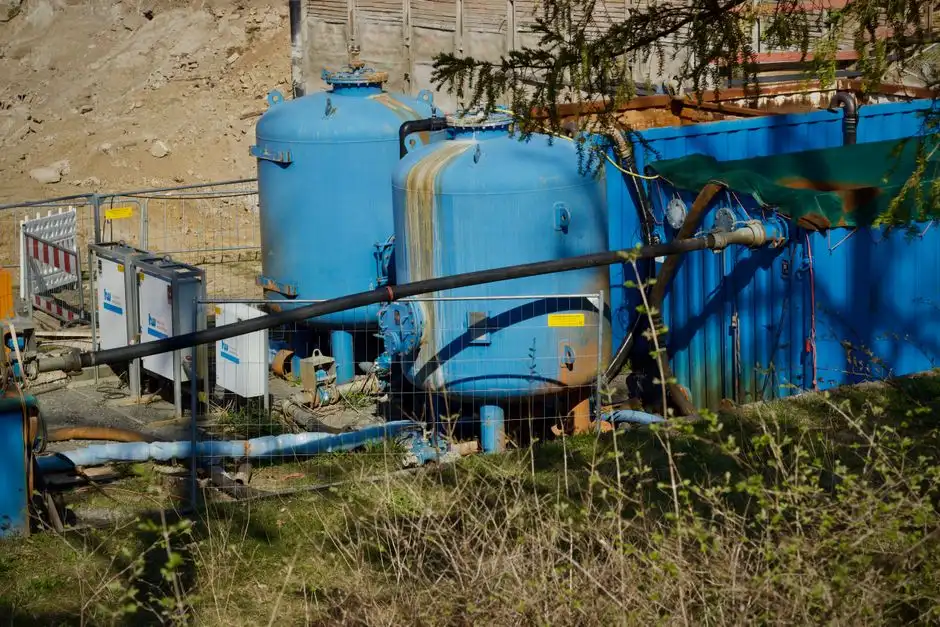
A lamella clarifier stacks inclined plates at 55–60° inside a rectangular tank; the effective settling area equals the plan area times the cosine of the plate angle, which lets the same footprint clarify 2–4× the flow of a conventional clarifier. The HydropureWater high-efficiency lamella clarifier runs at surface loading rates of 20–40 m/h with up to 30% chemical savings from sludge recirculation (per HydropureWater product spec, 2026). That recirculation is decisive for metal-finishing hydroxide sludge: Fe, Cr, and Ni precipitates flocculate best when the slurry contacts previously formed solids, and the recirculation stream returns 10–20% of the underflow to act as seed. A stand-alone lamella, however, is poor at free-oil capture — oil sheets blind the plate packs and ride over the effluent weir — so on fabricated-metals streams it almost always follows a DAF or a dedicated oil-skim step. For 40 CFR 433 compliance after DAF + hydroxide precipitation, lamella plate area should be sized at ≤20 m/h on the design peak flow to keep post-clarifier TSS at or below 30 mg/L before pH adjustment and discharge.
DAF vs Clarifier: A 2026 Selection Matrix for Columbus Plants
The two units answer different questions. DAF asks "how do I get free oil and light TSS out of the stream?"; the lamella clarifier asks "how do I settle the metal hydroxide floc that chemistry produced?" Most Columbus fabricated-metals plants need both, in series, and the procurement mistake is to write a spec that pits them as competitors. The matrix below is the document to hand to purchasing when bids cross your desk.
| Selection Axis | DAF | Lamella Clarifier | 40 CFR 433 Implication |
|---|---|---|---|
| Primary target | Free oil, FOG, light TSS | Settleable TSS, metal hydroxide floc | O&G 52 mg/L, TSS 86 mg/L |
| Typical removal efficiency | 50–90% free oil, 60–85% TSS | 70–95% settleable TSS post-precipitation | Both needed to hit local Cu/Ni ≤1.0 mg/L |
| Footprint per m³/h | 0.2–0.4 m² | 0.15–0.3 m² (lamella plates effective) | Both fit a 20 ft × 20 ft bay at 50 m³/h |
| Cold-influentsensitivity | Saturation falls 10–20% below 10°C | Viscosity penalty 5–10% below 10°C | DAF needs 15% derate or heating |
| CAPEX (packaged, 10–50 m³/h) | 1.3–1.8× lamella | Baseline | Train (DAF + lamella) < single conventional clarifier civil cost |
| OPEX drivers | Compressed air, polymer 5–15 mg/L | Coagulant (sludge recirculation saves up to 30%) | Lamella offsets some DAF polymer cost |
| 40 CFR 433 fit | Hits O&G; partial TSS | Hits TSS, Cu, Ni, Cr post-precipitation | Use DAF upstream, lamella downstream |
Decision rule: if the influent carries more than ~50 mg/L free oil or tramp cutting fluid, start with the HydropureWater DAF system; if the stream is already skimmed and dominated by dissolved metals + settleable TSS, route it directly to the HydropureWater high-efficiency lamella clarifier after chemical precipitation. The default Columbus fabricated-metals train is DAF → chemical precipitation → lamella → pH adjustment → discharge.
Columbus-Specific Sizing and Climate Considerations
Columbus winter influent temperatures drop to 5–10°C from December through March, and DAF saturation efficiency falls roughly 10–20% versus the 20°C design point because colder water holds less dissolved air and the resulting micro-bubbles are smaller and slower to rise. The fix is mechanical, not chemical: oversize the DAF by 15% on hydraulic loading, or house the saturator and contact zone in a small heated enclosure to hold influent above 12°C. For a retrofit in an older Columbus job shop, footprint is the binding constraint; the DAF at 4–300 m³/h is dramatically more compact than a conventional clarifier of equivalent flow, which matters on parcels where building expansion is capped by the lot line. The City of Columbus POTW pretreatment program (Southerly and Jackson Pike) enforces 40 CFR 433 locally and stacks surcharges above 250 mg/L TSS and 100 mg/L O&G (per Columbus Code 1145), so design should target effluent TSS ≤30 mg/L and O&G ≤10 mg/L — half the surcharge trigger — to avoid quarterly cost penalties. Central Ohio's alloy mix is heavy on iron, nickel, and chrome, and the cutting-fluid stream from stamping and machining lines is dominated by water-soluble emulsions, not straight oils, so the DAF polymer program should plan on 5–15 mg/L active polymer to break emulsions and prevent oil from blinding the downstream lamella plates.
2026 Cost, Footprint, and Compliance Outlook
A packaged HydropureWater DAF sized at 10–50 m³/h runs roughly 1.3–1.8× the cost of an equivalent-flow lamella clarifier before civil works, but the combined DAF + lamella train typically fits inside a 20 ft × 20 ft footprint and displaces a single conventional clarifier that would need 40 ft × 30 ft, a real saving on Columbus brownfield sites where a new clarifier tank pour is the schedule-driving cost. OPEX splits the other way: DAF adds compressed-air and polymer cost (5–15 mg/L on the feed), while the lamella's sludge recirculation cuts coagulant use by up to 30% (per HydropureWater product spec, 2026). On the regulatory side, OEPA continues to align categorical limits with 40 CFR 433 and is not signaling tightening for Cu, Ni, or Cr through 2026; PFAS scrutiny is rising nationally but does not yet bind primary clarification on fabricated-metals streams, so it is a watch-item, not a current design driver. For plants with a permit deadline before permanent equipment can be fabricated, rental and pilot DAF units remain available for short-term compliance bridging.
| Equipment Path (10–50 m³/h) | 2026 Packaged CAPEX Band (USD) | Footprint | Notes |
|---|---|---|---|
| DAF alone | $90,000 – $220,000 | ~15 ft × 10 ft | Add 15% hydraulic derate for Columbus winter |
| Lamella Clarifier alone | $55,000 – $130,000 | ~10 ft × 8 ft | Best downstream of precipitation |
| DAF + Lamella train | $150,000 – $340,000 | ~20 ft × 20 ft | Displaces a 40 ft × 30 ft conventional clarifier |
| Conventional clarifier (equivalent) | $110,000 – $260,000 + civil | ~40 ft × 30 ft | Civil work typically doubles installed cost on brownfield |
For comparison context on related DAF-vs-clarifier decisions in other U.S. metals hubs, see the DAF vs clarifier for mining/metals wastewater in Charleston and the DAF vs clarifier for EV/auto wastewater in Bradenton, FL guides, which apply the same matrix logic to those regions.
Frequently Asked Questions
What are the 40 CFR 433 daily maximum limits a Columbus fabricated-metals plant must hit?
Under 40 CFR 433.11, the daily maximum standards are 52 mg/L O&G, 86 mg/L TSS, 2.38 mg/L Cu, 2.38 mg/L Ni, 1.71 mg/L total Cr, 0.69 mg/L Pb, 1.52 mg/L Zn, and pH 6.0–10.0; the City of Columbus local IU program typically tightens Cu and Ni ceilings to 1.0 mg/L.
Should I use a DAF or a lamella clarifier as a stand-alone unit for metal finishing wastewater?
Neither, on its own, is sufficient. A DAF hits the O&G and partial TSS limits but does not precipitate dissolved Cu, Ni, or Cr; a lamella clarifier cannot remove free oil without first blinding its plate packs. The standard train is DAF → chemical precipitation → lamella clarifier → pH adjustment.
How do I size the DAF for a Columbus winter?
Add a 15% hydraulic derate to the 20°C design flow or house the saturator in a heated enclosure to keep influent above 12°C; below 10°C, air-saturation efficiency drops 10–20%, and a cold-only design will miss the 52 mg/L O&G limit between December and March.
What polymer dose should I plan for on emulsified cutting fluid?
Budget 5–15 mg/L active polymer on the DAF feed for water-soluble emulsions typical of central Ohio stamping and machining lines, paired with a coagulant dose tied to the influent TSS, not a fixed ratio, because cutting-fluid formulations vary week to week.
Is lamella sludge recirculation worth specifying for a 50 m³/h line?
Yes. Sludge recirculation at 10–20% of the underflow seeds hydroxide flocculation and cuts coagulant use by up to 30% (per HydropureWater product spec, 2026), which on a 50 m³/h line offsets a meaningful share of the DAF's compressed-air and polymer OPEX.
For a deeper dive on keeping the DAF train running once installed, see the DAF oil-water separator maintenance guide.