East Liberty's 2026 EV/auto wastewater question: DAF or clarifier?
For 2026, East Liberty EV and auto factories should pair a dissolved air flotation (DAF) primary with a lamella clarifier polish: DAF for paint-shop, ED-coat, and battery cell wastewater where 90–99% FOG removal is required, and lamella for stamping tramp-oil streams carrying metal fines. A dissolved air flotation (DAF) system alone suffices when paint and ED-coat dominate the load. DAF separates by micro-bubble attachment: a sidestream pressurized with air at 60–80 psig forms 20–50 µm bubbles that lift flocculated oil and TSS to the surface as a skimmed blanket. A lamella clarifier separates by Stokes settling: dense particles fall onto 55–60° inclined plates at 20–40 m/h surface loading, with no bubbles and a footprint roughly 5–10× smaller than a conventional clarifier (per Colic et al., University of Utah review; HydropureWater product data, 2026).
The governing rule is 40 CFR Part 403 — General Pretreatment Regulations, which sets the federal floor for any industrial discharger to a POTW. East Liberty plants typically discharge to the City of Columbus Division of Sewerage and Drainage (DOSD) or, for Honda-area Tier-1 suppliers further west, the City of Marysville WWTP, not the Buffalo Sewer Authority. The local envelope still lands near 100 mg/L oil & grease and 200 mg/L TSS — a properly sized DAF skid is designed to clear both limits with margin, while a clarifier alone will fail FOG on any stream with significant emulsified oil (per EPA 40 CFR 133 categorical standards and the HydropureWater Buffalo 2026 guide envelope).
How a DAF and a lamella clarifier actually separate oil and solids
DAF and lamella clarifiers look similar from across a plant floor — both produce clarified water on top and thickened sludge on the bottom — but the physics is fundamentally different. DAF is a bubble-attachment process; lamella is a density-differential process. That distinction is the entire basis for the 2026 equipment-selection decision on an East Liberty line.
A classical DAF saturates 10–20% of clarified recycle with air in a pressurized tank, typically at 60–80 psig, and releases that recycle through nozzles at the inlet of a shallow flotation cell. The pressure drop nucleates a cloud of 20–40 µm micro-bubbles (DAF Corporation Micro Bubble Generator spec) or 30–50 µm bubbles (SigmaDAF/Clearwater Industries). Pre-conditioned floc particles and oil droplets attach to the bubbles; the bubble-particle aggregate has effective density below water and rises to the surface in 3–5 minutes of hydraulic residence time, where chain-and-flight skimmers remove the blanket (per Colic et al., Utah review). The air-to-water ratio in classical DAF is roughly 0.15:1 by volume, which is why Colic et al. flag classical DAF as inefficient above ~1% TSS — the basis for the hybrid centrifugal-DAF development the same authors describe. DAF sludge thickens to 2–4% consistency; downstream plate and frame press typically dewaters to 25–35% dry solids.
A HydropureWater high-efficiency lamella sedimentation tank inserts 55–60° inclined plates at 20–40 m/h surface loading into a rectangular basin. Particles settle onto the plate face, slide down to the hopper, and clarified water rises counter-current. There are no bubbles, no saturation tank, no air compressor. The trade-off is residence time: a lamella needs 1–3 hours of HRT versus 3–5 minutes for a DAF, which means a lamella cannot absorb a hydraulic surge the way a DAF can. The footprint is roughly 5–10× smaller than a conventional clarifier at the same flow (HydropureWater product data, 2026).
DAF vs lamella clarifier: head-to-head for 2026 auto plant streams
The table below scores both technologies against the criteria that actually drive an East Liberty equipment selection — removal performance, footprint, O&M, and cold-region behavior. Numbers reflect manufacturer-rated performance, HydropureWater product data, and typical 2026 industrial design ranges for the 50–500 GPM envelope.
| Parameter | DAF (HydropureWater / FC Maximizer class) | Lamella (inclined-plate) clarifier |
|---|---|---|
| TSS removal | 85–98% (92–98% FC round; 85–90% RC rectangular, per DAF Corporation 2025 product data) | 50–80% on buoyant TSS; 80–95% on dense settleable TSS |
| FOG / oil removal | 90–99% on free and emulsified oil | 30–60% — gravity alone cannot capture emulsified droplets <10 µm (Colic et al.) |
| Footprint | ~15–25 ft² for a packaged skid (50–500 GPM) | ~5–10× smaller than a conventional clarifier; typically a poured basin or larger steel tank |
| Civil cost | Skid on a slab; shortest install path | Higher civil cost; competitive on equipment alone |
| O&M load | Air compressor (~5–10 kW at 200 GPM), 10–20% recycle pump, 1–5 mg/L polymer | No compressor; ~30% higher polymer; quarterly plate cleaning (4–8 hr/quarter) |
| Surge tolerance | Strong — 3–5 min HRT buffers upsets | Weak — 1–3 hr HRT means long recovery from upsets |
| Cold-region behavior | Workable with 10–15% hydraulic margin; 1–2 kW immersion heater on saturation loop below 4 °C | Covered basin to prevent surface ice; viscosity penalty offsets most density gain |
| Best-fit stream | Oily, low-to-medium TSS: paint, ED-coat, battery cell rinse, refinery | Heavy settleable solids: metal fines, dense coolant sludge, high TSS |
| Bubble size | 20–40 µm consistent (DAF Corporation) or 30–50 µm (SigmaDAF/Clearwater) | None — no bubble contact mechanism |
Two takeaways for a CAPEX memo. First, on oil-laden streams the DAF's 90–99% FOG removal is the only credible number in the column; a lamella alone will fail the 100 mg/L O&G envelope on paint or ED-coat water. Second, on the civil side a packaged DAF skid at 50–500 GPM sits on a slab and ties into an existing header, while a lamella typically needs a poured basin or a much larger steel tank. The dissolved air flotation (DAF) system and the HydropureWater high-efficiency lamella sedimentation tank are both available in this flow envelope, but the DAF has the shorter install path for paint-shop retrofit work.
Stream-by-stream equipment map for an East Liberty EV or auto plant
Every East Liberty EV or Tier-1 auto plant has at least four distinct wastewater sub-streams in 2026, and the equipment map changes with each one. The table below is the per-stream rule a 2026 engineer can drop onto a P&ID. It mirrors the per-stream map from the DAF or clarifier for EV/auto wastewater in Buffalo NY: 2026 factory guide, with the lithium-ion cell and pack assembly sub-stream added for the East Liberty gigafactory envelope.
| Sub-stream | Typical influent (mg/L) | Recommended 2026 configuration | Rationale |
|---|---|---|---|
| Paint spray booth + ED-coat rinse | FOG 200–2,000; TSS 200–800; emulsified oil + paint solids | DAF primary | Buoyant oil and paint solids float, do not settle; DAF is the standard 2026 choice |
| Stamping tramp oil | FOG 500–5,000; TSS 1,000–5,000; metal fines, graphite | DAF primary + Lamella polish, or Lamella alone if oil is pre-skimmed | Mixed buoyant + settleable; two-stage handles both |
| Parts washing / phosphate coating | TSS 500–2,000; moderate Zn/Ni/Cr; low oil | DAF if flow <300 GPM; Lamella if flow >300 GPM and floor is open | DAF dominates at smaller flows; lamella wins on civil cost at scale |
| ED-coat ultrafiltration reject | High TDS, paint solids, low FOG | DAF with chemical conditioning | High solids load, low oil — DAF thickens to 2–4% sludge consistency |
| Lithium-ion cell and pack assembly | NMP solvent, PVDF binder, LiPF6 electrolyte salts, trace HF; TSS 100–1,500 | DAF primary for organics and TSS, followed by a separate lithium-recovery and fluoride-specific polish | Sub-10 µm binder particles will not settle; lamella alone will not capture them; fluoride requires a dedicated downstream step |
Across all five sub-streams, the limiting factor is chemical conditioning. A DAF that does not see coagulant plus flocculant will land at the low end of its 85–90% range; the same unit with a properly tuned HydropureWater automatic chemical dosing system hits 95%+. For paint and ED-coat lines specifically, expect a cationic coagulant (typically 50–150 mg/L) followed by an anionic flocculant (1–5 mg/L) — the exact dose is bench-tested per shift. The allied metal-finishing pretreatment guide walks through the same chemistry for an adjacent stamping stream.
The lithium-ion sub-stream is the 2026 differentiator for East Liberty. NMP (N-methyl-2-pyrrolidone) is the dominant carrier solvent in cathode slurry coating; PVDF binder fragments shed into the rinse water; LiPF6 hydrolyzes to HF and PFAS precursors in any moisture. A DAF primary lifts the binder particles and traces of NMP into the float layer; a downstream ion exchange or precipitation step recovers lithium and strips fluoride before discharge. The 40 CFR Part 403 envelope and the local Columbus / Marysville POTW limits do not yet have explicit lithium or PFAS ceilings, but Ohio EPA's 2025 nutrient and emerging-contaminant guidance flags both — build margin into the 2026 design.
Chemical conditioning, sizing envelope, and 2026 cold-region design margins
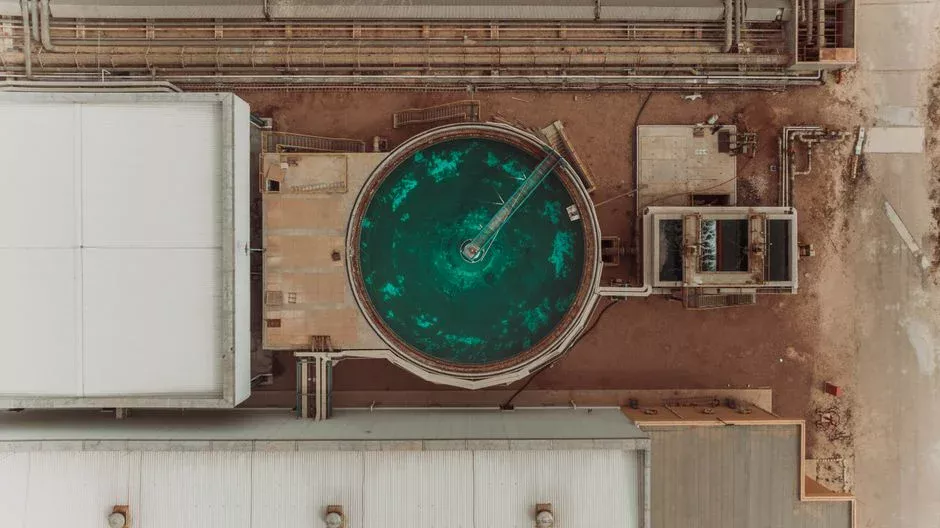
Standard 2026 chemistry for any East Liberty paint or ED-coat DAF is a cationic coagulant at 50–150 mg/L followed by an anionic flocculant at 1–5 mg/L, with doses bench-tested per shift on a jar tester. Without this conditioning, a DAF lands at 50–70% TSS removal and fails POTW limits on most streams (per HydropureWater field data, 2026). The HydropureWater automatic chemical dosing system ties the polymer pump to a streaming-current or turbidity sensor so the dose tracks influent variability without operator intervention.
The skid-mounted DAF sweet spot is 50–500 GPM. DAF Corporation's FC Maximizer line runs 48 GPM at 6 ft diameter up to 450 GPM at 15 ft diameter, all pre-assembled with piping, valves, and controls (per DAF Corporation 2025 product data). Above 500 GPM, evaluate a custom rectangular DAF or a built-in-place lamella against Ohio land cost and the local civil envelope. The EV/auto pretreatment compliance guide for 2026 applies the same flow-envelope logic to a warmer Florida climate, which is a useful cross-check on sizing methodology.
Cold-region margin is the Ohio-specific sizing factor. Plant process water in East Liberty routinely runs below 10 °C from December through March; air temperatures dip below -10 °C. Cold water raises viscosity by roughly 25% versus 20 °C design, which slows DAF rise rate and slightly degrades oil-droplet attachment. The 2026 design practice is to size the DAF with a 10–15% hydraulic margin, insulate the saturation tank, and add a 1–2 kW immersion heater on the air-saturation loop if the skid sits in an unheated enclosure. Lamella clarifiers settle marginally faster in cold water because density goes up, but the viscosity penalty mostly offsets the gain, and they have no equivalent of a saturation loop to heat — expect a covered basin to prevent surface ice, which erodes the footprint advantage. On polymer consumption, HydropureWater product data shows up to 30% polymer reduction versus a conventional clarifier when a lamella is run with sludge recirculation; a DAF on a similar auto stream typically lands at 1–5 mg/L versus 5–10 mg/L for the lamella-only case.
Frequently Asked Questions
For an East Liberty paint or ED-coat line in 2026, is a DAF or a clarifier the right primary?
A DAF is the right primary. Paint spray booth water and ED-coat rinse are dominated by buoyant emulsified oil and paint overspray at FOG levels of 200–2,000 mg/L. Gravity settling cannot remove emulsified oil because the droplets are near-neutrally buoyant, and a clarifier alone will routinely fail the 100 mg/L O&G local POTW limit. A DAF with coagulant and flocculant conditioning routinely hits 90–99% FOG removal and 92–98% TSS removal, well inside the 40 CFR Part 403 envelope applied at the Columbus DOSD or City of Marysville WWTP.
Can a lamella clarifier ever replace a DAF on an auto wastewater stream?
Only after the FOG is largely removed upstream. A lamella works on density differential, not bubble attachment, so emulsified oil passes through. For raw paint, ED-coat, or stamping water with FOG above ~50 mg/L, a lamella alone will fail oil limits. The standard 2026 configuration is a DAF primary for oil removal followed by a lamella polish only if the downstream stream carries settleable metal fines that need a second pass — typically the stamping tramp-oil sidestream.
What local discharge limits apply to an East Liberty EV or auto plant in 2026?
East Liberty plants discharging to the City of Columbus DOSD or the City of Marysville WWTP must meet 40 CFR Part 403 General Pretreatment Standards plus local POTW limits, which in 2026 sit around 100 mg/L oil & grease and 200 mg/L TSS for industrial users. Ohio EPA direct-discharge (NPDES) permits apply only if a plant discharges to a receiving water without going through a POTW, which is uncommon in the East Liberty corridor. A properly sized DAF skid clears both envelope limits with margin.
Do DAFs work in Ohio winters without a heated building?
Yes. DAFs run year-round in unheated enclosures with proper hydraulic sizing. Below ~4 °C, plant operators typically add a 1–2 kW immersion heater on the air-saturation loop to keep recycle viscosity in design range. The standard 2026 sizing practice for East Liberty plants is a 10–15% hydraulic margin on the DAF to absorb the cold-water rise-rate penalty; gravity clarifiers are not immune either, since basin surface ice requires a covered structure that erodes the footprint advantage.
Does a DAF really need chemical dosing to hit 90–99% FOG removal?
Yes. Coagulant plus flocculant conditioning is what allows a DAF to reach the 92–98% TSS removal the manufacturer rates it for. A DAF without chemistry lands in the 50–70% range, which fails 40 CFR Part 403 envelope limits on most paint and ED-coat streams. An automatic dosing skid — typically cationic coagulant at 50–150 mg/L followed by anionic flocculant at 1–5 mg/L — is standard scope on any 2026 packaged DAF installation and should be carried on the same CAPEX line item as the flotation unit.