Why Paramount transportation equipment plants default to DAF in 2026
Dissolved air flotation (DAF) is the correct primary unit for Paramount, California transportation equipment factories in 2026 because the EPA Oil/Water Separation State-of-the-Art matrix (EPA-600/2-78-069, April 1978) rates DAF "XXX — excellent" for free oil, unstabilized dispersions, and oil-coated solids, while a conventional gravity clarifier is rated only "XXX" for free oil and "X–XX" for the dispersed classes. The same report concludes that "a modern oil wastewater treatment system may include an API gravity separator and dissolved air flotation for removing free oil" — EPA explicitly pairs them, with DAF as the active oil-removal step. A lamella clarifier belongs downstream as polish, not as the primary oil-removal unit.
The binding federal standard is 40 CFR Part 432, the Transportation Equipment Cleaning Point Source Category — not the generic 40 CFR Part 433 Metal Finishing category cited by most vendor pages. Subpart A covers aircraft and aerospace parts cleaning; Subpart B covers metal-finishing of transportation equipment. The 2024–2025 EPA effluent-guideline revision cycle tightened daily-maximum limits on O&G and several metals, and increased the frequency of narrative self-monitoring reports. In Paramount, the LA Regional Water Quality Control Board is the permit writer and inspector; current numeric effluent limits, not vendor marketing, set the bar. A packaged HydropureWater DAF system sized to the daily-maximum sampling window is the defensible 2026 default.
The four wastewater streams a Paramount transportation equipment plant actually runs
Paramount transportation equipment plants fall under NAICS 336xxx and often combine multiple process streams, requiring a composite profile to drive unit selection. Map your plant first, then size.
- Automotive stamping (NAICS 336111/336112): parts-washer overflow with free oil at 200–2,000 mg/L plus tramp greases from stamping-press lubricant carry-off. This stream floats — gravity alone will not remove it.
- Aerospace component machining (NAICS 336411/336412): machining coolant dumps contribute emulsified oil stabilized by surfactants, often 500–5,000 mg/L O&G. Surfactants make this the hardest class to break — a demulsifier plus DAF air bubble attachment is required.
- Marine hardware passivation and E-coat/phosphate conversion-coating rinse (NAICS 336611): TSS 200–1,000 mg/L plus trace zinc, nickel, and chromium. The rinse water is mildly acidic and oxidizing, which is why polypropylene DAF construction (per the SIGMADAF technical bulletin) is preferred over carbon steel.
- Rail and heavy-truck sub-tier parts washing (NAICS 336510/336992): batch parts-washer dumps and paint-booth water contribute polymeric overspray and floatable solvents. Spent solvent floats and re-emulsifies; DAF air bubbles scavenge it before it reaches the clarifier overflow.
The composite profile is oily (free + emulsified, often 300–3,000 mg/L O&G combined), turbid (TSS 200–1,000 mg/L), and chemically active. That envelope is exactly what the EPA matrix flags for DAF.
Mechanism: why a DAF pulls oil out and a lamella does not
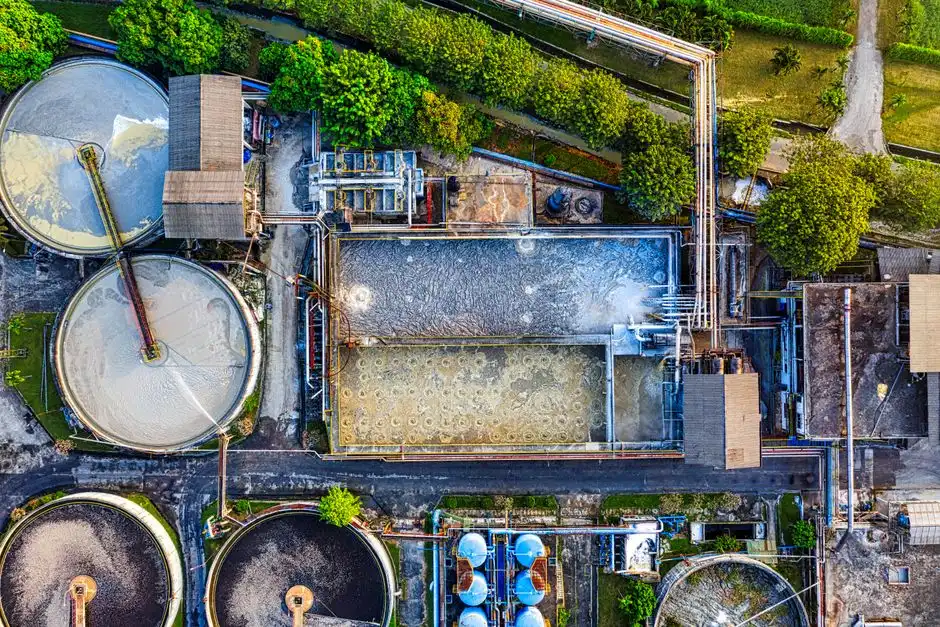
A DAF unit pressurizes a side-stream of clarified effluent to 5–8 bar and saturates it with air, then releases the stream to atmospheric pressure at the bottom of the flotation tank. The pressure drop nucleates a cloud of micro-bubbles in the 10–80 µm range, which attach to oil droplets and oil-coated solids and lift them to the surface in 15–40 minutes of hydraulic retention time. Surface loading rates run 5–25 m/h (HydropureWater field data, 2026), which is why a DAF handles a high oil load in a compact footprint. A surface skimmer removes the float at 3–6% dry solids — thick enough to dewater efficiently on a filter press.
A lamella clarifier is a gravity settler. Wastewater flows upward through a stack of inclined plates set at 55–60°; settleable solids drop onto the plate surface and slide down into a sludge hopper. The HydropureWater high-efficiency lamella clarifier is rated at 20–40 m³/m²·h surface loading with 30–90 minutes HRT. The mechanism is purely gravitational, so the unit only removes particles whose settling velocity exceeds the plate overflow rate. Free oil floats and passes through the plate pack — a lamella needs a separate oil-skimming trough on top of the tank plus a chemical demulsifier feed to remove free or emulsified oil. Adding those features duplicates most of what a packaged DAF already integrates.
Polypropylene DAF construction (per SIGMADAF) is chemically inert and resists the weak inorganic acids, organic acids, alcohols, ammonia, and oxidizing salts common in E-coat and phosphate rinse chemistry. Standard carbon-steel DAFs will not survive this corrosion regime for a full permitting cycle without lining or coating maintenance.
Side-by-side comparison: DAF vs lamella clarifier for a Paramount oily stream
The table below is sized to the 10–80 m³/h flow band typical of single- and two-shift Paramount plants, anchored to the Ecologix 2026 case-study benchmark: DAF achieved 95% O&G removal versus a clarifier's 70% on the same oily stream.
| Parameter | Dissolved Air Flotation (DAF) | Lamella Clarifier |
|---|---|---|
| Target contaminant | Free oil, emulsified oil, oil-coated TSS | Settleable TSS only; free oil passes through without skimmer + demulsifier |
| Removal efficiency | 80–95% O&G; 60–90% TSS (with polymer) | 50–80% TSS; <30% free oil alone |
| Footprint | Compact; surface loading 5–25 m/h | Larger tank volume (~1.5–2× DAF); surface loading 20–40 m³/m²·h |
| Chemistry | Coagulant + flocculant (polymer 2–10 mg/L) | Flocculant only (polymer 2–10 mg/L) |
| OPEX driver | Saturated-water recycle pump energy + polymer | Polymer + sludge pumping (thinner 1–2% DS underflow) |
| Sludge dryness | 3–6% DS float; easy to dewater | 1–2% DS underflow; higher hauling cost |
| Surge tolerance | Tolerant; rapid float-up kinetics, recycle pump throttles | Sensitive; fixed overflow rate, surge pushes oil out or resuspends solids |
| Total installed cost (oily stream) | Higher bare unit; lower total installed once oil-skimmer and chemistry added | Lower bare unit; rises sharply when oil-skimmer, demulsifier, and larger plate area added |
| Flow range (HydropureWater) | 4–300 m³/h, 13 standard models | 20–40 m³/m²·h surface loading; up to 30% chemical consumption reduction vs conventional clarifier |
Sizing for 40 CFR 432 daily-maximum and the Paramount morning surge
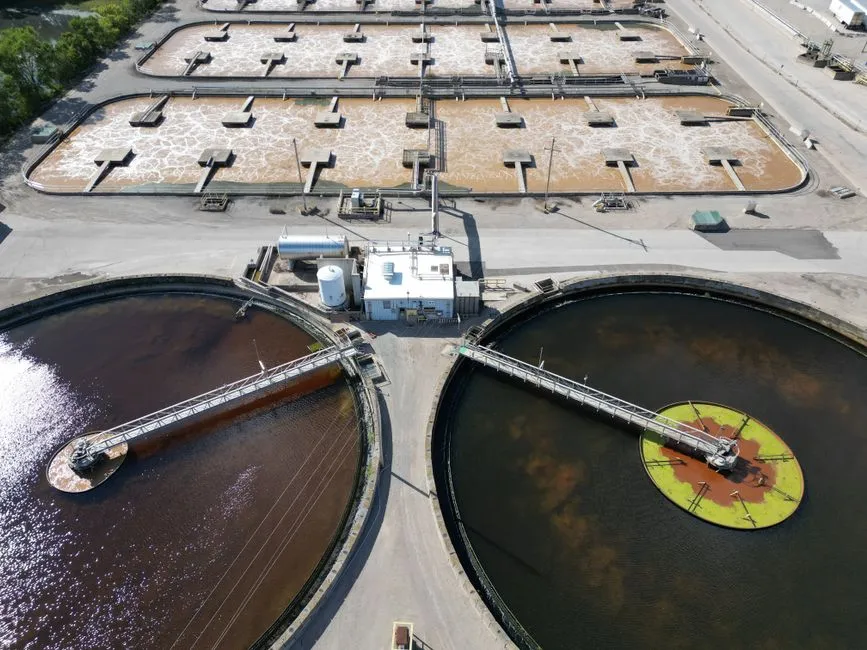
The HydropureWater DAF system covers 4–300 m³/h across 13 standard models, which brackets a single-shift Paramount parts washer (10–25 m³/h of combined washer and E-coat rinse flow) and a two-shift high-mix plant (40–80 m³/h). A lamella is sized on plate area: design flow (m³/h) divided by the 20–40 m³/m²·h surface loading rate. At 50 m³/h and a conservative 25 m³/m²·h, the plate pack needs roughly 2 m² of effective area — small in theory, but it still requires a separate oil-skimming trough, sludge hopper, and chemical feed skid that a packaged DAF integrates.
Size to the 40 CFR 432 daily-maximum sampling window, not the monthly-average flow. Transportation equipment plants typically run a 30-minute morning startup surge as the E-coat line or batch parts washer dumps accumulated overnight inventory. A DAF absorbs that surge well — float-up kinetics are fast, the recycle pump can be throttled, and the tank buffers hydraulically. A lamella absorbs it poorly: the plate pack has a fixed overflow rate, and a surge either pushes oil out the overflow or knocks settled solids back into suspension. For a 25 m³/h single-shift plant, size for at least 30–35 m³/h peak, and select a DAF model with documented headroom.
Total installed cost: why the cheap clarifier stops being cheap
A bare lamella clarifier has a lower nameplate price than a packaged DAF, but this comparison is incomplete. Add to the lamella: an oil-skimmer, a demulsifier feed skid, the larger plate area needed to chase 40 CFR 432 daily-max O&G, and the sludge-hauling uplift for the thinner 1–2% DS underflow versus a DAF's 3–6% DS float. Once those line items are tallied, total installed cost for an oily Paramount stream usually favors DAF (HydropureWater field data, 2026). OPEX on a DAF is dominated by the saturated-water recycle pump (1–3% of throughput energy) and a 2–10 mg/L polymer dose; a HydropureWater automatic chemical dosing system paired with the DAF stabilizes performance through flow swings. A HydropureWater plate and frame filter press downstream handles the float sludge without sending water-rich cake to disposal. The HydropureWater lamella's "up to 30% chemical consumption reduction" claim is a clarifier-vs-clarifier metric, not a clarifier-vs-DAF comparison, and should not justify a lamella-primary on an oily stream.
The 2026 enforcement environment for Paramount plants
EPA has moved toward narrative self-monitoring reports and weekly DMR submissions for category 432 facilities (per the 2024–2025 effluent-guidelines revision cycle), and LA Regional Water Quality Control Board inspectors are reading the narrative for cause rather than just checking numbers. A DAF-primary plus lamella-polish train is easier to narrate defensibly because each unit has a single, well-documented job — DAF removes oil and oil-coated solids; lamella polishes residual TSS and thickens sludge. Confirm current numeric limits with the state NPDES authority before sizing any unit. The same logic applies to peer plants in adjacent geographies — the Milton transportation equipment DAF vs clarifier guide walks the 40 CFR 432 anchor for an Indiana peer, and the Bradenton EV/auto DAF vs clarifier guide extends it to EV-stamping flows.
Frequently Asked Questions
Should a Paramount transportation equipment factory choose DAF or clarifier in 2026?
DAF-primary, with a lamella clarifier downstream as polish is the recommended configuration. The EPA Oil/Water Separation State-of-the-Art matrix (EPA
Frequently Asked Questions
Should a Paramount transportation equipment factory choose DAF or clarifier in 2026?
For transportation equipment facilities in Paramount, a Dissolved Air Flotation (DAF) unit is generally preferred when wastewater contains emulsified oils, greases, or high concentrations of suspended solids requiring rapid separation. DAF systems typically achieve 90% to 99% oil and grease removal efficiency by utilizing micro-bubbles to float contaminants to the surface.
Conversely, a clarifier is more effective for high-volume, low-solids applications or where the primary goal is simple gravity settling of heavy metal hydroxides. If your 2026 facility layout involves high-traffic vehicle washing or degreasing, the DAF's compact footprint and ability to handle variable influent loads often provide a better return on investment compared to the large settling tanks required by conventional clarifiers.
Can a lamella clarifier remove free oil from parts-washer wastewater?
A lamella clarifier is fundamentally designed for solid-liquid separation via gravity and is largely ineffective at removing free oil. Because free oil is less dense than water, it tends to rise to the surface of the clarifier, potentially causing surface crusting, anaerobic conditions, and interference with the discharge weirs.
To treat parts-washer wastewater containing free oil, an oil-water separator or a DAF system must be utilized upstream of any clarification process. If free oil enters a lamella clarifier, it will likely result in non-compliance with local Los Angeles County Sanitation District discharge limits for oil and grease, which typically cap levels at 100 mg/L or lower.
What flow rate range does a HydropureWater DAF cover?
The HydropureWater DAF series is engineered for industrial throughputs ranging from 5 m³/h to 100 m³/h (approximately 22 to 440 GPM). These units are scalable based on the specific hydraulic loading rate required by the transportation equipment facility's waste stream.
Selection within this range is determined by the total suspended solids (TSS) concentration and the chemical oxygen demand (COD) of the wastewater. For facilities in Paramount requiring higher flow capacities, multiple DAF units can be operated in parallel to accommodate peak discharge periods while maintaining stable separation performance.
Which federal rule governs Paramount transportation equipment wastewater — 40 CFR 432 or 433?
Transportation equipment facilities in Paramount are primarily governed by 40 CFR 433, the Metal Finishing Point Source Category. This regulation applies to processes including electroplating, coating, chemical etching, and milling, which are standard in the manufacture and maintenance of transportation components.
While 40 CFR 432 pertains to the Meat and Poultry Products Point Source Category, it is not applicable to transportation equipment manufacturing. Compliance with 40 CFR 433 requires strict adherence to discharge limitations for toxic organics, cyanide, and heavy metals such as cadmium, chromium, copper, lead, nickel, silver, and zinc.
How is the 2026 EPA enforcement environment changing for transportation equipment plants?
In 2026, the EPA and local California regulatory bodies are shifting toward more rigorous "cradle-to-grave" oversight, with a specific focus on the discharge of PFAS (per- and polyfluoroalkyl substances) and advanced heavy metal monitoring. Enforcement actions are increasingly relying on real-time digital monitoring and automated reporting, reducing the reliance on self-reported periodic sampling.
Facilities should expect an increase in unannounced inspections and a lower tolerance for exceedances in pretreatment standards. The 2026 regulatory climate emphasizes the implementation of Best Management Practices (BMPs) and the necessity of maintaining robust, documented pretreatment systems that can prove consistent compliance with local sewer use ordinances.