Why Hopkinsville Transportation Equipment Plants Can't Pick DAF or Clarifier on Generic Advice
Hopkinsville and Christian County host a dense cluster of transportation equipment manufacturing and rebuild operations — assembly lines, machining cells, parts-washing bays, paint booths, and maintenance shops — all of which drain to the Hopkinsville POTW under a sewer use ordinance that enforces 40 CFR 433 categorical pretreatment standards (EPA, 2026). For a plant engineer in 2026, the relevant 40 CFR 433 (Transportation Equipment Cleaning) daily maximum and monthly average limits are not abstract: oil and grease 26 mg/L daily max, TSS 300 mg/L daily max, lead 0.10 mg/L, cadmium 0.10 mg/L, total chromium 0.75 mg/L, and nickel 1.0 mg/L monthly average. A single excursion on oil and grease triggers a Hopkinsville POTW surcharge; a recurring excursion triggers EPA Region 4 enforcement and a Consent Order.
The reason generic "DAF vs. clarifier" advice fails here is that a typical transportation equipment floor drain contains two contaminant families with opposite physical behavior. Emulsified oils, coolants, and surfactants rise. Metal fines, grinding swarf, and paint overspray solids settle. A unit operation optimized for one family is mediocre on the other, and the 40 CFR 433 metal limits (lead, cadmium, chromium, nickel) require that the metal-fines stream be removed reliably before it can adsorb metals into the sludge. That is why the real engineering question for a Hopkinsville plant is not "DAF or clarifier?" but "which contaminant drives my design, and do I need both in series?"
What Comes Out of a Transportation Equipment Floor Drain in 2026
A typical 2026 transportation equipment drain in Christian County is a blend, not a single stream. Emulsified oils and water-soluble coolants dominate the parts-washer and degrease cells, typically 100–2,000 mg/L FOG with droplet sizes in the 5–50 µm range (mechanical emulsification from spray impact). Machining and grinding cells add 200–3,000 mg/L TSS in the form of ferrous and aluminum fines, with swarf up to several millimeters. Phosphate-based cleaners, nitrite-bearing corrosion inhibitors, and periodic solvent spills (mineral spirits, naptha) push pH into the 6–10 band. Paint-shop overspray solids — pigment-loaded base coats and clear coats — contribute both settleable solids and finely divided organic polymers that resist gravity separation.
Hopkinsville's winter climate complicates the picture. January lows reach –10 °C, and ambient wastewater temperatures in unheated pre-treatment vaults drop into the 4–8 °C range. Cold water raises viscosity, which directly reduces the free-oil rise velocity predicted by Stokes' law — gravity oil-water separators lose 30–40% of their nominal separation efficiency in winter. The microbubble-assisted flotation in a DAF system is far less viscosity-sensitive, because the 30–50 µm bubbles provide buoyancy that overwhelms the viscosity penalty. For a plant engineer characterizing influent, the practical takeaway is to sample in winter as well as summer; a stream that settles fine in July may emulsify and float in January.
A plant that only runs a parts-washing bay has a fundamentally different stream than a plant that also grinds, machines, and paints. The technology choice should be driven by the dominant stream, not by an industry-wide average.
How DAF and Clarifiers Each Remove Contaminants
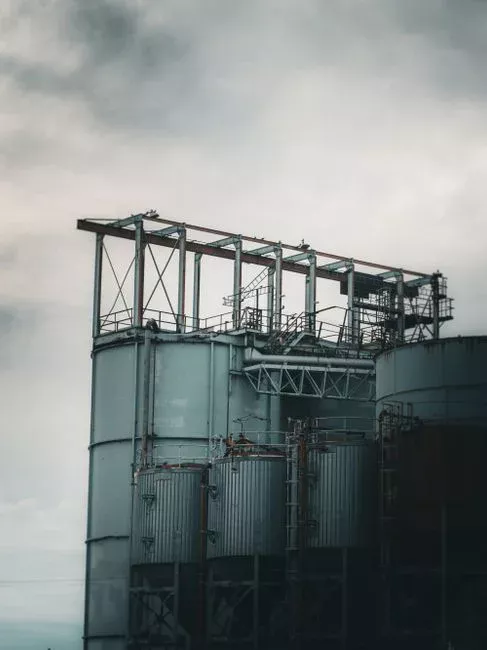
A Dissolved Air Flotation (DAF) system removes contaminants by attaching 30–50 µm diameter microbubbles to flocculated oil and colloidal solids, then skimming the buoyant layer (Clean Technology Post, 2026-08). The saturator vessel pressurizes 20–40% of treated recycle to 4–6 bar, dissolving 70–100 mg/L of air; pressure release through nozzles generates the bubble cloud. Bubble-floc aggregates rise at 5–15 m/h through a quiescent separation zone, and a surface skimmer removes the float. The sludge is thick — typically 2–6% solids — which reduces downstream dewatering cost. Hydraulic loading rates run 5–30 m³/m²·h for conventional DAF and up to 40–50 m³/m²·h for high-rate DAF with internal plate packs. A chemical conditioning step (coagulant plus flocculant, typically dosed via PLC-controlled automatic chemical dosing systems) is essential — without floc, the bubbles have nothing to attach to and removal collapses.
A conventional clarifier relies on quiescent gravity settling: heavy particles drop to a sludge blanket, light oils either skim slowly or escape over the effluent weir. The limitation is fundamental — at the 5–50 µm droplet sizes typical of emulsified wash-bay wastewater, Stokes' law predicts rise rates on the order of centimeters per hour, far below the surface loading rates of any practical clarifier. A lamella clarifier refines the mechanism by installing 55–60° inclined plates that shorten the effective settling distance, allowing surface loading rates of 20–40 m/h in a footprint 3–5× smaller than an equivalent circular clarifier (per HydropureWater high-efficiency sedimentation tanks (lamella clarifiers)). Lamella is excellent for grit, swarf, and metal hydroxide floc, but it still does not remove emulsified oil efficiently. Clarifier sludge is thin — 0.5–2% solids — and that drives higher dewatering OPEX downstream.
The key process implication is that DAF needs chemical conditioning to work, while a clarifier tolerates raw wastewater but benefits from flocculant to settle fine colloidal solids faster. For a Hopkinsville plant with a mixed stream, neither technology alone is the whole answer.
Hopkinsville 2026 Comparison: DAF vs Lamella Clarifier for Transportation Equipment Wastewater
The table below is sized for a typical 50 GPM (~11 m³/h) wash-bay or assembly plant drain — the most common capacity range for transportation equipment operations in Christian County. Sizing assumes primary treatment only; downstream filtration, biological, or membrane polishing is a separate scope.
| Parameter | DAF (e.g., HydropureWater DAF systems) | Lamella Clarifier (e.g., HydropureWater lamella clarifier) |
|---|---|---|
| Primary target contaminant | FOG, emulsified oil, colloidal solids | Heavy inorganic settleable solids, metal fines |
| FOG removal | Up to 95% (Ecologix, 2026-05) | ~70% on free oil; poor on emulsified |
| TSS removal | 70–85% with chemical conditioning | Up to 90% (Ecologix, 2026-05) |
| Emulsified oil handling | Strong (5–50 µm droplets) | Weak |
| Free oil handling | Strong | Moderate — skimming weirs needed |
| Footprint per 50 GPM | ~2–4 m² tank area; skid-mounted | ~3–5 m² tank area; taller profile |
| Hydraulic loading rate | 5–30 m³/m²·h (up to 40–50 high-rate) | 20–40 m³/m²·h on plate area |
| Sludge solids concentration | 2–6% (Clean Technology Post, 2026-08) | 0.5–2% |
| CAPEX (50 GPM skid, 2026) | Equipment cost band; differentiated by chemical dosing skid and material (304/316 SS) | Comparable equipment cost band; differentiated by plate pack material and sludge mechanism |
| OPEX drivers | Air compressor + saturator pump + polymer | Polymer + sludge pumping |
| Cold-weather sensitivity | Low — microbubble buoyancy dominates viscosity | Moderate to high — viscosity reduces rise rate |
| Operator skill required | Higher (A/S ratio, chemical dosing, saturator) | Lower (mostly sludge handling) |
| Hopkinsville POTW compliance fit | Hits 40 CFR 433 oil & grease 26 mg/L with margin | Hits 40 CFR 433 TSS 300 mg/L and metal limits with margin; oil & grease is the weak point |
A 50 GPM stream at 11 m³/h sits comfortably inside the small-model DAF systems range and maps to a single lamella plate pack for a high-efficiency sedimentation tank. Plants above 80 GPM typically move into dual-unit or larger custom builds.
Which Technology Wins for Each Hopkinsville Application
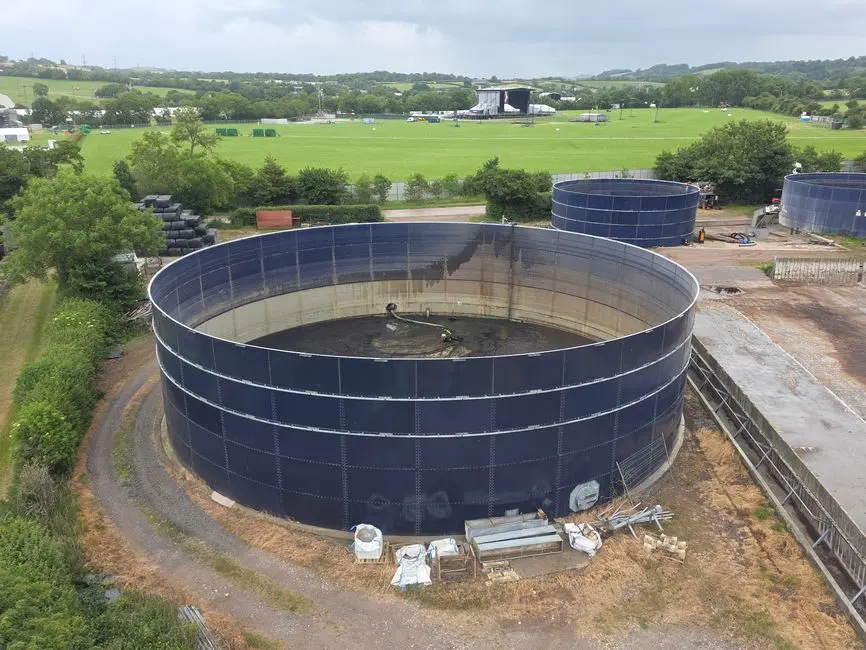
The decision framework below maps the four most common transportation equipment drain profiles in Christian County to a primary and secondary unit operation. The dominant contaminant, not the industry average, drives the answer.
- FOG-dominant parts-washing bay (FOG 500+ mg/L, TSS <300 mg/L): DAF as primary, often no clarifier needed because grit load is low. A HydropureWater DAF system with polymer conditioning hits the 40 CFR 433 oil and grease 26 mg/L daily max with margin. Skid mounting keeps the install fast in an existing wash-bay vault.
- TSS-dominant machining or grinding cell (TSS 1,000+ mg/L, FOG <100 mg/L): Lamella clarifier as primary. DAF is overkill for the FOG load and the metal-fines stream will accelerate skimmer wear and accumulate on the DAF tank floor. The lamella drops 70–80% of TSS and protects any downstream polishing step.
- Mixed assembly plant with paint-shop, machining, and wash bays: Hybrid lamella → DAF is the 2026 standard. The lamella drops grit, swarf, and paint overspray solids first; the DAF then polishes oil and grease to the 40 CFR 433 26 mg/L limit. This is the configuration most Hopkinsville rebuild and assembly operations should default to.
- Maintenance and rebuild shops with variable flow: Skid-mounted compact DAF (≤66 GPM units are available) plus a small lamella for chips and grinding residue; both units trailer-friendly for the rebuild-shop context. The lamella handles the variable grit load from tear-down, and the DAF handles the variable FOG load from parts washing.
The hybrid configuration is the dominant 2026 default in transportation equipment pretreatment for a reason: FOG and metal fines are not the same unit operation, and 40 CFR 433 enforces both. For an EV or auto-adjacent plant evaluating the same compliance question, the EV and auto plant 40 CFR pretreatment compliance reference walks through the same logic.
2026 Cost and Compliance Projection for a Hopkinsville Plant
For a 50 GPM skid, small DAF units in the DAF-5 to DAF-15 class and a small lamella clarifier typically sit in a comparable equipment-cost band; the differentiator is the building footprint and the chemical dosing skid (a DAF install needs the saturator, air compressor, and a PLC-controlled automatic chemical dosing system, while a lamella install needs the plate pack and sludge pump). Material selection matters in 2026: 316 SS builds for automotive paint-shop service, where chloride-bearing cleaners and bright zinc phosphate stages attack 304 SS at the weld seams, run 8–12 weeks lead time, while standard 304 SS or carbon steel DAF and lamella units typically ship in weeks.
OPEX is where the hybrid configuration earns its keep. A lamella spends on polymer plus sludge pumping, and is the lower-OPEX option when grit is the only target. A DAF spends on air compression, saturator pumping, and polymer, and that higher OPEX is justified when the alternative is a 40 CFR 433 oil and grease violation. Hopkinsville POTW surcharges for oil and grease excursions accumulate quarter over quarter, and a single quarter of surcharges plus administrative fees typically exceeds a year's DAF polymer cost. The compliance ROI calculation is straightforward: a passing DAF effluent at oil and grease <26 mg/L avoids the surcharge entirely; a failing effluent is one quarter of surcharges away from a Consent Order and an EPA Region 4 inspection.
For a Hopkinsville plant engineer building the capital justification, frame the equipment cost against (1) avoided surcharges, (2) avoided Consent Order risk, and (3) the smaller building footprint of a skid-mounted DAF plus lamella versus a concrete circular clarifier of equivalent capacity. For a deeper dive on DAF unit engineering specs that support the proposal, the deep dive on DAF unit working principle and engineering specs is a useful companion. Engineers evaluating a parallel facility in a neighboring jurisdiction can also reference the companion transportation equipment DAF vs clarifier guide for Milton.
Frequently Asked Questions
Can a DAF system alone meet 40 CFR 433 oil and grease 26 mg/L for a Hopkinsville transportation equipment plant?
Yes, if the DAF is properly sized and chemically conditioned. A well-engineered DAF with coagulant and flocculant dosing achieves up to 95% FOG removal on emulsified wash-bay wastewater (Ecologix, 2026-05), and that comfortably clears the 40 CFR 433 daily maximum oil and grease limit of 26 mg/L when influent FOG is below 1,000 mg/L. Above 1,000 mg/L FOG or with high metal-fines loading, a lamella clarifier upstream protects the DAF skimmer and extends compliance margin.
When is a lamella clarifier the better primary choice over DAF for a transportation equipment facility?
When the stream is TSS-dominant — machining, grinding, or paint overspray cells producing 1,000+ mg/L TSS with FOG under 100 mg/L. A lamella clarifier hits up to 90% TSS removal at lower OPEX than DAF (Ecologix, 2026-05), and avoids the skimmer wear and tank-floor grit accumulation that DAF units experience on fines-heavy influent. The 40 CFR 433 TSS daily maximum of 300 mg/L and the metal limits (lead 0.10 mg/L, cadmium 0.10 mg/L, total chromium 0.75 mg/L, nickel 1.0 mg/L monthly average) are best secured by lamella first when the FOG load does not justify a DAF.
What is the 2026 recommendation for a mixed parts-washing, machining, and paint-shop drain in Hopkinsville?
Run a hybrid: lamella clarifier first to drop grit, swarf, and paint overspray solids, then DAF to polish emulsified oil and grease to the 40 CFR 433 oil and grease 26 mg/L daily maximum. The lamella protects the DAF skimmer from fines, and the DAF handles the FOG that the lamella cannot remove. This lamella → DAF configuration is the 2026 standard for Christian County transportation equipment plants with mixed streams, and it is the configuration that secures both the oil and grease and the TSS and metal limits enforced by the Hopkinsville POTW pretreatment program.