Why Indianapolis Fabricated Metals Plants Need DAF or a Clarifier in 2026
Indianapolis fabricated metals plants discharging to the Belmont or Southport advanced wastewater treatment plants operate under two layered compliance regimes in 2026: federal categorical standards under 40 CFR 433 (Metal Products & Machinery), and the local industrial pretreatment program administered by Citizens Energy Group under 40 CFR 403. The federal numbers are the binding ceiling: Oil & Grease (O&G) capped at 26 mg/L daily maximum and 17 mg/L monthly average, Total Suspended Solids (TSS) at 60 mg/L daily maximum and 31 mg/L monthly average, and Total Metals (cadmium, chromium, copper, lead, nickel, silver, zinc) per the categorical table (per 40 CFR 433.102). Citizens Energy Group layers a local FOG discharge cap of approximately 250 mg/L into the sewer, surcharges on exceedances, and a zero-discharge tolerance for visible oil sheen or floating solids at the sampling port.
The waste stream that drives the equipment decision is a specific mix generated by stamping, machining, and metal-finishing lines in the Indianapolis corridor: tramp oils from CNC sumps and hydraulic presses (typically 200-1,000 mg/L O&G), water-soluble and straight cutting fluid emulsions, stamping lubricants, drawing compounds, phosphating rinse water carrying zinc and iron phosphate solids, and metal hydroxide flocs from pickling and alkaline cleaning. That contamination profile determines whether a dissolved air flotation (DAF) unit or a lamella clarifier belongs at the head of the treatment train. The decision rule is straightforward: oil-laden streams above 50 mg/L O&G need DAF first; heavy non-oily inorganic TSS at low FOG can use a clarifier. For a regional view of how the same decision plays out in a different regulatory jurisdiction, see the fabricated metals DAF vs clarifier guide for Madison Heights.
How a DAF Unit Actually Treats Metalworking Wastewater
A dissolved air flotation unit separates suspended matter by attaching microbubbles (10-100 µm) to particles or oil droplets, lifting them to the surface for removal by a mechanical skimmer. The microbubbles are generated by saturating a side-stream recycle (20-50% of the hydraulic throughput) at 4-6 bar and releasing it through needle valves or nozzles into the contact zone. Hydraulic residence time in the flotation cell runs 5-20 minutes, and surface loading rates for the HydropureWater DAF range (4-300 m³/h coverage) sit at 5-15 m/h, sized to the contamination load (HydropureWater DAF spec, 2026).
For fabricated metals, the chemical conditioning stage differentiates compliant performance from failure. A coagulant stage (alum, polyaluminum chloride, or ferric chloride at 50-150 mg/L) destabilizes emulsified cutting fluid and colloidal metal hydroxides, followed by a polymer flocculant (2-10 mg/L anionic polyacrylamide) that bridges destabilized droplets into macroflocs. With this conditioning step, DAF breaks emulsions and pulls total oil and grease (SOG) down 80-95% in a single pass (Durban University of Technology optimization study, 2024; SSRN flotation review, 2024). On real Indianapolis metalworking influent in the 200-1,000 mg/L O&G range, a properly conditioned HydropureWater dissolved air flotation system typically delivers <10 mg/L O&G and <20 mg/L TSS at the outlet, providing a comfortable safety margin below the 26 mg/L daily max and 17 mg/L monthly average O&G limits.
How a Lamella Clarifier Handles the Same Waste Stream
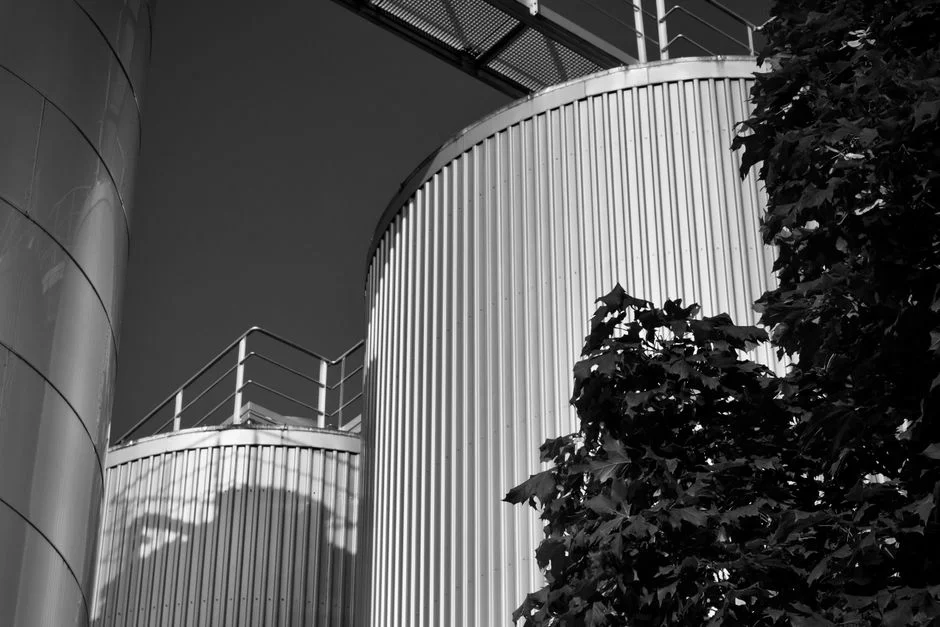
A lamella (inclined-plate) clarifier is a packed settling device where wastewater flows upward through a stack of parallel plates inclined at 55-60°, solids settle onto the plate surfaces under gravity, and the collected sludge slides down to a hopper. The surface loading rate for the HydropureWater lamella range is 20-40 m/h, roughly three to five times the rate of a conventional clarifier, allowing for a compact footprint. Most lamella units used in metalworking are designed with sludge recirculation to maintain a dense, flocculated sludge blanket that acts as a contact filter for incoming solids.
The physics of gravity-based separation explain why lamella units struggle with metalworking waste: oil and grease float rather than settle. A plate stack is optimized for density-driven separation, so any free or emulsified oil that enters a lamella primary simply rides the upflow, exits over the weir, and produces a non-compliant effluent plus a floating oil layer that re-emulsifies on the surface. Realistic removal numbers on a fabricated metals stream with no upstream oil removal are 50-80% TSS, 20-40% free oil, and under 30% emulsified oil (HydropureWater field data, 2026). The lamella is built for inorganic TSS: metal hydroxide flocs, phosphate precipitates, sand, and grinding swarf after the oil has already been removed by a DAF or oil-skim pre-step. As a primary unit on an oily stream, the HydropureWater lamella clarifier will not reliably meet 40 CFR 433 O&G limits or the local 250 mg/L FOG cap.
DAF vs Lamella Clarifier: Head-to-Head Parameter Comparison
The table below consolidates the engineering numbers an Indianapolis plant engineer needs to defend equipment selection in a 2026 CAPEX review. All CAPEX figures are turnkey installed ranges for a 50 m³/h packaged unit on a metalworking duty cycle, sized for 16-20 hours/day operation. Footprint values are envelope dimensions including skid, tankage, and access aisles.
| Parameter | Dissolved Air Flotation (DAF) | Lamella Clarifier |
|---|---|---|
| Target contaminant | Free & emulsified oil, FOG, suspended solids, metal hydroxide flocs | Inorganic TSS only (metal hydroxides, phosphates, grit) |
| Typical influent range (metalworking) | 200-1,000 mg/L O&G; 200-2,000 mg/L TSS | 50-300 mg/L TSS; <30 mg/L O&G (post-DAF) |
| Removal efficiency | 80-95% O&G; 70-90% TSS in one step (per SSRN 2024; DUT 2024) | 50-80% TSS; 20-40% free oil; <30% emulsified oil (HydropureWater field data, 2026) |
| Hydraulic retention time | 5-20 minutes | 20-45 minutes |
| Surface loading rate | 5-15 m/h | 20-40 m/h |
| Footprint at 50 m³/h (m²) | 15-25 m² (incl. recycle pump, saturator, skimmer) | 8-14 m² (incl. sludge hopper) |
| CAPEX band 2026 (USD, 50 m³/h) | $90,000-$180,000 installed (HydropureWater 2026 pricing) | $40,000-$90,000 installed (HydropureWater 2026 pricing) |
| Polymer / coagulant demand | 2-10 mg/L flocculant + 50-150 mg/L coagulant (emulsion breaking) | 1-5 mg/L flocculant; coagulant required for any meaningful TSS reduction |
| OPEX drivers | Polymer, coagulant, saturator compressed air 0.5-1.5 kW, skimmer drive | Coagulant, sludge pumping, periodic plate cleaning |
| Regulatory limit addressed | 40 CFR 433 O&G (26 mg/L daily / 17 mg/L monthly avg); TSS 60/31 mg/L | 40 CFR 433 TSS polish (60/31 mg/L) only — does not address O&G |
| Best fit | Primary unit on oily, emulsion-bearing metalworking wastewater | Polishing step after DAF, or primary on non-oily inorganic TSS |
The DAF CAPEX premium is roughly $50,000-$90,000 for a 50 m³/h line, which is minor relative to a non-compliance event at the Indianapolis POTW that can trigger surcharges, consent-order penalties, and production-line shutdowns. Lamella's footprint advantage is only beneficial if the upstream oil problem is already solved; otherwise, the smaller footprint simply results in a smaller non-compliant discharge.
Decision Framework: Which One Should Your Indianapolis Plant Buy in 2026?
Run the influent characterization first by pulling a 24-hour composite sample of the combined wastewater from stamping, machining, and parts-washing lines, then testing for O&G by EPA 1664, TSS by SM 2540D, and emulsified oil by hexane-extractable SOG.
Branch 1 — Influent O&G >50 mg/L, or any detectable emulsified cutting fluid: Select DAF as the primary unit. At this loading, a lamella primary will not meet 40 CFR 433 O&G limits, will not satisfy the local 250 mg/L FOG cap, and will accumulate a floating oil blanket that re-stabilizes emulsions. Size the DAF to the peak hourly flow plus 20% turndown margin, and pair it with an automatic chemical dosing skid to hold coagulant and polymer dose within ±5% of setpoint despite influent swings from batch dumps.
Branch 2 — Influent O&G <30 mg/L and stream dominated by inorganic TSS (phosphating rinse, pickling wash after oil-skim, vibratory finishing overflow): A lamella clarifier with coagulant dosing is the economic choice. CAPEX is roughly half of a DAF install, the footprint is 40-50% smaller, and the unit will reliably polish to the 31 mg/L TSS monthly average.
Branch 3 — Mixed stream (typical of a job shop with both machining and phosphating on the same discharge line): Specify DAF primary + lamella polish, which is the 2026 best practice across the metal-finishing sector. The DAF performs the oil and emulsion work to <10 mg/L O&G, while the lamella polishes residual TSS to <31 mg/L monthly. Sludge from the DAF float and the lamella underflow should be dewatered together on a plate-and-frame filter press to reduce hauling volume, providing a measurable OPEX saving in year one.
Installing a clarifier as the primary unit on an oily stream creates a non-compliant situation that cannot be fixed downstream, as the oil has already passed the regulatory sampling point. Pretreatment program audits in Indianapolis have resulted in consent orders requiring full DAF retrofits within 12 months, plus surcharges on every gallon discharged in the interim.
Frequently Asked Questions
What O&G limit does 40 CFR 433 set for fabricated metals discharges?
40 CFR 433.102 sets the Oil & Grease limit at 26 mg/L daily maximum and 17 mg/L monthly average for any facility in the Metal Products & Machinery category, including stamping, machining, and metal-finishing operations. Citizens Energy Group's local pretreatment program layers an influent FOG cap near 250 mg/
Frequently Asked Questions
Is a DAF or clarifier better for fabricated metals wastewater in Indianapolis?
The choice between Dissolved Air Flotation (DAF) and a clarifier depends on the specific gravity and buoyancy of the suspended solids in your metalworking stream. DAF systems are generally superior for fabricated metals wastewater containing high concentrations of emulsified oils, greases, and light metal fines that tend to float or settle very slowly. Because Indianapolis metal finishing shops often deal with high-volume cutting fluids and lubricants, DAF units provide a smaller footprint and faster separation rates compared to traditional gravity clarifiers.
Conversely, if your effluent is primarily composed of heavy metal hydroxides or dense inorganic solids resulting from precipitation processes, a conventional or lamella clarifier is typically more effective and cost-efficient to operate. Many modern facilities in the region utilize a hybrid approach, employing a clarifier for primary metal precipitation followed by a DAF unit for final polishing of residual oils and suspended solids to meet stringent discharge requirements.
What is the 40 CFR 433 oil and grease limit for metal finishing?
Under 40 CFR 433 (Metal Finishing Point Source Category), the federal effluent limitation for oil and grease is 52.0 mg/L for any single-day maximum and 26.0 mg/L as a monthly average. These standards apply to all facilities performing core operations such as electroplating, electroless plating, anodizing, coating, chemical etching, milling, or machining.
It is important to note that while 40 CFR 433 sets the federal baseline, local discharge limits enforced by the municipal sewer authority often supersede these values if they are more stringent. Compliance requires consistent monitoring of your wastewater stream to ensure that both the daily maximum and monthly average are not exceeded, as violations can lead to significant regulatory penalties and increased surcharge fees.
Can a lamella clarifier remove cutting fluid emulsions?
A standard lamella clarifier is generally ineffective at removing cutting fluid emulsions on its own because these fluids are designed to remain dispersed in water. Emulsions consist of oil droplets stabilized by surfactants, which are typically smaller than the settling capacity of a lamella plate system. Without chemical pretreatment, these droplets will pass through the clarifier unaffected.
To successfully remove cutting fluid emulsions using a lamella clarifier, the wastewater must first undergo a demulsification process. This involves chemical breaking of the emulsion using coagulants (such as alum or ferric chloride) and flocculants to aggregate the dispersed oil into larger, denser particles. Once the emulsion is broken and the solids are flocculated, the lamella clarifier can effectively settle the resulting sludge, provided the surface overflow rate is properly managed.
How much does a 50 m3/h DAF cost for a metalworking plant in 2026?
As of 2026, the capital expenditure for a turnkey 50 m3/h DAF system tailored for a metalworking facility typically ranges from $185,000 to $320,000. This price variance is driven by the choice of construction materials, such as 304 or 316L stainless steel, the complexity of the integrated chemical dosing skids, and the inclusion of automated sludge dewatering equipment like a filter press or screw press.
Beyond the base unit, project costs must account for installation, which can add 30% to 50% to the total budget depending on site-specific piping modifications, electrical upgrades, and the integration of PLC-based control systems. Ongoing operational costs, including chemical consumption for pH adjustment and flocculation, as well as energy for the air saturation pump, should be factored into your 5-year total cost of ownership analysis.
Does Citizens Energy Group in Indianapolis enforce a FOG limit on industrial discharges?
Yes, Citizens Energy Group maintains strict oversight regarding the discharge of Fats, Oils, and Grease (FOG) into the Indianapolis sewer system. Industrial users are governed by the facility's specific wastewater discharge permit, which frequently includes local limits designed to protect the integrity of the sanitary sewer collection system and prevent blockages.
While general municipal codes may set broad limits, your facility's individual permit will dictate the specific mass-loading or concentration-based limits for oil and grease. Failure to maintain FOG levels within the permitted range can result in industrial surcharges, non-compliance notices, or the requirement to install additional pretreatment technology to reduce the organic loading before it reaches the municipal treatment facility.