Why the DAF-vs-Clarifier Question Is Different in Lakeland Fabricated Metals
For a Lakeland, FL fabricated metals plant in 2026, the DAF-vs-clarifier decision is driven by the categorical pretreatment standards under 40 CFR 433 (Metal Finishing) and the City of Lakeland Industrial Pretreatment Program enforced through Polk County Utilities. Stamping, machining, grinding, parts washing, phosphating, and electroplating rinsewaters all fall under those standards, with daily-maximum limits of 52 mg/L oil & grease, 1.48 mg/L total lead, 0.60 mg/L total chromium, and 4.68 mg/L total zinc (per 40 CFR 433, Table 1). The local program layers a FOG surcharge and discharge authorization on top, so any equipment choice that misses O&G by even 20 mg/L becomes a notice-of-violation risk.
The streams coming out of a Lakeland fabrication shop split into two archetypes that determine unit-process selection. Archetype 1 is free and emulsified oil from stamping presses, parts washers, and drawing-compound overflows — the cutting fluids and lubricants that refuse to settle. Archetype 2 is metal-hydroxide floc generated when plating rinses are raised to pH 9-9.5 for precipitation of nickel, zinc, and chromium hydroxides. UFC 3-240-03 (Section 5.2.2) explicitly lists DAF as a standard unit operation in metals wastewater treatment, but it does not mandate DAF; it only confirms it is a recognized federal design option (UFC 3-240-03, 2001-07). The archetype, not the regulation, dictates the unit. For a parallel take on the same question in a different geography, see the DAF or clarifier analysis for fabricated metals in Madison Heights.
How DAF and Lamella Clarifiers Actually Treat Metals Wastewater
A dissolved air flotation unit operates by pressurizing a recycle stream of clarified effluent to roughly 60-80 psig in a saturation vessel, then releasing it through a pressure-relief valve near the tank center. The pressure drop flashes dissolved air into 10-100 micron micro-bubbles that attach to oil droplets and floated TSS, lifting them to the surface where a mechanical skimmer removes the float layer (per ClearStream and VanAire design descriptions). ClearStream notes that rectangular DAF units "can include integral coagulation and flocculation chambers," which makes them a compact single-tank solution for narrow Lakeland equipment rooms. A packaged DAF system for oily metals wastewater in this configuration typically ships fully shop-assembled, which shortens field install time on a tight 2026 capex schedule.
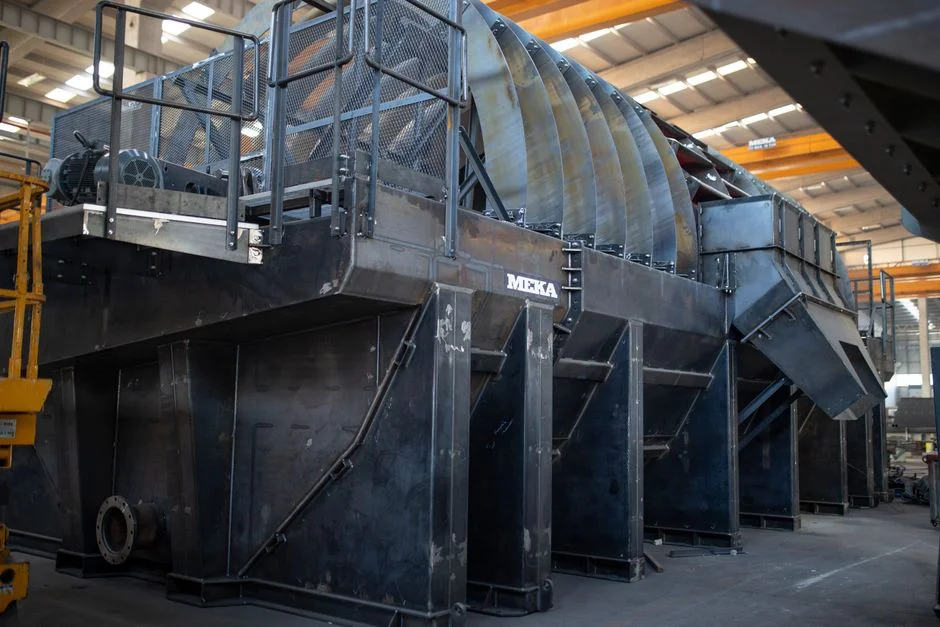
A lamella clarifier (inclined-plate settler) utilizes gravity-based separation. Wastewater is dosed with coagulant and flocculant, then flows upward through a stack of plates inclined at roughly 60°, where the effective settling area is multiplied by the plate projection. Surface loading rates typically run 20-40 m/h for industrial lamella units (per HydropureWater lamella product data, 2026). Heavy metal-hydroxide sludge slides down the plates into a hopper, and clarified water exits through launders at the top. A lamella clarifier for metal-hydroxide floc streams is the right tool when the only job is gravity-settling a dense, well-flocculated precipitate — not when the stream carries emulsified oil that has been stable in suspension for hours.
The mechanism gap is what drives selection. Micro-bubbles attach to oil droplets that are near-neutrally buoyant, which is exactly the population that defeats a clarifier. Inclined plates require the droplet or floc particle to actually settle — emulsified oil often does not. The two technologies are not interchangeable; they are complements, and the order in which a plant installs them is determined by which contaminant is dominant.
Side-by-Side: DAF vs Clarifier on the Numbers That Matter
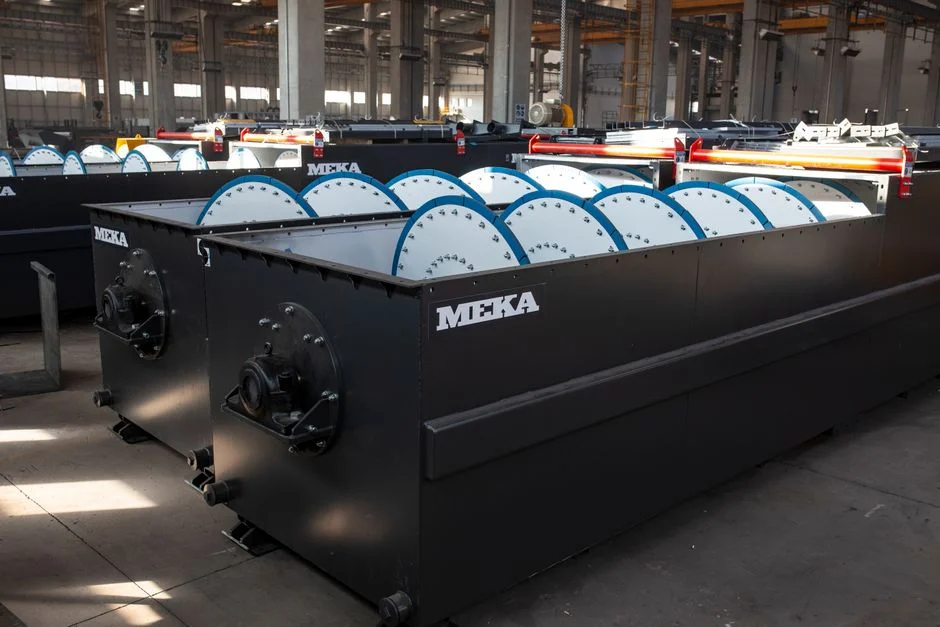
The table below distills the operating comparison a Lakeland plant engineer needs to weigh one bid against another. Removal ranges are published industrial ranges, not site guarantees — confirm with a 4-6 week jar test on your actual stream before purchase.
| Parameter | Dissolved Air Flotation (DAF) | Lamella Clarifier (Inclined Plate) |
|---|---|---|
| Best-fit stream | Free & emulsified oil, FOG, cutting fluids, floated TSS | Metal-hydroxide floc from precipitation reactor, low-O&G polishing |
| TSS removal (typical industrial range) | 80-95% | 50-80% |
| Oil & grease / FOG removal | 70-95% (validate via jar test) | 20-50% on emulsified oil — rarely meets 40 CFR 433 O&G alone |
| Residence time | 15-25 min | 1-3 h |
| Footprint at 30 m³/h (132 gpm) | 3-5 m² packaged rectangular | 8-15 m² plus structural plate support |
| Polymer demand | Lower (0.5-2 mg/L typical) | Up to 30% less than conventional clarifier, but higher than DAF in oily service |
| CAPEX band (USD 2026, installed) | $180k-260k at 30 m³/h | $110k-160k at 30 m³/h, plus $40k-70k for upstream OWS if oil present |
| Sludge consistency | Drier float (3-6% DS typical) | Wetter settled sludge (1-3% DS) |
| Operator skill | Low — automated saturator, skimmer | Moderate — scraper mechanism, plate inspection |
| 40 CFR 433 O&G daily-max fit | Typically meets 52 mg/L with proper chemistry | Rarely sufficient alone for 52 mg/L |
| Florida / Lakeland fit | Enclosed, covers available for odor/H2S control in warm summers | Open tank — H2S risk from sulfate-reducing bacteria in hydroxide sludge |
| Retrofit friendliness | High — ships shop-assembled, fits existing basins | Moderate — requires structural support for plate packs |
For plants in adjacent geographies, the same trade-off plays out in mining and primary metals; see the DAF vs clarifier for mining and metals wastewater analysis. The structural conclusion is identical: DAF is the default whenever the contaminant is buoyant; lamella is the default when the contaminant is dense and already flocculated.
A Lakeland 2026 Cost & Footprint Scenario for a 30 m³/h Fabricated Metals Line
A combined stamping, parts-washing, and light-plating line producing 30 m³/h (132 gpm) of mixed wastewater must hit the 40 CFR 433 daily-max envelope — 52 mg/L O&G, 1.48 mg/L total lead, 0.60 mg/L total chromium, 4.68 mg/L total zinc (per 40 CFR 433, Table 1). The realistic installed-cost bands in 2026 USD are roughly $180k-260k for a packaged DAF with internal floc chamber, chemical dosing skid, pH/ORP probes, and sludge pump. A lamella clarifier at the same flow runs $110k-160k installed — but if the stream contains more than trace oil, add $40k-70k for an upstream oil-water separator, which erases roughly half the CAPEX gap.
Operating cost is where the DAF case tightens. A DAF recycle pump draws 1-3 kW per 10 m³/h of throughput, and polymer consumption typically runs $0.02-0.05 per m³ treated. A lamella needs more polymer in oily service and carries a mechanical scraper, but no saturator pump. On a 30 m³/h line running two shifts, annual operating cost difference is usually inside 15% once you account for the oil-water separator maintenance on the clarifier path.
Florida-specific install items frequently missed in a CAPEX sketch include hurricane-rated equipment anchoring (per Florida Building Code 2023, 7th edition), FDEP General Permit for industrial wastewater treatment systems, City of Lakeland backflow prevention on any reclaim line, and a covered DAF or odor-control canopy to handle the warm Polk County summers. A PLC-controlled coagulant and flocculant dosing skid and a filter press for DAF float sludge dewatering are the typical downstream add-ons; budget for the full train, not just the clarifier or DAF vessel, because sludge hauling in Florida runs $80-150 per wet ton (per industry hauling rate, 2025-11).
How to Decide: A 2026 Selection Flowchart for Lakeland Fabricated Metals Plants
- Test the stream. If free or emulsified oil exceeds ~50 mg/L influent (jar-tested, not just visually), default to DAF — a lamella alone will not meet the 40 CFR 433 daily-max of 52 mg/L O&G (per 40 CFR 433, Table 1).
- Check flow and oil together. If flow is below 10 m³/h and oil is below 30 mg/L — a small machine shop with no stamping, for example — a lamella clarifier can be sufficient and saves CAPEX.
- Check the footprint envelope. If the site has no outdoor space and the equipment room column grid is tight, specify a packaged rectangular DAF with integral floc chamber; ClearStream confirms these ship fully shop-assembled for narrow sites and retrofits (per ClearStream product description).
- Check the 2026 reuse goal. If the plant is pursuing zero-liquid-discharge or closed-loop rinsewater reuse, DAF float sludge dewaters to 18-25% DS on a filter press and feeds a reuse loop more cleanly than lamella sludge — see the DAF configuration for stamping press oily water guide for the reuse train.
- Permit and validate before purchase. Always pair the equipment decision with a 4-6 week jar test on real wastewater and a City of Lakeland Industrial Pretreatment Program permit review before signing a PO. Treatment claims without jar data do not survive an NOV.
Frequently Asked Questions
Does a DAF actually meet 40 CFR 433 oil and grease limits without a clarifier polish?
Yes, in most fabricated metals streams. A properly operated DAF with optimized coagulant and flocculant chemistry typically achieves 70-95% O&G removal, which brings a 200-500 mg/L influent comfortably under the 52 mg/L daily-max (per 40 CFR 433, Table 1). Confirm with a jar test on your specific cutting fluid and drawing compound blend before purchase. For a parallel Florida case study, see the DAF or clarifier comparison for a Palmetto, FL fabricated metals plant.
Can a lamella clarifier handle emulsified oil from a stamping press at all?
Poorly. Inclined plates rely on gravity settling, and emulsified oil droplets in the 5-20 micron range stay suspended for hours. A lamella alone typically achieves only 20-50% O&G removal on emulsified oil — usually not enough to meet 40 CFR 433. If you want to use a lamella, install an oil-water separator or DAF upstream.