
What Hayti Mining and Metals Plants Are Actually Treating in 2026
Hayti, MO sits inside a Pemiscot County industrial corridor that historically hosted mineral-processing and metal-finishing operations alongside aggregate washing. The wastewater those plants generate is rarely the textbook "clean industrial stream" that generic DAF brochures imply: it is typically 500–5,000 mg/L TSS (per EPA ore mining profile guidance), carrying entrained silica fines, iron and aluminum hydroxides, occasional lead and zinc from metal-finishing rinses, intermittent oil/grease from equipment washdown, and pH swings from 4 to 10 across a single shift.
Those plants are bound by 40 CFR Part 437, the effluent limitations guideline covering the ore mining and mineral processing subcategory. Daily-maximum limits under Part 437 typically include TSS at 50 mg/L and tight caps on total recoverable metals such as iron, aluminum, lead, and zinc, which is what makes separator selection a compliance decision rather than a preference. Because 40 CFR Part 437 governs the daily-maximum envelope, the separator must hit those numbers on the worst hour of the worst shift, not on a lab sample.
Hayti plants also see hydraulic spikes from batch washdowns and stormwater infiltration, so the primary separator must tolerate 2–3× flow turndown without losing float or sludge blanket. That tolerance requirement is precisely where dissolved air flotation in mining duty earns its position: DAF micro-bubbles measure 30–50 µm (per Clearwater/SigmaDAF), small enough to lift fine metal-bearing colloids that would settle slowly in a gravity clarifier and escape with the overflow during a spike.
DAF vs Lamella Clarifier: How Each Technology Actually Separates Solids
A dissolved air flotation (DAF) system separates solids by buoyancy, not by weight. Pressurized, air-saturated recycle water is released at atmospheric pressure inside the flotation cell, forming a cloud of 30–50 µm micro-bubbles (per Clearwater/SigmaDAF). Those bubbles attach to chemically flocculated particles and lift them to the surface, where a paddle or belt skimmer removes the resulting sludge blanket. Heavier particles settle to the bottom hopper and are augered or pumped out separately. The clarified underflow exits from the cell bottom or side weir. Because the lifting force comes from a bubble rather than from Stokes-law settling, DAF is the right tool for low-density fines, oil and grease, and metal-bearing colloids that gravity alone cannot resolve.
A lamella clarifier separates solids the old-fashioned way: by gravity. The difference is geometry. A bundle of inclined parallel plates at 55–60° multiplies the effective settling area inside a footprint that is 5–10× smaller than a conventional clarifier. Surface loading on the projected plate area typically runs 20–40 m³/m²/h (per HydropureWater lamella product data), which is what makes the unit physically compact. Sludge slides down the plate faces into a hopper, and clarified water flows upward through the plate pack to the collection launder.
The physical consequence matters in mining duty. DAF relies on buoyancy and is best at lifting low-density particles, emulsified oil, and fine colloids. Lamella relies on gravity and excels at removing denser mineral particles but struggles with emulsified oil and very fine colloids. Both technologies require coagulation/flocculation upstream, but DAF is more sensitive to air-to-solids ratio and saturator pressure, while lamella is more sensitive to plate spacing, plate angle, and sludge recirculation rate. Getting either of those knobs wrong shows up immediately on the 40 CFR 437 daily-maximum chart.
Side-by-Side Comparison: DAF vs Lamella Clarifier for Mining/Metals Duty
The matrix below is the working document a Hayti procurement engineer should walk into a vendor meeting with. Every row is anchored in either the DAF specifications published by H2Flow, Clearwater/SigmaDAF, and wastewatermachinery, or in lamella clarifier product data for the mineral processing subcategory.
| Parameter | DAF (dissolved air flotation) | Lamella clarifier | Basis |
|---|---|---|---|
| Typical TSS removal | Up to 95% (H2Flow); up to 97% (wastewatermachinery) | 60–85% on a single pass; higher with coagulant optimization | Vendor published performance |
| COD/BOD removal | 60–80% COD; significant BODi when FOG-bound | 30–50% COD; primarily particulate-driven | wastewatermachinery / vendor data |
| Hydraulic surface loading rate | 5–25 m³/m²/h effective, depending on solids load | 20–40 m³/m²/h on projected plate area | H2Flow DAF sizing / HydropureWater lamella data |
| Footprint at 50 m³/h | ~30 m² plot (DAGYEE DAF-050: 8.4 m × 3.6 m) | ~20 m² plot; wider but shorter | DAGYEE DAF-050 datasheet / lamella catalog |
| Oil / FOG handling | Removes free and emulsified oil in a single unit | Handles free oil only; plates foul with oil accumulation | H2Flow FOG performance / field data |
| Sensitivity to flow spikes | Tolerates 2–3× turndown with consistent float | Loses sludge blanket above ~1.5× design flow | HydropureWater field data, 2026 |
| CAPEX direction (same flow) | Higher (saturator, recycle pump, skimmer, controls) | Lower (plates, hopper, sludge pump) | Industry pricing range, 2026 |
| OPEX direction | Higher (kWh for recycle pump and air compressor; polymer and wear parts) | Lower (gravity-driven; sludge pump duty only) | Industry pricing range, 2026 |
| Materials of construction | 304SS standard; 316SS, polypropylene optional (per Clearwater) | 304/316SS plates; carbon steel or concrete tank | SigmaDAF / Clearwater published options |
| Best-fit influent | Low-density fines, oil sheen, spiky flow, metal-bearing colloids | Dense mineral slurry, steady flow, capex-sensitive projects | Engineering judgment, 40 CFR 437 subcategory |
Two rows deserve special attention in a Hayti context. Oil/FOG handling is the row that pushes operators away from a lamella-only design: a single oil-coated plate pack forces a washdown cycle that takes the unit offline. Sensitivity to flow spikes is the row that pushes operators toward DAF as a polishing step even when lamella handles the bulk of the solids.
Which One Should a Hayti Factory Choose in 2026?
The selection logic in 2026 is a routing problem, not a single-vendor decision. The rule of thumb that holds up against 40 CFR Part 437 daily-maximum data is straightforward.
Decision rule 1 — match the separator to the influent character. If the influent TSS is mostly greater than 200 mg/L and consists of dense mineral particles with little oil, lead with a lamella clarifier. If the influent carries oil sheen, metal-bearing colloids, or high variability from batch washdowns, lead with DAF. The 30–50 µm bubble size is what makes DAF the only credible option for colloidal-bound metals that would otherwise report to the lamella overflow.
Decision rule 2 — when in doubt, run lamella primary and DAF polish. For any plant that must meet 40 CFR Part 437 daily-maximum metals limits for lead, zinc, copper, or iron reliably, the safest 2026 architecture is a lamella clarifier for bulk TSS reduction followed by a DAF for metals and FOG polishing. This is the configuration most EPCs in the Missouri Bootheel now specify for ore mining and mineral processing duty, and it is the only configuration that gives the operator a buffer on the worst hour of the worst shift.
Decision rule 3 — match deployment format to flow. For very small flows under roughly 10 m³/h or for remote sites, a skid-mounted or containerized DAF such as H2Flow's Alpha 5 (5–15 m³/h pilot) or the containerized Alpha 10 (up to 10 m³/h) is faster to deploy than a poured-concrete lamella basin. For larger flows, the H2Flow Delta series (5–180 m³/h skid) or the Sigma series (500–1,000 m³/h) covers the same duty in a smaller plot.
The recommendation should always be qualified by a pilot test. H2Flow offers the Alpha 5 pilot skid at flows up to 15 m³/h, and Clearwater/SigmaDAF runs comparable bench-scale trials, so the chosen technology can be validated on real Hayti feedwater before any CAPEX commitment. Skipping the pilot is how plants end up buying a lamella and discovering their colloids report to the overflow at hour four of the night shift.
Sizing, Footprint, and 2026 CAPEX/OPEX Reality Check
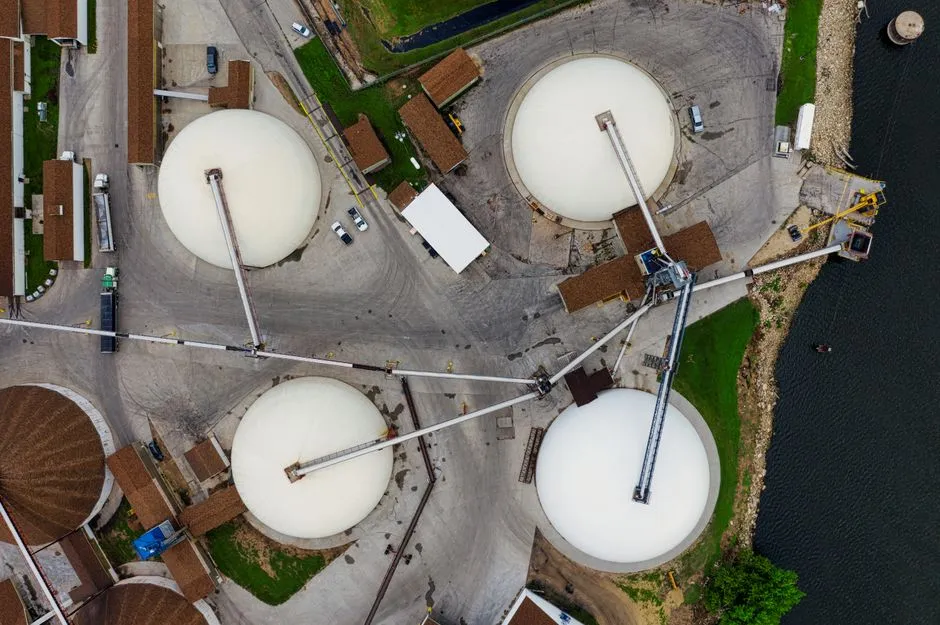
The footprint math is more forgiving than most DAF brochures admit. A 50 m³/h package such as the DAGYEE DAF-050 occupies roughly 8.4 m × 3.6 m × 2.7 m at 55 t operating weight (per the wastewatermachinery DAF technical sheet). A comparably rated lamella clarifier sits on a similar total plot area but in a different shape: the DAF is taller and narrower, the lamella is wider and shorter. Neither unit dominates the plot; civil work and the chemical dosing skid usually cost more than the separator tank itself.
OPEX direction is where DAF gets expensive. A DAF package draws continuous power for the recycle pump (typically 5–15 kW at 50 m³/h), the saturation system, and the air compressor. The polymer dose is also higher because the floc must be engineered to attach to rising bubbles rather than settle under gravity. Lamella is mostly gravity-driven; the only continuous duty is the sludge recirculation pump, which is typically sized in the 1–3 kW range at 50 m³/h.
CAPEX direction is the opposite. At the same flow, a DAF package is typically 1.2–1.6× the cost of a lamella clarifier package because of the saturator skid, recycle pump, skimmer mechanism, and PLC controls. The offset is downstream: a properly running DAF produces a thicker float (3–6% dry solids) and a more stable effluent, which reduces downstream chemical consumption and hauled-sludge costs over a 3–5 year window. The arithmetic only closes for the operator that pairs either separator with a properly sized automatic chemical dosing system, because both technologies depend on consistent coagulant and polymer feed to hit the 40 CFR 437 daily-maximum envelope.
Integrating DAF or Clarifier With the Rest of the Treatment Train
Separator choice is one decision in a multi-stage system, and treating it as the whole system is the most common 2026 failure mode in 40 CFR Part 437 compliance. Downstream of the chosen separator, most ore mining and mineral processing sites still need pH adjustment, metal precipitation (lime or caustic plus sulfide or hydroxide for tighter metals targets), and frequently a multimedia filter or a microfiltration polish to lock the daily-maximum envelope.
Sludge handling is the second decision that has to be made on day one. DAF float and lamella underflow both benefit from a plate and frame filter press to reach 20–30% dry solids before disposal; the sludge is typically classified as non-hazardous when properly conditioned, which is the difference between a 3% solids slurry that costs $80–$120 per cubic yard to haul and a 25% solids cake that costs $25–$40. That gap is the single largest line item on the OPEX side for a Hayti operation, and it is decided by the dewatering press, not by the separator.
Digital controls are now standard in 2026. A PLC-based DAF or lamella with VFD-driven sludge pumps and chemical dosing is a de facto requirement for any operator that wants to demonstrate real-time compliance with 40 CFR Part 437 daily-maximum limits, because the EPA's electronic reporting rule and the state-level discharge monitoring reports both expect continuous data rather than grab samples. The rest of this article answers the specific Hayti-context questions that operators ask most when they are about to sign a purchase order.
Frequently Asked Questions
Which is better for oil and TSS together in a Hayti mining plant?
DAF. A dissolved air flotation unit removes free and emulsified oil in the same cell where it achieves up to 95–97% TSS removal (per H2Flow and wastewatermachinery published data), which is why DAF is the default choice for streams carrying oil sheen, FOG, or metal-bearing colloids.
Does a lamella clarifier meet 40 CFR 437 daily-maximum TSS limits on its own?
Rarely. A lamella running at 20–40 m³/m²/h on a 50 m³/h design typically produces an effluent in the 30–80 mg/L TSS range, which can be inside the daily-maximum envelope on a good day and outside on a flow-spike day. Most 40 CFR Part 437 sites pair the lamella with a downstream DAF or multimedia filter to lock the daily-maximum number.
What flow range suits a skid DAF?
For pilot and small flows, 5–15 m³/h on the H2Flow Alpha 5 pilot skid or containerized Alpha 10. For production, the H2Flow Delta series covers 5–180 m³/h on a single skid, the Gamma series covers 225–600 m³/h, and the Sigma series covers 500–1,000 m³/h for the largest mineral processing sites.
Is DAF worth the higher capex over a lamella?
Usually yes when the feed is variable, oily, or colloidal; usually no when the feed is a steady dense mineral slurry at a known flow, because the lamella achieves 20–40 m³/m²/h loading at roughly 60–80% of the DAF capex. The economic crossover is the hybrid lamella-primary + DAF-polish configuration, which most 2026 EPCs now specify for 40 CFR Part 437 duty.
Do I need a pilot test before committing?
Yes. H2Flow offers the Alpha 5 pilot skid at up to 15 m³/h, and Clearwater/SigmaDAF runs bench-scale trials, so a Hayti operator can validate TSS, metals, and FOG removal on actual feedwater before signing a full-scale purchase order. The pilot cost is typically recovered in avoided oversizing on the saturator or plate pack.