
The Salt Lake City Pretreatment Stack That Governs a Plastics or Rubber Discharge
Plastics and rubber plants near Salt Lake City must meet federal categorical pretreatment standards — 40 CFR 433 for rubber manufacturing and 40 CFR 463 for plastics — and the City of Salt Lake's industrial pretreatment program under 40 CFR Part 403, Utah Administrative Code R317-8-8, and SLC Ordinance Chapters 17.32–17.69. Compliance is enforced by the Salt Lake City Water Reclamation Facility through a Commercial and Industrial User Questionnaire, a wastewater discharge permit, and local discharge limits tied to the Great Salt Lake's Technology-based Phosphorus Effluent Limits (per slc.gov/utilities/wastewater-pretreatment/).
The hierarchy binds a facility in five layers. The federal Clean Water Act authorizes EPA to set categorical pretreatment standards under 40 CFR Part 403, and 40 CFR 433 (rubber) and 40 CFR 463 (plastics) are two of those categorical rules. Utah then implements that authority through UAC R317-8-8, which is the state-side basis for local limits. Salt Lake City layers local enforcement on top through Ordinance Chapters 17.32, 17.36, 17.52, 17.68, and 17.69, and the Water Reclamation Facility issues a site-specific permit that may be more restrictive than the federal categorical standard but never less restrictive (per slc.gov).
The City's pretreatment program is administered by the Water Reclamation Facility at 2020 North Redwood Road, Salt Lake City, UT 84116. The regulatory contact is Terrence Price, Regulatory Compliance Manager, 801-799-4041 (per slc.gov). A categorical discharger is one whose activity is named in 40 CFR 433 or 40 CFR 463 — meaning those numeric limits apply whether or not the local POTW is currently sampling them. The first piece of equipment on a compliant treatment train is a rotary mechanical bar screen at the headworks to keep pellets, regrind, lint, and rags from fouling downstream unit operations.
What Plastics Plants Actually Discharge: 40 CFR 463 Pollutants to Watch
40 CFR 463 divides plastics manufacturing into four subcategories — contact cooling and contact process water, finishing, plastisol coating, and latex — and each subcategory has its own daily-maximum and monthly-average effluent limits for BOD, TSS, pH, oil & grease, COD, and total toxic organics (TTO). The TTO list is what catches most compliance managers off guard, because it is a 110-compound scan against EPA's priority pollutant list regardless of whether your lab has ever measured those compounds (per 40 CFR 463.16–463.25).
The specific organics a Salt Lake City facility should expect to see on its scan include vinyl chloride from PVC operations, styrene from polyester and polystyrene, acrylonitrile from ABS, and the solvents methylene chloride, toluene, and ethylbenzene from cleaning and coating lines. These reach the drain through reactor washwater, off-spec product recovery, floor cleaning, plastisol-coating line rinses, and latex-resin equipment washes. For exact subcategory-specific daily maximum and monthly average values, the controlling reference is the 40 CFR 463 tables as published on eCFR, not a vendor summary.
The compliance implication is that a process engineer needs to inventory every process stream against the relevant subcategory before selecting treatment technology, because the regulated parameter set varies by subcategory. A finishing line sees a different effluent profile than a contact-cooling line, and mixing them in a single equalization basin can change which subcategory limits apply.
Rubber Manufacturing Limits Under 40 CFR 433 and Why Zinc Drives the Design
Federal categorical pretreatment standards for rubber manufacturing under 40 CFR 433 establish the numeric limits a discharging plant must meet. The rule's subcategory tables list daily maximum values for TSS at 300 mg/L, oil & grease at 100 mg/L, lead at 0.6 mg/L, and zinc at 1.0 mg/L (per 40 CFR 433 tables; consult eCFR for the full subcategory matrix). These are the values that almost always dictate the design of a rubber plant's pretreatment train, because they are tighter than most local POTW heavy-metal limits and they are not relaxed by dilution.
Zinc and lead control the design because they originate in the process, not in housekeeping. Tire-cord brass plating baths are a continuous source of copper, zinc, and tin through rinse drag-out. Zinc oxide is the dominant vulcanization activator in tire and mechanical-goods compounds, and older lines still use lead-based stabilizers and lead-cured stocks. Batch dumps from compound mixers, extruder purges, and cleaning operations carry these metals into the wastewater at concentrations that will exceed 1.0 mg/L zinc within minutes of upset.
Because the federal categorical metals limits are independent of — and stricter than — the local POTW's general heavy-metal limits, the industrial user cannot dilute to comply. A 40 CFR 433 facility must install chemical precipitation for zinc and lead (typically hydroxide precipitation at pH 9–10 for zinc, pH 10–11 for lead), and the pH control loop is the single most important design parameter. A PLC-controlled automatic chemical dosing skid is what makes that loop reliable across batch and shift changes.
| Parameter | 40 CFR 433 Daily Max | Typical Source Stream | Treatment Unit Operation |
|---|---|---|---|
| TSS | 300 mg/L | Compound dust, carbon black, latex coagulation | DAF, settling, filtration |
| Oil & Grease | 100 mg/L | Process oils, release agents, extender oils | DAF with chemical conditioning |
| Lead | 0.6 mg/L | Lead stabilizers, brass plating rinse | Hydroxide precipitation at pH 10–11 |
| Zinc | 1.0 mg/L | ZnO activator, brass plating rinse | Hydroxide precipitation at pH 9–10 |
The Treatment Train That Actually Meets These Limits in 2026
A compliant pretreatment train for a 40 CFR 433 or 40 CFR 463 discharger in the SLC service area runs in six sequential unit operations. Skipping one of them either costs compliance margin or increases operating risk. The first step is screening, typically a rotary mechanical bar screen sized to capture pellets, regrind, lint, and rags before they reach pumps and DAF equipment, where they would wrap and foul.
Step two is equalization and neutralization. Batch dumps and shift-change cleanouts produce pH and flow spikes that no downstream chemical or biological system can absorb without upset. A 24-hour equalization basin with mechanical mixing and pH adjustment is the cheapest insurance in a categorical compliance program. Step three is dissolved air flotation for free and emulsified oil, FOG, and suspended solids carryover. DAF micro-bubble technology routinely hits 90–95% oil & grease removal and is well-matched to the 4–300 m³/h capacity range that a typical plastics or rubber plant occupies.
Step four is chemical conditioning. An automatic chemical dosing skid delivers coagulant (typically ferric chloride or alum), flocculant (anionic polyacrylamide), and pH-adjustment reagents (NaOH or lime for metals precipitation, H2SO4 for high-pH streams). The dosing setpoints must be tied to influent flow and to a pH probe in the precipitation reactor, because zinc and lead solubilities are sharply pH-dependent. Step five is biological treatment. Conventional activated sludge handles most of the COD and BOD, but an MBR membrane bioreactor is favored when a plant must also meet tightened effluent criteria — phosphorus, residual COD, or low TSS — on a small footprint. MBRs in the 10–2,000 m³/day range are a standard packaged configuration for a 5–20 m³/h facility. Step six is sludge handling with a plate-and-frame filter press to produce a dry cake for offsite disposal; this is a compliance-adjacent need rather than a discharge requirement, but it determines whether the rest of the train is operationally sustainable.
| Step | Unit Operation | Target Pollutants | Typical Removal / Performance |
|---|---|---|---|
| 1 | Rotary bar screen | Pellets, rags, lint | >90% gross solids capture |
| 2 | Equalization / neutralization | pH swings, shock loads | pH 6–9 stabilization, 24-h dampening |
| 3 | DAF | O&G, TSS, FOG | 90–95% O&G, 70–90% TSS |
| 4 | Chemical precipitation + dosing | Zn, Pb, residual TSS | Zn <1 mg/L, Pb <0.6 mg/L at design pH |
| 5 | MBR or activated sludge | COD, BOD, residual organics | COD <100 mg/L, BOD <10 mg/L (MBR) |
| 6 | Filter press dewatering | Waste sludge volume | Cake 25–35% DS |
How the Great Salt Lake Nutrient Story Affects Your Discharge Permit
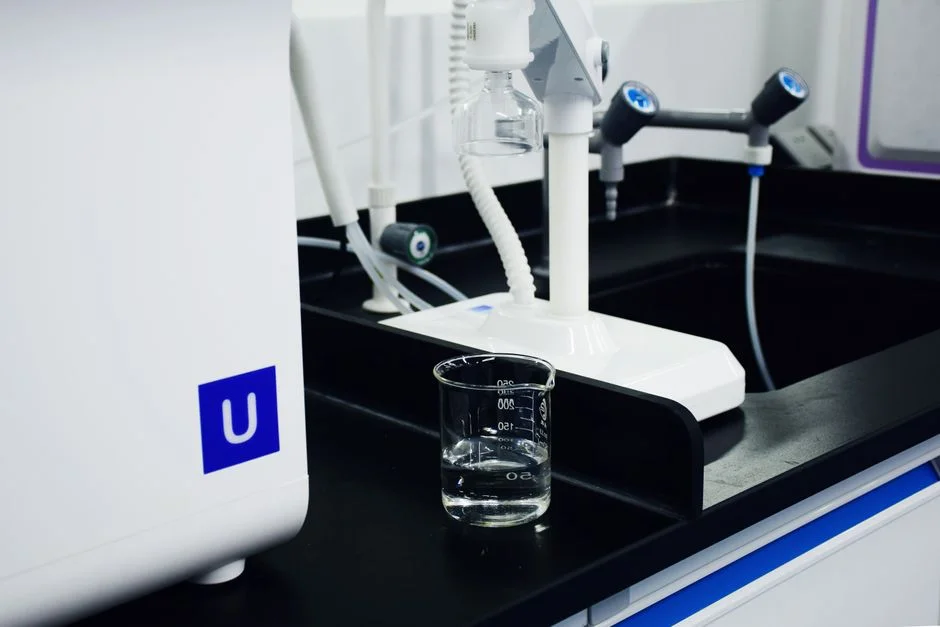
Utah's Technology-based Phosphorus Effluent Limits (TBPELs) are the macro-level driver that is tightening local discharge limits across the Wasatch Front. North Davis Sewer District treats up to 34 MGD and, rather than build a $500–600 million replacement plant to meet TBPELs, invested approximately $55 million in a 6-mile, 63-inch HDPE pipeline that redirects treated effluent from Farmington Bay to Gilbert Bay (per WWDMag). The pipeline was hydraulically designed for 28, 34, and 60 MGD future flows, sized for the next 30 years of regional growth.
For an SLC plastics or rubber discharger, the TBPEL story matters because the receiving POTW must lower its nutrient load to the lake, and it will pass that pressure down through revised local limits. Even if the categorical 40 CFR 433 or 40 CFR 463 limits you are measured against do not change, your site-specific permit will tighten for total phosphorus, ammonia, and sometimes nitrate. Pretreatment enforcement — including more frequent self-monitoring, lower local limits, and stricter slug-control plans — is a downstream consequence of the GSL pressure on every POTW in the watershed.
Permitting Steps: From CIUQ to Active Discharge in the SLC Service Area
The sequence from a greenfield or retrofit plastics or rubber plant to an active, compliant discharge in the SLC service area is four steps. Step one: submit the Commercial and Industrial User Questionnaire (CIUQ) to the SLC pretreatment program. The CIUQ is required of any industry or manufacturing facility that discharges, or has the potential to discharge, non-domestic wastewater into the sanitary sewer (per slc.gov).
Step two: if the CIUQ flags non-domestic wastewater, prepare a wastewater discharge permit application. The City will review the process description, pollutant characterization, and proposed pretreatment, and will issue site-specific numerical limits in the permit. These limits are tied to the categorical standard (40 CFR 433 or 40 CFR 463) and to any local limit that is more stringent. Step three: install pretreatment, commission sampling, and start self-monitoring. The permit will specify monitoring frequency and parameters, typically BOD, TSS, oil & grease, pH, flow, plus any 40 CFR 433 or 40 CFR 463 toxic pollutants identified in the application. Step four: report and renew. Annual reporting is standard POTW practice in Utah, with the permit issued on a multi-year cycle.
Capital and Operating Cost Snapshot for a 2026 Pretreatment Retrofit
A small-to-mid plastics or rubber plant generating 5–20 m³/h fits inside the standard packaged DAF + chemical dosing + MBR product range, with a dissolved air flotation system sized within its 4–300 m³/h catalog range and an MBR membrane bioreactor sized within its 10–2,000 m³/day range. A packaged DAF plus dosing skid is the lower-capex, faster-install option with moderate effluent quality; a full MBR carries higher capex but a smaller footprint and near-reuse effluent quality, which is the right answer when the receiving POTW's local limits are tightening on phosphorus or residual COD.
The decision between the two paths is mostly about how much margin you want against future permit tightening. If you have a 10-year permit and no near-term expectation of a TBPEL-related local-limit revision, the packaged DAF + dosing skid is the economic choice. If you are adjacent to a watershed under GSL nutrient pressure or anticipate growth that pushes flow into the next permit cycle, the MBR's smaller footprint and tighter effluent are the cheaper insurance. Before sizing either, run a jar test or on-site pilot with your actual wastewater, because zinc and lead precipitation chemistry varies sharply with pH and with the presence of complexing agents like ammonia, EDTA, or citrate. For a side-by-side economic framing, see our DAF versus oil-water separator cost comparison; for a parallel pretreatment retrofit example in a different industry, the industrial NPDES pretreatment guide walks through the same permit-to-commissioning sequence.
Frequently Asked Questions
What federal categorical standards apply to a plastics or rubber plant in Salt Lake City?
Plastics manufacturing is regulated under 40 CFR 463, with subcategory-specific limits for contact cooling, finishing, plastisol coating, and latex operations. Rubber manufacturing is regulated under 40 CFR 433, with limits that include TSS 300 mg/L, oil & grease 100 mg/L, lead 0.6 mg/L, and zinc 1.0 mg/L as daily maximums (per 40 CFR 433 tables). Both apply on top of 40 CFR Part 403 and SLC Ordinance Chapters 17.32–17.69.
Who do I contact at Salt Lake City to start the pretreatment permitting process?
Contact Terrence Price, Regulatory Compliance Manager at the Salt Lake City Water Reclamation Facility, 801-799-4041, 2020 North Redwood Road, Salt Lake City, UT 84116 (per slc.gov). The first step is submitting a Commercial and Industrial User Questionnaire (CIUQ); the second is applying for a wastewater discharge permit if the CIUQ flags non-domestic wastewater.
Why is the Great Salt Lake nutrient story changing local discharge permits?
Utah implemented Technology-based Phosphorus Effluent Limits, and POTWs like North Davis Sewer District (which treats up to 34 MGD) had to invest in either new plant capacity or outfall relocation. The NDSD chose a 6-mile HDPE pipeline to Gilbert Bay for approximately $55 million, and the receiving POTWs across the Wasatch Front are passing tightening nutrient requirements down through revised local limits (per WWDMag). Even a categorical 40 CFR 433 or 40 CFR 463 discharger will see site-specific permit tightening on phosphorus and ammonia.