The three rules a Coralville fab has to clear before sewer discharge
Three overlapping rules govern every discharge from a semiconductor fab in the Coralville/Iowa City corridor to the Iowa City POTW, and the strictest of the three is the only one that matters at the discharge point. The federal anchor is the EPA Industrial Pretreatment Program at 40 CFR Part 403, which establishes the categorical framework at 40 CFR Parts 405–471 (per EPA 40 CFR 403.6) and sets the general duty to prevent pass-through, interference, and sludge contamination. Layered on top is 40 CFR Part 413, the semiconductor categorical standard with its PSES (existing sources) and PSNS (new sources) effluent ceilings. Layered above both is the Iowa City POTW Sewer Use Ordinance, enforced under Iowa DNR NPDES delegation, which can — and routinely does — impose limits tighter than the categorical floor when the receiving plant's headworks, digesters, or the Iowa River watershed require it (per 40 CFR 403.5 prohibited discharge standards and 40 CFR 403.3(j) Categorical Industrial User definition).
For a Coralville fab in particular, the receiving POTW is the Iowa City Water Pollution Control Facility, which takes flow from the South Branch and main-stem Iowa River drainage. A categorical floor that passes at a fab in Austin or Hillsboro can still fail at Iowa City, because the Iowa River's cold-climate temperature swing from near 0°C in January to >25°C in August changes headworks biological activity and grease/solids settling — a variable the categorical ceiling does not address. The categorical floor is rarely the binding ceiling; the local limits and headworks tolerance almost always undercut it. The 40 CFR Part 403 framework is the legal mechanism that makes compliance with those tighter local ceilings enforceable through Iowa City POTW-issued permits (for a parallel federal categorical walkthrough on a different receiving POTW, see this parallel Snoqualmie-area pretreatment walkthrough).
Any "Categorical Industrial User" under 40 CFR 403.3(j) — which includes any semiconductor fab subject to 40 CFR Part 413 — must obtain a full Iowa City POTW discharge permit regardless of discharge volume. Non-significant users discharging less than 5,000 gpd still have to comply with the receiving POTW's instantaneous limits, but they avoid the full IPP permit and the monthly DMR cycle. For a small Coralville-area research fab or a University of Iowa satellite test line, that 5,000 gpd threshold is the line between a single application form and a full Categorical Industrial User permit with slug-control plan, baseline monitoring report, and 90-day compliance report. The table below maps the three layers to their source and to what each layer actually controls.
| Layer | Authority | What it sets | Document / reference |
|---|---|---|---|
| 1. Federal categorical | EPA | Categorical Industrial User framework; semiconductor PSES/PSNS ceilings | 40 CFR Part 403; 40 CFR Part 413 |
| 2. Iowa state implementation | Iowa DNR (NPDES delegation) | State-level IPP authority, enforcement, IU designation | Iowa Administrative Code 567-62; NPDES delegation |
| 3. Local ceiling (binding) | Iowa City POTW | Local limits stricter than 40 CFR Part 413 when headworks, digesters, or Iowa River watershed require | Iowa City Sewer Use Ordinance; local-limits letter |
| Non-significant user path | EPA / Iowa City POTW | Exempts from full IPP and monthly DMR below 5,000 gpd; still bound by instantaneous limits | 40 CFR 403.3(v) |
Binding parameter envelope at the discharge point
Translating the federal and state framework into a wall-pinned engineering reference, the binding limits a Coralville-area fab has to hit at the discharge point are set by the Iowa City POTW's local-limits document, the prohibited discharge standards at 40 CFR 403.5, and Iowa Administrative Code 567-62. The parameter set below is the working envelope for a Categorical Industrial User fab; non-significant users below 5,000 gpd comply only with the instantaneous columns (per Iowa City POTW local-limits letter and 40 CFR 403.5).
| Parameter | Limit type | Typical engineering range / ceiling | Basis |
|---|---|---|---|
| pH | Instantaneous, any grab | 5.0–10.0; daily average near 7 | Iowa City Sewer Use Ordinance; 40 CFR 403.5 |
| Fluoride | Daily-max mg/L + lb/day mass | Site-specific mg/L target; mass allocation per local-limits document | Iowa City POTW local-limits letter |
| Total metals (Cu, Ni, Cr, Pb, Ag) | mg/L daily-max + lb/day mass allocation | lb/day set at one standard deviation of plant average flow | Mass allocation procedure, local-limits letter |
| Temperature | Instantaneous | Closed-cup ≥140°F cap; headworks cap typically 104°F (40°C) | 40 CFR 403.5; headworks tolerance |
| TMAH + NH₃-N (developer stream) | Daily-max | ~50 mg/L combined after biodegradation | Iowa City POTW ammonia/all-nitrogen cap |
| Oil & grease / FOG | Daily-max | ≤100 mg/L; separator plan POTW-approved | 40 CFR 403.5(b) |
Three engineering consequences follow from this table. First, mass-based metals limits are calculated in lb/day at one standard deviation of the receiving plant's average flow — this is a design-day calculation, not an annual-average calculation, and it is the number the train has to hold on the worst shift, not on a 12-month rolling mean. Second, the 140°F closed-cup cap and the 104°F headworks cap force any elevated-temperature stream to be tempered before the sewer, and any process that wants to feed a heat exchanger upstream of discharge needs that exchanger sized against the 40°C ceiling, not the 65°C ceiling. Third, the categorical semiconductor user always needs a full Iowa City POTW permit — categorical status is the trigger, not discharge volume (per 40 CFR 403.3(j) and the Iowa City POTW categorical-discharger framework). Coralville-area cold winter influent may also require heating in the equalization basin to keep headworks biological activity in range — an operating-cost line item that does not exist in warm-climate fabs.
Why three-stream segregation is a piping decision, not a chemistry decision
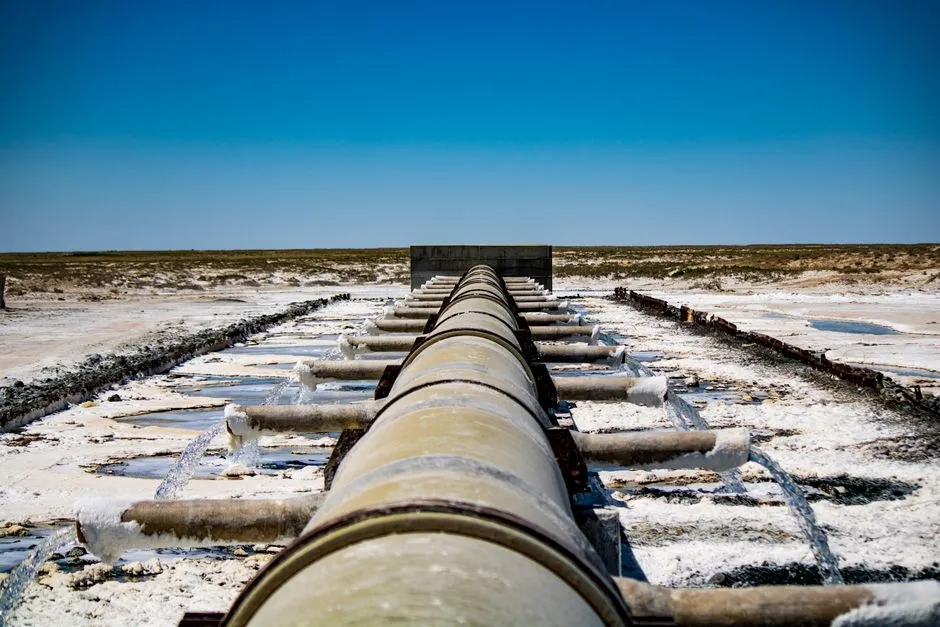
Every pretreatment decision at a Coralville fab traces back to which drain is being treated and what the binding parameter is for that drain. The three-stream map below is the one Samsung Austin has operated since 1997 and the one that drives segregation on the P&ID — and the P&ID decision is almost impossible to retrofit cheaply on a brownfield (per Samsung Austin case study, GWI Magazine, 2020).
| Stream | Source drains | Key binding parameter | Treatment window |
|---|---|---|---|
| Fluoride | Wet-etch, HF-last cleans | F⁻; site-specific mg/L target | pH 6–8; CaF₂ precipitation (Ksp ≈ 3.9 × 10⁻¹¹) |
| Copper / metals | CMP, plating, post-CMP cleans | Cu, Ni, Co, Pb, Ag; ≤1–3 mg/L individual; ≤5 mg/L combined | pH 9–10.5; metal hydroxide precipitation |
| Developer / TMAH | Lithography developer drains | 100–200 mg/L TMAH site-dependent; TMAH + NH₃-N ~50 mg/L after biodegradation | Separate temperature/pH window; biological TMAH degradation |
| Utility floor / FOG | Coatings, scrubber blowdown, floor drains | Screen protection; FOG 100 mg/L cap | Headworks screening; FOG separation |
The developer stream is the one that breaks simple "combine everything" train designs. TMAH biodegrades fastest outside the fluoride precipitation pH window, and its ammonia byproduct drives an NH₃-N ceiling near 50 mg/L — a separate number on the Iowa City POTW permit from the TMAH number itself. Combining the developer drain with the etch drain forces the operator to dose toward a compromise pH and accept higher reagent use; keeping it segregated lets the developer run on its own temperature/pH schedule and lets the etch and metals streams run on the windows where CaF₂ and metal hydroxides actually precipitate.
Source segregation is a piping decision made at fab design time — fluoride, CMP/TMAH, and utility-floor streams stay on separate headers from the wet bench back to the pretreatment building, and the P&ID shows it long before any chemistry skid is selected. A brownfield retrofit that has to break combined headers is one of the most expensive capex lines on the project, so this scope item has to land in the front-end engineering package, not in construction change orders.
The four-stage treatment train for a Coralville fab
On the headworks, a rotary mechanical bar screen for fab headworks at 2–6 mm bar spacing, sized to design-day peak flow with auto-cleaning and brush discharge, is the highest-ROI line item on the train. The frame for it is low-capex / high-opex-protection: particulates, hair, and lint from utility-floor drains are the leading cause of dosing-pump diaphragm failure and DAF recycle eductor clogging, and a screen that costs a fraction of one dosing-pump rebuild keeps the rest of the train online. Pull design-day, not average-day, loads when sizing this screen — batch discharges from wet-etch tools and post-CMP cleaning can swing instantaneous fluoride and solids by 3–5× over the daily average (HydropureWater field data, 2026).
Calcium-driven precipitation is the workhorse of fab fluoride removal, and the reason is thermodynamic. CaCl₂ (or lime, Ca(OH)₂) dosed into the fluoride stream at pH 6–8 drives the reaction F⁻ + Ca²⁺ → CaF₂↓, and the Ksp of CaF₂ is approximately 3.9 × 10⁻¹¹ — a small enough solubility product that single-digit mg/L fluoride effluent is thermodynamically reachable in a well-mixed, well-controlled reactor. The metal-bearing stream goes to pH 9–10.5 with NaOH or lime, where Cu, Ni, Co, Cr(III), Pb, and Ag all reach their minimum solubilities as hydroxides. The two streams are then recombined into a single equalization basin ahead of Stage 3.
Equipment-level execution is where most fab pretreatment trains actually win or lose. A PLC-controlled chemical dosing skid with redundant pH and fluoride ISE holds reagent addition within ±5% of setpoint, which is the difference between meeting a 15 mg/L fluoride cap and oscillating around it. Specify at least 10:1 turndown on the metering pumps, and require the skid to accept both 4–20 mA flow-pacing and pH/ISE feedback so the same skid can track a rinse-water spike without overdosing caustic. Size the skid on peak fluoride and metal mass load in kg/day, not on average flow, because peak-day loads are what the dose-control loop actually has to hold. The long-term reliability failure mode on this stage is the pH probe itself, not the chemistry — probe drift, coating, and reference-junction fouling are the most common reasons a Stage 2 skid starts to pass a higher fluoride number than the setpoint would predict; specify a defined calibration cadence as a maintenance scope item (see the broader 2026 heavy metal discharge limits comparison for the pH window rationale).
The solids/liquid separation decision in fab pretreatment is driven by three numbers an engineer already has: peak flow (m³/h), influent TSS after coagulation, and available bay footprint. A useful side-by-side treatment of this trade space on a different industrial wastewater is the DAF vs lamella clarifier decision guide. For a Coralville fab, the head-to-head below is the basis for picking the right device, not a default to whichever the EPC is most comfortable with.
| Criterion | DAF | Lamella clarifier |
|---|---|---|
| Best-fit stream | High float loading; oily; fluoride-rich | Moderate flow; denser metal hydroxide solids |
| Footprint | Larger bay; high float scraping | Tight bay; inclined plates |
| Overflow TSS (well-tuned upstream) | 30–60 mg/L SUO | 30–60 mg/L SUO |
| Throughput guidance | High m³/h with low-density load | Moderate m³/h with denser solids |
For chromium-bearing streams (third-generation fab work), a dedicated Cr(VI) reduction and precipitation step must be added upstream of whichever Stage 3 device is selected — that is a scope item on the P&ID, not a footnote. Both devices routinely deliver overflow TSS below the 30–60 mg/L SUO range when the upstream Stage 2 chemistry is correct — neither device buys compliance on its own. The DAF system for high-flow fluoride and metal-laden streams is the right answer when float loading and oily loading are high; the lamella clarifier wins when flows are moderate, solids are denser, and the building bay is tight.
Polishing is what separates a compliance-only train from a water-stewardship train, and the same four-stage train that hits the Iowa City POTW limits also enables reuse. The decision rule is short: pick ion exchange when the polishing duty is primarily trace metals and hardness, throughput is ≤50 m³/h, and the operator is comfortable with regeneration cycles. Pick RO when the fab has a documented reuse target of ≥50% of pretreatment effluent and an industrial-grade reject-stream management plan. An industrial RO polishing system at 75–95% recovery per pass drops TDS plus residual fluoride to levels suitable for non-critical rinsing, cooling-tower makeup, or scrubber feed. RO permeate that is not reused is sewered well below any applicable limit, so there is no compliance penalty for sending clean water to the POTW. For a deeper look at ZLD-adjacent design and the front-end chemistry that makes brine recovery work, see this third-generation semiconductor wastewater treatment engineering specs reference.
Cr(VI) reduction and the back-end economics that close the capex case
For chromium-bearing streams, a dedicated Cr(VI) reduction step — typically SO₂ or NaHSO₃ at pH ~2 to drive Cr(VI) → Cr(III) — must be added upstream of Stage 3 separation. This is a P&ID scope item, not a footnote, and the reactor sizing follows the same peak-mass-load logic used for the fluoride and metals skids.
The solids removed in Stage 3 — CaF₂, metal hydroxides, and CMP residue — report as a thickened sludge typically at 1–4% dry solids, and a plate and frame filter press for CaF2 and metal hydroxide cake sized from 1 m² (pilot) to 500 m² (full fab, multi-press line) dewateres that sludge to a 25–35% dry-solids cake for off-site disposal. Filtrate returns to the head of the train and is not lost to the mass balance. The cost swing on the back end is disposal routing: if the upstream chemistry produces a sludge that retains pollutants through EPA's TCLP (Toxicity Characteristic Leaching Procedure, 40 CFR 261.24), the cake can be disposed of as non-hazardous waste at a fraction of hazardous-waste rates. Polymer flocs often fail TCLP and re-leach under dewatering pressure; bentonite-based separating chemistries are engineered to retain pollutants through TCLP and produce an easily dewatered cake.
Back-end cost swing: the 2025-09 industry benchmark that hauling liquid hazardous waste off-site runs 5–10× the cost per cubic meter of sewer discharge is the number that closes the disposal line for a Coralville capex request. The same train that achieves compliance also closes the disposal cost line — and that multiplier is what the EHS manager brings to plant leadership when defending the project. The Samsung Austin copper IX retrofit eliminated 1.5M lb of solids, reduced chemical treatment by 2M lb, and cut system footprint by 65% — a worked benchmark directly applicable to a Coralville capex defense.
| Back-end cost line | Typical unit cost basis | Multiplier vs sewer discharge |
|---|---|---|
| Sewer compliant effluent | $/m³; Iowa City POTW user charge | 1× (baseline) |
| Liquid hazardous waste haul | $/m³; Iowa-licensed TSDF | 5–10× (2025-09 industry benchmark) |
| Samsung Austin Cu IX retrofit (worked benchmark) | 1.5M lb solids eliminated; 2M lb chemical reduced; 65% footprint cut | Operating-cost reduction driver |
Frequently Asked Questions
Why is the Iowa City POTW local limit the binding ceiling rather than the federal 40 CFR Part 413 categorical floor?
Under 40 CFR Part 403, the EPA's Industrial Pretreatment Program framework lets the controlling POTW set local limits stricter than the categorical floor when its headworks, digesters, or receiving stream require it. For Coralville-area fabs, the receiving plant is the Iowa City Water Pollution Control Facility, and cold-climate swings on the Iowa River can tighten headworks tolerance beyond the categorical ceiling. The categorical floor is rarely the binding ceiling; the local-limits letter and 40 CFR 403.5 prohibited discharge standards are.
What is the chemistry anchor for hitting a low-mg/L fluoride number before sewer discharge?
Calcium-driven precipitation as CaF₂. CaCl₂ or lime dosed at pH 6–8 drives F⁻ + Ca²⁺ → CaF₂↓, with a Ksp of approximately 3.9 × 10⁻¹¹ — small enough that single-digit mg/L fluoride effluent is thermodynamically reachable in a well-controlled reactor, paired with a fluoride ISE in the dose-control loop.
Does a small Coralville-area research fab under 5,000 gpd still need a full Categorical Industrial User permit?
No. Under 40 CFR 403.3(v), a non-significant industrial user discharging less than 5,000 gpd avoids the full IPP permit and the monthly DMR cycle, but still has to comply with the Iowa City POTW's instantaneous limits. A small University of Iowa satellite line or test fab fits this path if actual daily flow stays below the threshold.
How does the Samsung Austin copper IX retrofit translate to a Coralville capex case?
Samsung Austin's conversion of copper treatment from chemical co-precipitation to ion exchange eliminated 1.5M lb of solids, reduced chemical treatment by 2M lb, and cut system footprint by 65% (per Samsung Austin case study, GWI Magazine, 2020). Combined with the 5–10× cost multiplier between sewering compliant effluent and hauling liquid hazardous waste (2025-09 industry benchmark), the operating-cost payback is the number that turns a compliance project into a budget-approved one.