Why Texas City Chemical Plants Are Re-Engineering Pretreatment in 2026
Texas City, Galveston County, and the broader Houston Ship Channel corridor host one of the densest concentrations of petrochemical, chlor-alkali, and specialty-chemical manufacturing in the United States. The same plants that feed global plastics and fertilizer supply chains also generate high-strength wastewater — typically 800-5,000 mg/L COD, 200-1,000 mg/L TSS, 50-500 mg/L oil & grease, and TDS above 5,000 mg/L from chloride and sulfate process streams — that must be cleaned to pretreatment standards before any of it can be sewered to a local POTW (source: Bayou City Waterkeeper/EIP v. EPA complaint, 2023-04).
The compliance clock just got pulled forward. In April 2023, a 13-group coalition led by the Environmental Integrity Project and Bayou City Waterkeeper filed suit in the U.S. Ninth Circuit Court of Appeals challenging EPA's 40-year-stale effluent limitation guidelines (ELGs) for seven industry categories, including the 40 CFR 414 inorganic chemicals category that governs most Texas City plants (source: bayoucitywaterkeeper.org, 2023-04). The complaint highlights that EPA's refinery ELG dates to 1985, the plastics ELG to 1984, and the fertilizer ELG to 1986, and notes that 40 of 59 regulated industry categories are 30+ years old. EIP's parallel report "Oil's Unchecked Outfalls" found that 229 U.S. inorganic chemical plants discharged more than 2 billion lb of pollution in 2019, and that 7 of the 10 worst TDS-dumping refineries in 2021 were in Texas — with ExxonMobil Baytown at #1 (≈127 million lb of chlorides, sulfates, and other dissolved solids to the Houston Ship Channel) and Phillips 66 Sweeney also flagged (44 permit exceedances 2019-2021, 42 for cyanide, against $30,000 in penalties).
For an EHS manager specifying equipment in 2026, the practical takeaway is that technology-based limits written in the Reagan era are about to be reopened under court order, and the binding local ceiling on dissolved solids, cyanide, and trace organics will likely tighten. Specifying a 1980s-vintage DAF-plus-clarifier train now is a stranded-asset risk; designing for technology-forced tightening in the 2026 ELG effluent limitation guidelines update window is the defensible position.
The Three Compliance Layers Texas City Plants Must Hit Before Sewer Discharge
Designing to only one of the three layers is the most common — and most expensive — engineering mistake on Texas City pretreatment projects. A compliant train has to clear all three simultaneously, and the binding limit is almost always the strictest of the three at any given pollutant.
- Layer 1 — Federal categorical standards under 40 CFR 414. The Inorganic Chemicals Manufacturing Point Source Category sets technology-based daily maximum and monthly average limits across Subparts A through N for pollutants including TSS, total residual chlorine, ammonia, and the toxic pollutant list in 40 CFR 414 Appendix A. Importantly, 40 CFR 414 includes a dedicated Pretreatment Standards subpart that applies to any flow routed to a POTW rather than discharged directly to surface water (per 40 CFR 414).
- Layer 2 — Local POTW sewer-use ordinance. The City of Texas City WWTP, the City of Hitchcock, the City of La Marque, and the Houston Ship Channel-area POTWs each impose conventional pollutant ceilings — typically BOD₅ ≤ 250 mg/L, TSS ≤ 250 mg/L, oil & grease ≤ 100 mg/L, pH 5.0-10.0 — and specific metals ceilings that are frequently tighter than the federal categorical standards. Local limits are enforced through the industrial user's discharge permit.
- Layer 3 — TPDES and basin water-quality standards. The Texas Commission on Environmental Quality's TPDES Texas pretreatment program layers in whole-effluent toxicity (WET) testing, TMDL pollutant allocations, and Houston Ship Channel/Galveston Bay dissolved-oxygen and chloride criteria. For plants discharging into the Bayou watershed or the Houston Ship Channel Tidal segment, the basin-level chloride and sulfate allocations can drive the design even when the POTW headworks ceiling is met.
| Pollutant | 40 CFR 414 typical limit (pretreatment) | Typical local POTW ceiling (Texas City corridor) | Driving design parameter |
|---|---|---|---|
| TSS | ~50-150 mg/L daily max (subpart-specific) | ≤ 250 mg/L | DAF + MBR polish |
| Oil & grease | ~50-100 mg/L | ≤ 100 mg/L | DAF (primary) |
| BOD₅ | ~50-200 mg/L | ≤ 250 mg/L | Biological / MBR |
| Ammonia (as N) | ~10-30 mg/L | Site-specific, often ≤ 20 mg/L | Nitrification in MBR |
| Total residual chlorine | ≤ 1.0 mg/L (typical categorical) | ≤ 1.0 mg/L | Dechlorination or ClO₂ swap |
| TDS / chloride / sulfate | Not always numeric; narrative | Site-specific; basin TMDL can require reduction | RO (tertiary) |
| Cyanide | Listed toxic pollutant | Often ≤ 0.2-1.0 mg/L | Alkaline chlorination or biological |
| pH | 5.0-10.0 (typical) | 5.0-10.0 | Equalization + dosing |
When the federal limit is loose and the local POTW limit is tight — which is typical for chloride, sulfate, and TDS in this corridor — the engineer is effectively designing to the local ceiling plus anticipated 2026 tightening.
What Texas City Chemical Plant Wastewater Actually Looks Like
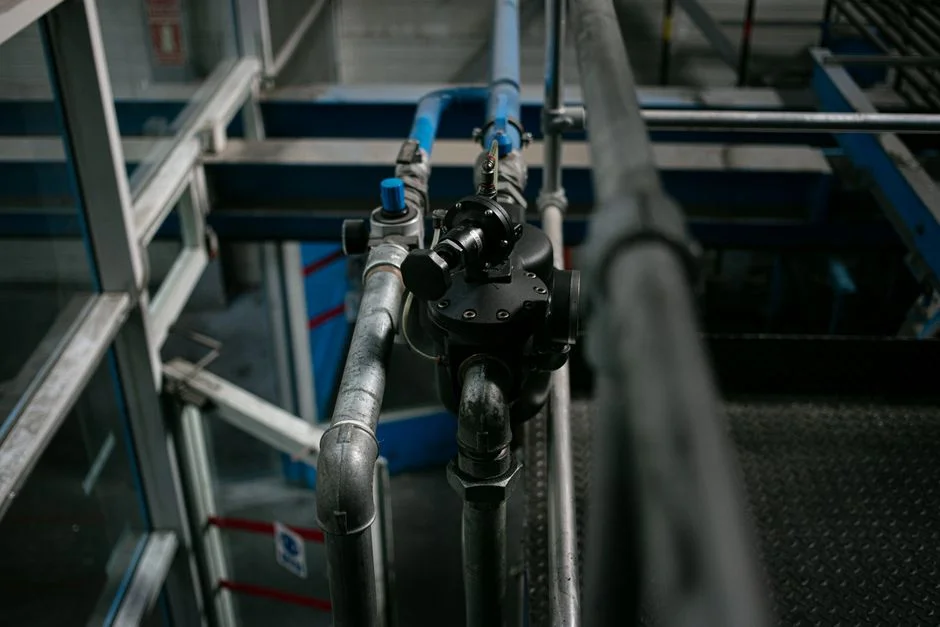
Raw wastewater at a Texas City inorganic or organic chemical plant is not a single stream — it is a blend of process condensate, equipment washwater, scrubber blowdown, and periodic stormwater ingress. Typical raw influent parameters observed in the corridor: COD 800-5,000 mg/L, BOD₅ 200-1,500 mg/L, TSS 200-1,000 mg/L, oil & grease 50-500 mg/L, total nitrogen 50-300 mg/L, chloride 500-10,000 mg/L, sulfate 200-3,000 mg/L, and pH swings of 2-11 driven by acid and alkali cleaning cycles (typical engineering range for chlor-alkali, specialty chemical, and pesticide plants).
Trace organics are routine rather than exceptional: benzene, toluene, ethylbenzene, and xylene (BTEX) from process leaks; 1,2-dichloroethane and vinyl chloride from chlorinated solvent production; and metals including mercury (cell-room blowdown), lead, and chromium from catalysts. The batch nature of specialty production means hydraulic and contaminant spikes can exceed the daily average by 3-5× during product changeovers, which is why equalization retention is sized to 12-48 hours rather than the 4-8 hours typical of refineries.
The single biggest engineering constraint is dissolved solids. Conventional biological treatment — activated sludge, sequencing batch reactors, moving-bed biofilm reactors — removes carbon and nitrogen but does not touch chloride or sulfate. The ExxonMobil Baytown ≈127 million lb of chlorides, sulfates, and other dissolved solids discharged in 2021 illustrates the regional scale of the loading that any local plant is trying to reduce (source: EIP, "Oil's Unchecked Outfalls," 2022-09, reported in Bayou City Waterkeeper complaint, 2023-04). Without a tertiary TDS reduction reverse osmosis chemical plant step, no amount of biological optimization will get a high-TDS stream below a tightened local ceiling.
The 2026 Pretreatment Train: From Influent to POTW-Ready Effluent
The pretreatment train for a Texas City chemical plant discharging to a POTW is a six-step flow. Each step is sized against the binding limit identified in the table above, not against the federal categorical standard in isolation.
- Coarse and fine screening. A rotary mechanical bar screen with 6-25 mm openings removes rags, plastics, and fibrous debris that would otherwise foul downstream pumps and membranes. Expect 5-15% TSS reduction here; the bigger value is protection of the downstream train.
- Flow and pH equalization. 12-48 hour retention with mechanical mixing plus a PLC-controlled chemical dosing skid for acid/alkali dampens batch spikes and stabilizes pH into the 6-9 range for the downstream biological stage. Without adequate equalization, no biological system downstream will hold a steady nitrification rate.
- Dissolved air flotation (DAF). The workhorse for chemical plant pretreatment, a dissolved air flotation (DAF) system with micro-bubble saturation and automatic skimming typically removes 60-90% of TSS and 85-95% of oil & grease in a single pass, and is particularly effective on the emulsified oils and metal-hydroxide flocs common in chlor-alkali and specialty chemical plants. For a deeper look at the technology choice between DAF and a lamella clarifier, see this DAF vs lamella clarifier for chemical plant wastewater guide.
- Biological treatment + MBR. An anoxic/aerobic activated-sludge basin followed by a submerged PVDF MBR membrane bioreactor system (0.1 µm nominal pore) polishes the mixed liquor to sub-1 mg/L TSS and 90-99% BOD/COD removal. Combined train effluent is typically BOD₅ < 10 mg/L, COD < 50 mg/L, TSS < 1 mg/L, ammonia < 1-5 mg/L — comfortably inside a 30 mg/L BOD ceiling. MBR is preferred over a conventional clarifier where space is tight or the discharge ceiling is strict, because the membrane decouples biomass retention from settling.
- Tertiary polishing — RO and/or ClO₂. For plants facing tightened chloride, sulfate, or TDS limits, an industrial RO system sized for 95-99% TDS rejection is now standard. RO concentrate is typically 15-25% of the feed flow and must be handled through brine concentration, crystallization, or offsite disposal. Where the binding limit is residual chlorine or microbial, an on-site ClO₂ generator has the advantage over liquid chlorine of not generating trihalomethanes at the residual level — relevant for plants whose POTW has a strict THM ceiling or whose discharge goes to a drinking-water intake watershed.
- Sludge dewatering. DAF float and MBR waste sludge are dewatered via a plate-and-frame filter press to 25-35% dry solids; cake is hauled offsite or, where the chemistry permits, recycled back to a process. For comparable equipment selection logic on a petroleum stream, see this DAF vs clarifier for Texas petroleum wastewater guide.
| Unit operation | Target pollutant(s) | Typical removal | Effluent target to next stage |
|---|---|---|---|
| Bar screen (6-25 mm) | Rags, debris | 5-15% TSS | Protect downstream pumps |
| Equalization + dosing | pH, hydraulic spikes | pH 6-9 stable | Stable feed to biology |
| DAF | Oil & grease, TSS, colloids | 60-90% TSS, 85-95% O&G | O&G < 30 mg/L, TSS < 100 mg/L |
| Anoxic/aerobic + MBR | BOD, COD, ammonia, TSS | 90-99% BOD, >95% ammonia | BOD < 10 mg/L, TSS < 1 mg/L |
| RO (brackish) | TDS, chloride, sulfate | 95-99% TDS rejection | TDS < 500 mg/L (site-specific) |
| ClO₂ or UV | Microbial, residual oxidant | 3-5 log reduction | TRC < 1.0 mg/L, fecal coliform compliant |
| Plate-and-frame press | Sludge volume | Cake 25-35% DS | Haul-off or recycle |
Selecting the Right Equipment for the Tightest 2026 Limit
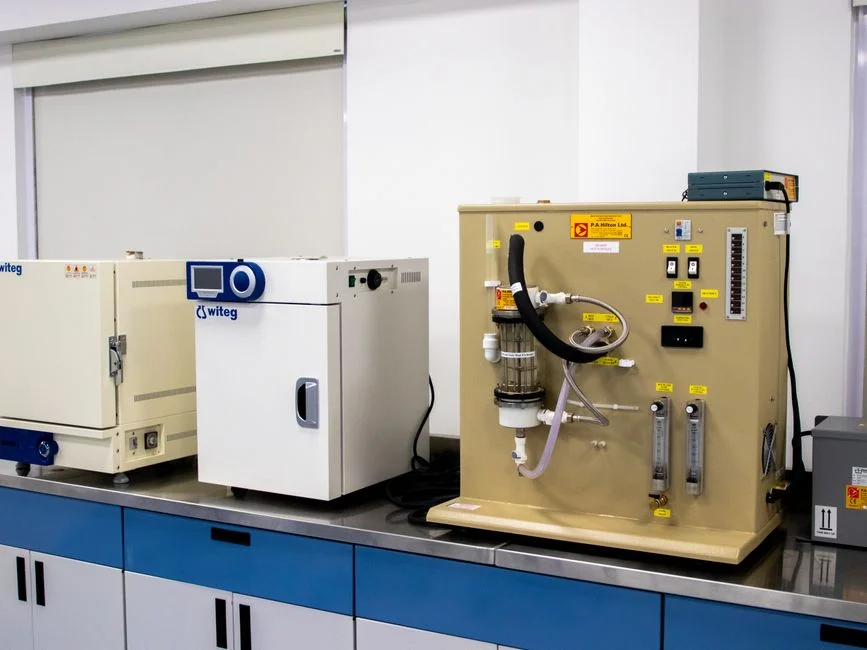
Equipment selection should be driven by the single tightest applicable ceiling, not by what the plant already owns. A practical 2026 selection framework:
- Binding limit is oil & grease or TSS only: a DAF system with optional lamella clarifier polish is usually sufficient and lowest CAPEX; expect 70-90% TSS and 85-95% oil & grease removal on a single pass. Typical sub-line CAPEX for the DAF cell and saturator only is a small fraction of the train total.
- Binding limit is BOD, COD, or ammonia: add an MBR system or a conventional activated-sludge system with a clarifier. MBR is preferred when floor space is constrained, when the discharge ceiling is below 30 mg/L BOD, or when biomass retention needs to be decoupled from settling hydraulics.
- Binding limit is TDS, chloride, or sulfate (the category that triggered the 2023 EIP lawsuit): RO becomes mandatory. Pair with a chemical softening or anti-scalant dosing skid and a concentrate management plan sized for 15-25% of RO feed. Brine disposal cost and energy recovery (energy-recovery devices on the high-pressure pump) are the dominant OPEX drivers.
- Binding limit is residual chlorine or microbial: add an on-site ClO₂ generator or UV. ClO₂ has the THM-formation advantage; UV has the chemical-handling advantage. A sizing review of the upstream BOD residual is warranted before committing to UV alone.
| Train configuration (100-500 m³/day) | Indicative 2026 CAPEX band (USD) | Typical OPEX drivers | Where it fits |
|---|---|---|---|
| Screen + EQ + DAF only | Low six figures | Polymer, sludge haul-off | O&G / TSS ceiling only |
| Screen + EQ + DAF + MBR (no RO) | Mid six figures to ~$1M | Membrane air scour, MLSS wasting | BOD / ammonia ceiling |
| Full train incl. RO + ClO₂ | $1.5M-$4M+ (capacity-dependent) | RO membrane replacement, energy, brine | TDS / chloride / sulfate ceiling |
For a comparable procurement pattern on a petroleum plant, see the parallel pretreatment compliance playbook for petroleum plants. The CAPEX band above is for the pretreatment train only — site work, instrumentation, and permitting are line items that routinely double the installed cost and should be carried separately in any 2026 budget submission to procurement (HydropureWater field data, 2026).
Frequently Asked Questions
What is 40 CFR 414 and why does it govern Texas City chemical plants?
40 CFR 414 is EPA's categorical effluent regulation for the Inorganic Chemicals Manufacturing Point Source Category. It sets technology-based daily-maximum and monthly-average limits for pollutants including TSS, total residual chlorine, ammonia, and listed toxic pollutants across Subparts A through N, and includes a dedicated Pretreatment Standards subpart that applies to flows routed to a POTW rather than discharged directly to surface water (per 40 CFR 414).
Why is the 2023 Bayou City Waterkeeper/EIP v. EPA lawsuit changing 2026 pretreatment design?
The 2023 Ninth Circuit complaint challenges EPA's failure to update ELGs and pretreatment standards last revised in the 1980s for petroleum refineries, plastics, fertilizer, pesticide, nonferrous metals, and inorganic/organic chemical manufacturers. The plaintiffs cite EPA's own estimate that 229 U.S. inorganic chemical plants discharged more than 2 billion lb of pollution in 2019, and EIP's finding that 7 of the 10 worst TDS-dumping U.S. refineries in 2021 were in Texas — making a court-mandated tightening of 40 CFR 414 and the related categories a 2026 design event (source: Bayou City Waterkeeper/EIP v. EPA, filed 2023-04).
When is reverse osmosis required for chemical plant pretreatment near Texas City?
RO becomes required when the binding limit is on a dissolved-solid parameter — typically chloride, sulfate, or total TDS — that conventional biological treatment cannot remove. In the Texas City corridor, the trigger is usually a local POTW or basin-level TMDL allocation tightening chloride/sulfate below what the raw influent already contains; an industrial RO system typically achieves 95-99% TDS rejection, with concentrate at 15-25% of feed requiring separate management.