What petroleum wastewater in Forest actually contains
Petroleum plants in the Forest, US corridor (Bedford County, VA) handle a wastewater profile that breaks into four distinct fractions, and the boundaries between them are what make the equipment choice non-obvious. Free oil separates by gravity in minutes and is the target of an upstream API gravity separator. Emulsified oil consists of droplets in the 1–20 µm range stabilized by surfactants, fuel contamination or shear; this fraction does not settle and is the single most common cause of an API separator failing its discharge sheen limit. Dissolved organics — phenols, BTEX and PAHs — pass through both API and DAF largely untouched and require a biological or advanced oxidation stage downstream. Suspended solids (rust, scale, catalyst fines, silt) settle or float depending on density and particle association with oil.
Typical refinery and bulk-terminal influent in this envelope runs TSS 100–500 mg/L, oil & grease 200–2,000 mg/L, and COD 300–1,500 mg/L (HydropureWater field data, 2026). Forest-area sites with truck-loading racks, tank bottoms and stormwater commingling frequently spike above 1,000 mg/L O&G during a rain event. Most Bedford County facilities either discharge to a regional POTW under a pretreatment permit or hold an individual NPDES permit issued under 40 CFR Part 122; either path pulls in the oil and gas extraction effluent guidelines at 40 CFR Part 435, which defines what "oil-free" means for the regulator. The practical consequence is that free oil removal is an API separator's job; the DAF-versus-clarifier choice applies to the secondary clarification step that protects whatever comes next.
DAF vs clarifier: how each technology works on oily water
A dissolved air flotation (DAF) unit saturates 30–50% of the clarified recycle stream with air at 4–6 bar, then releases it through needle valves or nozzles into the flotation tank at atmospheric pressure. The dissolved air comes out of solution as 10–100 µm microbubbles, which attach to oil droplets and suspended floc and lift them to the surface in 3–5 minutes; a mechanical skimmer then removes the float layer. Hydraulic residence in the flotation cell is typically 15–30 minutes, which is why a packaged HydropureWater DAF system (4–300 m³/h) can sit on a footprint a fraction of a clarifier's.
Selecting the right secondary separation technology hinges on these distinct mechanical differences. A gravity clarifier — conventional or lamella plate — relies on Stokes' law settling. Conventional units run at 1–3 m/h surface loading and need 1–2 hours of detention, so a 50 m³/h stream translates into a 50–100 m³ concrete or steel tank. Lamella designs pack inclined plates at 55–60° and push surface loading to 20–40 m/h, which is how a HydropureWater lamella clarifier achieves a compact footprint while still being a settling device. The benchmark that drives the petroleum recommendation is direct: DAF removes about 95% of oil and grease versus roughly 70% for a clarifier on the same oily stream (per Ecologix 2026 selection guide). DAF float is typically 3–5% dry solids and dewaters readily; clarifier underflow at 0.5–2% is watery and expensive to haul or press.
Head-to-head: DAF vs clarifier for Forest petroleum plants
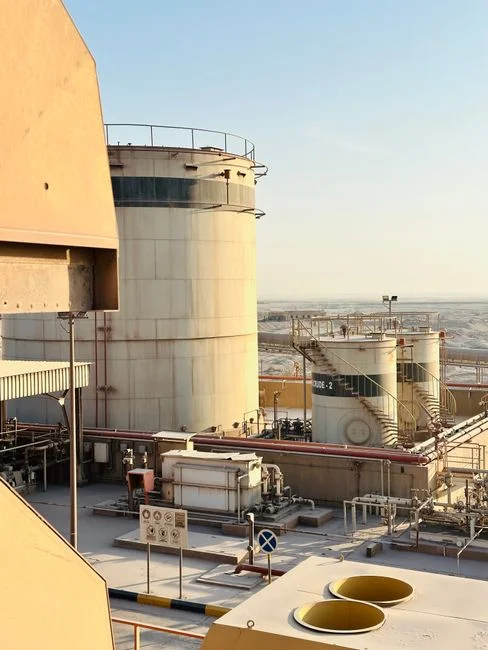
The decision matrix below compresses a bench-pilot study into a single scan. Use the rule at the bottom: if your influent O&G is above 100 mg/L or carries any emulsified oil, default to DAF. If the stream is mostly heavy settleable sand or scale and oil is already below 30 mg/L post-API, a lamella clarifier is the right polish.
| Dimension | DAF | Gravity / Lamella Clarifier |
|---|---|---|
| Oil & grease removal | ~95% (per Ecologix 2026) | ~70% (per Ecologix 2026) |
| TSS removal | ~90% | 80–90% |
| Emulsified oil handling | Strong (bubble attachment on 1–20 µm droplets) | Poor (droplets do not settle) |
| Footprint for 50 m³/h | Compact (~10–15 m²) | Large conventional / compact lamella |
| Hydraulic sensitivity | Tolerates 1.5–2× flow swings | Sensitive to shock loads |
| CAPEX band (2026) | $80,000–$350,000 installed | $40,000–$180,000 installed |
| OPEX band | Higher per m³, lower per kg oil removed | Lower per m³, higher per kg oil removed |
| Sludge consistency | Float at 3–5% DS | Underflow at 0.5–2% DS |
| Operator skill | Moderate (air system, chemistry) | Low (gravity-driven) |
Clarifiers are not a bad technology — a mining operation with heavy sediment loads can cut TSS 90% at lower cost with a clarifier (per Ecologix 2026). That is the case where clarifier wins. Petroleum oily streams are not that case: the cost saving is consumed by hauling watery underflow and by POTW surcharges on residual O&G. The DAF premium buys compliance headroom and a thicker sludge that actually dewaters.
What US rules say: 40 CFR 435, NPDES and API 421
Forest-area petroleum sites operate under a layered regulatory stack. 40 CFR Part 435 sets the federal effluent guidelines for the oil and gas extraction point source category, with subparts covering coastal, offshore, onshore and agricultural operations; refineries and bulk terminals are typically covered indirectly through state-issued limits that incorporate Part 435 numerics. The operating permit itself is an NPDES individual permit under 40 CFR Part 122, or a pretreatment authorization when discharge goes to a POTW. Either route, the local limits most Forest-area pretreatment programs enforce are roughly 100 mg/L O&G, 250 mg/L TSS, and pH 6–9 (HydropureWater field data, 2026, Bedford County/Roanoke-region POTW envelope).
Regulatory compliance dictates that equipment must meet both current discharge standards and industry best practices. API Publication 421 — "Design and Operation of Oil-Water Separators" — is the industry consensus document for the upstream API gravity separator and is what auditors expect to see cited in the basis-of-design. After API 421 removes the free oil, DAF is the polishing step that gets the rest of the system below the 100 mg/L O&G ceiling without paying for a biological stage sized for raw emulsified loads. API separator + DAF + biological/MBR polish is the train most easily defended to a state inspector; a clarifier in the same slot invites a sheen violation on the first slug load.
Practical design parameters for a Forest DAF or clarifier
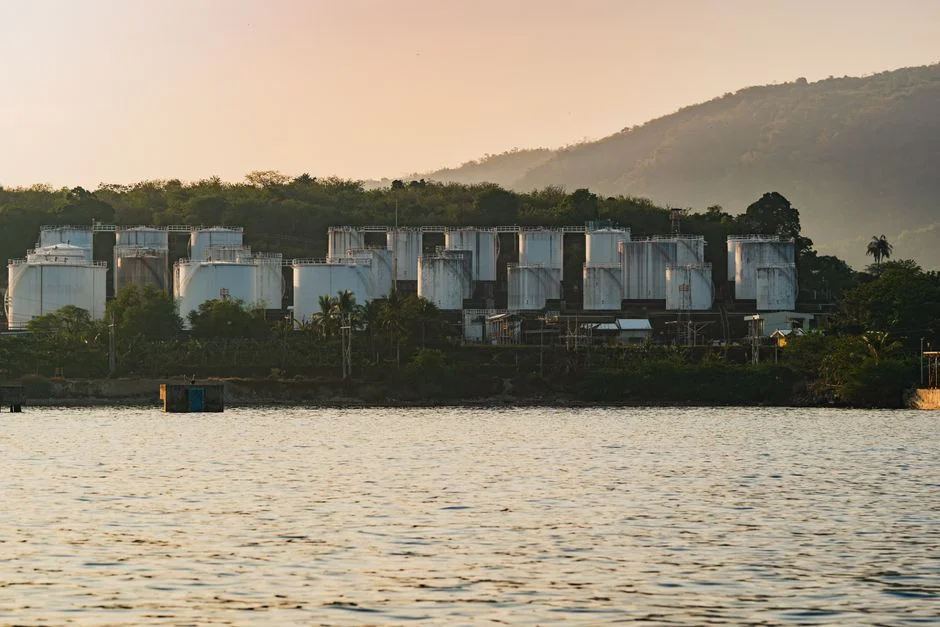
Before you call a vendor, sanity-check sizing against the parameter bands below. They are conservative 2026 industrial ranges drawn from operating data and the design references cited earlier.
| Parameter | DAF (flotation zone) | Clarifier (conventional / lamella) |
|---|---|---|
| Hydraulic / surface loading | 5–25 m³/(m²·h) on flotation zone | 1–3 m/h conventional / 20–40 m/h lamella |
| Recycle ratio | 20–50% | N/A |
| Pressurized retention | 1–3 min at 4–6 bar | N/A |
| Flotation / settling retention | 15–30 min | 1–2 h conventional / 20–30 min lamella |
| Air-to-solids ratio (A/S) | 0.005–0.060 g air / g TSS | N/A |
| Sludge withdrawal | Skimmer, 3–5% DS float | Hopper with positive rake, 0.5–2% DS |
Neither unit works without upstream conditioning. For petroleum streams, expect to inject a coagulant (alum or PAC at 50–150 mg/L) followed by an anionic polyacrylamide flocculant at 1–5 mg/L; an automated HydropureWater automatic chemical dosing system with PLC-controlled pacing keeps the dose matched to flow and avoids the over-dose that buries a clarifier or starves a DAF. Downstream of either clarifier, route the sludge to a HydropureWater plate and frame filter press to push the float to 25–35% DS cake for off-site disposal or, in some cases, fuel-blending under a permitted waste-fuel program.
Cost, footprint and ROI for a Forest petroleum plant in 2026
Order-of-magnitude 2026 pricing for a packaged, skidded unit installed in Bedford County: a DAF sized 20–100 m³/h lands at $80,000–$350,000; a comparable lamella clarifier at $40,000–$180,000. The spread is driven by material (carbon steel vs 304/316 stainless for hot or high-chloride service), instrumentation level, and whether the building, blower room and chemical skid are inside the vendor's scope (HydropureWater field data, 2026).
OPEX is dominated by power, chemistry and sludge disposal. DAF OPEX per cubic meter treated is higher because of the saturator pump and air compressor, but OPEX per kilogram of oil removed is lower because removal is more complete and the float dewaters to cake instead of hauling liquid. On a 50 m³/h stream, avoiding a single POTW surcharge or EPA Notice of Violation typically pays back the DAF premium in 12–24 months; a sheen-related shut-in costs more in a week than the equipment delta costs in a year.
Recommended configurations for 2026: API separator (API 421) → DAF → biological or MBR polish for sites with dissolved organics or phenols; API separator → lamella clarifier only for low-O&G polishing duty where influent O&G is already under 30 mg/L after API. For the full multi-stage train including phenol/BTEX destruction, see the petrochemical wastewater treatment blueprint for 2026.
Frequently Asked Questions
Is DAF or a clarifier better for oily wastewater at a petroleum plant?
DAF. It removes about 95% of oil and grease versus roughly 70% for a clarifier on the same stream (per Ecologix 2026), and it handles 1–20 µm emulsified droplets that a clarifier cannot settle at any detention time.
What influent O&G level should trigger DAF over a clarifier?
Use DAF when post-API O&G is above 100 mg/L or when emulsified oil is present. A lamella clarifier is sufficient only when O&G is already below 30 mg/L and the stream is dominated by settleable sand or scale.
Which US regulations govern oily wastewater discharge in Virginia?
An NPDES individual permit under 40 CFR Part 122, incorporating 40 CFR Part 435 effluent guidelines, with local pretreatment limits near 100 mg/L O&