What Transportation Equipment Wastewater in Griffin Actually Looks Like
Floor drains at a Tier-2/3 auto-parts or transportation-equipment plant in Spalding County do not see one stream — they see five, often sequentially through the same day. A typical Griffin shop produces (1) alkaline parts-wash overflow from batch aqueous washers, (2) phosphate/nickel rinse water from a metal-finishing line, (3) drawing-compound carryover from press operations, (4) machine-coolant blowdown from CNC sumps, and (5) truck-wash or floor-wash runoff from the loading dock. The contaminant envelope is wide and load-specific: FOG typically lands between 200 and 2,000 mg/L on wash and coolant streams, total suspended solids run 300–3,000 mg/L on phosphate rinse and floor-wash, and trace metals — zinc from galvanize lines, nickel from electroless plating, iron from pickling — show up in the rinse at single-digit-to-low-tens of mg/L even after good housekeeping (HydropureWater field data, 2026). Most Griffin operations are batch/intermittent, not 24/7 continuous — a shift change dumps a parts washer, a press campaign dumps a sump, a storm event dumps a truck-wash pad — so hydraulic and load shocks are the design baseline, not the exception. Discharge compliance is governed by the Georgia EPD Industrial Wastewater General Permit framework and, where flow goes to the City of Griffin POTW, by the local sewer-use ordinance; both set numeric ceilings on FOG, TSS, and metals that the treatment train has to hit on the worst shift, not the average one.
How a DAF and a Clarifier Actually Treat the Water
Both units are primary separators — they do not oxidize, they do not biodegrade, they move a contaminant phase out of the water column. The mechanism is what differs. A dissolved air flotation (DAF) system saturates a recycle side-stream with air at 60–80 psig, then releases that pressure through needle valves at the bottom of the contact zone; the resulting micro-bubbles, sized 20–40 µm, attach to oil droplets and coagulated floc and lift them to the surface, where a rotating scoop or flight skims the floated layer into a sludge hopper (DAF Corp, 2025). The DAF Corp FC Maximizer runs that contact zone inside a zero-velocity circular tank 6–70 ft in diameter, with a sludge cone, top bridge, and a side-laundered clarified outlet; the rectangular RC UniMax covers 10–1,000 gpm in the same flow range. A conventional or lamella clarifier does the opposite job with gravity: water flows upward through a stack of inclined plates spaced at 50–80 mm, surface loading runs 20–40 m³/m²·h, heavier solids drop to the cone or hopper, and clarified water overflows a peripheral launder (Ecologix, 2026). The implication for a Griffin engineer is straightforward — a dissolved air flotation system wins on light-phase contaminants (free oil, tramp grease, emulsified cutting fluid) because the bubble does the lifting work, while a lamella clarifier wins on heavy-phase contaminants (metal grit, phosphate sludge, sand) because gravity does the dropping work. Neither unit, used alone, reliably pushes an emulsified coolant stream below 50 mg/L oil — that requires chemical break (coagulant + flocculant) ahead of either device, which sets up the hybrid recommendation later.
DAF vs Clarifier: Side-by-Side Parameter Matrix
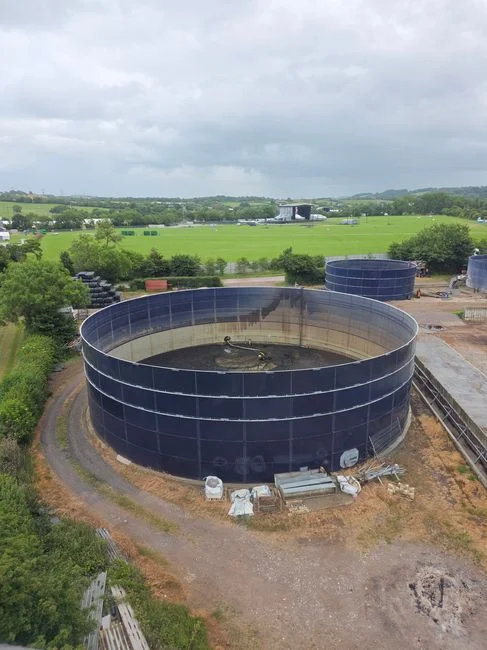
Before recommending a unit, an engineer needs the head-to-head numbers in one place. The matrix below anchors the comparison to the Ecologix 2026 food-plant case (95% FOG for DAF, 70% for a clarifier) and to the DAF Corp FC Maximizer and RC UniMax performance envelopes (92–98% TSS circular, 85–90% TSS rectangular), with lamella performance drawn from standard inclined-plate design practice.
| Parameter | DAF (circular FC / rectangular RC) | Lamella / Conventional Clarifier |
|---|---|---|
| Mechanism | Micro-bubble flotation of oil & floc (20–40 µm bubbles) | Gravity settling on inclined plates at 20–40 m³/m²·h |
| Best contaminant | Free oil, tramp grease, emulsified cutting fluid, light TSS | Metal grit, phosphate sludge, sand, shot-blast dust |
| FOG removal | ~95% (Ecologix 2026 food-plant case) | ~70% (Ecologix 2026, same case) |
| TSS removal | 85–98% (circular 92–98%, rectangular 85–90%, DAF Corp) | 60–85% on heavy-solids streams with coagulant aid |
| Typical footprint | Shallow circular tank; FC-150 is ~120 in dia × 23.5 in deep at 250–500 gpm (Krofta SPC-10 reference) | Deeper rectangular basin; needs vertical headroom for plate pack |
| CAPEX band | Higher per gpm at small scale (skid 48–450 gpm, DAF Corp); compressed-air system adds cost | Lower mechanical CAPEX; cost driven by basin steel and plate pack |
| OPEX band | Compressor kWh, polymer dose, skim maintenance; warranty parts (1-yr, DAF Corp) | Polymer dose lower per HydropureWater lamella clarifier spec; sludge hauling often dominates |
| Sensitivity to flow swings | Tolerates batch dumps; recycle pump buffers hydraulic shock | Upward velocity sensitive; a slug of oil re-entrains the bed |
| Sludge dryness | 2–4% thickened float (DAF Corp) — easy to feed a sludge dewatering filter press | 1–3% underflow; higher hauling cost per dry ton |
The matrix is the decision instrument; the rest of the article maps it to a real Griffin plant.
Matching the Technology to Each Transportation-Equipment Sub-Stream
The matrix collapses quickly when you walk the floor, because each sub-stream has a dominant phase. A parts washer dumps free oil, tramp grease, and alkaline detergent — that is a DAF job. A phosphate/nickel rinse carries dissolved metals that precipitate as a fine floc with pH adjustment — both a DAF (with coagulant) and a lamella work, but DAF is faster to ramp and cleaner on the float. A drawing-compound press overflow is half oil, heavy on emulsified soap — again, DAF. Coolant blowdown is the hardest stream because it is emulsified and metal-bearing at the same time, so the answer is a DAF first to strip FOG, then a lamella to polish TSS and protect downstream RO/UF. Truck-wash runoff and floor wash are mostly grit with a light oil sheen; a lamella with an upstream oil-scrap pre-stage handles them. Shot-blast dust scrubber water is the one place a clarifier alone is sufficient — low FOG, high specific gravity, and the grit abrades DAF internals. The 250 gpm Krofta Supracell SPC-10 — 120 in diameter, 23-1/2 in deep, 304 SS, built 2004 — is the size class a single Griffin wash line could host without a major pad extension (DHG Used Equipment listing).
| Sub-stream | Dominant load | Recommended primary | Notes |
|---|---|---|---|
| Alkaline parts-wash overflow | Free oil, grease, detergent | DAF | 95% FOG removal; DAF handles batch shock |
| Phosphate / nickel rinse | Fine metal floc, low FOG | DAF with coagulant or lamella | pH adjust upstream; sludge to filter press |
| Drawing-compound carryover | Emulsified oil, soap | DAF | Polymer dose critical; skim to 2–4% DS |
| Coolant blowdown | Emulsified oil + metals | DAF → lamella (hybrid) | Lamella protects RO/UF polish |
| Truck-wash / floor-wash runoff | Grit, light oil sheen | Lamella with oil-scrap pre-stage | Storm surge tolerance needed |
| Shot-blast scrubber water | Iron grit, low FOG | Clarifier (lamella) | Grit abrades DAF rotors — use gravity |
For plants producing both free oil and metal-bearing solids, the hybrid DAF-then-lamella train is the defensible answer: the DAF strips FOG to roughly 50 ppm or below, the lamella drops residual TSS, and downstream filtration or reuse sees a stable feed.
2026 Decision Framework for Griffin Plants
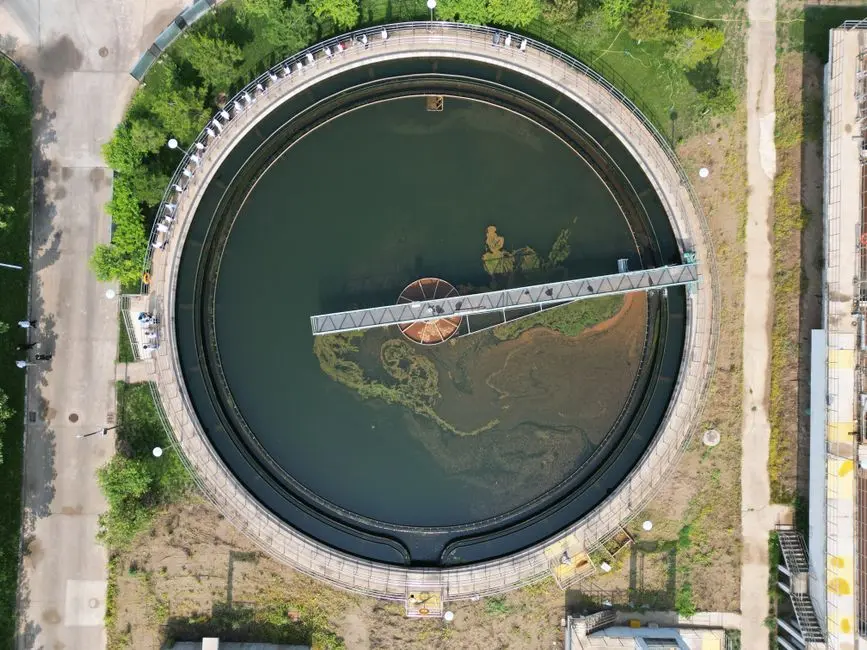
Step 1 — classify the dominant load. Pull a 24-hour composite sample from the worst shift; if FOG > 200 mg/L and TSS < 1,500 mg/L, the stream is oil-led. If TSS > 1,500 mg/L and FOG < 200 mg/L, it is grit-led. If both, it is mixed and you are in hybrid territory. Step 2 — check the flow regime. A batch/intermittent wash schedule (one or two dumps per shift) rewards a DAF, because the saturator and recycle pump buffer hydraulic shock; a lamella tolerates a slug of oil poorly, because upward velocity re-entrains the bed. Step 3 — check the binding constraint. If the discharge is to the City of Griffin POTW and the ordinance ceiling is the only bar, a lamella is often acceptable. If the goal is on-site reuse ahead of an RO/UF polish, DAF is preferred because oil breakthrough fouls membranes. Step 4 — weigh the footprint. The Krofta SPC-10 at 120 in dia × 23.5 in deep shows the DAF envelope is shallow; lamella needs vertical headroom for the plate pack and the underflow cone, which often costs more in civil work than the equipment itself. Step 5 — decide on hybrid. If you serve a parts washer, a coolant sump, and a phosphate line from one pad, a dissolved air flotation system feeding a HydropureWater lamella clarifier is the configuration that survives a 2026 CFO review. For deeper background on parallel applications, see the DAF configuration for hydrostatic test water guide and the DAF vs clarifier for chemical wastewater selection piece; for O&M, the air flotation maintenance protocol walks the 12-step routine.
Total Cost of Ownership: 2026 CAPEX and OPEX Envelope
CAPEX scales inversely with size across the DAF Corp 48–11,000 gpm envelope; small skid units (48–450 gpm) carry the highest per-gpm installed cost because the compressor, saturator, and skimmer are fixed, while packaged 500 gpm systems and above bring the per-gpm number down. A lamella clarifier is mechanically simpler — no air system, no recycle pump — but the basin steel, plate pack, and civil headroom often close the gap. OPEX is where the real 5-year argument lives. For a DAF, the dominant line items are compressor kWh, polymer dose, skim mechanism wear, and warranty parts (all labor, parts, and equipment supplied by DAF Corp are covered by a one-year warranty). For a lamella, the HydropureWater product specification shows inclined-plate geometry cuts coagulant consumption up to 30% versus a conventional basin, which materially changes the chemical line of the OPEX stack. Sludge hauling favors DAF: the float thickens to 2–4% dry solids, while clarifier underflow lands at 1–3% — a real cost per dry ton. A packaged skid-mounted coagulant and flocculant dosing skid plus a pre-wired DAF skid is the fastest 2026 install path, because piping, valves, and controls arrive on one frame. Plan downstream for a sludge dewatering filter press to take float or underflow from 2–4% DS up to 25–35% cake for off-site disposal.
Frequently Asked Questions
What's the real difference between a DAF and a clarifier for oily parts-wash water?
A DAF attaches 20–40 µm micro-bubbles to oil and floc and floats them to the surface, removing roughly 95% of FOG; a clarifier relies on gravity to settle heavier solids and removes only about 70% of FOG on the same stream (Ecologix, 2026). For parts-wash overflow dominated by free oil, DAF is the correct primary.
What TSS removal can a DAF system actually guarantee?
On a properly coagulated stream, the DAF Corp FC Maximizer circular unit hits 92–98% TSS, and the rectangular RC UniMax hits 85–90% (DAF Corp). A well-designed lamella clarifier lands at 60–85% on heavy-solids streams. Spec the circular DAF when TSS is the binding discharge parameter.
Can a DAF and a lamella clarifier run together on the same pad?
Yes. The hybrid DAF → lamella train is the standard answer for plants with both free oil and metal-bearing solids, because DAF strips FOG first and the lamella polishes residual TSS. See the dissolved air flotation system and the HydropureWater lamella clarifier for skid options that share a common control panel.
How much does a DAF cost per gpm in 2026?
CAPEX bands run highest on small skid units (48–450 gpm, DAF Corp) and drop on packaged 500 gpm systems and above; OPEX is dominated by compressor kWh and polymer. For a Griffin plant discharging under the Georgia EPD Industrial Wastewater General Permit to the City of Griffin POTW, request a per-gpm installed quote at your actual flow and treat the 5-year OPEX, not the sticker, as the decision number.