
Why Davenport Petroleum Plants Are Rethinking the API Separator in 2026
Refineries, re-refineries, and lubricant blenders in the Iowa Quad Cities cluster discharge directly to the Mississippi River under Iowa DNR NPDES permits, and the federal effluent guidelines at 40 CFR Part 435 (Petroleum Refining) set the oil-and-grease, TSS, and phenol limits that drive the 2026 technology decision. A typical Davenport-area plant sees a stream mix that the original 1970s-vintage API separator was never designed to handle: crude-unit desalter brine at 200–800 mg/L FOG with high salinity, tank-farm draw water with intermittent free oil, loading-rack washdown with emulsified lubricants, and oily stormwater that can spike to 5,000 mg/L TSS during a 25-year storm. The EPA Process Design Manual for Suspended Solids Removal (EPA 625/1-75-003a, Chapter 7) still underpins both flotation and sedimentation design, but the manual itself notes that traditional API/CPI units target free oil ≥150 µm, leaving emulsified oil in the 5–50 µm range — and the oil-wet TSS that carries it — to pass through into the downstream biological or polishing system. That leakage is pushing Davenport operators to compare dissolved air flotation against gravity clarifiers for the 2026 capital plan.
How DAF and Clarifiers Actually Treat Oily Wastewater
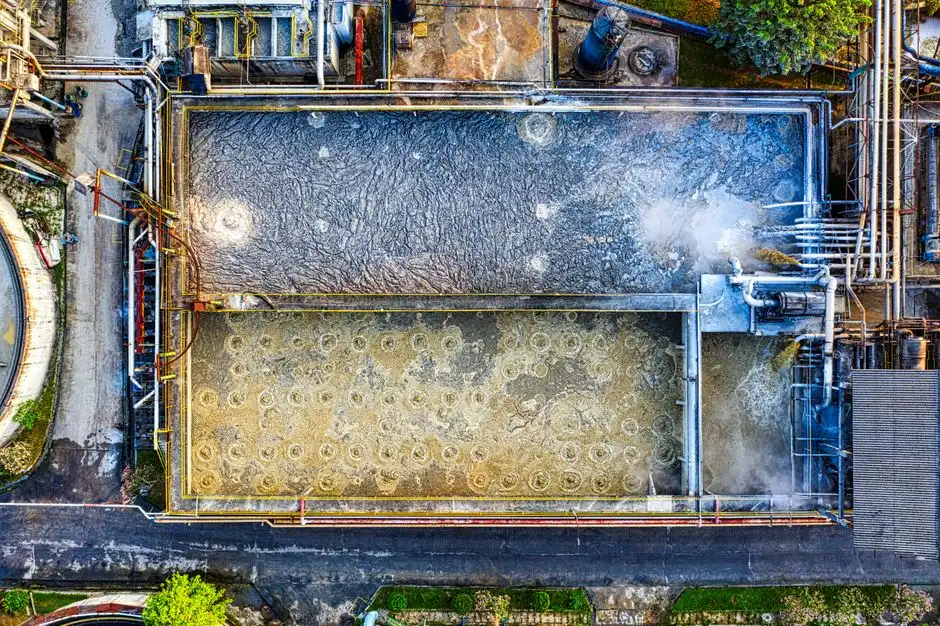
A dissolved air flotation unit saturates a side stream of clarified effluent with air at 60–80 psig in a pressure vessel, then releases the stream through needle valves or a micro-bubble generator into the flotation cell. The pressure drop nucleates 20–40 micron bubbles that attach to oil droplets and oil-wet solids, lifting them to the surface where a skimmer sweeps the float into a thickened sludge hopper (per DAF Corp's published system description). The clarifier, by contrast, relies on Stokes-law gravity settling; CPI corrugated plates, lamella packs, or a sludge-blanket solids-contact design compress the footprint, but the physics still requires a droplet to settle against upflow. The practical cutoff for a well-designed clarifier on oily water is around 50 µm — anything finer, or anything that has been stabilized by surfactants in a desalter or lube-blending operation, will ride the overflow. Polymer flocculation, covered in EPA 625/1-75-003a Chapter 6, is the engineering bridge: a 1–5 mg/L dose of an anionic or cationic emulsion polymer agglomerates the emulsified oil so either downstream device can capture it. Clarifier design parameters from the same manual include overflow rate (typically 600–1,200 gpd/ft² for primary oily-water service), detention time, and weir loading; DAF design centers on hydraulic loading (1.0–3.0 gpm/ft²), air-to-solids ratio (0.05–0.15 lb air per lb TSS), and bubble size distribution.
DAF vs Clarifier for Petroleum Service: Side-by-Side Parameters
The decision for a Davenport plant engineer in 2026 relies on a small set of numbers on the influent data sheet. The table below summarizes the head-to-head performance on petroleum service streams, drawn from published case data and vendor specifications.
| Parameter | Dissolved Air Flotation (DAF) | Gravity Clarifier (API / CPI / Lamella) |
|---|---|---|
| FOG removal on oily feed | ~95% (food-processing case, 95% vs clarifier 70% on the same stream per Ecologix 2026) | ~70% on the same feed |
| TSS removal | 92–98% (round FC Maximizer) or 85–90% (rectangular RC UniMax) per DAF Corp published ratings | 70–90% depending on plate-pack spacing and sludge-blanket control |
| Best influent envelope | 50–5,000 mg/L TSS, 50–3,000 mg/L FOG | >1,000 mg/L settleable solids, <50 mg/L emulsified oil |
| Footprint | Compact skid; FC Maximizers cover 48–450 gpm in 6–15 ft diameters per DAF Corp | Larger surface area; inclined plates or tube settlers needed to hit equivalent overflow rate |
| Typical CAPEX envelope | Higher unit cost; lower civil work | Lower unit cost; higher civil and basin cost |
| OPEX driver | Air-compressor kWh, polymer (~$0.02–0.05/gal treated), float handling | Sludge hauling, polymer, basin maintenance |
| Sludge output | Float thickened to 2–4% solids directly off the DAF | Underflow typically 1–2% solids, needs further dewatering |
| 40 CFR Part 435 fit | Effluent more likely to hit monthly-average O&G without polishing | Effluent often needs walnut-shell filter or membrane polish for monthly-average O&G |
| Best-fit stream examples | Desalter brine with emulsified FOG, tank-farm draw, lube-blending washdown, oily stormwater | Heavy desalter scale, API sludge, sand and rust from stormwater with low emulsified oil |
The dissolved air flotation system is the workhorse for the FOG-and-TSS envelope above; many Davenport plants also run it as a polisher on the overflow of an existing API separator during the 2026 transition window before a full clarifier replacement is justified. Where the feed is primarily heavy settleable solids with low emulsified oil, a HydropureWater lamella clarifier remains the lower-OPEX option and pairs naturally with a plate-and-frame filter press for solids handling downstream.
Davenport-Specific Selection Triggers
Process engineers can apply the following criteria against actual stream data to determine the optimal system:
- Visible sheen on the API overflow, or emulsified FOG >100 mg/L after the existing separator — specify DAF. Clarifiers will not break the emulsion without a chemistry step the downstream biological unit is not designed to handle.
- Stream is mostly desalter scale, sand, or rust with <50 mg/L emulsified oil — specify a lamella clarifier, or run a round FC Maximizer in clarifier mode at a higher hydraulic loading.
- Oily stormwater runoff with intermittent 5,000 mg/L TSS spikes during a 25-year storm — DAF with equalization. A clarifier loses efficiency under hydraulic surge; the DAF hydraulic-loading window is forgiving by comparison.
- Riverfront site with no lay-down area for a new basin — DAF skid, because the 6–15 ft diameter FC Maximizer fits inside an existing containment pad.
- Site has open lay-down area and a downstream biological polishing unit already permitted — a lamella clarifier at lower OPEX may suffice, and the biological unit absorbs the residual emulsified FOG that the clarifier misses.
- Tight 40 CFR Part 435 monthly-average O&G limit with no dilution water — DAF. The monthly-average math is unforgiving and clarifier effluent variability will trip it.
The HydropureWater lamella clarifier is the right answer for the second and fifth triggers; for the first, third, fourth, and sixth, the DAF on a chemical-dosing skid is the lower-risk specification.
2026 Cost, Compliance, and Pilot-Test Framework
CAPEX for a refinery-grade DAF scales with flow — DAF Corp publishes a build range from 10 gpm pilots up to 11,000 gpm full-scale units, and the 2026 cost curve from EPA 625/1-75-003a Chapter 10 is the most defensible sanity check on a vendor quote. OPEX on a DAF is dominated by the air-compressor kWh (typically 0.3–0.6 kWh per 1,000 gallons treated at 60–80 psig) and polymer dose, while clarifier OPEX is dominated by sludge hauling. For a Davenport plant expecting 2–4% float solids from the DAF, the downstream dewatering train is short — a plate-and-frame filter press paired with an automatic chemical dosing skid for polymer make-down and conditioning. For a clarifier producing 1–2% underflow, a sludge-thickening basin ahead of the press is the cheaper path. Before any 2026 commitment, run a 60–90 gpm on-site pilot using a DAF Corp FC-60 or RC UniMax-80 pilot skid against your actual desalter brine or tank-farm draw. The pilot provides evidence an Iowa DNR permit-renewal reviewer will accept, because it ties the technology choice to your measured free-vs-emulsified oil split, TSS, sulfides, and phenols, and to the 40 CFR Part 435 monthly-average effluent numbers you will commit to. Document everything — jar tests, polymer curves, float solids percentage, and final effluent — so the 2026 CAPEX memo and the NPDES renewal share one paper trail. For procurement teams cross-checking other regional references, the petroleum wastewater DAF vs clarifier guide for Nashville plants covers a similar influent matrix under Tennessee regulators.
Frequently Asked Questions
What is the single biggest factor that decides DAF vs clarifier for a Davenport refinery in 2026?
The free-oil-to-emulsified-oil ratio in the influent. Streams above ~100 mg/L emulsified FOG almost always need DAF; streams with mostly settleable solids and under 50 mg/L emulsified oil can be handled by a clarifier at lower OPEX. The 40 CFR Part 435 monthly-average O&G limit is the compliance gate, and DAF hits it more reliably without a polishing step.
How much does a DAF system cost for a 50–200 gpm petroleum wastewater stream?
For a 50–200 gpm DAF skid with polymer feed and compressed-air package in 2026, expect roughly $180,000–$450,000 CAPEX depending on materials (304L vs 316L stainless) and instrumentation. OPEX is dominated by 0.3–0.6 kWh per 1,000 gallons of treated water plus polymer at $0.02–0.05 per gallon. Use EPA 625/1-75-003a Chapter 10 cost curves to sanity-check vendor numbers before signing.
Can a clarifier meet 40 CFR Part 435 oil and grease limits without a DAF upstream?
Often no, on emulsified feed. A lamella clarifier on a desalter-brine or lube-blending washdown stream typically needs a downstream walnut-shell filter or membrane polish to consistently hit the monthly-average O&G limit. DAF effluent more frequently meets the limit directly, which is why most 2026 CAPEX projects in the Quad Cities cluster are replacing or backing up the API separator with DAF rather than another clarifier.
How long should a refinery DAF pilot run before the 2026 CAPEX decision?
Run a 60–90 gpm on-site pilot for a minimum of 4–6 weeks, including at least two storm events if the stream is oily stormwater. The DAF Corp FC-60 (48 gpm) and RC UniMax-80 (80–100 gpm) pilots are sized for exactly this duty. Capture free-vs-emulsified oil data, TSS, sulfides, and phenols across the run so the Iowa DNR permit-renewal file and the engineering procurement memo share one dataset.
Related Equipment
- Dissolved air flotation system — specifications, capacity range, and technical data
- HydropureWater lamella clarifier — specifications, capacity range, and technical data
- plate-and-frame filter press — specifications, capacity range, and technical data
- automatic chemical dosing skid — specifications, capacity range, and technical data