Why Newberry Transportation Equipment Plants Face a Two-Phase Wastewater Problem
A Newberry, SC transportation equipment plant in 2026 is regulated under 40 CFR Part 433 (Metal Finishing), with a daily-maximum oil and grease ceiling of 26 mg/L, copper at 2.38 mg/L, nickel at 1.71 mg/L, zinc at 0.43 mg/L, and a pH window of 6–9. That is the compliance envelope, and it is the first fact to put on the whiteboard before any equipment decision.
The stream itself is not a generic "industrial" waste. A heavy-truck assembly, rail-car fabrication, or auto-parts stamping plant generates four distinct wastewaters that converge on the pretreatment system: parts-washer overflow carrying free and emulsified lube oil, stamping lubricant drip, phosphate conversion-coating rinse water, and grinding swarf fines. The first two are light — they float. The last two are heavy — they settle. That is the two-phase problem in one sentence, and it is why the choice between a DAF system and a lamella clarifier is not a contest but a question of which phase dominates which shift.
SCDES administers the NPDES permit at the state level, and most Newberry plants actually discharge to the City of Newberry WWTP under an industrial pretreatment agreement. That agreement carries its own surcharges — typically $0.18–$0.42 per lb TSS and $0.35–$0.85 per lb O&G above local limits (per SCDES pretreatment program guidance, 2025-08). Pretreatment surcharges are a real line item on the sewer bill, which is why the $/lb-removed number matters as much as the $/gpm capital number.
The rest of this article treats the DAF-vs-clarifier question as a phase-matching exercise. Each technology removes a different fraction of the same stream, and the winning train for NAICS 336 almost always uses both in series.
DAF vs Clarifier: How Each Technology Actually Works
A dissolved air flotation unit pressurizes a recycle stream at 60–80 psig in a saturator, then releases it through a reducing nozzle into a flotation cell. The pressure drop generates 20–40 micron micro-bubbles that attach to oil droplets, grease, and low-density solids, lifting them to the surface in 3–5 minutes for skimming. The mechanism is buoyancy driven by gas-particle attachment, not gravity. That is why DAF excels on exactly the material a clarifier cannot catch: free oil, emulsified coolant, and the light FOG fraction that stays in suspension for hours.
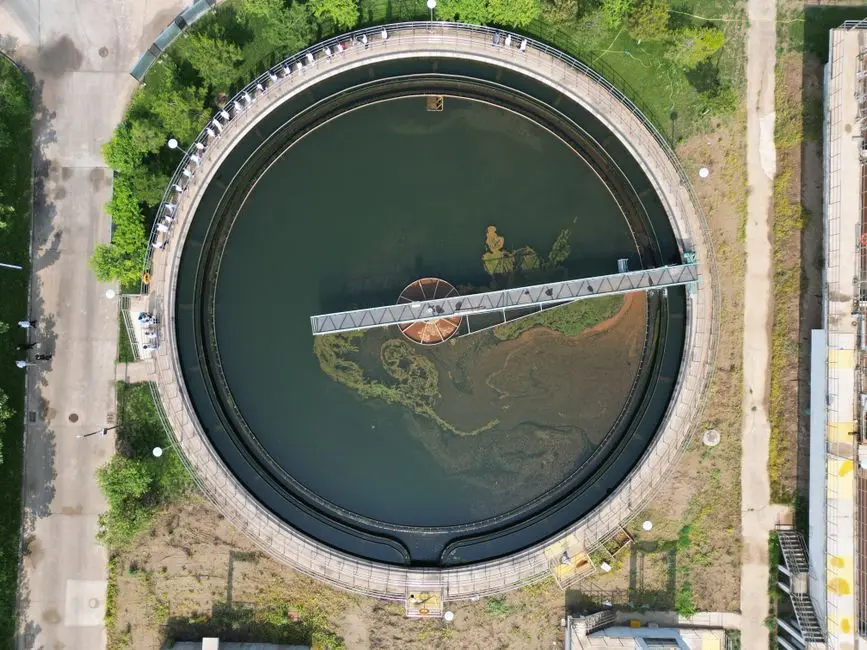
A lamella clarifier (or a conventional gravity clarifier with inclined plates at 55–60°) settles heavy solids under quiescent conditions. The inclined plates multiply the effective settling area inside a small footprint, delivering 20–40 m/h surface loading rates versus roughly 1–2 m/h for a conventional basin (per HydropureWater lamella specifications, 2026). The mechanism is gravity sedimentation, and the unit works best on particles denser than water — phosphate sludge, grinding swarf, and metal-bearing fines.
Performance numbers from the manufacturer base case: the DAF Corp FC Maximizer circular unit is rated for 92–98% TSS removal at flows from 10 to 11,000 gpm in a shallow 6–70 ft diameter tank, while the rectangular RC UniMax delivers 85–90% TSS at 10–1,000 gpm. A lamella clarifier on a heavy-solids stream typically removes 60–80% of TSS in a single pass and 90%+ with polymer assist (per EcologixSystems 2026 update). On oil and grease specifically, EcologixSystems field data shows DAF at 95% removal versus 70% for a clarifier on the same food-processing stream — a gap that holds across most oily-wastewater applications.
Footprint is a real constraint in Newberry. DAF tanks run shallow and can be circular or rectangular, often skid-mounted for the 4–25 m³/h (50–110 gpm) range. Lamella clarifiers run taller but pack a 4–6 m² plate pack into a small shell, which is why they are the default retrofit into existing concrete basins. The mechanisms are different, the footprints are different, and the contaminant each one targets is different.
Head-to-Head Comparison: DAF vs Lamella Clarifier on the Five Metrics That Decide the Purchase
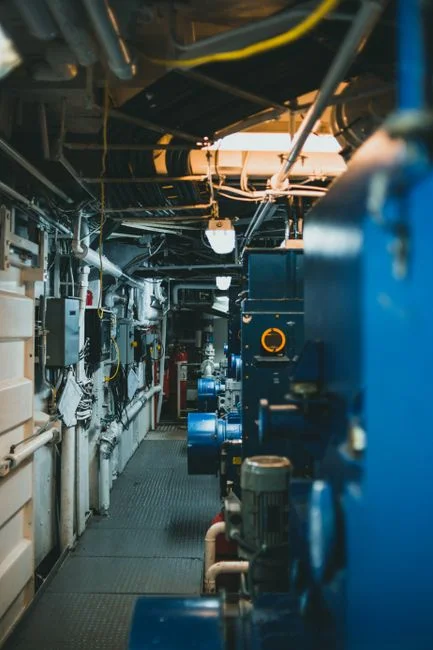
The procurement-side reader needs a side-by-side. The matrix below distills the trade-offs on the five dimensions that actually drive a 2026 capital decision at a Newberry transportation equipment plant. All data points are drawn from DAF Corp published specifications, the EcologixSystems 2026 selection guide, and HydropureWater product specifications.
| Metric | DAF | Lamella Clarifier | Verdict for NAICS 336 |
|---|---|---|---|
| Free & emulsified oil removal | 90–98% (95% per EcologixSystems field data, 2026) | 65–75% (70% per EcologixSystems field data, 2026) | DAF wins — oil floats, not settles |
| TSS / grinding swarf removal | 85–98% (DAF Corp FC Maximizer / RC UniMax, 2025) | 60–80% single pass; 90%+ with polymer | Lamella wins on heavy phosphate sludge; DAF competitive on light swarf |
| Footprint (50 gpm duty) | ~3 m × 6 m skid, 1.5 m shallow tank | ~2 m × 2 m × 4 m tall, 4–6 m² plate area | Lamella fits tighter existing basins; DAF easier for outdoor greenfield |
| Chemical OPEX | Polymer + coagulant $0.08–$0.22 per m³; air energy $0.01–$0.03 per m³ | Polymer only, up to 30% chemical savings vs DAF on TSS-only streams (HydropureWater spec, 2026) | Lamella cheaper on TSS-only; DAF justified when oil loading is high |
| Retrofit complexity | Saturator, recycle pump, skimmer, controls — typically 2–3 weeks install | Drop-in plate pack into existing concrete basin — typically 1 week | Lamella is the easier retrofit; DAF often paired with a lamella polish |
The HydropureWater DAF system covers 4–300 m³/h across 13 standard models, which puts a single unit inside the 15–80 gpm envelope typical of a 50–250 employee NAICS 336 plant. The matching HydropureWater lamella clarifier delivers the 20–40 m/h surface loading needed to polish the DAF effluent. For background on the technology trade-offs in adjacent industries, this DAF vs clarifier guide for metals and mining wastewater covers the same five-metric matrix for a different stream profile.
What a Newberry Plant Actually Pays: A 2026 Capex and Opex Band
Before the engineer goes to procurement, they need a dollar anchor. The table below gives indicative 2026 turnkey ranges for skid-mounted and field-erected equipment. These are bands, not point estimates — request a site-specific quote once the wastewater characterization is in hand.
| Equipment | Flow range | Turnkey capex (2026 USD) | Dominant OPEX driver |
|---|---|---|---|
| Skid-mounted DAF, 304L SS | 4–25 m³/h (50–110 gpm) | $60,000–$180,000 | Polymer + coagulant $0.08–$0.22 per m³ |
| Field-erected DAF, 304L SS | 50–300 m³/h (220–1,320 gpm) | $220,000–$650,000 | Compressed-air energy $0.01–$0.03 per m³ |
| Lamella clarifier, epoxy-coated CS | 5–50 m³/h (22–220 gpm) | $35,000–$95,000 | Polymer only, 30% lower than DAF on TSS-only streams |
| Lamella clarifier, 304L SS plate pack | 5–50 m³/h (22–220 gpm) | $70,000–$140,000 | Polymer only |
| Automatic chemical dosing skid | Matches DAF or lamella | $8,000–$25,000 | Chemistry consumption |
Two OPEX numbers move the most on a transportation equipment stream. First, sludge hauling: DAF float cake runs 2–4% solids versus 0.5–1% for clarifier underflow, which reduces hauling volume by 40–60% and is often the single largest OPEX line on a FOG-heavy stream (DAF Corp field data, 2025). Second, the SCDES pretreatment surcharge: at $0.18–$0.42 per lb TSS and $0.35–$0.85 per lb O&G above local limits (per SCDES pretreatment program guidance, 2025-08), every 100 mg/L of O&G that the DAF removes instead of letting pass through to the City of Newberry WWTP shows up directly on the monthly sewer bill. For a 50 gpm stream running two shifts, that is a five-figure annual line item.
The automatic chemical dosing skid is the piece that ties the capex and opex numbers together — without consistent coagulant and flocculant preparation, neither the DAF nor the lamella hits its removal spec. A standalone jar-test program on the actual plant effluent is the cheapest insurance against oversizing chemistry OPEX, and a DAF system manufacturer buyer's guide walks through how that bench work feeds into a vendor selection.
Choosing the Right System for Your Newberry Plant: A 2026 Decision Flow
The decision tree below resolves the comparison into one of three concrete configurations. It assumes the stream is the typical NAICS 336 mix described in section one.
- If free and emulsified oil dominates above 200 mg/L O&G (parts-washer overflow, stamping lube, drawing compound) → DAF-primary, sized for 100% of the oil load, with a small lamella as polish to catch the light swarf the DAF lets pass. Anchor equipment: the DAF system rated 4–300 m³/h.
- If phosphate-conversion-coating TSS and grinding swarf dominate above 800 mg/L TSS with low oil (<100 mg/L O&G) → lamella-primary, with DAF held in reserve as an FOG-spike buffer for batch discharges from the parts washer. Anchor equipment: the HydropureWater High-Efficiency Sedimentation Tank with 4–6 m² plate area.
- If the stream carries both phases — the typical transportation equipment case — → DAF + lamella in series, sized so the DAF handles 100% of the oil load and the lamella polishes the float-tank effluent down to the 40 CFR 433 daily-max envelope. Add an automatic chemical dosing skid between the two units to manage coagulant dose on the FOG stage and polymer dose on the TSS polish stage.
For a Newberry plant in 2026, option three is the most common resolution. The hybrid train delivers the 26 mg/L O&G and sub-1 mg/L metals compliance margin that the SCDES inspector will look for on the next renewal, while keeping the chemical OPEX inside the band shown above.
Frequently Asked Questions
Can a DAF meet 40 CFR 433 oil and grease limits alone?
Yes. A properly sized DAF with consistent coagulant and polymer dosing routinely discharges below 10 mg/L O&G — well under the 26 mg/L daily maximum in 40 CFR Part 433 — based on DAF Corp FC Maximizer performance data (2025) and EcologixSystems field results (2026). The catch is upstream variability: a batch dump of parts-washer overflow can overwhelm a single DAF, which is why most NAICS 336 plants run a lamella polish or an equalization tank ahead of the unit.
What flow range is typical for a Newberry transportation equipment plant?
Most NAICS 336 plants in the 50–250 employee range generate 15–80 gpm of process wastewater, comfortably handled by a single DAF unit or a 4–6 m² lamella clarifier (HydropureWater product specifications, 2026). Plants above 250 employees or with multiple phosphate coating lines typically split the flow across two parallel DAFs at 50–110 gpm each.
Can a DAF and a clarifier share the same tank?
Yes. Retrofit packages convert an existing clarifier into a DAF flotation cell by adding a saturator, recycle pump, and skimmer to the basin — DAF Corp offers this as a standard new-and-retrofit service (2025). It is the cheapest hybrid path for a Newberry plant that already has a concrete clarifier and wants to add oil removal without building a new tank.
Does a Newberry plant need SCDES approval to change treatment technology?
Any change to the treatment train that affects discharge quality requires an updated NPDES permit modification through SCDES, and for industrial pretreatment customers, written notification of the control authority — in Newberry's case, the City of Newberry WWTP (per SCDES pretreatment program guidance, 2025-08). Jar-test data and pilot results should be in the modification package before the equipment order is signed.