Why Fabricated Metals Wastewater in Crawfordsville Is a Special Case
Fabricated metals plants in Crawfordsville — stamping, machining, coating, and finishing operations — generate wastewater streams that differ from food, dairy, or municipal FOG sources. A typical day on the floor produces tramp oils from stamping lubricants, emulsified cutting fluids, quenching oils, alkaline cleaner rinses, and metal hydroxide flocs from pickling and plating rinses. Hexavalent chromium baths, where still in use, add a regulated toxic species to an already heavy solids and oil load. The wastewater envelope commonly seen at these plants runs from roughly 1,000 to 3,000 mg/L TSS and 200 to 800 mg/L O&G, with periodic slug discharges when a bath dumps or a coolant line breaks (typical metal-finishing jar-test range; do not treat as a hard median for any single plant).
These streams discharge to the Crawfordsville POTW and reach the Wabash River, placing every significant discharger under the Indiana Department of Environmental Management (IDEM) pretreatment program. The applicable federal ceiling is 40 CFR 433 Metal Finishing categorical pretreatment standards: daily maximum TSS 60 mg/L, O&G 52 mg/L, lead 0.69 mg/L, total chromium 2.77 mg/L, and hexavalent chromium 0.32 mg/L (per 40 CFR 433.102). The DAF vs clarifier question is a chemistry-driven decision about whether oil and fine floc can be removed reliably enough to stay under those daily maxima.
How a DAF Clarifier Works in a Metals Plant
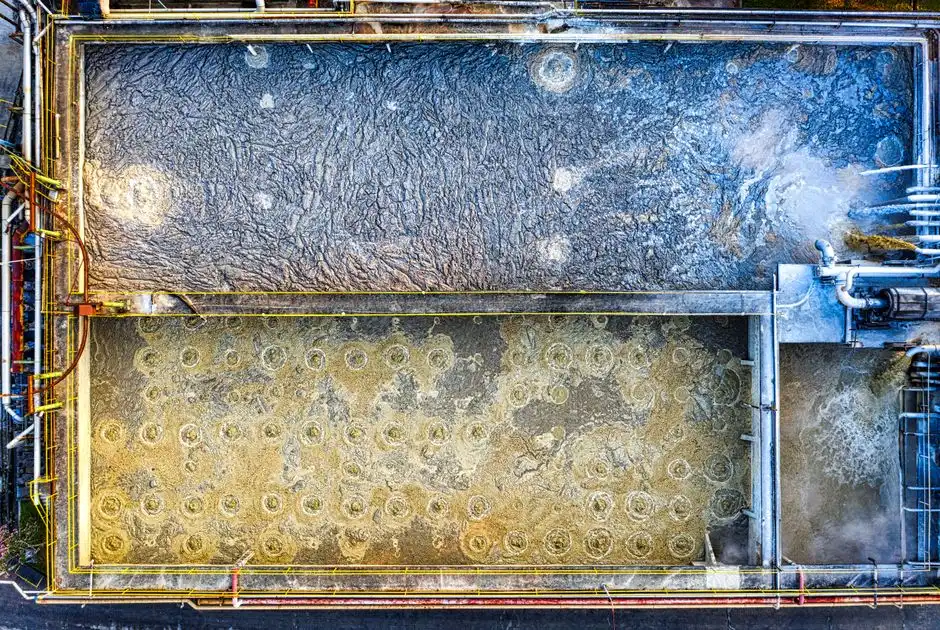
A DAF clarifier saturates a pressurized recycle stream of clarified effluent with air, then releases that stream through nozzles at atmospheric pressure. The pressure drop nucleates 30-50 micron microbubbles that attach to oil droplets and chemically flocculated metal-hydroxide particles, lifting them to the surface where a paddle skimmer removes the float; heavier settleable solids drop to a bottom auger and are scraped out (per SigmaDAF/clearwaterind.com, 2026-04). Standard construction is 304SS, with 316SS and polypropylene available for acidic rinse waters common in fabricated metals (per clearwaterind.com, 2026-04).
Chemical conditioning represents the critical hidden cost for this equipment. DAF technology depends on proper coagulation and flocculation to enlarge floc and improve bubble attachment — without it, removal collapses toward clarifier-class performance (per clearwaterind.com, 2026-04). Skid-mounted units cover 48 to 450 GPM, and packaged DAFs scale up to roughly 2,000 GPM (per dafcorp.com and frcsystems.com). For Crawfordsville plants evaluating the HydropureWater DAF system, the skid format matters because most older fabricated metals buildings have limited floor space and minimal civil-work budgets.
How a Gravity or Lamella Clarifier Works for the Same Stream
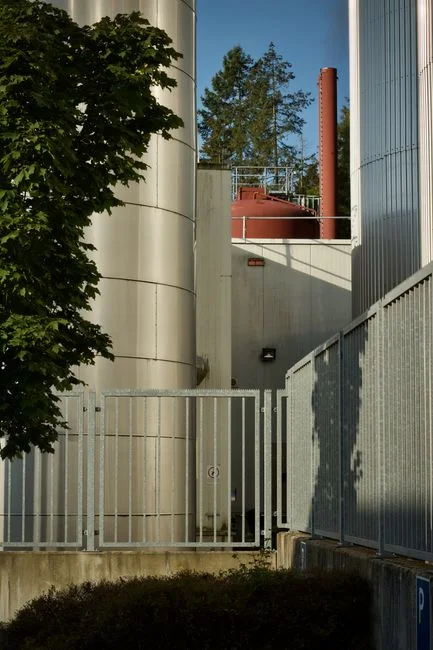
A conventional gravity clarifier relies on quiescent settling at surface loading rates of about 1-2 m/h, which requires a large footprint and creates sensitivity to hydraulic surges. A lamella clarifier — an inclined plate pack — operates at 20-40 m/h, compressing the same settling area into roughly one-fifth the footprint and making it well-suited to settleable metal-hydroxide flocs from neutralized rinse water.
Lamella clarifiers struggle with emulsified oils and low-density fines, which is the particle class DAF handles best. The HydropureWater high-efficiency lamella clarifier uses sludge recirculation to reduce coagulant demand by up to 30% (per HydropureWater product spec, 2026). The right fit is a plant with high flow (>500 GPM), low oil, and primarily settleable solids; a sand filter or DAF polish can be added downstream if TSS or O&G limits are not met in a single pass.
DAF vs Clarifier: Head-to-Head Comparison for Crawfordsville Metals Plants
This table provides data for a 2026 capital memo, using cited sources and typical engineering ranges.
| Parameter | DAF Clarifier (with chemical conditioning) | Lamella / Gravity Clarifier |
|---|---|---|
| TSS removal efficiency | 92-98% (FC Maximizer); 85-90% (RC UniMax) (per dafcorp.com) | 60-80% without coagulation; 80-90% with coagulation (typical engineering range) |
| O&G removal | High; consistently meets 52 mg/L 40 CFR 433 daily max when conditioned | Poor on emulsified oils; adequate on free oil with skimming |
| Footprint per 100 GPM | Compact; skid 6-15 ft diameter (per dafcorp.com) | Lamella ~1/5 of conventional; conventional clarifier is the largest option |
| Hydraulic loading rate | Limited by surface area; ~5-25 m/h equivalent | Lamella 20-40 m/h; conventional 1-2 m/h |
| CAPEX band | Higher unit cost; lower civil cost on skid units | Lower unit cost; higher civil/structural cost on conventional |
| OPEX band | Energy for saturation recycle pump + coagulant/polymer | Lowest energy draw; coagulant only if sludge recirculation not used |
| Sensitivity to oil loading | Designed for emulsified oils; tolerates slug loads | Sensitive — emulsified oil carryover degrades effluent |
| Sensitivity to flow surges | Moderate; equalization tank recommended | High on conventional; moderate on lamella with plate pack |
| Standard material | 304SS standard; 316SS / PP options (per clearwaterind.com, 2026-04) | 304SS / FRP / carbon steel with coating |
| Operator skill required | Moderate; PLC-controlled chemical dosing | Low to moderate; mostly sludge pump and pH control |
| Ability to meet 40 CFR 433 daily maxima | Strong for TSS, O&G, and most metals when paired with precipitation | Conditional; may require polish step for O&G and TSS |
| Emergency / temporary capacity | Mobile DAF on 47.5 ft trailer, on-site within a day (per WesTech, 2026) | Not typically available as a mobile unit |
Chemical conditioning is the swing factor for DAF. Without coagulant and flocculant, DAF removal converges on clarifier-class performance — a DAF without chemistry is an expensive clarifier.
Decision Framework: When to Pick DAF, Clarifier, or Both
Four rules cover roughly 90% of Crawfordsville fabricated metals cases. Apply them in order; the first match wins.
- Influent O&G > 100 mg/L OR emulsified oils present → DAF first. Clarifier should only appear as a downstream polish, if at all. This is the most common configuration for stamping and machining plants with significant coolant and lubricant usage.
- Flow > 500 GPM with settleable metal-hydroxide flocs dominant and O&G < 50 mg/L → lamella clarifier is the lower-cost primary. Typical for coating and finishing lines where rinses are alkaline but oils are minor.
- Variable flow, frequent hydraulic surges, or limited footprint → DAF with plate pack (FPBC-style configuration). The lamella pack inside the DAF reduces water velocity and recovers separation efficiency under surge (per clearwaterind.com, 2026-04).
- Existing clarifier undersized for a new production line → add DAF as pretreatment rather than rebuilding the clarifier. Pretreatment DAFs protect downstream settlers and reduce retrofit capex.
Always require a jar test or on-site pilot before purchase. Pilot trailers are available at 48-100 GPM (per dafcorp.com) and let a plant verify chemistry and removal against its own wastewater before signing a PO. Crawfordsville plants should not skip this step.
2026 Cost, Footprint, and Compliance Considerations in Crawfordsville
Skid-mounted DAFs reduce install time and on-site civil work, which matters for older Crawfordsville plants with constrained floor space (per dafcorp.com). Lamella clarifiers win on energy because they have no saturation recycle pump, and that delta shows up on a 2026 electricity bill. Both technologies require chemical dosing — pairing either with an HydropureWater automatic chemical dosing skid keeps coagulant and polymer feed on the setpoint and avoids the overdose/underdose swings that trigger 40 CFR 433 excursions.
IDEM pretreatment permitting in Indiana requires a slug control plan for metal-finishing operations. DAFs and clarifiers both qualify as treatment units, but DAFs more readily demonstrate daily-maximum compliance for O&G because the float layer is physically removed rather than relying on quiescent settling. The back end of the system matters: a HydropureWater plate and frame filter press dewatering the float or settled sludge closes the loop on solids handling and reduces disposal volume. For peer context on how other Midwest metals plants structure the same decision, the Milwaukee metals DAF vs clarifier guide and the Fairhope metals DAF vs clarifier comparison show the same chemistry-driven logic in different watersheds. For plants adding EV or battery lines, the EV/auto plant pretreatment compliance playbook covers the additional nickel and cobalt categorical limits that a 2026 capex committee will ask about.
Frequently Asked Questions
Does DAF always outperform a lamella clarifier on TSS at a Crawfordsville metals plant?
No. With chemical conditioning, a DAF delivers 92-98% TSS removal on the FC Maximizer and 85-90% on the RC UniMax (per dafcorp.com), but a lamella clarifier with coagulation reaches 80-90% on settleable metal-hydroxide flocs at a lower operating cost. DAF wins on emulsified oil and fine TSS; lamella wins on settleable solids and energy cost.
What is the smallest pilot DAF a Crawfordsville plant can rent before buying?
48 GPM skid-mounted pilot units are available, and rectangular pilots run 80-100 GPM (per dafcorp.com). Mobile trailer DAFs on 47.5 ft frac-tank trailers can be on-site within a single day for full-stream trials or emergency capacity (per WesTech, 2026).
Can a lamella clarifier meet 40 CFR 433 daily maximums for O&G on its own?
Rarely. The 52 mg/L O&G daily maximum is difficult for any gravity device to hit on emulsified oils from stamping and machining fluids. A DAF upstream, or a DAF polish step, is the reliable path to compliance when O&G in the raw stream runs above roughly 100 mg/L.
Is a DAF or clarifier the better fit for a Crawfordsville plant with limited floor space?
DAF is generally better. Skid-mounted DAFs at 48-450 GPM occupy a 6-15 ft diameter footprint (per dafcorp.com), while a conventional clarifier at the same flow can need five times the floor area. Lamella narrows the gap but still loses to DAF on oil-laden streams.