
Why Bowling Green Auto and EV Plants Are Re-Evaluating Pretreatment in 2026
Bowling Green, Kentucky sits at a regulatory and manufacturing inflection point in 2026. GM Bowling Green Assembly continues to push stamping, machining, and paint-shop wastewater toward Sanitation District No. 1 of Warren County, while a new ring of battery cell suppliers along I-65 is introducing nickel, cobalt, lithium, and copper-bearing streams that no Kentucky pretreatment program was designed for in 2015. The 2026 EPA NPDES Multi-Sector General Permit revision and the Kentucky Division of Water's tightened industrial metals and PFAS monitoring framework require discharge-side proof of removal that older clarifier-only trains cannot deliver. Published industrial data from Ecologix shows a DAF system achieving 95% oil and grease removal on a high-FOG stream versus 70% for a clarifier on the same feed (Ecologix 2026 update) — and that gap is the reason most Warren County plants are reopening the DAF vs. clarifier question. The decision frames the next 12 to 24 months of capex for any plant discharging to the District's collection system.
What DAF Does Best — and Where It Falls Short
A DAF system clarifies wastewater by attaching microscopic air bubbles to suspended matter and floating it to the surface for skimming. The HydropureWater DAF system uses a pressurized recycle loop in which 20-40 micron bubbles are generated and released through a pressure relief valve near the tank center, per the DAF Corp Micro Bubble Generator specification (S4). Bubble-particle attachment is most effective on particles with specific gravity close to water — FOG, oil emulsions, electrode-coating residues, biological floc, and fine TSS below roughly 100 microns. DAF Corp's FC Maximizer, the zero-velocity circular geometry used in industrial plants, routinely clarifies a 2,000 PPM feed down to 50 PPM at a 500 GPM design point, a 92-98% TSS removal band (S4). Sludge consistency exits at 2-4% total solids, which is thick enough to feed a plate-and-frame press directly (S4). ClearStream's DAF design note also describes the role of the pressure relief valve and the difference between circular and rectangular tanks — circular under approximately 50 ft diameter, rectangular for narrow or retrofit sites (S5).
DAF carries higher upfront and operational costs than a clarifier because of the air compressor, saturation vessel, and recycle pumps (Ecologix 2026 update). DAF is sensitive to hydraulic surges — a slug of oily draw fluid from a forming press will pass through an under-sized DAF, and DAF alone will not polish to 10 mg/L TSS without a downstream stage. DAF does not remove truly dissolved metals; it requires coagulant dosing (typically a HydropureWater automatic chemical dosing system) to precipitate nickel or cobalt before the air flotation step.
What a Clarifier Does Best — and Where It Falls Short
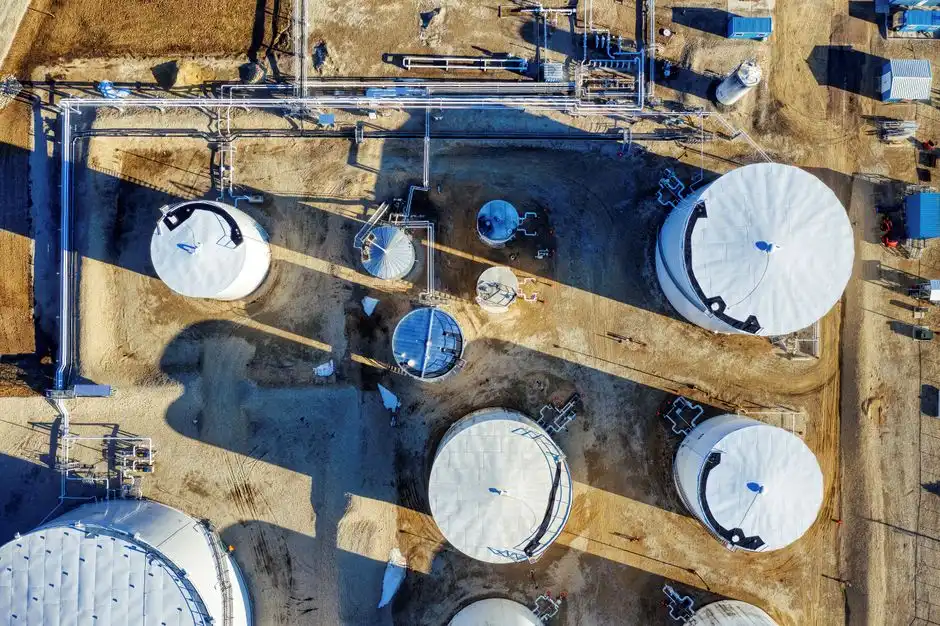
A gravity clarifier relies on Stokes-law sedimentation: heavier particles settle into a sludge hopper, clarified water overflows a weir, and sludge is recirculated or wasted from the cone bottom. On dense inorganic streams — stamping grinding swarf, foundry sand, and mining tailings — Ecologix's 2026 update cites 90% solids reduction at lower cost than DAF, which is the upper end of what gravity settling can do in industrial service. Lamella or inclined-plate clarifier variants compress that footprint dramatically by using stacked plates at 55-60° to multiply the effective settling area; the HydropureWater high-efficiency sedimentation tank is a representative compact design suited to plants with limited floor space. A clarifier also tolerates a wider range of flow surges than DAF and has a lower OPEX profile because there is no compressor or saturation pump loop.
Clarifier performance drops on oil and grease removal, which is about 70% on a high-FOG stream (Ecologix 2026 update), the footprint at high flow is large, and response to load swings is slow. Clarifiers also cannot thicken sludge beyond roughly 1-2% total solids without a picket-fence thickener, and they do not capture colloidal heavy metals or PFAS precursor compounds without chemical pretreatment upstream.
DAF vs. Clarifier: 2026 Head-to-Head for Auto and EV Wastewater
The matrix below scores each technology against the stream characteristics a Bowling Green plant actually faces: paint-shop overspray, electrode-coating wash water, oily draw and forming fluids, stamping grinding swarf, and battery precursor rinse water. Every row is anchored to the scraped data from S2, S4, or S5.
| Parameter | DAF (skid-mounted) | Gravity / Lamella Clarifier |
|---|---|---|
| Removal mechanism | Micro-bubble flotation, 20-40 µm bubbles (S4) | Gravity sedimentation, inclined plates (lamella) |
| FOG / oil removal | ~95% (Ecologix S2) | ~70% (Ecologix S2) |
| TSS removal | 92-98% (FC Maximizer, S4) | Up to 90% on heavy solids (S2); 85-90% rectangular (S4) |
| Heavy-metal colloid capture | Effective with coagulant dosing | Partial; requires upstream precipitation |
| PFAS precursor capture | Marginal; not a polishing stage | Marginal; not a polishing stage |
| Footprint (per 100 GPM) | Compact, skid-mounted | Larger; lamella reduces it 4-6x vs. conventional |
| CAPEX band (2026) | Higher (compressor, SAT vessel, controls) | Lower (tank, drive, sludge pump) |
| OPEX band (2026) | Higher (compressed air, pumps per S2) | Lower (minimal auxiliaries) |
| Sludge dryness | 2-4% total solids (S4) | 1-2% (often needs thickening) |
| Sensitivity to flow surges | High; needs equalization | Moderate; larger basin dampens surges |
| Best-fit Bowling Green stream | Paint-shop, electrode-coating, oily draw, coolant, battery rinse | Stamping swarf, grinding, high-flow primary grit |
DAF performs best where FOG, oil emulsions, or fine TSS dominate — paint-shop, electrode-coating, oily draw, and coolant streams. Clarifiers perform best where heavy inorganic grit or high-flow primary settling dominates — stamping, grinding, and body-shop floor wash. The Ecologix 2026 update explicitly endorses a hybrid DAF → clarifier train for complex streams that contain both oil and heavy solids, which is the realistic case for most Bowling Green plants discharging mixed waste to Sanitation District No. 1.
2026 Cost and Footprint Reality Check for Bowling Green Plants
The table below converts the head-to-head into procurement-ready order-of-magnitude numbers an engineer can drop into a 2026 capex memo. Bands are typical for skid-mounted industrial equipment in the U.S. Midwest and should be confirmed with vendor quotes.
| Flow rate (m³/h) | Skid-mounted DAF CAPEX | Lamella clarifier CAPEX | Relative OPEX driver |
|---|---|---|---|
| 4-10 | Low six figures USD | ~40-60% of DAF | DAF compressor dominates |
| 20-50 | Mid six figures USD | ~45-65% of DAF | DAF recycle pump scales up |
| 100-300 | High six to low seven figures USD | ~50-70% of DAF | DAF air saturation vessel sizing |
DAF's higher energy demand comes from the air compressor and recycle pump loop (Ecologix 2026 update); a lamella clarifier's OPEX is largely the sludge pump and a small rake drive. Before committing capex, both DAF Corp (FC-60 pilot at 48 GPM) and ClearStream offer pilot units for 2-4 week on-site trials (S4, S5). A jar-test plus pilot run on actual plant effluent is the only way to lock in air-to-solids ratio, polymer dose, and sludge yield. Downstream dewatering is identical for either technology — a HydropureWater plate and frame filter press handles the 2-4% DAF float or the 1-2% clarifier underflow and produces a 25-35% dry cake suitable for off-site disposal.
Recommended 2026 Configuration for Bowling Green EV and Auto Plants
For most 2026 Bowling Green EV and auto-parts plants, the defensible configuration is a hybrid train: a HydropureWater DAF system as primary, fed by a HydropureWater automatic chemical dosing system for nickel, cobalt, and FOG programs; a lamella clarifier as polishing; and a plate-and-frame filter press for sludge dewatering. This train hits the 95% oil-removal benchmark where it matters (paint shop, electrode-coating, oily draw), uses the lamella stage to drop residual TSS to the 20-30 mg/L range that the District typically expects, and produces a press cake that is cost-effective to haul. For a pure stamping or grinding shop with low FOG and heavy swarf, a single lamella clarifier remains the cost-correct choice and avoids the DAF OPEX premium. For battery precursor facilities, the chemical dosing stage ahead of DAF is non-negotiable — nickel and cobalt do not float without hydroxide precipitation, and the DAF is the right flotation cell once the metals are converted to settleable floc. PFAS polishing (GAC or ion-exchange) should be planned as a future-proofing step, not a 2026 deliverable, because the EPA NPDES PFAS rule is still in transition and Warren County enforcement timing is not yet final.
Frequently Asked Questions
What removal efficiency can a Bowling Green plant expect from a DAF on paint-shop and oily draw fluids?
A skid-mounted DAF or DAF Corp FC Maximizer typically delivers 92-98% TSS removal and approximately 95% oil and grease removal on high-FOG industrial streams (Ecologix 2026 update; DAF Corp S4). Paint-shop and electrode-coating streams match this profile.
When is a clarifier the right choice over a DAF in 2026?
A clarifier is the cost-correct choice when the stream is dominated by heavy inorganic grit, stamping swarf, or high-flow primary settling, and when FOG is below roughly 10% of the contaminant load. A lamella clarifier is especially attractive in plants with limited floor space, delivering up to 90% TSS reduction on dense streams at roughly 40-70% of DAF CAPEX (Ecologix 2026 update).
Can a DAF and a clarifier be used together for EV battery wastewater in Bowling Green?
Yes. The hybrid DAF → clarifier configuration is explicitly endorsed for complex streams containing both oils and heavy solids (Ecologix 2026 update). For battery precursor streams, add a chemical dosing stage ahead of the DAF to precipitate nickel and cobalt, then polish with a lamella clarifier and dewater with a plate-and-frame press.
What does the Sanitation District No. 1 of Warren County require that affects this decision?
The District enforces local limits on oil and grease, TSS, and a growing list of metals consistent with the Kentucky Division of Water pretreatment program, with PFAS monitoring expanding in 2026. Plants must demonstrate removal proof; a DAF-primary train is the most direct way to hit the oil-removal targets, while a clarifier-only train typically needs equalization and chemical support to meet metals and TSS limits.