
Why Fabricated Metals Wastewater in Prairie Grove Forces This Choice in 2026
Fabricated-metals job shops stamping, machining, and finishing parts in the Prairie Grove, Illinois area discharge to a regional publicly owned treatment works (POTW) under categorical pretreatment rules, and those rules dictate which primary separator is even defensible. The federal standard is 40 CFR Part 433 — the Metal Finishing categorical standard — which applies to SIC 34 fabricators and sets daily maximums on oil & grease (56 mg/L for many subcategories), TSS, lead (0.69 mg/L), cadmium (0.69 mg/L), zinc (2.61 mg/L), total chromium (2.77 mg/L), and hexavalent chromium (0.32 mg/L), with pH held inside 6.0–9.0 (40 CFR 433.102). A 2026 capex proposal that does not demonstrate day-one categorical compliance on these parameters will not survive a POTW pretreatment audit or a corporate EHS review.
Raw wastewater at a Prairie Grove job shop typically runs 200–2,000 mg/L TSS, 100–1,000+ mg/L oil & grease from emulsified cutting fluids and tramp oil, pH 6–9, with trace metals dragged in by coolant makeup and parts rinsing (HydropureWater field data, 2026). The emulsified oil is the binding constraint: a 5% semi-synthetic coolant that has broken through a tramp-oil skimmer is stable in the water column and will not settle under gravity in a reasonable residence time. The EPA's Emerging Technologies for Wastewater Treatment and In-Plant Wet Weather Management (EPA 832-R-06-006, Feb 2008) lists dissolved air flotation among the standard physical/chemical primary treatment options for exactly this kind of emulsified, TSS-heavy stream.
Prairie Grove's receiving POTW layers local sewer-use ordinance limits on top of the federal categorical standards, and any noncompliance event — a pH excursion, an oil slug from a sump pump-out — triggers a site visit and a corrective-action clock. The 2026 capex question is therefore not "which technology is nicer" but "which technology keeps me off the Significant Noncompliance list." For most fabricated-metals streams in the 20–150 GPM band that defines a Prairie Grove job shop, the primary unit must lift emulsified oil and TSS in a single step, and that is what the rest of this article compares.
DAF vs Clarifier at a Glance: The One-Minute Decision
A DAF system and a HydropureWater lamella clarifier are not drop-in substitutes; they are different unit operations for different jobs. The table below is the version a Prairie Grove engineer can paste into a 2026 capex memo with the line items, removal numbers, and footprint proxies a finance reviewer will look for first.
| Parameter | Dissolved Air Flotation (DAF) | Lamella / High-Rate Clarifier |
|---|---|---|
| Primary removal mechanism | 20–40 µm microbubbles attach to oil/floc and float to the surface for skimming | Inclined plates (55–60°) increase effective settling area; floc blanket in sludge-recirculation zone |
| TSS removal | 92–98% (DAF Corp FC Maximizer round units); 85–90% (RC UniMax rectangular units) | 60–80% on free-settling TSS; lower on emulsified or colloidal fractions |
| Oil & FOG removal | 85–95% on emulsified cutting fluid; float skimmed at 2–4% dry solids (DAF Corp) | 40–60%; emulsified oil largely passes through with the effluent |
| Footprint per GPM (5–150 GPM band) | ~0.5–1.0 ft²/GPM (compact skid); larger open-tank designs need more | ~0.2–0.4 ft²/GPM at 20–40 m/h surface loading (HydropureWater catalog) |
| Typical polymer dose | 2–10 mg/L flocculant + 50–150 mg/L coagulant, often pH-adjusted | 5–15 mg/L flocculant + coagulant; higher on metal-bearing streams |
| Air-to-solids (A/S) ratio | 0.01–0.05 lb air / lb solids (chemical DAF on metalworking) | N/A — no aeration |
| CAPEX (2026, skid SS, 20–150 GPM) | Higher; dominated by stainless tank, recycle pump, air saturator, compressor, controls | Lower; plate pack, sludge hopper, simple controls |
| OPEX drivers | Compressed air, polymer, float disposal, periodic nozzle cleaning | Polymer, sludge pumping, plate-pack washdown, blanket-control labor |
| Best-fit scenario | Emulsified oil, FOG >200 mg/L, TSS >500 mg/L, batch spikes, strict 40 CFR 433 O&G limit | Steady <~30 GPM, oil already removed upstream, footprint binding, mostly settleable TSS |
How Each System Actually Treats Oily Metalworking Water
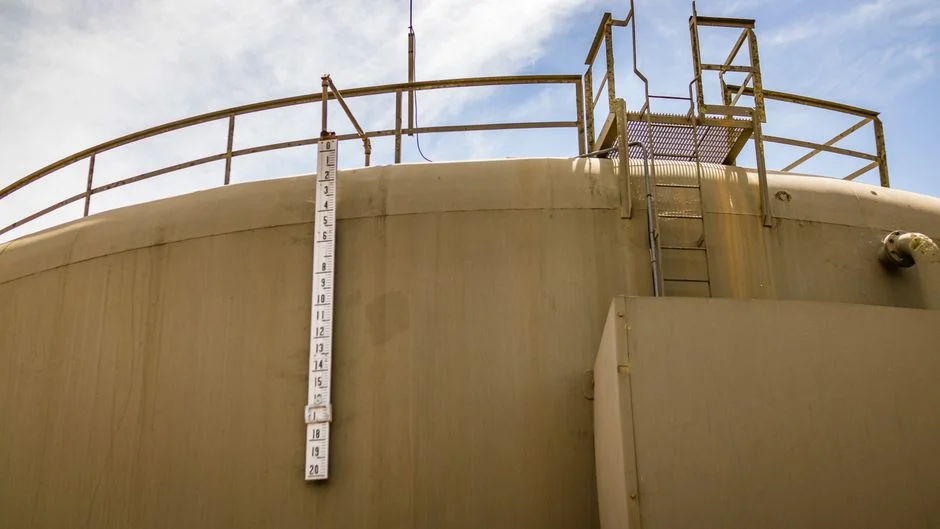
The physical difference between the two unit operations is what determines whether you hit 40 CFR 433's 56 mg/L oil & grease daily maximum on a single primary pass. A dissolved air flotation system works by pressurizing a recycle of clarified effluent with air — typically 60–80 psig in a packed saturator — then releasing that recycle through needle valves or a proprietary nozzle bank into the flotation tank at atmospheric pressure. The pressure drop generates a cloud of 20–40 µm bubbles (DAF Corporation's Micro Bubble Generator is the design most often cited in 2024–2026 vendor literature for consistent bubble size and no coarse air carry-through). Those bubbles attach to oil droplets and coagulated floc and lift the combined particle to the surface in 3–5 minutes, where a rotating scoop or flight skimmer sweeps the float into a sludge hopper. Clarified underflow exits the bottom.
High-rate DAF designs such as FRC's PCL-Series add inclined plate packs inside the contact zone. The plates shorten the bubble rise path, which lets the same removal efficiency occur in a smaller footprint and at a lower air-to-solids ratio — relevant when the air compressor sizing matters for a small shop. The float sludge leaves the DAF at 2–4% dry solids, which is the right consistency to feed a plate-and-frame filter press directly without an intermediate thickener (DAF Corp; FRC Systems, 2025).
A lamella clarifier does the opposite. Coagulant and flocculant are dosed upstream (HydropureWater ships a skid-mounted polymer dosing system for this), the destabilized stream enters a sludge-recirculation or blanket zone where floc is allowed to grow, and the water then flows upward through a pack of inclined plates at 55–60°. The plates multiply the effective settling area — each square foot of footprint does the work of 6–10 ft² of horizontal settling — so a 5 m² plate pack handles roughly 100–200 m³/h at 20–40 m/h surface loading (HydropureWater catalog). Heavy solids slide down the plate faces into a hopper; clarified water exits over a weir at the top.
The gap shows up on emulsified oil. Cutting fluids are stabilized by surfactants, so the oil droplets are 1–10 µm and stay in suspension. Gravity settling in a lamella pack has no mechanism to capture them — they ride the upward flow and exit over the weir with the effluent. DAF, by contrast, has an active lifting force (the bubble) that overcomes the droplet's buoyancy and drag in either direction. That is the single engineering reason DAF is the default primary for fabricated-metals shops subject to a tight oil & grease limit, and the reason EPA 832-R-06-006 lists DAF (and not gravity clarification) as the standard physical/chemical treatment for emulsified oil-bearing streams.
Sizing for a Prairie Grove Shop: GPM, Footprint, and Air-to-Solids
Back-of-envelope sizing for a primary separator starts with the design flow and the influent TSS. A Prairie Grove job shop that runs one or two machining cells, a small stamping press, and a parts washer will typically peak in the 20–150 GPM range. DAF Corporation's skid-mounted FC Maximizer line covers exactly this band — 48 GPM on a 6 ft diameter unit up to 450 GPM on a 15 ft diameter unit — with engineered plant-scale systems to 11,000 GPM on 6–70 ft diameters (DAF Corporation, 2025). FRC Systems' DAF line is rated to 2,000+ GPM on free area from 5 to 500+ ft² (FRC Systems, 2025), which is the same envelope scaled upward. Either vendor family brackets the typical fabricated-metals duty.
For a lamella clarifier in the same GPM band, the design is driven by surface loading, not retention time. At 20–40 m/h and a 5 m² plate pack, you handle 100–200 m³/h (440–880 GPM), so a single small clarifier will in fact look oversized on a 50 GPM shop — which is part of why lamella units are attractive in tight, steady-state flows. The trade-off is residence time: a DAF needs ~20–30 minutes of hydraulic residence to let float rise and clarified water exit cleanly; a lamella clarifier needs ~1–2 hours at comparable loading for the floc blanket to stabilize and plate overflow to clarify. The lamella wins on footprint per GPM; the DAF wins on throughput per square foot of operating volume.
| Parameter | DAF (chemical, 20–150 GPM) | Lamella Clarifier (20–150 GPM) |
|---|---|---|
| Hydraulic residence time | 20–30 min | 60–120 min |
| Hydraulic loading basis | Surface overflow ~5–15 m/h plus air flux | Plate surface loading 20–40 m/h |
| Air-to-solids (A/S) ratio | 0.01–0.05 lb air / lb solids (chemical DAF on metalworking) | N/A |
| Compressor / saturator | Required; sized to recycle flow and pressure (~60–80 psig) | Not required |
| Sludge output consistency | 2–4% dry solids (skimmable float) | 0.5–2% dry solids (settled sludge) |
| Cold-weather sensitivity (IL 2026) | Recoil freeze protection on saturator; insulated/enclosed skid recommended | Plate pack exposed to freezing air — basin may need enclosure or burial below frost line |
Two engineered numbers matter most for a 2026 capex. First, A/S ratio: at 0.01–0.05 lb air / lb solids, a 100 GPM DAF treating 1,000 mg/L TSS moves ~50 lb/hr of solids, which means 0.5–2.5 lb/hr of dissolved air requirement and a small (~5–15 SCFM) oil-free compressor — well within shop-air capacity or a dedicated unit. Second, the cold-climate caveat: a Prairie Grove shop in January is operating at 10–20 °F ambient, which raises the viscosity of any oil-rich stream, slows floc kinetics, and risks saturator and pipe freeze-ups. Specify a DAF skid with an enclosed, heat-traced saturator package; specify a lamella with the plate pack either buried or housed.
Cost, Compliance, and Operating Reality in 2026
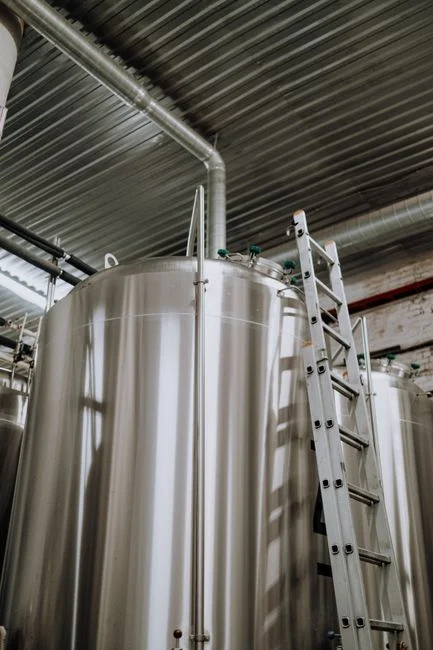
Capital cost for a skid-mounted, stainless-steel DAF in the 20–150 GPM range sits noticeably above a comparably rated lamella clarifier because the DAF carries a recycle pump, saturator vessel, air compressor, and a control panel with float and pressure instrumentation. OPEX inverts that picture only partially: a DAF spends on compressed air and float disposal, while a lamella spends on polymer and the labor of keeping the sludge blanket stable. For a two-shift Prairie Grove job shop, the DAF OPEX line is more predictable month-to-month because float is removed mechanically and the chemistry target is forgiving, while a lamella demands an operator who actually watches the blanket and the effluent clarity.
Compliance is the deciding factor. The 40 CFR 433 oil & grease daily maximum for the metal-finishing subcategory is 56 mg/L (40 CFR 433.102), and that is the line item a pretreatment coordinator will look at first. A single-pass DAF hitting 85–95% removal on 200–1,000 mg/L influent oil & grease will reliably discharge below 56 mg/L, often without a polish step. A lamella at 40–60% removal on the same stream will not — the math leaves 100+ mg/L of emulsified oil leaving the clarifier, which is a categorical exceedance and a permit violation. For a 2026 capex in a space-constrained shop, the realistic path is either a DAF alone with a downstream polish, or a lamella as primary followed by a polish DAF — exactly the retrofit approach described in the parallel Springfield fabricated-metals DAF-vs-clarifier guide and in the Fort Atkinson pretreatment compliance guide (which uses the same 40 CFR 433 framework and similar POTW sensitivities).
Audit findings on small fabricated-metals shops in 2025–2026 consistently flag two issues: under-staffed lamella blankets drifting out of spec during shift changes, and DAF saturators that have not been descaled, costing the unit its A/S ratio and pushing float solids out as a cloudy dispersion. Plan the OPEX line with those failure modes in mind, not with the nameplate removal numbers.
When a Lamella Clarifier Beats a DAF (and Vice Versa)
Pick a DAF when any of the following are true: the influent carries emulsified cutting fluid, FOG is above ~200 mg/L, TSS is above ~500 mg/L, the operation has batch discharges that spike the stream (a sump pump-out, a coolant change-out), or the receiving POTW enforces the 40 CFR 433 oil & grease limit tightly. Pick a lamella clarifier when the flow is steady and below ~30 GPM, the bulk of free oil is already removed upstream by an API separator or plate coalescer, and the binding constraint on the capex is floor space rather than compliance headroom.
Many 2026 Prairie Grove retrofits end up specifying both in series — a lamella as a low-footprint primary that knocks down the bulk TSS, followed by a polish DAF that catches the emulsified oil the lamella cannot. This is the defensible answer for a space-constrained shop that still has to meet the 56 mg/L oil & grease limit. It is also the configuration that produces the cleanest downstream stream for any metals precipitation or pH adjustment step that follows. DAF is the only one of the two that produces a float layer (skimmable sludge at 2–4% DS) suitable for direct dewatering in a plate-and-frame filter press; a lamella clarifier's settled sludge is too thin to feed a press without an intermediate thickener.
For more on the metals precipitation step that always comes after either unit, the lead removal process guide walks through the 40 CFR 433 lead and zinc limits and the chemistry that follows primary separation.
Frequently Asked Questions
Will a DAF alone get a Prairie Grove fabricated-metals shop under the 40 CFR 433 oil & grease limit?
Yes, in the majority of cases. The 40 CFR 433 categorical daily maximum for oil & grease is 56 mg/L for the metal-finishing subcategory, and a chemical DAF removing 85–95% of emulsified oil from a 200–1,000 mg/L influent will reliably discharge below that limit in a single pass. A polish step (multimedia filter or second small DAF) is recommended as belt-and-suspenders for shops that run batch coolant dumps.
At what GPM does a lamella clarifier make more sense than a DAF?
Below roughly 30 GPM, with oil already removed upstream and footprint as the binding capex constraint. The lamella's 20–40 m/h surface loading (HydropureWater catalog) means a small plate pack handles that flow in a fraction of the floor area a DAF would need. Above 30 GPM, or whenever the oil & grease limit is the binding permit constraint, DAF is the right primary.
Can DAF float sludge feed a plate-and-frame filter press directly?
Yes. DAF float leaves the unit at 2–4% dry solids (DAF Corporation, 2025), which is the right feed consistency for a plate-and-frame press without an intermediate thickener. Lamella clarifier sludge at 0.5–2% DS is generally too thin to press economically without a thickener step first.
Is an oil/water separator a substitute for a DAF or a lamella clarifier?
No. An oil/water separator (API, CPI, or plate coalescer) is a free-oil removal step that precedes primary treatment; a DAF or lamella clarifier is the primary that handles emulsified oil and TSS. They are three different unit operations often used in series — separator, then primary, then polish — not substitutes.
Does picking DAF or lamella eliminate the need for pH adjustment and metals precipitation?
No. Neither unit removes dissolved metals or corrects pH; both only separate oil and TSS. Any 2026 capex still needs pH adjustment and a metals precipitation step downstream to meet the 40 CFR 433 lead, cadmium, zinc, total chromium, and hexavalent chromium limits.