Why Plastics and Rubber Wastewater in Oostburg Is a Different Decision
For Oostburg plastics and rubber factories in 2026, a DAF system is the stronger primary choice because polymer, latex, and finishing washwater carry high FOG, suspended polymer particles, and low-density additives that float rather than settle; commercial DAF units routinely hit 92–98% TSS and ~95% FOG removal versus 70% for a clarifier on oily streams. A gravity clarifier still earns a place as a polishing/secondary step on heavy settleable solids, and a DAF→clarifier hybrid handles the widest plastics/rubber effluent envelopes under 40 CFR Parts 437 and 463.
Generic DAF-vs-clarifier guides miss the point because they are written for food processing or mining. The signature coming off an extrusion line, a parts washer, a latex dipping tank, or a rubber calendar is fundamentally different from slaughterhouse or frac-flow wastewater. Typical contaminants include polymer fines (PVC, polyethylene, polypropylene, polystyrene), unreacted latex and SBR/NBR residues, mold-release oils and waxes, plasticizer and stabilizer surfactants, and heavy filler dusts (carbon black, talc, calcium carbonate, glass fiber) that arrive together in the same warm, surfactant-rich stream. Washwater temperatures of 30–50 °C lower the viscosity of the oil phase and stabilize emulsions, which keeps contaminants suspended instead of letting them settle. Oostburg's local-industrial context — small to mid-sized polymer, rubber goods, and finishing operations discharging to a regional POTW — means pretreatment compliance, not internal water reuse, is usually the binding driver on the technology choice.
Applicable 2026 Standards: 40 CFR Parts 403, 437, and 463
40 CFR Part 403 is the General Pretreatment umbrella that every US industrial discharger sits under; the categorical standards in 40 CFR Parts 437 and 463 layer additional numeric limits on top of it for rubber and plastics operations respectively (per EPA 40 CFR 403). 40 CFR Part 463 (Plastics Molding and Forming) typically governs injection molding, extrusion, and plastics finishing plants, with limits on oil and grease, TSS, BOD/COD, and pH that depend on the specific subcategory (e.g., 463.16 for contact cooling and contact process water). 40 CFR Part 437 (Rubber Manufacturing) covers tire, hose, latex, and general rubber goods, and adds parameters like total zinc and ammonia-nitrogen on top of the standard oil & grease, TSS, and BOD envelope.
For a Wisconsin site, the Wisconsin Department of Natural Resources (WDNR) enforces these categorical limits through the WPDES permit program, and the local POTW may impose local limits that are tighter than the federal floor. The EHS manager should pull the current 40 CFR text for the exact subcategory (Part 437 subpart B for tire manufacturing differs from subpart D for latex, for example) and then overlay any local sewer use ordinance before sizing equipment. Treat the categorical numbers as the floor, not the ceiling — POTW surcharges for TSS, FOG, and zinc will dominate the operating-cost conversation with the CFO long before the federal cap matters.
How a DAF System Actually Treats Polymer and Latex Streams

A DAF system generates a dense cloud of microbubbles — 30–50 microns in standard SigmaDAF designs and 20–40 microns in DAF Corp's Micro Bubbler — that attach to polymer fines, latex droplets, and emulsified oils and lift them to the surface for skimming (per SigmaDAF/Clearwater Industries, 2026-04; per DAF Corporation). The 20–40 micron range is meaningful for plastics/rubber work: smaller bubbles have higher surface-area-to-volume ratios, which improves attachment on the sub-100-micron latex and emulsion droplets that slip past a coarser bubble system.
Coagulation and flocculation chemistry ahead of the cell is not optional for these streams. Cationic polyacrylamide, aluminum sulfate (alum), or polyaluminum chloride (PAC) is typically used to neutralize the negative surface charge on latex and polymer colloids and to agglomerate emulsified oil droplets large enough for bubbles to lift. The exact coagulant and dose are stream-specific and should be set by jar testing rather than copied from a brochure. Two commercial geometries cover most plastics/rubber sites: the circular zero-velocity FC Maximizer (6–70 ft diameter, 92–98% TSS removal) suits higher-solids, steady streams, while the rectangular/cross-flow RC UniMax or SigmaDAF FPBC, FPHF, and FPAC variants cover lower-solids or footprint-constrained layouts. Material selection matters when washwater runs hot and surfactant-rich: 304 stainless is the standard build, but 316 stainless or polypropylene is often specified for chloride or low-pH excursions in polymer finishing. A packaged unit like the HydropureWater dissolved air flotation system in the 4–300 m³/h range covers the typical Oostburg plant envelope.
How a Clarifier Performs on Plastics and Rubber Effluent
A gravity clarifier does one thing well: it lets heavy, fast-settling particles fall out under quiescent conditions. In a plastics or rubber plant, that means carbon black, talc, calcium carbonate, and glass fiber — the dense filler dusts that show up in compounding and grinding wastewater. The same Ecologix 2026 selection guide that anchors the 95% FOG DAF figure also documents a mining clarifier hitting 90% TSS reduction on heavy sediment loads — the upper bound of what gravity can do on the right stream. Most polymer and latex contaminants will not reach that benchmark because they are too light, too emulsified, or too close in density to water.
Lamella or inclined-plate clarifiers, including compact units like the HydropureWater lamella clarifier, multiply the effective settling area inside a small footprint by stacking plates at 55–60°. They work well as a polishing step after a DAF, where the float has already pulled out the FOG and the remaining TSS is mostly settleable filler. Clarifiers are cheaper to operate than DAF — no saturator, no recycle pump, no compressed air — but they pay for that with a larger civil footprint, a sensitivity to temperature (warm polymer washwater lowers water viscosity, which actually helps settling but also re-emulsifies oils at the surface), and an inability to handle light polymer fines that just ride the water column out the weir. For Oostburg sites with limited yard space and a tight capex envelope, civil works often dominate the clarifier-installed cost.
Head-to-Head: DAF vs Clarifier for Oostburg Plastics & Rubber Plants
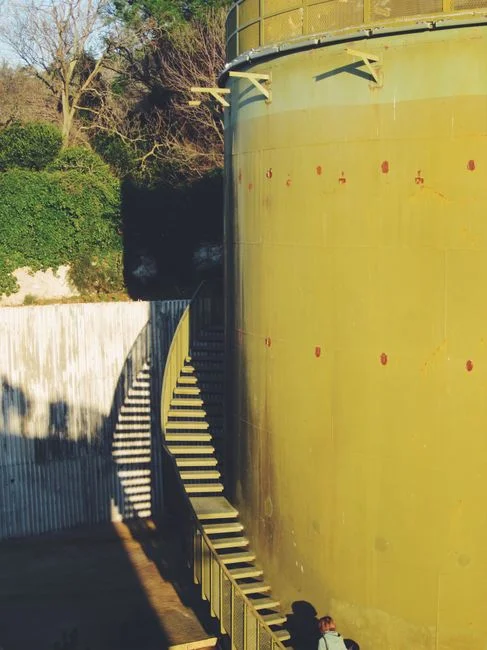
DAF systems are designed to float light, oily, emulsified contaminants; clarifiers are designed to drop heavy, settleable solids. The decision matrix below maps the typical plastics/rubber effluent envelope to the right primary unit and shows where the two technologies overlap.
| Parameter | DAF (primary) | Clarifier (primary) |
|---|---|---|
| Target contaminant | FOG, latex, mold-release oil, polymer fines, emulsified surfactants | Carbon black, talc, CaCO3, glass fiber, metal fines |
| TSS removal | 92–98% (FC Maximizer, zero-velocity circular) | Up to ~90% on heavy sediment; lower on polymer fines |
| FOG/oil removal | ~95% on oily streams | ~70% on oily streams |
| Microbubble size | 20–50 μm | N/A (gravity only) |
| Footprint | Compact, packaged skids available | Larger tanks; lamella reduces but does not eliminate footprint |
| CAPEX | Higher unit cost; lower civil cost | Lower unit cost; higher civil/tank cost at small sites |
| OPEX complexity | Moderate (air compressor, recycle pump, coagulant dosing) | Low (sludge pump, periodic sludge blowdown) |
| Chemical demand | Coagulant + flocculant typically required | Optional; often none for raw sedimentation |
| Sensitivity to temperature and surfactants | Low — bubble attachment works on warm, surfactant-rich streams | High — warm water re-emulsifies oils; surfactants keep fines in suspension |
| 2026 typical application | Extrusion washwater, parts washing, latex finishing, mold-release lines | Compounding dust, grinding swarf, heavy filler settle-out, polishing after DAF |
For Oostburg plants, DAF is the right primary unit on FOG-, latex-, mold-release-, and polymer-fine-dominated lines; a clarifier is the right primary only on a plant whose stream is dominated by heavy filler/carbon-black sedimentation with minimal emulsified oil. The DAF→clarifier hybrid covers the widest envelope and is the recommended default for mixed extrusion-and-finishing operations.
CAPEX, Footprint, and CAPEX-by-Skid: 2026 Cost Lens
DAF pricing in 2026 scales with flow, and vendors have settled on a clear modular logic that finance and procurement teams can plan against. SigmaDAF's COMPACT DAF uses a single skid at flows of 66 gpm or less and a modular two-skid configuration above 66 gpm, with chemical conditioning, instrumentation, and PLC controls pre-assembled (per Clearwater Industries, 2026-04). DAF Corp's product line spans 48 gpm pilot units up to an 11,000 gpm FC Maximizer, with skid-mounted FC Maximizers covering 48–450 gpm in a 6–15 ft diameter footprint (per DAF Corporation). That range — pilot to large plant on a single technology platform — is what makes DAF defensible to a CFO evaluating a 2026–2027 capex project.
For short-term, peak, or trial operation, WesTech's mobile DAF units deploy in a single day and ship in two trailer sizes — 47'-6" x 8'-6" (small) and 51'-7" x 8'-6" in operation (large) — making them a useful tool for Oostburg plants that need temporary capacity during a shutdown or a tie-in. Civil works dominate the clarifier cost equation at small sites: a circular steel or concrete clarifier with the same 50–450 gpm throughput needs a poured tank, a bridge/scraper mechanism, and a sludge well, which can push installed cost above a packaged DAF once excavation and concrete are added.
| Configuration | Typical flow range | Footprint signal | 2026 deployment model |
|---|---|---|---|
| SigmaDAF COMPACT (single skid) | ≤ 66 gpm | Packaged skid, plug-and-play | Pilot / small plant |
| SigmaDAF COMPACT (two-skid) | > 66 gpm | Modular skids, integrated controls | Mid-sized plant |
| DAF Corp FC Maximizer (skid) | 48–450 gpm | 6–15 ft diameter circular | Small to mid plant |
| DAF Corp FC Maximizer (field-built) | Up to 11,000 gpm | Up to 70 ft diameter circular | Large plant / campus |
| WesTech mobile DAF | Temporary, trailerized | 47'-6" x 8'-6" or 51'-7" x 8'-6" | 1-day deployment, peak/emergency/trial |
| Lamella clarifier (HydropureWater) | Scales with plate area | Compact vs. conventional circular | Polishing or primary on heavy solids |
Recommended 2026 Process Train for an Oostburg Plastics or Rubber Plant
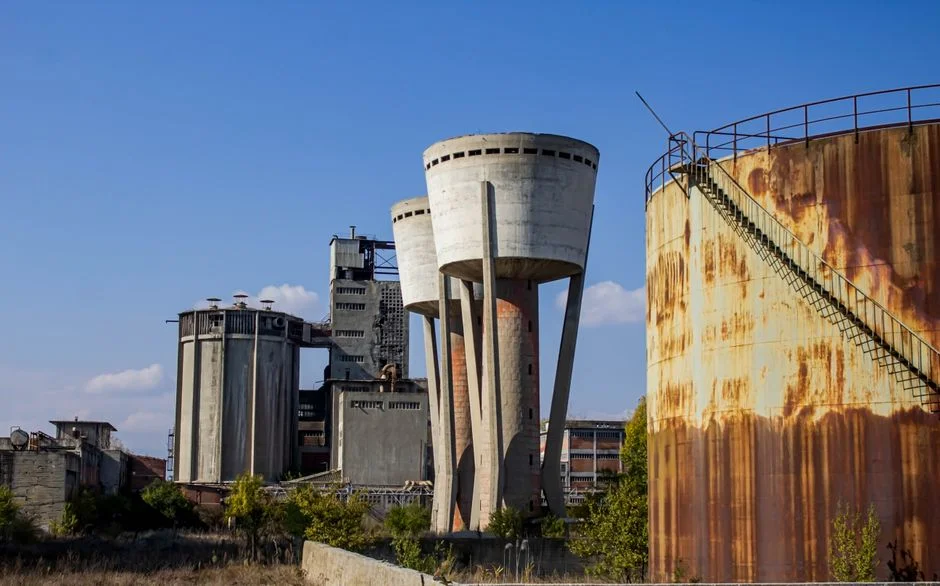
The default 2026 process train for a mixed plastics/rubber plant in Oostburg runs: coarse screening → flow equalization → HydropureWater dissolved air flotation system as the primary FOG and suspended-polymer step → optional biological or membrane stage → HydropureWater lamella clarifier as a polishing/solids step → sludge dewatering. Coagulant and flocculant are dosed upstream of the DAF using a packaged HydropureWater automatic chemical dosing system, with the dose set by jar testing against the actual polymer/latex stream rather than a generic recipe.
For rubber sites, the DAF primary does not finish the job on its own — zinc and other categorical parameters under 40 CFR Part 437 typically need a chemical precipitation step (pH adjust to ~9 with caustic, dose sulfide or hydroxide) or an ion-exchange polish downstream of the float, depending on the discharge limits. Pairing DAF with chemical dosing is the recommended operating mode rather than running the cell raw, which is the consistent guidance across both SigmaDAF and Ecologix application notes. Plants that need a quick trial or a peak-shaving option should evaluate a mobile DAF deployment before committing to a permanent install, particularly when the categorical numbers are still being negotiated with the local POTW.
Frequently Asked Questions
What removal efficiency can a DAF realistically hit on plastics or rubber washwater?
Commercial DAF systems remove 92–98% of TSS and approximately 95% of FOG on oily industrial streams, against roughly 70% FOG removal for a clarifier on the same stream (per Ecologix 2026 selection guide).
Which US federal standard governs a plastics or rubber plant's discharge?
Plastics molding and forming plants typically fall under 40 CFR Part 463, while tire, hose, latex, and general rubber goods plants fall under 40 CFR Part 437, both of which sit on top of the 40 CFR Part 403 General Pretreatment framework (per EPA 40 CFR 403, 437, 463).
Why does a clarifier underperform on polymer and latex streams?
Polymer fines, latex droplets, and emulsified mold-release oils are low-density and surfactant-stabilized, so they stay suspended or float instead of settling; warm washwater (30–50 °C) further stabilizes the emulsion, which is the opposite of what a gravity clarifier needs.
Can a DAF and a clarifier be combined in one process train?
Yes. A DAF primary followed by a lamella clarifier polish is the recommended hybrid for Oostburg plastics and rubber plants because the DAF pulls FOG, latex, and polymer fines while the lamella drops the remaining settleable filler and protects downstream equipment.